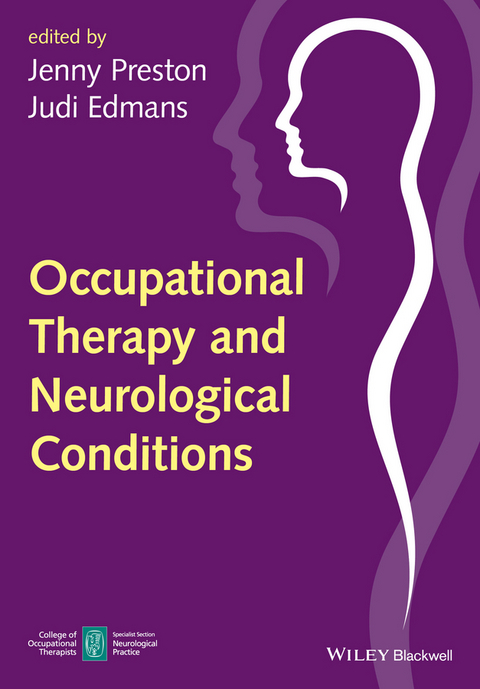
Occupational Therapy and Neurological Conditions (eBook)
John Wiley & Sons (Verlag)
978-1-118-93612-2 (ISBN)
While diagnosis with a neurological condition may not be life-threatening, it can have significant impact on everyday life and on participation in activities. Occupational therapists must be able to fully consider the physical, cognitive, emotional, psychological and behavioural problems which may occur as a consequence of a neurological disorder, and understand the impact of diagnosis from a person-centred perspective. Occupational Therapy and Neurological Conditions incorporates theoretical, clinical and research evidence to support occupational therapists in the management of people with neurological conditions.
- Covers the key symptoms of neurological conditions and the biological basis of these within the ICF framework
- Provides an overview of therapy and management for all neurological conditions
- Includes key occupational therapy theory
- Case studies root concepts in real-life practice
- End-of-chapter self-evaluation questions help test understanding
Occupational Therapy and Neurological Conditions is the ideal resource to support students, newly-qualified practitioners, and occupational therapists looking for an overview or introduction to this key area of practice.
Jenny Preston, PhD, BSc (Hons), DipCOT is a Consultant Occupational Therapist within NHS Ayrshire & Arran, and Glasgow Caledonian University. She has over 30 years clinical experience working with people with a range of neurological conditions, and is currently Chair of the College of Occupational Therapists Specialist Section Neurological Practice.
Judi Edmans, PhD, MPhil, DipCOT, FCOT is a Senior Research Fellow in the Division of Rehabilitation and Ageing at the University of Nottingham. She has been qualified for over 35 years, has worked mainly in stroke both in clinical practice and research and is the editor of the book Occupational Therapy and Stroke.
While diagnosis with a neurological condition may not be life-threatening, it can have significant impact on everyday life and on participation in activities. Occupational therapists must be able to fully consider the physical, cognitive, emotional, psychological and behavioural problems which may occur as a consequence of a neurological disorder, and understand the impact of diagnosis from a person-centred perspective. Occupational Therapy and Neurological Conditions incorporates theoretical, clinical and research evidence to support occupational therapists in the management of people with neurological conditions. Covers the key symptoms of neurological conditions and the biological basis of these within the ICF framework Provides an overview of therapy and management for all neurological conditions Includes key occupational therapy theory Case studies root concepts in real-life practice End-of-chapter self-evaluation questions help test understanding Occupational Therapy and Neurological Conditions is the ideal resource to support students, newly-qualified practitioners, and occupational therapists looking for an overview or introduction to this key area of practice.
Jenny Preston, PhD, BSc (Hons), DipCOT is a Consultant Occupational Therapist within NHS Ayrshire & Arran, and Glasgow Caledonian University. She has over 30 years clinical experience working with people with a range of neurological conditions, and is currently Chair of the College of Occupational Therapists Specialist Section Neurological Practice. Judi Edmans, PhD, MPhil, DipCOT, FCOT is a Senior Research Fellow in the Division of Rehabilitation and Ageing at the University of Nottingham. She has been qualified for over 35 years, has worked mainly in stroke both in clinical practice and research and is the editor of the book Occupational Therapy and Stroke.
Title Page 5
Copyright Page 6
Contents 7
List of figures and tables 10
List of contributors 12
Academic foreword 13
Service user foreword 14
Preface 15
Acknowledgements 16
CHAPTER 1 Introduction 17
1.1 Economic impact of long-term neurological conditions 17
1.2 Definition of long-term neurological conditions 18
1.3 International Classification of Functioning, Disability and Health 18
1.4 Huntington’s disease 20
1.4.1 Body functions 20
1.4.2 Body structures 20
1.4.3 Stages of HD 20
1.4.4 Impairments 21
1.4.5 Diagnosing HD 23
1.5 Motor neurone disease 25
1.5.1 Body functions 26
1.5.2 Body structures 26
1.5.3 Genetic Risk 27
1.5.4 Impairments 27
1.5.5 Diagnosing MND 28
1.6 Multiple sclerosis 29
1.6.1 Body functions 30
1.6.2 Body structures 30
1.6.3 Impairments 31
1.6.4 Diagnosing MS 33
1.7 Parkinson’s 34
1.7.1 Body functions 34
1.7.2 Body structures 34
1.7.3 Impairments 35
1.7.4 Diagnosing parkinson’s 37
1.8 Self-evaluation questions 38
References 38
CHAPTER 2 Delivering good quality, safe and effective care 40
2.1 Introduction 40
2.2 The strategic context 40
2.2.1 National Service Framework for long-term conditions 41
2.2.2 Clinical standards: Neurological Health Standards 42
2.3 Evidence-based practice 43
2.3.1 Why do we need evidence-based practice? 43
2.3.2 Finding the best evidence 43
2.3.3 Using electronic databases to find evidence 44
2.3.4 Appraising the evidence 45
2.3.5 Implementing findings into clinical practice 45
2.3.6 Using evidence to inform clinical decisions in occupational therapy 46
2.3.7 Asking clinical questions 47
2.4 Clinical guidelines 49
2.5 Practice guidance 49
2.5.1 Occupational therapy in the prevention and management of falls in adults 50
2.5.2 Splinting for the prevention and correction of contractures in adults with neurological dysfunction 50
2.5.3 Occupational therapy for people with Parkinson’s 50
2.5.4 Management of the Ataxias: Towards best clinical practice 50
2.5.5 Fatigue management for people with multiple sclerosis 50
2.5.6 Translating the NICE and NSF guidance into practice: A guide for occupational therapists 51
2.5.7 Occupational therapy for people with Huntington’s disease: Best practice guidelines 51
2.6 Client expertise in evidence-based practice 51
2.6.1 Shared decision-making 51
2.7 Quality improvement 52
2.8 Health economic evaluation 55
2.8.1 Key steps of an economic evaluation 55
2.9 Professional standards of practice 56
2.10 CPD and lifelong learning 56
2.10.1 CPD resources 57
2.11 Self-evaluation questions 58
References 59
CHAPTER 3 Person-centredness and long-term neurological conditions 62
3.1 Introduction 62
3.2 Person-centredness 62
3.2.1 What is person-centred care? 62
3.2.2 Medical model of care 63
3.2.3 Social model of disability 64
3.3 Client-centred practice 64
3.3.1 Exploring both the disease and the illness experience 65
3.3.2 Understanding the whole person 67
3.3.3 Finding common ground regarding management 68
3.3.4 Incorporating illness prevention and health promotion 69
3.3.5 Enhancing the therapist-client relationship 69
3.3.6 Being ‘realistic’ about personal limitations and issues such as the availability of time and resources 70
3.4 Self-management 71
3.5 Co-production 73
3.6 Evaluating your practice 74
3.6.1 Measures of client experience 75
3.7 Self-evaluation questions 75
References 76
CHAPTER 4 Theoretical basis 79
4.1 Introduction 79
4.2 Definitions of occupational therapy 79
4.3 Central philosophy of occupational therapy 81
4.4 Core professional reasoning skills 81
4.4.1 Clinical reasoning 82
4.5 Conceptual models of occupational therapy practice 85
4.5.1 Model of Human Occupation 85
4.5.2 Canadian Model of Occupational Performance and Enablement 86
4.5.3 The Person-Environment-Occupational Performance (PEOP) model 89
4.5.4 The Kawa (River) model 92
4.5.5 The Occupational Performance Model (Australia) OPM-A 94
4.6 Frames of reference 94
4.6.1 Cognitive Behavioural Frame of Reference 94
4.6.2 Biomechanical Frame of Reference 95
4.6.3 Neurodevelopmental Frame of Reference 96
4.7 Context-dependent practice skills 97
4.7.1 Occupational therapy core skills 97
4.7.2 Core values for neurological practice 97
4.7.3 Context-dependent practice skills for neurological practice 97
4.8 Self-evaluation questions 99
References 99
CHAPTER 5 Occupation and long-term neurological conditions 102
5.1 Introduction 102
5.2 Defining occupation 102
5.3 Occupational patterns 103
5.4 Doing, being, becoming and belonging 104
5.4.1 Occupations for doing 105
5.4.2 Occupations for being 106
5.4.3 Occupations for becoming 107
5.4.4 Occupations for belonging 108
5.5 Occupational dysfunction 109
5.6 Occupational adaptation 112
5.7 Defining occupational goals 114
5.8 Self-evaluation questions 115
References 115
CHAPTER 6 Identifying occupational performance enablers and deficits 117
6.1 Introduction 117
6.2 What is measurement? 117
6.3 What are occupational therapy outcomes? 118
6.3.1 Why measure? 118
6.3.2 How to measure 118
6.3.3 What to measure 119
6.4 Selecting the right measure 119
6.5 Commonly used measures in neurological rehabilitation 122
6.5.1 Activities of daily living indices 122
6.5.2 Commonly used impairment-level measures 127
6.5.3 Perceived health and QOL measure 127
6.6 Disease-specific measures 127
6.7 Self-evaluation questions 134
References 134
CHAPTER 7 Occupational therapy intervention 138
7.1 Introduction 138
7.1.1 Rehabilitation interventions 138
7.2 Activities of daily living 139
7.2.1 Dressing 139
7.2.2 Eating and drinking 139
7.2.3 Toileting 139
7.2.4 Bed mobility 140
7.2.5 Grooming 140
7.3 Fatigue management 140
7.3.1 Practical strategies for energy conservation 141
7.4 Cognitive rehabilitation 142
7.4.1 General principles of cognitive rehabilitation 143
7.4.2 General principles in the management of memory disorders 143
7.4.3 Commonly used intervention strategies 144
7.4.4 Generalisation 144
7.5 Anxiety management 145
7.5.1 Symptoms of anxiety 145
7.5.2 Strategies for managing anxiety 146
7.6 Falls management 151
7.6.1 Identification of people at risk 152
7.6.2 Assessment of occupational performance 152
7.6.3 Interventions 152
7.7 Pain management 153
7.7.1 Practical strategies for pain management 154
7.8 Managing tremor 156
7.9 Sleep 159
7.10 Sexual relationships and intimacy 160
7.10.1 General tips for improving relationships 160
7.11 Self evaluation questions 163
References 163
CHAPTER 8 Using technology to support participation 166
8.1 Introduction 166
8.2 Environmental characteristics and occupational performance 166
8.3 Environmental adaptations 167
8.4 Assistive technology 168
8.5 Assistive devices 168
8.5.1 Provision following assessment 169
8.5.2 VAT exemption 169
8.6 Housing adaptations 170
8.6.1 Minor adaptations 170
8.6.2 Major adaptations 171
8.7 Seating and postural management 172
8.7.1 The role of normal posture as a foundation for occupational performance 172
8.8 Management of posture and positioning in sitting 174
8.8.1 Posture and head control in sitting 174
8.8.2 Wheelchairs 175
8.8.3 Powered wheelchairs 176
8.9 Management of posture and positioning in lying 176
8.9.1 Sleep systems 176
8.9.2 Bed mobility 177
8.9.3 Respiration 177
8.10 Splinting 178
8.10.1 Types of splints 178
8.10.2 Assessing for a splint 178
8.10.3 Education and monitoring 179
8.11 Electronic assistive technology 179
8.11.1 Telehealth 180
8.11.2 Telecare 180
8.11.3 Environmental control systems 181
8.11.4 Smart housing 182
8.11.5 Computer access 182
8.11.6 Switches and input devices 182
8.11.7 Augmentative and alternative communication 182
8.12 Self-evaluation questions 184
References 184
CHAPTER 9 Living with a long-term neurological condition 187
9.1 Introduction 187
9.2 Transitions theory 187
9.3 Illness experiences 188
9.3.1 Diagnosis with a long-term neurological condition 188
9.4 Rehabilitation and recovery 189
9.5 Lifespan transitions 190
9.5.1 Parenthood 190
9.6 Social and cultural transitions 191
9.6.1 Work 191
9.6.2 Driving 196
9.7 Caregiving 199
9.7.1 Impact on family and carers 199
9.7.2 Burden of care 200
9.7.3 Supporting carers 200
9.7.4 Supporting the needs of young carers 201
9.8 Psychosocial adjustment 201
9.9 Self-evaluation questions 205
References 205
CHAPTER 10 Planning for the future 210
10.1 Introduction 210
10.2 Disease progression 210
10.3 The nature of occupation in death and dying 213
10.4 Facilitation of meaning, quality of life and well?being 214
10.5 Spirituality 214
10.6 Therapeutic use of self 215
10.6.1 Therapist self-care 216
10.7 Advance care planning 216
10.7.1 Lasting power of attorney 217
10.7.2 Capacity 219
10.7.3 Safeguards 219
10.7.4 Advance statement 220
10.7.5 Advance decision 220
10.7.6 Assisted dying and implications for occupational therapy 221
10.8 Conclusion 225
10.9 Self-evaluation questions 225
References 226
Index 228
EULA 233
| Erscheint lt. Verlag | 12.4.2016 |
|---|---|
| Sprache | englisch |
| Themenwelt | Medizin / Pharmazie ► Medizinische Fachgebiete ► Neurologie |
| Medizin / Pharmazie ► Naturheilkunde | |
| Medizin / Pharmazie ► Physiotherapie / Ergotherapie ► Ergotherapie | |
| Schlagworte | behavioural • Cognitive • Conditions • COT • Diagnosis • disorder • Emotional • Ergotherapie • Ergotherapie / Praxis • Gesundheits- u. Sozialwesen • Health & Social Care • Medical Science • Medizin • Neurological • Neurologie • Neurology • Occupation • Occupational • occupational therapy • Occupational Therapy Practice • Physical • Psychological • SSNP • stroke • Therapist • therapy |
| ISBN-10 | 1-118-93612-4 / 1118936124 |
| ISBN-13 | 978-1-118-93612-2 / 9781118936122 |
| Informationen gemäß Produktsicherheitsverordnung (GPSR) | |
| Haben Sie eine Frage zum Produkt? |
 PDF (Adobe DRM)
Kopierschutz: Adobe-DRM
Adobe-DRM ist ein Kopierschutz, der das eBook vor Mißbrauch schützen soll. Dabei wird das eBook bereits beim Download auf Ihre persönliche Adobe-ID autorisiert. Lesen können Sie das eBook dann nur auf den Geräten, welche ebenfalls auf Ihre Adobe-ID registriert sind.
Details zum Adobe-DRM
Dateiformat: PDF (Portable Document Format)
Mit einem festen Seitenlayout eignet sich die PDF besonders für Fachbücher mit Spalten, Tabellen und Abbildungen. Eine PDF kann auf fast allen Geräten angezeigt werden, ist aber für kleine Displays (Smartphone, eReader) nur eingeschränkt geeignet.
Systemvoraussetzungen:
PC/Mac: Mit einem PC oder Mac können Sie dieses eBook lesen. Sie benötigen eine
eReader: Dieses eBook kann mit (fast) allen eBook-Readern gelesen werden. Mit dem amazon-Kindle ist es aber nicht kompatibel.
Smartphone/Tablet: Egal ob Apple oder Android, dieses eBook können Sie lesen. Sie benötigen eine
Geräteliste und zusätzliche Hinweise
Buying eBooks from abroad
For tax law reasons we can sell eBooks just within Germany and Switzerland. Regrettably we cannot fulfill eBook-orders from other countries.
aus dem Bereich