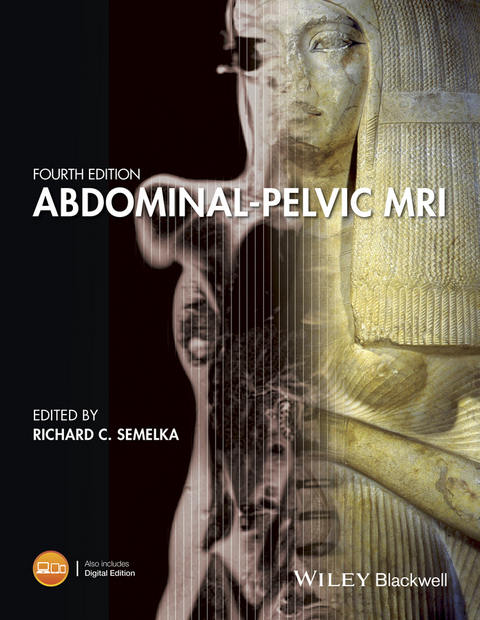
Abdominal-Pelvic MRI (eBook)
John Wiley & Sons (Verlag)
978-1-119-01295-5 (ISBN)
- An established best-seller in this field updated with multiple brand new case figures supplying the reader with high quality examples of diagnoses and anatomy
- Includes discussion of new sequences, such as diffusion-weighted imaging and a new chapter on MR/PET
- Describes techniques and tips for controlling motion, including radial acquisition and shorter breath hold acquisition using techniques of multigradient parallel imaging in order to achieve high quality images
- Offers practice advice and recommendations for contrast agents taking into account patient safety, efficacy, and cost
- Accompanying digital edition offers rapid search and easy figure download
Richard Semelka, MD, is Director of Magnetic Resonance Services, Professor, and Vice Chairman of Radiology at the University of North Carolina-Chapel Hill Medical School. He received his medical degree and residency training in radiology in his native Canada at the University of Manitoba, and completed a clinical research fellowship in MRI of the body at the University of California at San Francisco. Dr. Semelka has authored over 300 peer-reviewed articles, 12 textbooks including the Wiley Abdominal-Pelvic MRI and Current Clinical Imaging series and is an internationally acclaimed authority in the field.
Michele A Brown, MD is a Professor of Clinical Radiology at the University of California San Diego Health System. She is trained in all modalities of abdominal and pelvic imaging, including ultrasound, flouroscopy, CT, and magnetic resonance imaging (MRI) and has special interest in MRI of the female pelvis. Her main current research activities involve MRI of the fetus and placenta, gynecologic malignancies, and benign conditions of the uterus, cervix, and ovaries. She is particularly experienced in the utilization of MRI for the diagnosis of placenta accreta and causes of maternal abdominal pain during pregnancy. Dr. Brown lectures internationally and is an active member of several professional societies, including the Society of Urological Radiology and the Radiological Society of North America.
Ersan Altun, MD, is an Associate Professor of Radiology. He works as an attending radiologist at the University of North Carolina, Chapel Hill Medical School. He received his medical degree and residency training in Radiology in is native Turkey at Marmara University in Istanbul. He completed a clinical fellowship in Abdominal Imaging and a clinical research fellowship in MRI of the Body at the University of North Carolina at Chapel Hill. Dr. Altun authored over 35 peer-reviewed articles, numerous books chapters and authored the book entitled Liver Imaging: MRI with CT Correlation, which is published in the Current Clinical Imaging Series of Wiley.
This fourth edition of Abdominal-Pelvic MRI provides the reader with a significant update on earlier works. Modern diagnostic MRI relies on the practitioner's ability to distinguish between diseases through pattern recognition and experience, and this landmark reference provides the most complete coverage of magnetic resonance imaging of the abdomen and pelvis, with particular emphasis on illustrating benign, malignant and inflammatory lesions An established best-seller in this field updated with multiple brand new case figures supplying the reader with high quality examples of diagnoses and anatomy Includes discussion of new sequences, such as diffusion-weighted imaging and a new chapter on MR/PET Describes techniques and tips for controlling motion, including radial acquisition and shorter breath hold acquisition using techniques of multigradient parallel imaging in order to achieve high quality images Offers practice advice and recommendations for contrast agents taking into account patient safety, efficacy, and cost Accompanying digital edition offers rapid search and easy figure download
Richard Semelka, MD, is Director of Magnetic Resonance Services, Professor, and Vice Chairman of Radiology at the University of North Carolina-Chapel Hill Medical School. He received his medical degree and residency training in radiology in his native Canada at the University of Manitoba, and completed a clinical research fellowship in MRI of the body at the University of California at San Francisco. Dr. Semelka has authored over 300 peer-reviewed articles, 12 textbooks including the Wiley Abdominal-Pelvic MRI and Current Clinical Imaging series and is an internationally acclaimed authority in the field. Michele A Brown, MD is a Professor of Clinical Radiology at the University of California San Diego Health System. She is trained in all modalities of abdominal and pelvic imaging, including ultrasound, flouroscopy, CT, and magnetic resonance imaging (MRI) and has special interest in MRI of the female pelvis. Her main current research activities involve MRI of the fetus and placenta, gynecologic malignancies, and benign conditions of the uterus, cervix, and ovaries. She is particularly experienced in the utilization of MRI for the diagnosis of placenta accreta and causes of maternal abdominal pain during pregnancy. Dr. Brown lectures internationally and is an active member of several professional societies, including the Society of Urological Radiology and the Radiological Society of North America. Ersan Altun, MD, is an Associate Professor of Radiology. He works as an attending radiologist at the University of North Carolina, Chapel Hill Medical School. He received his medical degree and residency training in Radiology in is native Turkey at Marmara University in Istanbul. He completed a clinical fellowship in Abdominal Imaging and a clinical research fellowship in MRI of the Body at the University of North Carolina at Chapel Hill. Dr. Altun authored over 35 peer-reviewed articles, numerous books chapters and authored the book entitled Liver Imaging: MRI with CT Correlation, which is published in the Current Clinical Imaging Series of Wiley.
List of contributors, vii
Preface, ix
1 Diagnostic approach to protocoling and interpreting magnetic resonance studies of the abdomen and pelvis, 1
Puneet Sharma, Diego R. Martin, Brian M. Dale, Ersan Altun, and Richard C. Semelka
2 Liver, 39
Larissa Braga, Ersan Altun, Diane Armao, and Richard C. Semelka
3 Gallbladder and biliary system, 395
Ersan Altun, Fernanda Velloni, Mamdoh AlObaidy, Jorge Elias Jr, and Richard C. Semelka
4 Pancreas, 461
Fernanda Velloni, Ersan Altun, Diane Armao, Jorge Elias Jr, and Richard C. Semelka
5 Spleen, 559
Mamdoh AlObaidy, Ersan Altun, and Richard C. Semelka
6 Gastrointestinal tract, 593
Diego R. Martin, Miguel Ramalho, António P. Matos, Ersan Altun, and Richard C. Semelka
7 Peritoneal cavity, 745
Mamdoh AlObaidy, Ersan Altun, Jorge Elias Jr, and Richard C. Semelka
8 Adrenal glands, 791
Miguel Ramalho, António Matos, Ersan Altun, and Richard C. Semelka
9 Kidneys, 851
Miguel Ramalho, António Matos, Ersan Altun, Larissa Braga, and Richard C. Semelka
10 Retroperitoneum and body wall, 1005
Mamdoh AlObaidy, Ersan Altun, and Richard C. Semelka
11 Bladder and nongender pelvis, 1097
António Matos, Ersan Altun, and Richard C. Semelka
12 Male pelvis, 1135
Joseph Yacoub, Aytekin Oto, Ersan Altun, and Richard C. Semelka
13 Female urethra and vagina, 1193
Michèle A. Brown, Lara B. Eisenberg, and Richard C. Semelka
14 Uterus and cervix, 1213
Michèle A. Brown, Caroline Reinhold, and Richard C. Semelka
15 Adnexa, 1263
Michèle A. Brown, Susan M. Ascher, and Richard C. Semelka
16 Maternal conditions in pregnancy, 1309
Joy Liau, Shaun R. Best, Richard C. Semelka, Michèle A. Brown, and Lorene E. Romine
17 Fetus, 1341
Joy Liau, Richard C. Semelka, Michèle A. Brown, and Lorene E. Romine
18 Chest, 1389
Ersan Altun, Kiran Reddy Busireddy, Katherine R. Birchard, and Richard C. Semelka
19 Contrast agents, 1425
Ersan Altun, Diego R. Martin, and Richard C. Semelka
20 Magnetic resonance-positron emission tomography, 1443
Miguel Ramalho, Onofrio Catalano, Mamdoh AlObaidy, Ersan Altun, and Richard C. Semelka
Index, 1465
Color plate section 1 falls between pages 1142 and 1143
Color plate section 2 falls between pages 1446 and 1447
CHAPTER 1
Diagnostic approach to protocoling and interpreting magnetic resonance studies of the abdomen and pelvis
Puneet Sharma, Diego R. Martin, Brian M. Dale, Ersan Altun, and Richard C. Semelka
High image quality, reproducibility, and good conspicuity of disease require the use of sequences that are robust, reliable, and avoid artifacts [1–5]. Maximizing these principles to achieve high-quality diagnostic magnetic resonance (MR) images usually requires the use of fast scanning techniques, with the overall intention of generating images with consistent image quality that demonstrate consistent display of disease processes. The important goal of shorter examination time may also be achieved with the same principles that maximize diagnostic quality. With the decrease of imaging times for individual sequences, a variety of sequences may be employed to take advantage of the major strength of magnetic resonance imaging (MRI), which is comprehensive information on disease processes.
Respiration and bowel peristalsis are the major artifacts that have lessened the reproducibility of MRI. Breathing-independent sequences and breath-hold sequences form the foundation of high-quality MRI studies of the abdomen. Breathing artifact is less problematic in the pelvis, and high-spatial and contrast-resolution imaging have been the mainstay for maximizing image quality for pelvis studies.
Disease conspicuity depends on the principle of maximizing the difference in signal intensities between diseased tissues and the background tissue. For disease processes situated within or adjacent to fat, this is readily performed by manipulating the signal intensity of fat, which can range from low to high in signal intensity on both T1-weighted and T2-weighted images. For example, diseases that are low in signal intensity on T1-weighted images, such as peritoneal fluid or retroperitoneal fibrosis, are most conspicuous on T1-weighted sequences in which fat is high in signal intensity (i.e., sequences without fat suppression). Conversely, diseases that are high in signal intensity on T1-weighted images, such as subacute blood or proteinaceous fluid, are more conspicuous if fat is rendered low in signal intensity with the use of fat-suppression techniques. On T2-weighted images, diseases that are low in signal intensity, such as fibrous tissue, are most conspicuous on sequences in which background fat is high in signal intensity, such as single-shot echo-train spin-echo (SS-ETSE) sequences (Figure 1.1). Diseases that are moderate to high in signal intensity, such as lymphadenopathy or ascites, are most conspicuous on sequences in which fat signal intensity is low, such as FS sequences.
Gadolinium chelate enhancement may be routinely useful since it provides at least two further imaging properties that facilitate detection and characterization of disease, specifically the pattern of blood delivery (i.e., capillary enhancement) and the size and/or rapidity of drainage of the interstitial space (i.e., interstitial enhancement) [6]. Capillary phase (hepatic arterial dominant phase) image acquisition is achieved by using a short-duration sequence initiated immediately after gadolinium injection. Three-dimensional (3D) gradient echo (GE) sequences are ideal to use for capillary phase imaging. The majority of focal mass lesions are best evaluated in the capillary phase of enhancement, particularly lesions that do not distort the margins of the organs in which they are located (e.g., focal liver, spleen, or pancreatic lesions). Images acquired 1.5–10 min after contrast administration are in the interstitial phase of enhancement, with the optimal window being 2–5 min after contrast administration. Diseases that are superficially spreading or inflammatory in nature are generally well shown on interstitial phase images. The concomitant use of fat suppression serves to increase the conspicuity of disease processes characterized by increased enhancement on interstitial phase images, including peritoneal metastases, cholangiocarcinoma, ascending cholangitis, inflammatory bowel disease, and abscesses [7,8].
Figure 1.1 Maximizing contrast between abnormal and background tissue. T2-weighted SS-ETSE, standard (a) and fat-suppressed (FS) (b) in a patient with mild pancreatitis. On the non-FS image (a), the small-volume peripancreatic fluid is most clearly seen because background fat is high signal and of comparable signal intensity. With application of fat suppression (b), fat is rendered dark and the small-volume fluid surrounding the pancreatic head and duodenum (arrows, b) is readily appreciated.
The great majority of diseases can be characterized by defining their appearance on T1, T2, and early and late postgadolinium images. Throughout this text the combination of these four parameters for the evaluation of abdomino-pelvic disease will be stressed.
T1-weighted sequences
T1-weighted sequences are routinely useful for investigating diseases of the abdomen, and they supplement T2-weighted images for investigating disease of the pelvis. The primary information that precontrast T1-weighted images provide includes (1) information on abnormally increased fluid content or fibrous tissue content that appears low in signal intensity on T1-weighted images and (2) information on the presence of subacute blood or concentrated protein, which are both high in signal intensity. T1-weighted sequences obtained without fat suppression also demonstrate the presence of fat as high-signal-intensity tissue. The routine use of an additional fat-attenuating technique permits reliable characterization of fatty lesions.
In the abdomen and pelvis, GE sequences including spoiled gradient echo (SGE) or 3D-GE sequences are preferred to spin-echo (SE) sequences. GE sequences have a number of advantages:
- With GE sequences, T1 tissue contrast can be generated similar to that of SE sequences with much shorter scan times. The scan time reduction can be achieved either by exciting all required slices within one repetition time (TR) (multislice) or exciting one slice or slab per very short TR (single slice or 3D). The spoiling in the SGE minimizes the influence of T2 weighting.
- The shorter scan time of GE sequences allows breath-hold imaging to minimize motion artifacts. Breath holding obviates other, often time-consuming, methods of artifact reduction, such as signal averaging and phase reordering.
- GE sequences allow chemical shift imaging for the detection of relatively small amounts of fat in organs (e.g., fatty infiltration of the liver) and lesions (e.g., adrenal adenomas, liver cell adenomas). In contrast, frequency-selective fat-suppression methods suppress the signal in tissues or lesions with larger amounts of fat, like intraperitoneal fat or dermoid cysts.
- SGE, which is a two-dimensional (2D) technique, allows multislice imaging that acquires central k-space lines, which determine tissue contrast, of 20–24 slices within 4–5 s. 3D-GE can also acquire central k-space lines volumetrically, in a segmented fashion within the early portion of data acquisition. These properties are useful to perform contrast-enhanced dynamic exams of the upper abdomen with distinct arterial, portal, and venous phases in breath hold times.
- Currently, 3D-GE sequences, in combination with robust segmented fat-suppression techniques, overlapping reconstruction, and in-plane as well as through-plane interpolation of the MR data, allow high-quality imaging with larger volume coverage in breath hold times. 3D-GE sequences can be obtained with sufficient anatomic coverage, very thin sections, and high spatial resolution matrices in scan times of only 15–20 s. 3D-GE is particularly suitable for dynamic contrast-enhanced MRI because of its excellent fat suppression and sensitivity to enhanced tissues and abnormalities. The spatial resolution depends on matrix size, section thickness, and field of view (FOV). In 3D-GE, the actual spatial resolution depends on the chosen FOV and is often different in three orthogonal dimensions: spatial resolutionx = FOVx/Nx; spatial resolutiony = FOVy/Ny; spatial resolutionz = section thickness. Currently, most of the 3D-GE sequences used for dynamic gadolinium-enhanced MR exams employ sequential k-space filling as opposed to the sequences with centric or elliptic–centric k-space filling used in MR angiography in most centers. The 3D-GE sequences with sequential k-space filling can be combined with segmented fat-suppression techniques that result in very reliable and homogeneous fat suppression without significant increase in scan time. These beneficial features, in combination with clinically viable acquisition breath hold times, make 3D-GE the primary technique over 2D-SGE for dynamic contrast-enhanced imaging of the abdomen and pelvis.
2D-GE or 2D-SGE or SGE may be used interchangeably in the other chapters of the book for 2D-SGE sequence. 3D-GE or 3D-SGE may be used interchangeably in the other chapters of the book.
Gradient-echo sequences
The most commonly used GE sequences for routine abdominal imaging are SGE and 3D-GE sequences.
SGE sequences are one of the most important and versatile sequences for studying abdominal disease. SGE sequences are 2D sequences and can also be used as a single- (breathing independent) or multi-acquisition (breath hold) technique. They provide true...
| Erscheint lt. Verlag | 30.11.2015 |
|---|---|
| Mitarbeit |
Stellvertretende Herausgeber: Michele A. Brown, Ersan Altun |
| Sprache | englisch |
| Themenwelt | Medizin / Pharmazie ► Gesundheitsfachberufe |
| Medizinische Fachgebiete ► Radiologie / Bildgebende Verfahren ► Kernspintomographie (MRT) | |
| Medizinische Fachgebiete ► Radiologie / Bildgebende Verfahren ► Radiologie | |
| Schlagworte | Abdomen • Abdominal-Pelvic MRI • Benign • Blase • Computertomographie (MRI) • contrast agents • controlling motion • Diagnosis • diffusion-weighted imaging • disease pattern recognition • Ersan Altun • gold standard • inflammatory • Kernspintomographie • Leber • Magnetic Resonance Imaging • Malignant • Medical Science • Medizin • Michele A. Brown • MRI • MR/PET • multigradient parallel imaging • Niere • NMR-Tomographie • Oncology & Radiotherapy • Onkologie u. Strahlentherapie • patient safety • Pelvis • radial acquisition • Radiologie u. Bildgebende Verfahren • Radiology & Imaging • Richard Semelka • shorter breath hold acquisition |
| ISBN-10 | 1-119-01295-3 / 1119012953 |
| ISBN-13 | 978-1-119-01295-5 / 9781119012955 |
| Informationen gemäß Produktsicherheitsverordnung (GPSR) | |
| Haben Sie eine Frage zum Produkt? |
 EPUB (Adobe DRM)
Kopierschutz: Adobe-DRM
Adobe-DRM ist ein Kopierschutz, der das eBook vor Mißbrauch schützen soll. Dabei wird das eBook bereits beim Download auf Ihre persönliche Adobe-ID autorisiert. Lesen können Sie das eBook dann nur auf den Geräten, welche ebenfalls auf Ihre Adobe-ID registriert sind.
Details zum Adobe-DRM
Dateiformat: EPUB (Electronic Publication)
EPUB ist ein offener Standard für eBooks und eignet sich besonders zur Darstellung von Belletristik und Sachbüchern. Der Fließtext wird dynamisch an die Display- und Schriftgröße angepasst. Auch für mobile Lesegeräte ist EPUB daher gut geeignet.
Systemvoraussetzungen:
PC/Mac: Mit einem PC oder Mac können Sie dieses eBook lesen. Sie benötigen eine
eReader: Dieses eBook kann mit (fast) allen eBook-Readern gelesen werden. Mit dem amazon-Kindle ist es aber nicht kompatibel.
Smartphone/Tablet: Egal ob Apple oder Android, dieses eBook können Sie lesen. Sie benötigen eine
Geräteliste und zusätzliche Hinweise
Buying eBooks from abroad
For tax law reasons we can sell eBooks just within Germany and Switzerland. Regrettably we cannot fulfill eBook-orders from other countries.
aus dem Bereich