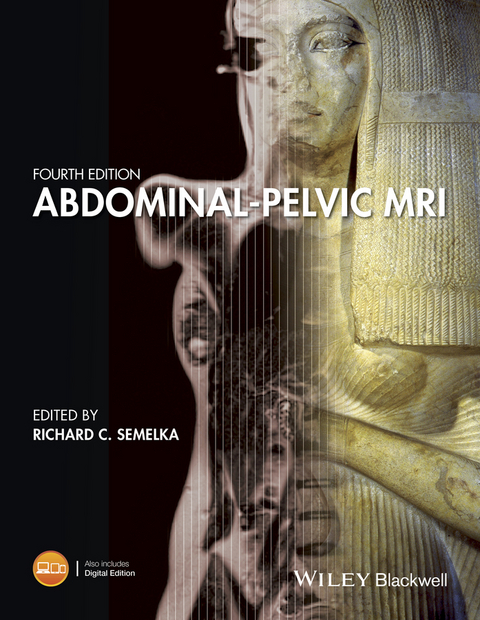
Abdominal-Pelvic MRI (eBook)
John Wiley & Sons (Verlag)
978-1-119-01296-2 (ISBN)
- An established best-seller in this field updated with multiple brand new case figures supplying the reader with high quality examples of diagnoses and anatomy
- Includes discussion of new sequences, such as diffusion-weighted imaging and a new chapter on MR/PET
- Describes techniques and tips for controlling motion, including radial acquisition and shorter breath hold acquisition using techniques of multigradient parallel imaging in order to achieve high quality images
- Offers practice advice and recommendations for contrast agents taking into account patient safety, efficacy, and cost
- Accompanying digital edition offers rapid search and easy figure download
Richard Semelka, MD, is Director of Magnetic Resonance Services, Professor, and Vice Chairman of Radiology at the University of North Carolina-Chapel Hill Medical School. He received his medical degree and residency training in radiology in his native Canada at the University of Manitoba, and completed a clinical research fellowship in MRI of the body at the University of California at San Francisco. Dr. Semelka has authored over 300 peer-reviewed articles, 12 textbooks including the Wiley Abdominal-Pelvic MRI and Current Clinical Imaging series and is an internationally acclaimed authority in the field.
Michele A Brown, MD is a Professor of Clinical Radiology at the University of California San Diego Health System. She is trained in all modalities of abdominal and pelvic imaging, including ultrasound, flouroscopy, CT, and magnetic resonance imaging (MRI) and has special interest in MRI of the female pelvis. Her main current research activities involve MRI of the fetus and placenta, gynecologic malignancies, and benign conditions of the uterus, cervix, and ovaries. She is particularly experienced in the utilization of MRI for the diagnosis of placenta accreta and causes of maternal abdominal pain during pregnancy. Dr. Brown lectures internationally and is an active member of several professional societies, including the Society of Urological Radiology and the Radiological Society of North America.
Ersan Altun, MD, is an Associate Professor of Radiology. He works as an attending radiologist at the University of North Carolina, Chapel Hill Medical School. He received his medical degree and residency training in Radiology in is native Turkey at Marmara University in Istanbul. He completed a clinical fellowship in Abdominal Imaging and a clinical research fellowship in MRI of the Body at the University of North Carolina at Chapel Hill. Dr. Altun authored over 35 peer-reviewed articles, numerous books chapters and authored the book entitled Liver Imaging: MRI with CT Correlation, which is published in the Current Clinical Imaging Series of Wiley.
This fourth edition of Abdominal-Pelvic MRI provides the reader with a significant update on earlier works. Modern diagnostic MRI relies on the practitioner's ability to distinguish between diseases through pattern recognition and experience, and this landmark reference provides the most complete coverage of magnetic resonance imaging of the abdomen and pelvis, with particular emphasis on illustrating benign, malignant and inflammatory lesions An established best-seller in this field updated with multiple brand new case figures supplying the reader with high quality examples of diagnoses and anatomy Includes discussion of new sequences, such as diffusion-weighted imaging and a new chapter on MR/PET Describes techniques and tips for controlling motion, including radial acquisition and shorter breath hold acquisition using techniques of multigradient parallel imaging in order to achieve high quality images Offers practice advice and recommendations for contrast agents taking into account patient safety, efficacy, and cost Accompanying digital edition offers rapid search and easy figure download
Richard Semelka, MD, is Director of Magnetic Resonance Services, Professor, and Vice Chairman of Radiology at the University of North Carolina-Chapel Hill Medical School. He received his medical degree and residency training in radiology in his native Canada at the University of Manitoba, and completed a clinical research fellowship in MRI of the body at the University of California at San Francisco. Dr. Semelka has authored over 300 peer-reviewed articles, 12 textbooks including the Wiley Abdominal-Pelvic MRI and Current Clinical Imaging series and is an internationally acclaimed authority in the field. Michele A Brown, MD is a Professor of Clinical Radiology at the University of California San Diego Health System. She is trained in all modalities of abdominal and pelvic imaging, including ultrasound, flouroscopy, CT, and magnetic resonance imaging (MRI) and has special interest in MRI of the female pelvis. Her main current research activities involve MRI of the fetus and placenta, gynecologic malignancies, and benign conditions of the uterus, cervix, and ovaries. She is particularly experienced in the utilization of MRI for the diagnosis of placenta accreta and causes of maternal abdominal pain during pregnancy. Dr. Brown lectures internationally and is an active member of several professional societies, including the Society of Urological Radiology and the Radiological Society of North America. Ersan Altun, MD, is an Associate Professor of Radiology. He works as an attending radiologist at the University of North Carolina, Chapel Hill Medical School. He received his medical degree and residency training in Radiology in is native Turkey at Marmara University in Istanbul. He completed a clinical fellowship in Abdominal Imaging and a clinical research fellowship in MRI of the Body at the University of North Carolina at Chapel Hill. Dr. Altun authored over 35 peer-reviewed articles, numerous books chapters and authored the book entitled Liver Imaging: MRI with CT Correlation, which is published in the Current Clinical Imaging Series of Wiley.
Abdominal–Pelvic MRI 3
Contents 7
List of contributors 9
Preface 11
Chapter 1 Diagnostic approach to protocoling and interpreting magnetic resonance studies of the abdomen and pelvis 13
T1-weighted sequences 14
Gradient-echo sequences 14
Fat-suppressed gradient-echo sequences 15
Out-of-phase gradient-echo sequences 15
Magnetization-prepared rapid-acquisition gradient-echo sequences 16
Radial three-dimensional gradient echo 17
T2-weighted sequences 17
Echo-train spin-echo sequences 17
Single-shot echo-train spin-echo sequence 18
Fat-suppressed echo-train spin-echo sequences 18
Diffusion-weighted echo planar imaging sequences 19
Gadolinium-enhanced T1-weighted sequences 20
Hepatic arterial-dominant (capillary) phase 20
Portal venous phase or early hepatic venous phase 23
Interstitial phase 23
Multiple imaging variables 23
Signal intensity of vessels 25
Imaging strategies 25
Serial MRI examination 30
Noncooperative patients 33
Emerging developments in MRI 33
Parallel MRI 37
Body MRI at 3 T: general considerations compared with 1.5 T 38
Whole-body MRI: faster and better 45
References 48
Chapter 2 Liver 51
Normal anatomy 51
MRI technique 51
Terminology of signal intensity and pattern features for focal liver lesions 61
Liver contrast agents 62
Normal variations 67
Disease of the hepatic parenchyma 67
Benign masses 67
Malignant masses 113
Hepatic transplantation 249
Diffuse liver parenchymal disease 267
Chronic liver diseases 267
Cirrhosis 287
Porta hepatis lymphadenopathy 320
Iron overload 323
Coexisting fat and iron deposition 333
Fatty liver 333
Mucopolysaccharidoses 342
Arteriovenous fistulas 347
Portal venous obstruction/thrombosis 347
Hepatic venous thrombosis 359
Hepatic arterial obstruction 364
Preeclampsia and eclampsia 368
Congestive heart failure 368
Portal venous air 368
Air in the biliary tree 368
Diffuse hyperperfusion abnormality 368
Focal hyperperfusion abnormality 372
Inflammatory parenchymal disease 372
Infectious parenchymal disease 374
Trauma 393
References 397
Chapter 3 Gallbladder and biliary system 407
Introduction 407
Normal anatomy 407
MRI technique 407
T2-weighted sequences/magnetic resonance cholangiopancreatography 407
T1-weighted sequences 411
Normal appearance and variants 412
Gallbladder 412
Bile ducts 412
Biliary anastomoses 414
Diseases of the gallbladder 416
Nonneoplastic Disease 416
Neoplastic disease 424
Diseases of the bile ducts 429
Benign disease 431
Malignant disease 455
References 469
Chapter 4 Pancreas 473
Normal anatomy 473
MRI technique 473
Developmental anomalies 476
Pancreas divisum 476
Annular pancreas 477
Congenital absence of the dorsal pancreatic anlage 477
Uneven fatty infiltration of the pancreas 477
Short pancreas in the polysplenia syndrome 477
Genetic disease 482
Cystic fibrosis 482
Primary hemochromatosis 484
Von Hippel–Lindau syndrome 484
Neoplasms 484
Solid neoplasms 485
Solid and papillary epithelial neoplasm (papillary cystic neoplasm) 519
Lymphoma 524
Metastases 524
Cystic neoplasms 524
Inflammatory disease 537
Pancreatitis 537
Inflammatory conditions and infections of the pancreas 564
Pancreatic trauma 564
Pancreatic transplants 565
References 567
Chapter 5 Spleen 571
Normal anatomy 571
MRI technique 571
Normal 571
Normal variants and congenital disease 574
Mass lesions 580
Benign masses 580
Malignant masses 586
Miscellaneous 593
Splenomegaly and vascular pathologies 593
Infection 593
Sarcoidosis 595
Gamna–Gandy bodies 595
Trauma 595
Subcapsular fluid collections 601
Splenosis 601
Infarcts 601
Conclusion 602
References 602
Chapter 6 Gastrointestinal tract 605
The esophagus 605
Normal anatomy 605
MRI technique 605
Congenital lesions 607
Mass lesions 608
Inflammatory and infectious disorders 613
The stomach 615
Normal anatomy 615
MRI technique 616
Congenital lesions 616
Mass lesions 619
Inflammatory and infectious disorders 633
The postoperative stomach 637
The small intestine 637
Normal anatomy 637
MRI techniques 641
Congenital lesions 644
Mass lesions 647
Inflammatory, infectious, and diffuse disorders 663
The large intestine 690
Normal anatomy 690
MRI technique 692
Congenital anomalies 693
Mass lesions 693
Inflammatory and infectious disorders 728
References 753
Chapter 7 Peritoneal cavity 757
Normal anatomy 757
MRI technique 758
Normal variants and congenital disease 759
Hernias 759
Bochdalek hernia 759
Hiatus hernia and internal hernia 760
Abdominal wall hernias 762
Mass lesions 764
Benign masses 764
Malignant masses 767
Intraperitoneal fluid 783
Ascites 783
Intraperitoneal blood 786
Intraperitoneal bile 786
Intraperitoneal urine 788
Intraperitoneal foreign bodies 788
Retained surgical sponge (gossypiboma) 788
Intraperitoneal catheter 791
Cocoon 791
Vascular disease 791
Inflammation 791
Mesenteric panniculitis (isolated lipodystrophy of the mesentery, retractile mesenteritis, sclerosing mesenteritis) 791
Pancreatitis 795
Peritonitis 795
Abscess 798
Conclusions 800
References 800
Chapter 8 Adrenal glands 803
Normal anatomy 803
MRI technique 803
The normal gland 803
Mass lesions 808
Cortical lesions 808
Medullary masses 843
Miscellaneous 857
Adrenal hemorrhage 857
Addison disease 857
Future directions 860
References 860
Chapter 9 Kidneys 863
Normal anatomy 863
MRI technique 863
Normal variants and congenital anomalies 865
Prominent columns of Bertin 865
Persistent fetal lobulation 867
Ectopic kidney 867
Horseshoe kidney 867
Crossed fused ectopia 867
Duplication of the collecting system 867
Hypoplastic kidney 870
Hyperplastic (hypertrophic) kidney 870
Disease of the renal parenchyma 874
Mass lesions 874
Diffuse renal parenchymal disease 940
Other parenchymal diseases 951
Infection 968
Acute infection 968
Abscess 973
Xanthogranulomatous pyelonephritis 977
Candidiasis 978
Pyonephrosis 978
Hemorrhage 978
Disease of the renal collecting system: renal pelvis and ureter 980
Mass lesions 980
Filling defects in the collecting system 986
Dilatation of the collecting system 988
Calyceal diverticulum 993
Juxtarenal processes 993
Trauma 993
Renal function 998
Renal transplants 1002
MR urography 1009
Diffusion-weighted imaging 1009
Future directions 1013
References 1013
Chapter 10 Retroperitoneum and body wall 1017
Normal anatomy 1017
MRI technique 1017
Retroperitoneal vessels 1017
Magnetic resonance angiography 1017
Retroperitoneal masses 1023
Benign masses 1023
Malignant masses 1025
Psoas muscle 1043
The body wall 1053
Neoplasms 1053
Miscellaneous 1056
Retroperitoneal vessels patholgies 1066
Aorta 1066
Inferior vena cava 1088
Conclusion 1105
References 1106
Chapter 11 Bladder and nongender pelvis 1109
Normal anatomy 1109
MRI techniques 1109
Normal 1110
Normal variants and congenital disease 1111
Mass lesions 1112
Benign masses 1112
Malignant masses 1115
Miscellaneous 1132
Edema 1132
Hypertrophy 1132
Cystitis 1132
Hemorrhagic cystitis 1135
Cystitis cystica 1135
Cystitis glandularis 1135
Granulomatous disease 1135
Endometriosis 1136
Fistulas 1136
Postoperative changes 1137
Bladder reconstruction 1138
Radiation changes 1138
Other non-gender related pelvic disease 1141
Pelvic lipomatosis 1141
Pelvic inflammatory myofibroblastic tumor 1141
Conclusion 1145
References 1145
Chapter 12 Male pelvis 1147
MRI technique 1147
Prostate and posterior urethra 1147
Normal anatomy 1147
Disease entities 1149
Trauma 1174
Penis and anterior urethra 1176
Normal anatomy 1176
Disease entities 1176
Trauma 1181
Seminal vesicles 1183
Normal anatomy 1183
Disease entities 1185
Testes, epididymis, and scrotum 1187
Normal anatomy 1187
MRI technique 1188
Disease entities 1189
Testicular torsion 1197
Infection 1200
Trauma 1202
Conclusions 1202
References 1203
Chapter 13 Female urethra and vagina 1205
Female urethra 1205
Introduction 1205
Normal anatomy 1205
MRI technique 1205
Normal 1205
Mass lesions 1206
Miscellaneous 1206
Conclusion 1211
The vagina 1211
Normal anatomy 1211
MRI technique 1211
Normal 1211
Mass lesions 1215
Miscellaneous 1220
Conclusion 1220
References 1223
Chapter 14 Uterus and cervix 1225
MRI technique 1225
Imaging at 3 T 1225
Normal anatomy 1226
Uterine corpus 1226
Cervix 1226
Parametrium 1227
Menstrual changes 1227
Changes of the endometrium due to hormonal treatment effects 1229
Congenital uterine anomalies 1229
Müllerian duct anomalies 1229
Congenital disorders of sexual differentiation 1232
Benign disease of the uterine corpus 1236
Endometrial hyperplasia and endometrial polyps 1236
Leiomyomas 1237
Adenomyosis 1244
Benign disease of the cervix 1249
Nabothian cysts 1249
Malignant disease of the uterine corpus and cervix 1251
Endometrial carcinoma 1251
Uterine sarcoma 1254
Uterine metastases 1258
Cervical carcinoma 1258
Adenocarcinoma, undifferentiated carcinoma, and sarcoma 1268
Cervical metastases 1270
Recurrent cervical carcinoma and posttreatment change 1270
Conclusion 1273
References 1273
Chapter 15 Adnexa 1275
MRI technique 1275
Imaging at 3 T 1275
Normal anatomy 1275
Ovary 1275
Fallopian tubes 1278
Congenital abnormalities 1278
Benign disease of the adnexa 1278
Non-neoplastic disease 1278
Pelvic inflammatory disease/tubo-ovarian abscess 1284
Hydrosalpinx 1285
Ectopic pregnancy 1286
Pelvic varices 1286
Benign ovarian neoplasms 1289
Malignant disease of the adnexa 1297
Primary ovarian carcinoma 1297
Other primary ovarian tumors 1307
Secondary ovarian malignancy 1309
Malignant disease of the fallopian tube 1315
Conclusion 1319
References 1319
Chapter 16 Maternal conditions in pregnancy 1321
MRI safety 1321
MRI technique in pregnancy 1322
Maternal imaging 1322
Pain 1322
Gastrointestinal 1322
Pancreaticobiliary 1325
Renal 1325
Gynecological 1326
Vascular 1331
Other pelvic masses 1331
Obstetrical complications 1334
Uterine rupture 1334
Ectopic pregnancy 1334
Cervical incompetence 1337
Subchorionic hemorrhage/abruption 1338
Placental imaging 1339
Morbidly adherent placenta: placenta accreta 1339
Gestational trophoblastic disease 1340
Postpartum imaging 1343
HELLP syndrome 1349
Conclusion 1350
References 1350
Chapter 17 Fetus 1353
Fetal imaging 1353
Normal anatomy 1353
Fetal anomalies 1357
Multiple gestation 1396
References 1397
Chapter 18 Chest 1401
Current techniques 1401
Primary lung cancer 1406
Pulmonary nodules 1409
Hilar and mediastinal adenopathy 1415
Pulmonary infiltrates 1415
Pleural disease 1420
Chest wall mass lesions 1420
Pulmonary magnetic resonance angiography and pulmonary emboli 1422
Thoracic magnetic resonance angiography 1428
Screening 1428
Future directions 1428
References 1434
Chapter 19 Contrast agents 1437
Categorization of MRI contrast agents 1437
Gadolinium-based contrast agents 1437
Iron-based contrast agents 1445
Manganese-based contrast agents 1445
Complications of gadolinium-based contrast agent administrations 1446
Acute toxicity 1446
Subacute toxicity 1447
Chronic toxicity 1453
Breastfeeding and gadolinium-based contrast agents 1453
References 1453
Chapter 20 Magnetic resonance–positron emission tomography 1455
Introduction 1455
Photomultipliers in the magnetic environment of magnetic resonance 1455
Attenuation correction of positron emission tomography data by magnetic resonance data 1455
Motion correction 1458
Magnetic resonance–positron emission tomography workflow efficiency 1458
Comparison with positron emission tomography–computed tomography and early clinical experience in body applications 1459
Clinical applications 1459
General oncology 1464
Pediatric oncology 1473
Future perspectives 1473
References 1473
Index 1477
Supplemental Images 1 1507
Supplemental Images 2 1509
EULA 1513
| Erscheint lt. Verlag | 20.11.2015 |
|---|---|
| Mitarbeit |
Stellvertretende Herausgeber: Michele A. Brown, Ersan Altun |
| Sprache | englisch |
| Themenwelt | Medizin / Pharmazie ► Gesundheitsfachberufe |
| Medizinische Fachgebiete ► Radiologie / Bildgebende Verfahren ► Kernspintomographie (MRT) | |
| Medizinische Fachgebiete ► Radiologie / Bildgebende Verfahren ► Radiologie | |
| Schlagworte | Abdomen • Abdominal-Pelvic MRI • Benign • Blase • Computertomographie (MRI) • contrast agents • controlling motion • Diagnosis • diffusion-weighted imaging • disease pattern recognition • Ersan Altun • gold standard • inflammatory • Kernspintomographie • Leber • Magnetic Resonance Imaging • Malignant • Medical Science • Medizin • Michele A. Brown • MRI • MR/PET • multigradient parallel imaging • Niere • NMR-Tomographie • Oncology & Radiotherapy • Onkologie u. Strahlentherapie • patient safety • Pelvis • radial acquisition • Radiologie u. Bildgebende Verfahren • Radiology & Imaging • Richard Semelka • shorter breath hold acquisition |
| ISBN-10 | 1-119-01296-1 / 1119012961 |
| ISBN-13 | 978-1-119-01296-2 / 9781119012962 |
| Informationen gemäß Produktsicherheitsverordnung (GPSR) | |
| Haben Sie eine Frage zum Produkt? |
 PDF (Adobe DRM)
Kopierschutz: Adobe-DRM
Adobe-DRM ist ein Kopierschutz, der das eBook vor Mißbrauch schützen soll. Dabei wird das eBook bereits beim Download auf Ihre persönliche Adobe-ID autorisiert. Lesen können Sie das eBook dann nur auf den Geräten, welche ebenfalls auf Ihre Adobe-ID registriert sind.
Details zum Adobe-DRM
Dateiformat: PDF (Portable Document Format)
Mit einem festen Seitenlayout eignet sich die PDF besonders für Fachbücher mit Spalten, Tabellen und Abbildungen. Eine PDF kann auf fast allen Geräten angezeigt werden, ist aber für kleine Displays (Smartphone, eReader) nur eingeschränkt geeignet.
Systemvoraussetzungen:
PC/Mac: Mit einem PC oder Mac können Sie dieses eBook lesen. Sie benötigen eine
eReader: Dieses eBook kann mit (fast) allen eBook-Readern gelesen werden. Mit dem amazon-Kindle ist es aber nicht kompatibel.
Smartphone/Tablet: Egal ob Apple oder Android, dieses eBook können Sie lesen. Sie benötigen eine
Geräteliste und zusätzliche Hinweise
Buying eBooks from abroad
For tax law reasons we can sell eBooks just within Germany and Switzerland. Regrettably we cannot fulfill eBook-orders from other countries.
aus dem Bereich