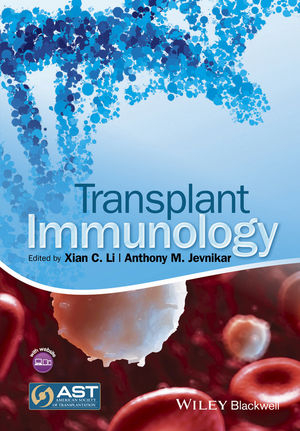
Transplant Immunology (eBook)
John Wiley & Sons (Verlag)
978-1-119-07301-7 (ISBN)
Xian C. Li, MD, PhD, Professor of Immunology/surgery, Weill Cornell Medical College, Cornell University, New York, NY; and Director, Immunobiology and Transplant Science, Houston Methodist Hospital, Texas Medical Center, Houston, TX, USA. Anthony M. Jevnikar MSc (Immunology), MD, FRCP(C), Professor of Medicine, Surgery, Immunology and Microbiology, Western University, Director Transplantation Nephrology and Director Matthew Mailing Centre for Translational Transplant Studies, London Health Sciences Centre, London ON, Canada.
Contributors, vii
Foreword, xii
Preface, xiv
About the companion website, xv
1 Tissues and organs of the immune system, 1
Isam W. Nasr, Qiang Zeng, and Fadi G. Lakkis
2 Cells of the immune system, 25
Jason R. Lees, Agnes M. Azimzadeh, Yaozhong Ding, Tonya J. Webb, and Jonathan S. Bromberg
3 Soluble mediators in the immune system, 48
Charles A. Su, William M. Baldwin III, and Robert L. Fairchild
4 Costimulatory molecules, 65
Maria?]Luisa Alegre and Anita S. Chong
5 Major histocompatibility complex, 85
Raja Rajalingam, Qiuheng Zhang, J. Michael Cecka, and Elaine F. Reed
6 T cells and the principles of immune responses, 103
Jonathan S. Maltzman, Angus Thomson, and David M. Rothstein
7 Ischemia and reperfusion injury, 128
Yuan Zhai, Yoichiro Uchida, Bibo Ke, Haofeng Ji, and Jerzy W. Kupiec?]Weglinski
8 Immune responses to transplants, 142
Denise J. Lo and Allan D. Kirk
9 Principles of hematopoietic cell transplantation, 164
Sung Choi and Pavan Reddy
10 Therapeutic approaches to organ transplantation, 184
Philip F. Halloran, Chatchai Kreepala, Gunilla Einecke, Alexandre Loupy, and Joana Sellarés
11 Organ?]specific features in clinical transplantation, 217
Roslyn B. Mannon
12 Transplant?]related complications, 237
Leonardo V. Riella and Anil Chandraker
13 Biomarkers of allograft rejection and tolerance, 259
Choli Hartono, Thangamani Muthukumar, and Manikkam Suthanthiran
14 Emerging issues in transplantation, 280
Rupert Oberhuber, Guangxiang Liu, Timm Heinbokel, and Stefan G. Tullius
15 New frontiers and new technologies, 297
Haval Shirwan, Yiming Huang, Kadiyala Ravindra, and Suzanne T. Ildstad
16 Experimental models in discovery and translational studies, 316
Andrew B. Adams, William H. Kitchens, and Kenneth A. Newell
Index, 337
CHAPTER 1
Tissues and organs of the immune system
Isam W. Nasr, Qiang Zeng, and Fadi G. Lakkis
Thomas E. Starzl Transplantation Institute, Departments of Surgery, Immunology, and Medicine, University of Pittsburgh, Pittsburgh, USA
CHAPTER OVERVIEW
- Lymphoid organs or tissues are specialized anatomic compartments where lymphocytes develop, reside, and function.
- Primary lymphoid tissues are the sites where lymphocytes undergo development, education, and maturation.
- Secondary lymphoid tissues are the main sites where naïve lymphocytes engage foreign antigens to mount a primary immune response.
- Tertiary lymphoid tissues are secondary lymphoid tissue-like structures that are induced at sites of chronic inflammation, and the function of such structures is not fully defined.
- Memory immune responses can occur outside secondary lymphoid tissues. Memory T cells can also be maintained without secondary lymphoid tissues.
- Primary and secondary lymphoid tissues are also necessary for tolerance induction and maintenance.
Introduction
It is the nature of scientists to be perpetually occupied with questions like “where,” “how,” and “why” things happen the way they do. Immunologists, in particular, are keen on answering the “where” question as it is central to understanding how immune cells are generated, what is required for their maturation, and whether they might mount productive responses against foreign antigens or not. The immune system is a bona fide organ system comprising primary and secondary lymphoid tissues (Figure 1.1). Primary lymphoid tissues (the bone marrow and thymus) specialize in generating immune cells from hematopoietic progenitors and transforming immature cells into mature lymphocytes with high specificity to foreign antigens (non-self) but not “self antigens.” Secondary lymphoid tissues, namely the spleen, lymph nodes, and mucosa-associated lymphoid tissues (MALTs) on the other hand are organized structures that are strategically located throughout the body to trap foreign antigens and ensure that they are best presented to T and B lymphocytes. The ability of an animal to mount a productive immune response is therefore critically dependent on the presence of the primary and secondary lymphoid tissues as well as the coordinated migration of immune cells into and out of these tissues.
Figure 1.1 Lymphoid tissues of the human body. The primary lymphoid tissues are the bone marrow and thymus. The secondary lymphoid tissues consist of lymph nodes, the spleen, and MALTs. Lymph nodes are arranged in strings along lymphatic vessels where they trap antigens and cells traveling in the lymph. The spleen intercepts antigens and cells circulating in the bloodstream. MALT includes the Peyer’s patches, adenoids, tonsils, and appendix. Cells traveling in the lymphatic system re-enter the blood circulation via the thoracic duct.
Source: Redrawn from Murphy (2011). Reproduced by permission of Garland Science/Taylor & Francis LLC.
This chapter will provide a comprehensive overview of the anatomy and function of primary and secondary lymphoid tissues and consider their roles in both transplant rejection and tolerance. Tertiary lymphoid tissues, which are secondary lymphoid tissue-like structures that are induced at sites of chronic inflammation, will also be discussed as they are thought to influence allograft outcomes. Controversies and unresolved questions will be highlighted where appropriate to encourage future investigations.
Primary lymphoid tissues
Primary lymphoid tissues are sites where T cells and B cells develop and mature, and mainly include the bone marrow and the thymus in mammals.
Bone marrow
The bone marrow is the site where both red and white blood cells are generated, by a process known as hematopoiesis. The adult human has two types of bone marrow: the red marrow, in which hematopoiesis is actively taking place, and the yellow marrow, consisting mainly of fat cells and lacking hematopoietic activity. At birth, all marrow is red but it is slowly replaced by yellow marrow over time. By adulthood, red marrow is restricted to flat bones (cranium, sternum, vertebrae, pelvis, and scapulae) and the epiphyseal ends of long bones (e.g., the femur and humerus), while the remaining marrow cavities are being occupied by fat cells. The bone marrow also provides a place where subsets of lymphocytes (both T cells and B cells), especially those with memory phenotypes reside.
Structure
Histologically, the red marrow consists of hematopoietic islands; such islands are mixed with fat cells, surrounded by vascular sinusoids, and interspersed throughout a meshwork of trabecular bone (Figure 1.2). The hematopoietic islands are organized into three-dimensional structures that provide optimal microenvironment for hematopoiesis. They contain blood cell precursors at different stages of maturation, stromal reticular cells, endothelial cells, macrophages, osteoblasts, osteoclasts, and the extracellular matrix. Both hematopoietic and nonhematopoietic cells in the islands orchestrate blood cell maturation through cell–cell contacts as well as production of growth factors, cytokines, and chemokines. Mature blood cells enter the circulation by migrating through the discontinuous basement membrane and between the endothelial cells of the vascular sinusoids.
Figure 1.2 Structure of the bone marrow. Example of red bone marrow (vertebra). Arrow points to a hematopoietic tissue island. Note fat cells (white globules) admixed with hematopoietic cells. Trabecular bone fills the space between islands.
Source: Reprinted from Travlos (2006). Reproduced by permission of SAGE publications.
Function
Hematopoietic stem cells (HSCs) are a pluripotent self-renewing cell type in the bone marrow that give rise to progenitor cells. These progenitor cells in turn generate all cells of the megakaryocytic (platelet), erythroid (RBC), myeloid, and lymphoid lineages (Figure 1.3). Myeloid cells (monocytes, dendritic cells or DCs, neutrophils, basophils, and eosinophils), natural killer (NK) cells, and B lymphocytes develop in the bone marrow, whereas T cell progenitors (pre-thymocytes) migrate to the thymus where they undergo further maturation (see section “Thymus”). The bone marrow also contains mesenchymal stem cells that give rise to nonhematopoietic tissues such as adipocytes, chondrocytes, osteocytes, and myoblasts. Mesenchymal stem cells have attracted considerable interest among transplant immunologists because of their immunosuppressive properties and prolonged survival features when adoptively transferred in select models.
Figure 1.3 Ontogeny of immune cells. Cells of the immune system arise from pluripotent HSCs in the bone marrow. The common lymphoid progenitor gives rise to B cells, T cells, and NK cells. The common myeloid progenitor gives rise to dendritic cells (DCs), monocytes, neutrophils, eosinophils, and basophils.
The bone marrow is the site where most stages of B cell maturation occur in mammals. B cell development in the bone marrow proceeds in a stepwise fashion from pro-B cells to pre-B cells, and lastly to immature B cells. During maturation in the bone marrow, B cells rearrange their immunoglobulin genes and express cell-surface IgM (the B cell receptor for antigen). These steps require close interactions with bone marrow stromal cells, which provide critical adhesion molecules, growth factors, chemokines, and cytokines (e.g., Flt3 ligand, thrombopoietin, CXCL12, and IL-7). Finally, autoreactive immature B cells are “weeded out” in the bone marrow through either clonal deletion or receptor editing before they are allowed into the circulation and complete their maturation in secondary lymphoid tissues.
In addition to serving as a primary lymphoid organ, the bone marrow is also a reservoir for mature myeloid and lymphoid cells. The bone marrow contains large numbers of neutrophils and monocytes that are mobilized into the circulation when needed (e.g., after infection). It is also the homing site for mature plasma cells, which are maintained in the bone marrow through the action of IL-6. Plasma cells are the principal source of antibodies in sensitized transplant recipients; therefore, investigators addressing the pathogenesis of antibody (historically referred to as “humoral”) rejection are increasingly interested in these bone marrow-resident plasma cells. There is also strong evidence that memory T cells home to or reside in the bone marrow where they can be activated by antigens. Other experiments have suggested that activation of naïve T cells could occur in the bone marrow under certain circumstances, raising the possibility that the bone marrow may additionally serve as a secondary lymphoid tissue (see section “Secondary lymphoid tissues”).
Cell trafficking
Cell trafficking is a dynamic process underlying allorecognition and transplantation responses, and remains a potential target in therapeutic strategies. Mature myeloid cells and certain...
| Erscheint lt. Verlag | 9.9.2015 |
|---|---|
| Sprache | englisch |
| Themenwelt | Medizin / Pharmazie ► Medizinische Fachgebiete ► Chirurgie |
| Studium ► Querschnittsbereiche ► Infektiologie / Immunologie | |
| Schlagworte | immune system • Immunologie • immunology • Immunosuppressants • immunosupression • Medical Science • Medizin • organ rejection • organ transplants • Transplantation • Transplantationen |
| ISBN-10 | 1-119-07301-4 / 1119073014 |
| ISBN-13 | 978-1-119-07301-7 / 9781119073017 |
| Informationen gemäß Produktsicherheitsverordnung (GPSR) | |
| Haben Sie eine Frage zum Produkt? |
 EPUB (Adobe DRM)
Kopierschutz: Adobe-DRM
Adobe-DRM ist ein Kopierschutz, der das eBook vor Mißbrauch schützen soll. Dabei wird das eBook bereits beim Download auf Ihre persönliche Adobe-ID autorisiert. Lesen können Sie das eBook dann nur auf den Geräten, welche ebenfalls auf Ihre Adobe-ID registriert sind.
Details zum Adobe-DRM
Dateiformat: EPUB (Electronic Publication)
EPUB ist ein offener Standard für eBooks und eignet sich besonders zur Darstellung von Belletristik und Sachbüchern. Der Fließtext wird dynamisch an die Display- und Schriftgröße angepasst. Auch für mobile Lesegeräte ist EPUB daher gut geeignet.
Systemvoraussetzungen:
PC/Mac: Mit einem PC oder Mac können Sie dieses eBook lesen. Sie benötigen eine
eReader: Dieses eBook kann mit (fast) allen eBook-Readern gelesen werden. Mit dem amazon-Kindle ist es aber nicht kompatibel.
Smartphone/Tablet: Egal ob Apple oder Android, dieses eBook können Sie lesen. Sie benötigen eine
Geräteliste und zusätzliche Hinweise
Buying eBooks from abroad
For tax law reasons we can sell eBooks just within Germany and Switzerland. Regrettably we cannot fulfill eBook-orders from other countries.
aus dem Bereich