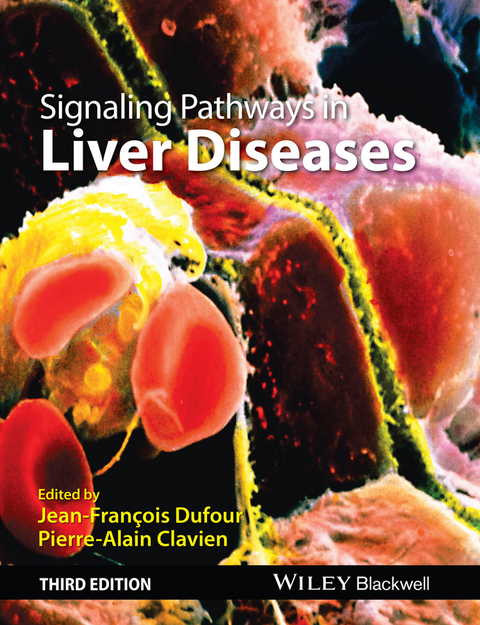
Signaling Pathways in Liver Diseases (eBook)
John Wiley & Sons (Verlag)
978-1-118-66336-3 (ISBN)
Signaling Pathways in Liver Diseases, Third Edition again provides hepatologists and hepatology researchers with an expert overview of the complex and novel cellular/extracellular signaling pathways in the liver, and their role in liver diseases. The last few years have seen a great number of developments in this field, which in turn have led to new opportunities for innovative treatments; however, the intricacy of these pathways and their interactions continue to provide a real challenge for clinicians. This outstanding book compiles the emerging knowledge into a single expert resource, cataloguing and organizing it into an accessible and understandable format.
With increased focus on the comprehension of cellular mechanisms involved in steatohepatitis, cirrhosis, and liver tumors, which has led to changes in the management of these diseases, this new edition also sees the introduction of exciting new chapters on key emerging areas such as:
- Autophagy
- Notch Pathway
- P13K/PTEN Signaling in Liver Diseases
- Sirtuins
- Hepcidin and Iron
- Epigenetic Regulation of Hepatic Stellate Cells and Liver Fibrosis
- Oxidative Stress and Signaling in the Liver.
Professors Dufour and Clavien have assembled an all-star cast of chapter authors, each of whom has provided clear and appropriate illustrations to reinforce the text, with a key points box offering a concise and handy summary. Self-assessment questions and answers allow the reader to test their own knowledge.
Signaling Pathways in Liver Disease, Third Edition is the perfect educational and reference tool to bridge the information exchange between the laboratory, the clinical ward, and the operating room, and an essential tool for the modern-day hepatologist.
Professor Jean-François Dufour, MD, PhD, Chief, Department of Clinical Pharmacology, University Clinic Visceral Surgery and Medicine, Bern, Switzerland.
Professor Dufour is on the governing board of the European Association for the Study of the Liver (EASL). He also serves as Associate Editor for the Wiley journal Liver International and is on the editorial board for the following journals: Journal of Hepatology; Clinical Science; World Journal of Gastroenterology
Professor Pierre-Alain Clavien, MD, PhD, FACS, FRCS (Eng), FRCS (Ed), Professor and Chairman, Department of Surgery. Head, Division of Visceral & Transplantation Surgery, University Hospital Zurich, Switzerland.
Professor Clavien is a world-wide renowned surgeon-scientist, currently professor and chairman of the Department of Surgery in Zurich, Switzerland. His areas of research include organ preservation, liver ischemia-reperfusion injury and regeneration, and pathogenesis of cancer, as well as outcome research. He received many competitive grants and awards, including one of the most prestigious prices for scientific research, the Otto Naegeli Award.
Signaling Pathways in Liver Diseases, Third Edition again provides hepatologists and hepatology researchers with an expert overview of the complex and novel cellular/extracellular signaling pathways in the liver, and their role in liver diseases. The last few years have seen a great number of developments in this field, which in turn have led to new opportunities for innovative treatments; however, the intricacy of these pathways and their interactions continue to provide a real challenge for clinicians. This outstanding book compiles the emerging knowledge into a single expert resource, cataloguing and organizing it into an accessible and understandable format. With increased focus on the comprehension of cellular mechanisms involved in steatohepatitis, cirrhosis, and liver tumors, which has led to changes in the management of these diseases, this new edition also sees the introduction of exciting new chapters on key emerging areas such as: Autophagy Notch Pathway P13K/PTEN Signaling in Liver Diseases Sirtuins Hepcidin and Iron Epigenetic Regulation of Hepatic Stellate Cells and Liver Fibrosis Oxidative Stress and Signaling in the Liver. Professors Dufour and Clavien have assembled an all-star cast of chapter authors, each of whom has provided clear and appropriate illustrations to reinforce the text, with a key points box offering a concise and handy summary. Self-assessment questions and answers allow the reader to test their own knowledge. Signaling Pathways in Liver Disease, Third Edition is the perfect educational and reference tool to bridge the information exchange between the laboratory, the clinical ward, and the operating room, and an essential tool for the modern-day hepatologist.
Professor Jean-François Dufour, MD, PhD, Chief, Department of Clinical Pharmacology, University Clinic Visceral Surgery and Medicine, Bern, Switzerland. Professor Dufour is on the governing board of the European Association for the Study of the Liver (EASL). He also serves as Associate Editor for the Wiley journal Liver International and is on the editorial board for the following journals: Journal of Hepatology; Clinical Science; World Journal of Gastroenterology Professor Pierre-Alain Clavien, MD, PhD, FACS, FRCS (Eng), FRCS (Ed), Professor and Chairman, Department of Surgery. Head, Division of Visceral & Transplantation Surgery, University Hospital Zurich, Switzerland. Professor Clavien is a world-wide renowned surgeon-scientist, currently professor and chairman of the Department of Surgery in Zurich, Switzerland. His areas of research include organ preservation, liver ischemia-reperfusion injury and regeneration, and pathogenesis of cancer, as well as outcome research. He received many competitive grants and awards, including one of the most prestigious prices for scientific research, the Otto Naegeli Award.
Title Page 5
Copyright Page 6
Contents 7
List of Contributors 9
Chapter 1 Hepatocytes 13
Introduction 13
Liver and hepatocyte development 14
Phenotype and regeneration of the mature hepatocyte 16
Metabolic functions of the liver 19
Resorption, storage, and synthesis 19
Detoxification and excretion 22
Detoxification of specific substances 23
Excretion 23
Multiple choice questions 24
References 24
Chapter 2 Signaling pathways in biliary epithelial cells 27
Introduction 27
Membrane receptors 27
Cyclic adenosine 3’, 5’-monophosphate (cAMP) 30
Cytosolic Ca2+ 31
Protein kinase C 34
Mitogen-activated protein kinase signaling 35
Phosphotidylinositol 3-kinase signaling 35
Notch signaling 36
Hedgehog signaling 36
Vascular endothelial growth factor 37
Pathological conditions 37
Conclusion 39
Acknowledgments 39
Multiple choice questions 40
References 40
Chapter 3 Stellate cells 46
Polypeptide growth factor receptors 48
Transforming growth factor-? receptor superfamily 52
Seven transmembrane domain receptors 53
Chemokines 54
Tumor necrosis factor receptor superfamily 55
Nuclear receptor family 56
Other cytokine receptors 57
Adipokine receptors 58
Extracellular matrix signaling and hepatic stellate cells 59
Toll-like receptors 60
Cannabinoid receptors 61
Hedgehog pathway 62
Wnt pathway 62
Autophagy 62
Senescence of activated stellate cells 63
miRNAs and hepatic stellate cells 63
Conclusion 64
Multiple choice questions 64
References 65
Chapter 4 Kupffer cells 73
Introduction 73
Markers, origin, and heterogeneity of Kupffer cells 74
M1 versus M2 polarization in Kupffer cells 75
Lipopolysaccharide signaling and endotoxin tolerance 77
Experimental approaches to deplete Kupffer cells in vivo 77
Role of Kupffer cells in liver disease 78
Nonalcoholic fatty liver disease/nonalcoholic steatohepatitis 78
Alcoholic liver disease 79
Liver regeneration 79
Liver fibrosis and cirrhosis 79
Ischemia-reperfusion liver injury 80
Primary and metastatic liver tumors 80
Infectious diseases 81
Clinical applications and future perspectives 81
Acknowledgment 81
Multiple choice questions 82
References 82
Chapter 5 Hepatic sinusoidal endothelial cells 85
Development and structure 85
Cellular functions 87
Filtration via fenestrae 87
Diapedesis 87
Nitric oxide signaling 87
Endocytosis 88
Bacterial processing 88
Liver regeneration 88
Pathobiology 89
Fibrosis and cirrhosis 89
Alcoholic liver disease 90
Nonalcoholic fatty liver disease 91
Hepatic malignancies 91
Drug toxicity 92
Ischemia-reperfusion injury 92
Aging process 92
Conclusion 93
Multiple choice questions 93
References 93
Chapter 6 Extracellular matrix 97
Introduction 97
Components of the extracellular matrix in liver (Figure 6.1) 98
The collagen scaffold 99
Proteoglycans 99
Laminin 99
Fibronectin 99
Matricellular proteins 100
Changes in the extracellular matrix from normal to fibrotic liver 100
Pathways of cell–matrix interaction 102
Integrin family 102
ADAM molecules 103
Discoidin domain receptors 103
Growth factors in ECM (Figure 6.4) 103
The extracellular matrix and the stem cell niche 103
Metalloproteinases and their inhibitors 104
Conclusion 105
Multiple choice questions 105
References 105
Chapter 7 Platelets: a new cell type in liver physiology 109
What are platelets? 109
Ischemia/reperfusion injury 112
Cold ischemia 112
Warm ischemia 112
Liver regeneration 113
Role of platelets 113
Role of platelet-derived serotonin 115
Platelets in chronic liver disease 116
Alterations in platelets in patients with liver disease 116
Platelet involvement in liver diseases 116
Conclusion 117
Multiple choice questions 118
References 118
Chapter 8 Immune cell communication in liver disease and liver regeneration 122
Introduction 122
The innate immune system within the liver 123
Dendritic cells 124
Natural killer cells, tatural killer T cells, and T?? cells 125
Adaptive immunity within the liver 127
T cells 127
B cells 128
Regulation of the immune response 129
Immune cell function in liver disease 129
Liver transplantation 129
Autoimmune liver disease 130
Alcoholic liver disease 132
Hepatic immune cell function during liver regeneration 133
Multiple choice questions 135
References 135
Chapter 9 Extracellular vesicle RNA in liver disease 142
Introduction 142
Types of extracellular RNA 142
Classification of extracellular vesicles 143
Contents of extracellular vesicles 144
Assessment of extracellular vesicle RNA 144
Biological roles of extracellular vesicle RNA 145
Pathophysiological roles of extracellular vesicle RNA in liver disease 145
Hepatocellular cancer 146
Tissue injury 146
Viral hepatitis 147
Translational implications 147
Conclusion 148
Acknowledgments 148
Multiple choice questions 148
References 149
Chapter 10 Endoplasmic reticulum stress in nonalcoholic fatty liver disease 151
Endoplasmic reticulum 151
Smooth endoplasmic reticulum 152
Rough endoplasmic reticulum 152
Unfolded protein response 153
PKR-like ER kinase (PERK) 154
Inositol requiring enzyme 1 (IRE1) 154
ATF6 transcription factor 154
ER stress and apoptosis 155
The UPR and human diseases 155
Role of the unfolded protein response in liver physiology and physiopathology 155
Role of UPR in liver physiology 155
Role of UPR in NAFLD 155
Targeting the unfolded protein response to treat nonalcoholic fatty liver disease 159
Multiple choice questions 160
References 160
Chapter 11 Autophagy 163
Introduction 163
Autophagy pathways and regulations 164
Autophagy molecules and autophagosome biogenesis 164
Regulation of autophagy by metabolic and stress pathways 167
Autophagy and liver diseases 167
Autophagy and viral hepatitis 168
Autophagy and hepatic cancer 169
Autophagy and alcoholic/nonalcoholic fatty liver disease 170
Autophagy in liver injury 171
Autophagy in liver fibrosis 172
Autophagy and ?1-antitrypsin deficiency 173
Conclusion 173
Multiple choice questions 173
References 174
Chapter 12 CXC chemokine receptor signaling in liver repair and regeneration 178
Introduction 178
Mediators of liver regeneration 179
CXC chemokine ligands and receptors 179
Impact of CXC chemokines on liver repair and regeneration 180
ELR+ CXC chemokines 180
ELR- CXC chemokines 182
Conclusion 182
Multiple choice questions 183
References 183
Chapter 13 Metabolic regulation of liver regeneration 186
Introduction 186
Hepatic insufficiency-induced alterations in metabolism 187
Metabolic regulation of liver regeneration 188
Metabolic and regenerative responses to PH are proportionate 188
Glucose supplementation impairs regeneration 188
Disrupting hepatic fat accumulation suppresses regeneration 189
Amino acid metabolism and regemneration 189
Regenerative regulation of metabolism 189
Candidate mechanisms linking metabolism and regeneration 189
Xenobiotic-activated nuclear hormone receptor-dependent hepatocellular proliferation 190
Metabolism and epigenetic regulation during regeneration 191
A metabolic model of liver regeneration 192
Clinical implications 192
Fatty liver 192
Aging 193
Subtotal hepatectomy 193
Metabolomic biomarkers of human liver regeneration 193
Conclusions 193
Acknowledgments 193
Multiple choice questions 194
References 194
Chapter 14 TNF signaling 198
Introduction 198
TNF: molecules and structure 198
TNF signaling pathways 199
Signal transduction by TNFR1 199
Signal transduction by TNFR2 202
Amplification and inhibition of the death signal 202
c-Jun N-terminal kinase 203
TNF signaling – switching apoptosis to necrosis 204
Function of TNF signaling in hepatic pathophysiology 205
Liver regeneration 205
Toxin-induced liver injury 206
Nonalcoholic steatohepatitis 207
Viral hepatitis 208
Conclusion 208
Acknowledgments 209
Multiple choice questions 209
References 209
Chapter 15 Fas/FasL 215
Introduction 215
Fas (CD95/APO-1) and Fas ligand (FasL/CD95L) 216
Fas (CD95/APO-1) 216
Fas ligand (FasL/CD95L) 217
Fas/FasL apoptotic signaling 217
Fas/FasL noncytotoxic signaling 219
Fas/FasL in liver diseases 219
Pathological conditions associated with reduced Fas-mediated apoptosis 219
Pathologic conditions associated with excessive Fas-mediated apoptosis 220
Multiple choice questions 222
References 222
Chapter 16 Interferon signaling 226
Interferons 226
Induction of type I interferons 227
Interferon signaling through the Jak-STAT pathway 227
The receptor-kinase complex 227
Signal transducers and activators of transcription 227
Negative regulators of interferon signaling 229
Refractoriness of interferon signaling 229
Effects of type I interferons 230
Interferon regulated genes 230
Antiviral effects 230
Antiproliferative effects 231
Interferon signaling in viral hepatitis 231
Interference of hepatitis C virus with interferon signaling 232
Hepatitis C virus-induced activation of the interferon system 232
Interferon signaling in chronic hepatitis B 232
Interferon signaling in chronic hepatitis D 232
Multiple choice questions 233
References 233
Chapter 17 Endocannabinoid signaling in liver pathologies 238
Endocannabinoids 239
The endocannabinoid system 239
Endocannabinoid synthesis 239
Endocannabinoid degradation 239
The complex relationships of the endocannabinoid system 239
Growing list of potential eCBs and eCB-like lipids 239
Alternative paths of eCB degradation and cross-over with other lipid signaling systems 241
Affinities of eCBs for CNRs and beyond 241
Signaling downstream of the CNRs 241
Nonalcoholic fatty liver disease 241
Alcoholic fatty liver 243
Progression to steatohepatitis 243
Liver fibrosis 244
Ischemia/reperfusion injury 244
Regeneration 245
Hepatitis C 245
Hepatocellular carcinoma 246
Conclusion 246
Multiple choice questions 247
References 248
Chapter 18 The WNT/?-catenin pathway 252
Pathway and interactions 252
Wnt/?-catenin signaling 253
?-catenin-E-cadherin interactions 255
Miscellaneous interactions/cross-talk 256
Wnt/?-catenin signaling in liver physiology 257
Role in liver development 257
Role in metabolic zonation 259
Role in liver regeneration 260
Wnt/?-catenin signaling in liver pathology 261
Hepatic adenoma 261
Hepatoblastoma 262
Hepatocellular cancer 263
Therapeutic implications 265
Activation of Wnt/?-catenin pathway 265
Inhibition of Wnt/?-catenin signaling 265
Multiple choice questions 266
References 266
Chapter 19 Hedgehog signaling in the liver 274
Introduction 274
Overview of the Hedgehog pathway 275
Hedgehog-producing and -responsive cells in the liver 277
Hedgehog in liver development and regeneration 278
Hedgehog in chronic liver disease 279
Hedgehog in liver cancer 281
Conclusion 282
Acknowledgments 282
Multiple choice questions 282
References 283
Chapter 20 Notch pathway 287
Introduction 287
Notch signaling 287
Notch receptors and ligands 287
The Notch signaling pathway 288
Regulation of Notch signaling 290
Notch signaling in the liver 290
Expression of Notch receptors and ligands in the liver 290
Physiological function of Notch signaling in the adult liver 291
Notch signaling in liver diseases 291
Notch signaling in liver repair during chronic liver injury 291
Notch signaling in Alagille syndrome and biliary disease 291
Notch signaling in nodular regenerative hyperplasia 292
Notch signaling in sinusoidal obstruction syndrome (SOS) 293
Notch signaling in liver malignancies 293
Conclusion 295
Multiple choice questions 295
References 296
Chapter 21 PI3K/PTEN signaling in liver diseases 299
Introduction 299
The PI3K signaling node in the liver 299
PI3K structure 299
Class I PI3K expression and regulation 301
Activation of the PI3K signaling cascade 301
The Phosphatase and TENsin homolog on chromosome 10 303
PTEN structure and activity 304
Regulation of PTEN expression 305
PI3K/PTEN downstream signaling and function in the liver 306
PI3K/Akt-dependent signaling 306
PI3K/PDPK1 signaling independent of Akt activity 309
PTEN functions independent of PI3K activity 310
Alterations of PI3K/PTEN signaling in hepatic diseases 311
Insulin resistance 311
Nonalcoholic fatty liver disease 311
Hepatitis C and B viral infections 312
Alcoholic liver diseases (ALD) 312
Hepatocellular carcinoma 313
Pharmaceutical targeting of the PI3K/PTEN signaling pathway 314
Summary 315
Acknowledgments 315
Multiple choice questions 316
References 316
Chapter 22 mTOR signaling in liver disease 326
Introduction 326
mTOR signaling in hepatic metabolism 327
mTOR signaling in liver cancer 329
mTOR signaling in circadian rhythm 331
Conclusion 333
Multiple choice questions 333
References 334
Chapter 23 LKB1/AMPK pathway in the control of hepatic energy metabolism 338
Introduction 338
Structure and regulation of AMPK 339
AMPK activation in liver 341
Regulation of glucose homeostasis 342
Regulation and management of lipid metabolism 342
Coordinated control of mitochondrial biogenesis and mitophagy 343
Regulation of protein synthesis and control of cell growth 343
Regulation of hepatocyte polarization and bile canicular network formation 344
Conclusions and perspectives 346
Multiple choice questions 346
References 347
Chapter 24 NF-?B 351
Introduction 351
Signaling pathway for NF-?B activation 351
TNF-?-mediated NF-?B activation and liver injury 352
Ischemia-reperfusion (I/R) liver injury 353
Role of NF-?B in liver regeneration 354
NF-?B and liver fibrosis 354
Nonalcoholic fatty liver disease and NF-?B 355
IKK-NF-?B and hepatocarcinogenesis 356
Clinical applications and future perspectives 356
Acknowledgment 357
Multiple choice questions 357
References 357
Chapter 25 c-Jun NH2-terminal kinases in liver diseases 360
Introduction 360
Functions and targets of JNKs in cell biology 360
JNK isoforms 360
JNK activation and inactivation 361
Regulation of JNK activity by other kinase pathways 362
JNK substrates and target genes 362
Regulation of cell death and survival by JNKs 363
Regulation of proliferation by JNKs 363
Regulation of inflammation by JNKs 364
JNKs in liver disease 364
TNF receptor family-mediated liver injury 364
Acetaminophen-induced liver injury 366
Ischemia-reperfusion injury 367
Liver fibrosis 368
Liver regeneration 368
Hepatocellular carcinoma (HCC) 369
NAFLD and NASH 370
Conclusion 371
Multiple choice questions 371
References 371
Chapter 26 p53 376
Introduction 376
The transcription factor p53 377
Protein structure of p53 377
The TA domain 377
The central DBD domain 378
The C-terminal TD/Reg domain 378
Regulation of p53 protein levels 379
Stress response: arrest of cell cycle and DNA repair 379
Stress response: apoptosis 380
Metabolic regulation by p53 380
Sensing metabolic stress 381
Glucose metabolism 381
Lipid metabolism 381
p53 function in liver disease 381
Multiple choice questions 382
References 382
Chapter 27 Sirtuins 386
Introduction 386
SIRT1 388
SIRT2 389
SIRT3 389
SIRT4 390
SIRT5 391
SIRT6 391
SIRT7 392
Conclusion 392
Acknowledgments 393
Multiple choice questions 393
References 393
Chapter 28 Bile acids and their receptors 397
Introduction 397
Role of bile acid-activated nuclear receptors for bile acid metabolism, bile secretion, and cholestasis 397
Background 397
Regulation of bile acid synthesis by NRs 398
Regulation of phase I and II bile acid metabolism 400
Regulation of hepatobiliary transport by NRs 400
Therapeutic principles targeting nuclear bile acid receptors in cholestasis 402
Role of bile acid-activated nuclear receptors for lipid and glucose metabolism 402
HDL metabolism 402
Triglyceride and LDL metabolism 403
Glucose metabolism 404
Nonalcoholic fatty liver disease 404
G protein-coupled receptor for bile acids 404
Discovery and properties 404
Metabolic role 405
Antiinflammatory effects of TGR5 405
Role of TGR5 in the biliary tree 405
Acknowledgments 405
Multiple choice questions 406
References 406
Chapter 29 Hepcidin and iron 412
Introduction 412
Hepcidin synthesis and function 413
Hepcidin regulation 413
Stimulatory signals and signaling pathways 413
Iron 413
Inflammation and infection 415
Endoplasmic reticulum, nutrient, and metabolic stress 416
Inhibitory signals and pathways 416
Conclusion 418
Multiple choice questions 418
References 419
Chapter 30 Gut microbiome and liver diseases 423
Introduction 423
Microbiota and nonalcoholic fatty liver disease 424
Preclinical animal studies 424
Clinical studies 424
Cytokine activation in NASH/NAFLD: a microbiota-driven process? 425
Targeting the microbiota in obesity-related disorders 425
Microbiota and alcoholic liver disease 426
Microbiota and liver cirrhosis 427
Spontaneous bacterial peritonitis 428
Minimal hepatic encephalopathy 428
Conclusion 428
Multiple choice questions 429
References 429
Chapter 31 Epigenetic regulation of hepatic stellate cells and liver fibrosis 433
Introduction 433
What is epigenetics? 434
Developmental epigenetics 435
A basic overview of epigenetic mechanisms 435
DNA methylation and hydroxymethylation 435
Histone modifications and variant histones 436
Transcription factors 436
Chromatin “readers” and remodeling proteins 437
Noncoding RNAs (ncRNAs) 438
The role of epigenetic mechanisms in hepatic stellate cells and liver fibrosis 438
Cross-talk between DNA methylation and histone modifications 439
Histone modifications 440
DNA methylation 440
MicroRNAs 441
Conclusion 443
Multiple choice questions 443
References 443
Chapter 32 Signaling in hepatocellular carcinoma 447
Introduction 447
Mechanisms of pathway deregulation 447
Damaging mutations 448
DNA copy number changes 449
Chromosomal rearrangements and fusion events 450
Epigenetic modifications 450
Deregulated pathways in hepatocellular carcinoma 450
Tyrosine kinase-dependent growth factor receptor pathways 450
Pathways involved in differentiation and cell-cell signaling 453
Inflammation pathways 453
Epigenetic pathways 454
Angiogenesis 454
Pathway-based therapeutics in oncology 454
Molecular subclasses and network medicine 455
Multiple choice questions 456
References 456
Chapter 33 Interplay between hepatitis B virus and innate immune signaling pathways 460
Introduction 460
Hepatitis B virus life cycle 460
Is HBV recognized by intrahepatic innate immunity sensors? 462
Is HBV able to actively counteract immune innate signaling pathways? 464
Interference with IFN pathways 464
Interference with PRR 465
Therapeutic implications 466
Multiple choice questions 467
References 468
Chapter 34 Signaling of hepatitis C virus 471
Introduction 471
Receptor tyrosine kinase signaling 472
MAPK signaling 472
Stress signaling 474
Phosphatidylinositol kinase signaling 474
AMP-activated protein kinase (AMPK) signaling 475
Cyclic AMP-dependent protein kinase A (PKA) 476
Conclusion 476
Multiple choice questions 477
References 477
Chapter 35 Oxidative stress and signaling in the liver 481
Introduction 481
Production of reactive oxygen species and antioxidant defenses in the liver 482
ROS production 482
ROS defense 483
Oxidative stress and signaling in the liver 484
MAPK pathways and liver injury 484
Oxidant stress and Nrf2 485
Oxidant stress and autophagy 485
Oxidant stress and inflammation 485
Oxidant stress as a cause of direct cell death 485
Oxidant stress and liver regeneration 486
Conclusion 487
Multiple choice questions 487
References 488
Answers to MCQs 491
Index 495
EULA 520
| Erscheint lt. Verlag | 24.8.2015 |
|---|---|
| Sprache | englisch |
| Themenwelt | Medizin / Pharmazie ► Allgemeines / Lexika |
| Medizinische Fachgebiete ► Innere Medizin ► Gastroenterologie | |
| Medizinische Fachgebiete ► Innere Medizin ► Hepatologie | |
| Schlagworte | Hepatologie • hepatology • Liver Disease, Hepatology, Steatohatitis, Cirrhosis, Liver Tumours, Hepatologist. • Medical Science • Medizin |
| ISBN-10 | 1-118-66336-5 / 1118663365 |
| ISBN-13 | 978-1-118-66336-3 / 9781118663363 |
| Informationen gemäß Produktsicherheitsverordnung (GPSR) | |
| Haben Sie eine Frage zum Produkt? |
 PDF (Adobe DRM)
Kopierschutz: Adobe-DRM
Adobe-DRM ist ein Kopierschutz, der das eBook vor Mißbrauch schützen soll. Dabei wird das eBook bereits beim Download auf Ihre persönliche Adobe-ID autorisiert. Lesen können Sie das eBook dann nur auf den Geräten, welche ebenfalls auf Ihre Adobe-ID registriert sind.
Details zum Adobe-DRM
Dateiformat: PDF (Portable Document Format)
Mit einem festen Seitenlayout eignet sich die PDF besonders für Fachbücher mit Spalten, Tabellen und Abbildungen. Eine PDF kann auf fast allen Geräten angezeigt werden, ist aber für kleine Displays (Smartphone, eReader) nur eingeschränkt geeignet.
Systemvoraussetzungen:
PC/Mac: Mit einem PC oder Mac können Sie dieses eBook lesen. Sie benötigen eine
eReader: Dieses eBook kann mit (fast) allen eBook-Readern gelesen werden. Mit dem amazon-Kindle ist es aber nicht kompatibel.
Smartphone/Tablet: Egal ob Apple oder Android, dieses eBook können Sie lesen. Sie benötigen eine
Geräteliste und zusätzliche Hinweise
Buying eBooks from abroad
For tax law reasons we can sell eBooks just within Germany and Switzerland. Regrettably we cannot fulfill eBook-orders from other countries.
aus dem Bereich