Morphology of Blood Disorders (eBook)
John Wiley & Sons (Verlag)
978-1-118-44259-3 (ISBN)
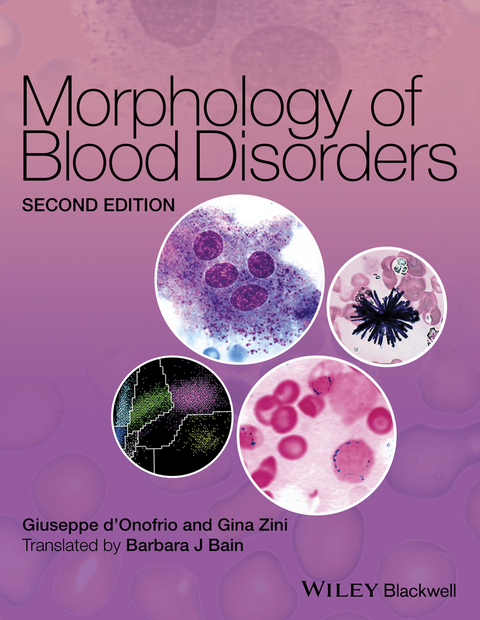
Morphology of Blood Disorders, 2nd edition is an outstanding atlas with over 800 high-quality digital images, covering the whole spectrum of blood and bone marrow morphology, with particular emphasis on malignant haematology. Originally written in the Italian language by two world leaders in the field, the book has been expertly translated by the renowned haematologist and teacher, Barbara Bain.
This book explores the major topics of haematological pathology, blending classical teaching with up-to-date WHO classification and terminology. Each image in this book is derived from material obtained for diagnostic purposes from patients with serious haematological conditions. Morphological details are supplemented by detailed descriptions of the output and role of automated instruments in disorders of the blood.
Morphology of Blood Disorders, 2nd edition is an essential reference source for diagnosis in the haematology laboratory, designed to be the go-to guide for anyone with an interest in blood cell morphology.
Professor Barbara Bain, Professor of Diagnostic Haematology, St Mary's Hospital Campus of Imperial College Faculty of Medicine, St Mary's Hospital, London, UK. Professor Bain has contributed to the 2001 and 2008 revisions of the WHO classification of tumours of the haematopoietic and lymphoid systems. She has a major interest in teaching, both undergraduate and postgraduate, as well as in the development of teaching resources, particularly electronic teaching resources. She has developed and organises teaching courses for haematologists, haematology trainees, haematopathologists, medical laboratory scientists and cytogeneticists and is co-convenor of the Imperial college BSc in Haematology.
She chairs the Imperial College Haematology Teaching Committee and, with colleagues, introduced peer review of haematology teaching. She is the sole author of six haematology textbooks (including many published by Wiley Blackwell) and joint author of another three.
Gina Zini, MD, Hematology Professor,Hematology Laboratory, Catholic University of Sacred Heart, Rome, Italy. Professor Zini is author and co-author of 4 scientific books, including 'Morphology of the Blood', which was first published in English by Butterworth-Heinemann. She is the author and co-author of 50 chapters and more than 150 scientific papers and published abstracts in the fields of morphology, automation, clinical haematology, artificial intelligence and training-on-line.
Giuseppe d'Onofrio, MD, Associate Professor in Clinical Pathology and Immunohematology, Hematology Laboratory, Catholic University of Sacred Heart, Rome, Italy. Founder and member of the Research Center for the Development of and Clinical Evaluation of Automated Methods in Hematology, at the Catholic University of the Sacred Heart in Rome, Italy. Member of the Board of Directors of the International Society of Laboratory Hematology in 2009-2011.
Referee for many scientific journals in the field of hematology, flow cytometry and clinical pathology. He has published more than 80 scientific papers on journals classified in Current Contents or JCR and several chapters in hematology manuals.
Morphology of Blood Disorders, 2nd edition is an outstanding atlas with over 800 high-quality digital images, covering the whole spectrum of blood and bone marrow morphology, with particular emphasis on malignant haematology. Originally written in the Italian language by two world leaders in the field, the book has been expertly translated by the renowned haematologist and teacher, Barbara Bain. This book explores the major topics of haematological pathology, blending classical teaching with up-to-date WHO classification and terminology. Each image in this book is derived from material obtained for diagnostic purposes from patients with serious haematological conditions. Morphological details are supplemented by detailed descriptions of the output and role of automated instruments in disorders of the blood. Morphology of Blood Disorders, 2nd edition is an essential reference source for diagnosis in the haematology laboratory, designed to be the go-to guide for anyone with an interest in blood cell morphology.
Professor Barbara Bain, Professor of Diagnostic Haematology, St Mary's Hospital Campus of Imperial College Faculty of Medicine, St Mary's Hospital, London, UK. Professor Bain has contributed to the 2001 and 2008 revisions of the WHO classification of tumours of the haematopoietic and lymphoid systems. She has a major interest in teaching, both undergraduate and postgraduate, as well as in the development of teaching resources, particularly electronic teaching resources. She has developed and organises teaching courses for haematologists, haematology trainees, haematopathologists, medical laboratory scientists and cytogeneticists and is co-convenor of the Imperial college BSc in Haematology. She chairs the Imperial College Haematology Teaching Committee and, with colleagues, introduced peer review of haematology teaching. She is the sole author of six haematology textbooks (including many published by Wiley Blackwell) and joint author of another three. Gina Zini, MD, Hematology Professor,Hematology Laboratory, Catholic University of Sacred Heart, Rome, Italy. Professor Zini is author and co-author of 4 scientific books, including "Morphology of the Blood", which was first published in English by Butterworth-Heinemann. She is the author and co-author of 50 chapters and more than 150 scientific papers and published abstracts in the fields of morphology, automation, clinical haematology, artificial intelligence and training-on-line. Giuseppe d'Onofrio, MD, Associate Professor in Clinical Pathology and Immunohematology, Hematology Laboratory, Catholic University of Sacred Heart, Rome, Italy. Founder and member of the Research Center for the Development of and Clinical Evaluation of Automated Methods in Hematology, at the Catholic University of the Sacred Heart in Rome, Italy. Member of the Board of Directors of the International Society of Laboratory Hematology in 2009-2011. Referee for many scientific journals in the field of hematology, flow cytometry and clinical pathology. He has published more than 80 scientific papers on journals classified in Current Contents or JCR and several chapters in hematology manuals.
1 Blood and Bone Marrow Cells
2 Erythropoiesis and Anaemia
3 Myelodysplastic Syndromes
4 Acute Myeloid Leukaemia
5 Myeloproliferative Neoplasms
6 Hypereosinophilia
7 Myelodysplastic/Myeloproliferative Neoplasms
8 Acute Lymphoblastic and Mixed Phenotype Leukaemia
9 Neoplasms of Mature b, t and nk cells
10 Plasma Cell Proliferative Disorders
11 Reactive Bone Marrow Changes and Non-haemopoietic Neoplasms
Index
"I highly recommend ?Morphology of Blood Disorders? for hematologists, hemopathologists and clinical laboratory professionals, both as a training instrument and a reference tool...The two authors, Giuseppe D?Onofrio and Gina Zini, both from Catholic University of the Sacred Heart, Rome, Italy are recognized experts in the morphology of blood and bone marrow. They have teamed up with Prof. Barbara Bain, from Imperial College London, the foremost authority on morphology of blood elements, to produce an exceptionally well-illustrated and detailed textbook, covering both benign and malignant hematology. In many sections, blood morphology is accompanied by output data from hematology analyzers, providing an additional piece of the puzzle that most of the other textbooks on this matter have failed to adequately consider. Prof. Bain has captured the subtleties and nuances of the original Italian text and married them with an eloquent and incisive prose which beautifully describes both images and pathophysiology. A major strength of this textbook is the number and quality of the images as well as the detailed descriptions contained in the legends."(American Journal of Hematology, 21 September 2015)
CHAPTER 1
Blood and Bone Marrow Cells
Biology of Haemopoiesis
In the second half of the 19th century, developments in microscopy and in staining techniques permitted the observation of various types of blood cell, leading to a developing understanding of their heterogeneity, morphological characteristics and manner of proliferating and differentiating. The German pathologist, Neumann, recognised that the formation of blood cells from a single progenitor cell took place in the bone marrow. From this recognition, together with the work of the Russian scientist, Maximov, evolved the monophyletic or unitary theory of haemopoiesis, of which Adolfo Ferrata became one of the most convinced supporters (Fig. 1.1).1 It was the studies of McCulloch and Till, at the beginning of the 1960s, that provided the necessary experimental evidence with their demonstration of the capacity of bone marrow cells to form multilineage myeloid colonies in the spleen when injected into animals rendered aplastic by irradiation.2 This experiment was repeated in man with the first transplants of bone marrow between twins and into workers accidentally exposed to nuclear irradiation.3
Fig. 1.1 Morphogenesis of blood cells, according to the monophyletic theory, illustrated in the original table in Adolfo Ferrata's text, Le Emopatie, published in 1933 by the Società Editrice Libraria. From the morphologically undifferentiated haemopoietic progenitors, grouped together at bottom left within an incomplete circle, originate the various lineages of bone marrow precursors, which progressively develop their distinctive morphological characteristics, finally giving rise to the mature cells of the peripheral blood. From left to right the lineages are basophil granulocytes, eosinophil granulocytes, neutrophil granulocytes, erythroid series and, bottom right, megakaryocytes. The illustration is incomplete, lacking the lymphocytes and monocytes; it nevertheless shows the high level of intuition and knowledge achieved by morphological observation alone.The blood, understood as both the haemopoietic matrix and the circulating cells, is a complicated tissue in which numerous elements are selected, organized and regulated like the instruments of a symphonic orchestra, to provide a harmonious, stable and effective result. The formation of the blood depends on the existence of a multipotent stem cell, recognised by its capacity to establish long-term cultures in vitro. This cell is at the top of a tree with increasing numbers of branches towards the base. The initial division is into two progenitors that differ in their potential, restricted respectively to lymphopoiesis and myelopoiesis. Successive branches give rise to other progenitors, organised in a hierarchy, with the capacity for differentiation becoming more limited and specific. This process culminates in the production of the population of morphologically recognisable haemopoietic cells of the bone marrow and ultimately of the mature elements that circulate in the peripheral blood.
Stem Cells
Haemopoietic stem cells are multipotent and it is from them that all the circulating blood cells derive. Haemopoiesis is the well-organised and carefully controlled process by which this fundamental capacity is realised. The adjective ‘stem’ derives from the Latin stamen, meaning thread, to which, figuratively speaking, is bound the life of every man: the thread in classical mythology is spun and then cut off by the Fates.4 The stamen in botany, moreover, is the flower's male organ. While this concept was used in the 19th century in Darwin's evolutionary theory to indicate the unicellular ancestor of all living creatures, it was only at the beginning of the 20th century that the term ‘stem cell’ was attributed to the common precursor of all the cells of the blood.5
The haemopoietic stem cells have two essential properties (Fig. 1.2):
- They are multipotent, that is capable of differentiating into all the various types of blood cell; this differentiation is associated with the loss of multilineage potential and the formation of committed haemopoietic progenitors;
- They are capable of indefinite self-renewal, maintaining themselves through many generations as a small constant percentage of daughter cells with their multilineage potential conserved.
The maintenance of stem cell numbers is necessary to maintain effective multilineage haemopoiesis for the life of an individual. In stable conditions (homeostasis), the majority of the rare mitoses seen in stem cells are symmetrical, producing two identical daughter cells, which are destined to give rise to differentiated progeny. The maintenance of a stable number of stem cells is achieved by the simultaneous occurrence of a more limited number of asymmetric divisions, in which a single stem cell produces two non-identical daughter cells, one of which maintains the original multipotent capacity while the other takes the path of differentiation. This asymmetric mitosis could be predetermined at the moment of mitosis, as is suggested by the polarized distribution of regulatory molecules,6 messenger RNA and individual proteins, which are not distributed equally between the daughter cells. In other instances, the factors determining that one of the daughter cells takes the pathway of differentiation could reside in the microenvironment.7
The multipotent long-term culture initiating haemopoietic stem cells (LT-HSC) can be identified and enriched in the mouse thanks to their surface membrane immunophenotype, characterised by positivity for c-Kit, Thy-1.1 (weak) and Sca-1 (stem cell antigen 1), and negativity for all the lineage-specific markers expressed by committed progenitors, differentiated precursors and mature cells. There is neither a single marker, nor a combination of markers, that is specific for haemopoietic stem cells in man. The immunophenotypic markers most often used, particularly for counting stem cells in relation to transplantation, are CD34, CD133, CD90 and CD117. The functional capacity of stem cells can be demonstrated by culture, i.e. they can give rise to long-term cultures in vitro. The morphology of these forms is similar to that of small blast cells, with a very high nucleocytoplasmic (N:C) ratio, scanty weakly basophilic cytoplasm and homogeneous nuclear chromatin, which is fairly compact (Figs 1.3, 1.4 and 1.5). In some cells the cytoplasm is more abundant and basophilic. The nucleus can have visible nucleoli of variable prominence.
Fig. 1.3 The haemocytoblasts of Ferrata (original illustration from Ferrata A, Le emopatie, 1933). The cells numbered from 8 to 10 particularly evoke the morphology and size of stem cells and haemopoietic progenitors as one recognises them today (see Figs 1.4 and 1.5). The other cells are more similar to myeloblasts, with an angulated nuclear outline (e.g. 1 and 2), or lymphoblasts. Fig. 1.4 Morphology of haemopoietic stem cells. (A) Cytocentrifuge preparation of mononuclear cells harvested for peripheral blood stem cell transplantation on a cell separator (stem cell apheresis) from a donor treated with granulocyte colony-stimulating factor (G-CSF). There are numerous monocytes, some partly vacuolated neutrophils, a metamyelocyte on the lower edge and, just to the left of the centre, an undifferentiated haemopoietic progenitor, which has a high nucleocytoplasmic (N:C) ratio and the appearance of a small blast cell; it has dispersed chromatin, small nucleoli and a thin rim of basophilic agranular cytoplasm, which has a pale paranuclear area. (B) Haemopoietic stem cells, CD34 positive, harvested by stem cell apheresis and purified by an immunomagnetic method. The nucleus occupies nine tenths of the cell and has dispersed homogeneous chromatin; the top right cell has a visible nucleolus. The cytoplasm shows no features of differentiation. Fig. 1.5 Haemopoietic stem cells and progenitors from cord blood. (A) Cytocentrifuge preparation of cord blood stem cells after enrichment by magnetic immunoselection on a column using anti-CD34. The morphological features are fairly uniform: all the cells are small to medium sized and lack any morphological signs of differentiation. (B) Morphological differentiation of the same cord blood stem cells after two weeks in semiliquid culture in the presence of G-CSF. The majority of the cells now have cytoplasmic granules, indicating neutrophilic differentiation. Top left, a cell in anaphase. The most heavily granulated cell also shows chromatin condensation, with the morphological...| Erscheint lt. Verlag | 29.10.2014 |
|---|---|
| Übersetzer | Barbara J. Bain |
| Sprache | englisch |
| Themenwelt | Medizinische Fachgebiete ► Innere Medizin ► Hämatologie |
| Schlagworte | Bain • Barbara • Blood • Catholic • centre • donofrio • GINA • Giuseppe • Hämatologie • Haematology • Hämatologie • Hematology • Imperial • IOL • Italy • marys • Medical Science • Medizin • Methods • Morphology • Professor • recamh • Research • ST • University • Zini |
| ISBN-10 | 1-118-44259-8 / 1118442598 |
| ISBN-13 | 978-1-118-44259-3 / 9781118442593 |
| Informationen gemäß Produktsicherheitsverordnung (GPSR) | |
| Haben Sie eine Frage zum Produkt? |
 EPUB (Adobe DRM)
Kopierschutz: Adobe-DRM
Adobe-DRM ist ein Kopierschutz, der das eBook vor Mißbrauch schützen soll. Dabei wird das eBook bereits beim Download auf Ihre persönliche Adobe-ID autorisiert. Lesen können Sie das eBook dann nur auf den Geräten, welche ebenfalls auf Ihre Adobe-ID registriert sind.
Details zum Adobe-DRM
Dateiformat: EPUB (Electronic Publication)
EPUB ist ein offener Standard für eBooks und eignet sich besonders zur Darstellung von Belletristik und Sachbüchern. Der Fließtext wird dynamisch an die Display- und Schriftgröße angepasst. Auch für mobile Lesegeräte ist EPUB daher gut geeignet.
Systemvoraussetzungen:
PC/Mac: Mit einem PC oder Mac können Sie dieses eBook lesen. Sie benötigen eine
eReader: Dieses eBook kann mit (fast) allen eBook-Readern gelesen werden. Mit dem amazon-Kindle ist es aber nicht kompatibel.
Smartphone/Tablet: Egal ob Apple oder Android, dieses eBook können Sie lesen. Sie benötigen eine
Geräteliste und zusätzliche Hinweise
Buying eBooks from abroad
For tax law reasons we can sell eBooks just within Germany and Switzerland. Regrettably we cannot fulfill eBook-orders from other countries.
aus dem Bereich