


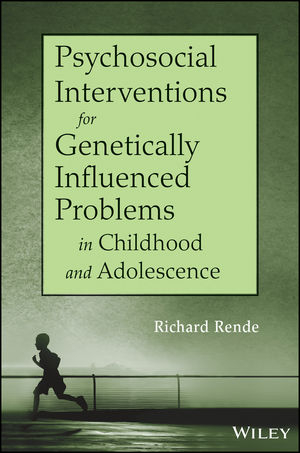
Psychosocial Interventions for Genetically Influenced Problems in Childhood and Adolescence (eBook)
John Wiley & Sons (Verlag)
978-1-118-23569-0 (ISBN)
How to weigh genetic factors while choosing the best psychosocial interventions
Psychosocial Interventions for Genetically Influenced Problems in Childhood and Adolescence explores empirically supported psychosocial interventions in light of our current understanding of the genome. It considers how interventions may be modified and enhanced as the products of genomic research continue to expand - and why they offer the most promise for making substantial gains in treatment and prevention.
Providing a clear, accessible assessment of our current knowledge, both of the genome and evidence based treatments, Psychosocial Interventions for Genetically Influenced Problems in Childhood and Adolescence provides practical advice to clinicians,policy makers, and others invested in treating young people who present with a variety of conditions including anxiety, depression, ADHD, autism, substance abuse, and dyslexia. Rende discusses the current understanding of genetic etiology of psychopathology, and explores the support, or lack thereof, for various modes of treatment in light of new genomic knowledge. The overall premise is that our advances in genetics will be put to best therapeutic use by fueling translational psychosocial interventions.
Key points raised include:
- The need for treating children suffering today, rather than waiting for a biological 'magic bullet'
- Discussion of how empirically-supported interventions mesh with genetic vulnerabilities
- Ways in which interventions may change as genetic research continues
Richard Rende, Ph.D., is a nationally and internationally recognized researcher who combines expertise at the intersection of developmental psychopathology and developmental behavioral genetics. As Associate Professor of Psychiatry and Human Behavior at Alpert Medical School of Brown University, he has been awarded multiple grants from 4 branches of the National Institutes of Health. He is the founder of Social Behavioral Research Applications (SBRA), a unique consultation service for industry, government, and academics. Rende developed the Red-Hot Parenting blog for Parents.com and a monthly column for the New Bedford Standard Times. His work has been featured on NPR, ABC News, The Huffington Post, Yahoo!, Time.com, CNN.com, and MSNBC.
How to weigh genetic factors while choosing the best psychosocial interventions Psychosocial Interventions for Genetically Influenced Problems in Childhood and Adolescence explores empirically supported psychosocial interventions in light of our current understanding of the genome. It considers how interventions may be modified and enhanced as the products of genomic research continue to expand and why they offer the most promise for making substantial gains in treatment and prevention. Providing a clear, accessible assessment of our current knowledge, both of the genome and evidence based treatments, Psychosocial Interventions for Genetically Influenced Problems in Childhood and Adolescence provides practical advice to clinicians,policy makers, and others invested in treating young people who present with a variety of conditions including anxiety, depression, ADHD, autism, substance abuse, and dyslexia. Rende discusses the current understanding of genetic etiology of psychopathology, and explores the support, or lack thereof, for various modes of treatment in light of new genomic knowledge. The overall premise is that our advances in genetics will be put to best therapeutic use by fueling translational psychosocial interventions. Key points raised include: The need for treating children suffering today, rather than waiting for a biological "e;magic bullet"e; Discussion of how empirically-supported interventions mesh with genetic vulnerabilities Ways in which interventions may change as genetic research continues
Richard Rende, Ph.D., is a nationally and internationally recognized researcher who combines expertise at the intersection of developmental psychopathology and developmental behavioral genetics. As Associate Professor of Psychiatry and Human Behavior at Alpert Medical School of Brown University, he has been awarded multiple grants from 4 branches of the National Institutes of Health. He is the founder of Social Behavioral Research Applications (SBRA), a unique consultation service for industry, government, and academics. Rende developed the Red-Hot Parenting blog for Parents.com and a monthly column for the New Bedford Standard Times. His work has been featured on NPR, ABC News, The Huffington Post, Yahoo!, Time.com, CNN.com, and MSNBC.
Preface ix
Acknowledgments xiii
1 Prelude: Great Expectations 1
Aren't Magic Bullets Possible? 10
So Aren't Similar Successes Imminent? 11
What Will be the Yield of Genetic Research in Terms of
Intervention? 14
Where Will All of This Lead? 17
2 Autism Spectrum Disorder: Can We Use Environmental
Intervention to Reprogram Genetic Effects? 21
Genomic Approaches to ASD 24
Is There a New Fundamental Etiological Model of ASD? 27
Genomics, Complex Disorders, Hype, and Hope 30
Using the Environment to Reprogram the Effects of Genes 34
What's Next? 41
References 44
3 Attention-Deficit/Hyperactivity Disorder and Reading
Disorder: Illuminating How the Environment Shapes Highly Heritable
Disorders 45
Genetic Models of ADHD and RD: Why Has Gene Discovery Been So
Elusive? 47
Why Would the Environment be Important for Highly Heritable
Disorders? 51
More Nuanced Models of Gene-Environment Interplay for ADHD
and RD 54
The Promise of Psychosocial Interventions 59
Concluding Remarks 66
References 67
4 Conduct Problems and Substance Use: The Underappreciated
Role of Shared Environmental Influences 69
Genetic Models of CP and SU 73
The Impact of Shared Environmental Influences 75
Getting Molecular About the Environment 81
A Developmental Gene-Environment Model 86
Family-Based Interventions and Genetic Epidemiology 90
Summary and Looking Ahead 95
References 96
5 Depression: The Importance of the Family as a Context for
Gene Expression 99
High-Risk Studies of Offspring of Depressed Parents 101
Genetic Models of MDD 104
GxE Interaction and Depression 108
Depression in Adolescents and Children 112
Who Should be Treated in Families at Risk? 116
Implications of the Parental Treatment Studies 120
References 124
6 Pediatric Bipolar Disorder: Complex Phenotypes, Genotypes,
and Environments 127
Current Thinking on the Genetics of BP 128
Is PBD an Early Manifestation of Genetic Risk to BP? 130
The Clinical Complexity of PBD 138
Emphasizing Psychosocial Interventions for PBD 143
Conclusions 148
References 150
7 Pediatric Anxiety Disorders: The Intersection of Genes and
Environments 153
The Heterogeneity of Anxiety Disorders: Focusing on
Anxiety-Related Behaviors in Childhood and Adolescence 154
Anxiety in the Family: The Intersection of Genes and Parenting
164
Genes, Environment, and Anxiety: Newer Methdologies 168
Concluding Remarks 174
References 177
8 The Future: Why Psychosocial Intervention Will Matter Even
More 179
Future Genetic Research and the Conceptualization of Disorders
183
Genomics May Refine Diagnosis and Point to Tailored
Interventions 188
Genomics Will Lead to Earlier Intervention 191
Genomics Will Accelerate the Development of Psychosocial
Interventions 193
Will We Discover Magic Bullets? 194
Author Index 197
Subject Index 203
Chapter 1
Prelude: Great Expectations
Over a decade ago, when the race to decode the human genome was in full stride, the expectations were great – and then some. The rhetoric focused not on the possibility, but on the promise, that the Human Genome Project (HGP) would revolutionize clinical practice, including the diagnosis and treatment of developmental, behavioral, and emotional disorders in infancy, childhood, and adolescence. This was no basic science endeavor focused on an intellectual holy grail. The HGP came with a very large promissory note – to uncover the genetic origins of disease and disorder and point directly and quickly to biological interventions that would have unprecedented success.
Once the completion of the HGP was formally announced in 2003, the expectations were that we would now be positioned to find the answers to questions that genetic research had promised (and failed) to answer in the past. The primary questions that lingered centered on the speed and scope of the impact. Would the knowledge derived from the HGP lead to “magic bullet” therapies that could inhibit pathological processes caused by rogue genes? Or would it lead to a better understanding of the role that genes play in disease and rapidly inform us about strategies that could be taken to compensate for genetic risk? In either case, we would have the knowledge to either circumvent or inhibit deleterious genetic influences by biological means, or at a minimum develop tailored interventions that would scan your DNA and tell you how to prevent, or eradicate, a pathological condition. The question that was harder to envision back then – now a decade ago – was whether it would simply illustrate how difficult it would be to move from identifying pathogenic genes to actually doing something about them or, for that matter, even actually identifying those genes.
These questions were prominent in the minds of those who study developmental, behavioral, and emotional disorders in children and adolescents. During the 1990s, there had been an explosion of research that used genetic methods and concepts in developmental psychopathology. Behavioral genetic approaches (such as twin and adoption studies) generated an impressive amount of informative data that were consistent with the idea that DNA is implicated in virtually every form of child and adolescent psychopathology. So just like researchers and practitioners who studied cancer or heart disease, developmental psychopathologists eagerly awaited to see how the HGP would transform what we do, and most importantly, how it would impact our ability to improve children's lives. And this wasn't just speculation. Go back a decade, and you will see that nearly every major longitudinal study of childhood psychopathology made some level of investment in the collection of DNA, in anticipation of some type of major advancement.
So, where do we stand right now? A quick Internet search today will reveal that the HGP revolution – with respect to intervention – has not happened. Numerous articles in the popular press over the past few years have documented the very gradual slope involved in identifying disease genes that could inform new therapeutic techniques. Some have drawn an analogy to business bubbles, in that the great expectations that surrounded the HGP has given way to the sober reality that a decade later few (if any) radical advances have been made with respect to therapeutics. National Geographic ran a piece that focused on the five breakthroughs from the HGP and five predictions. Developing gene therapies to cure disease was listed as a prediction – not a breakthrough – as it was proposed that this could start happening sometime in the next decade (or two decades after the completion of the HGP).
One could speculate that the popular press may be inclined to skew perceptions. However, the collective voice extends to the world of science. In July 2011, the prestigious journal Human Genetics devoted a special section to the yield to date of the HGP with respect to intervention. It included articles such as “Translating Human Genomics into Population Screening: Hype or Hope?” Other papers focused on the substantial challenges that scientists anticipate in moving from the extraordinary knowledge base derived from the HGP to the ultimate deliverable: genetically informed and tailored treatment strategies that work for a range of diseases. Even Francis Collins, who led the HGP initiative at the National Institutes of Health, has acknowledged in multiple interviews that the HGP has not had the massive immediate practical impact on treatment and prevention that was anticipated by many during the years that culminated in the announcement that the human genome was decoded.
But now there's even more to consider as the DNA story gets more tangled and complex. More than 30 papers were published in concert in September 2012 to disseminate the newest thinking about the genome and how genes influence development in the broadest sense. This research initiative called ENCODE is focused on extensive regions in DNA that were thought to be, well, junk – and reflects a new “encyclopedia” of DNA that radically alters that viewpoint. You may have heard that only 20% of DNA is actually doing something. Well, the new research is showing that nearly 80% of DNA is doing something (or more technically, has been assigned a biochemical function). The spotlight is not just on the genes that code for proteins, but also the vast number of genes that act as switches that turn other genes on and off. This regulatory function has been known for a long time, and its importance has always been grasped. What's different now is that it seems to be a predominant mechanism with many genes – and big chunks of DNA – devoted to it. And researchers believe that the emerging ENCODE may hold clues to understanding how many disorders arise from expression of genetic risk factors along with a whole potential range of factors. What is really changing is the emerging idea that it's not so much what is in the “core” genes that directly code for things, but rather how the complex mix of influences that turn genes on and off takes place continuously throughout development.
If you peruse the commentary of scientists involved with ENCODE, it's clear that the genetic landscape is getting more and more complicated, with more and more interplay between lots of genes and gene regions, and more and more unspecified influences that impact how genes have their influence on development and pathology. One analogy has been made to the genome being a “jungle” full of layers of biological factors that, at any given time, may be interacting in almost incalculable ways. You can think about it as multiple orchestras with lots of instruments and plenty of conductors. But whatever analogy you like, the big point is that while this new thinking on DNA – reflecting the work of something like 400 scientists over the last 8 years – is certainly extraordinary, it raises even more questions about how quickly we are going to translate knowledge about genetics into biologically informed prevention and intervention. In that sense, the idea that identifying a “disease” gene for complicated disorders, as informed by the HGP, will lead to a direct implication for diagnosis and treatment starts to sound less and less feasible in the near future (at a minimum).
Let's step back for a minute. Should you be thinking that this is a rant about genetics, or the slow pace of science, or the fact that it seems like every decade we come across a new “breakthrough” in thinking and methods that doesn't actually lead to anything practical for the vast majority of affected individuals? Not at all. That's how science typically works, and genetic research is no exception. This is about our great expectations of what genetic knowledge will do for us, which frankly may have been oversold in the scientific community. We had heard it before, but just the idea of the HGP – the thought that we would know all the genes – raised the stakes and expectations accordingly. Let's face it – we've invested not just extraordinary monetary and scientific resources in the HGP, but also faith and hope that led to expectations for immediate results. And while breakthroughs may happen, the stark reality is that they might not happen any time soon.
This reality is especially sobering when we consider the developmental, behavioral, and emotional disorders of childhood and adolescence. Why? Simply put, parents and practitioners alike deal with the need to change children's lives today. Parents don't have a decade to wait for unspecified advances that might happen. Think about how many kids have received a psychiatric diagnosis since the completion of the HGP. When I first learned about autism, the prevalence was estimated to be 4 in 10,000 – now that estimate is something like 1 in 110 (or maybe even 1 in 88). ADHD diagnoses are on the rise, and close to 1 in 10 kids will receive a diagnosis (or maybe even 1 in 7). These diagnoses happen in the first decade of life; so as each decade passes, we have extraordinary numbers of kids who were born who would profit from the development of new interventions. Yet despite all the resources devoted to understanding the genetic basis of some of the most prevalent and impairing disorders that affect youth from birth through...
| Erscheint lt. Verlag | 18.8.2014 |
|---|---|
| Sprache | englisch |
| Themenwelt | Geisteswissenschaften ► Psychologie ► Entwicklungspsychologie |
| Medizin / Pharmazie ► Medizinische Fachgebiete ► Psychiatrie / Psychotherapie | |
| Sozialwissenschaften ► Pädagogik ► Sozialpädagogik | |
| Sozialwissenschaften ► Soziologie | |
| Schlagworte | ADHD treatment • adolescent interventions • Adolescent Psychology • Adolescent Substance Abuse • Autism Therapy • behavior disorders treatments • bipolar therapy • child anxiety treatment • child cbt • child DBT • child depression treatment • child dyslexia • childhood interventions • Child Psychiatry • Child Psychology • Child Psychotherapy • Clinical psychology • Conduct Disorders • genetic risk factors mental health • genome and reading disorders • genomic research • Health & Behavioral Clinical Psychology • intervention techniques • Klinische Psychologie • Klinische Psychologie / Verhalten • mental health adolescents • mental health children • Psychologie • Psychology • Psychosocial Interventions for Biologically Based Problems in Childhood and Adolescence • psychosocial treatments • Psychotherapie • Psychotherapie u. Beratung • Psychotherapy & Counseling • Richard Rende • therapy modalities |
| ISBN-10 | 1-118-23569-X / 111823569X |
| ISBN-13 | 978-1-118-23569-0 / 9781118235690 |
| Informationen gemäß Produktsicherheitsverordnung (GPSR) | |
| Haben Sie eine Frage zum Produkt? |
 EPUB (Adobe DRM)
Kopierschutz: Adobe-DRM
Adobe-DRM ist ein Kopierschutz, der das eBook vor Mißbrauch schützen soll. Dabei wird das eBook bereits beim Download auf Ihre persönliche Adobe-ID autorisiert. Lesen können Sie das eBook dann nur auf den Geräten, welche ebenfalls auf Ihre Adobe-ID registriert sind.
Details zum Adobe-DRM
Dateiformat: EPUB (Electronic Publication)
EPUB ist ein offener Standard für eBooks und eignet sich besonders zur Darstellung von Belletristik und Sachbüchern. Der Fließtext wird dynamisch an die Display- und Schriftgröße angepasst. Auch für mobile Lesegeräte ist EPUB daher gut geeignet.
Systemvoraussetzungen:
PC/Mac: Mit einem PC oder Mac können Sie dieses eBook lesen. Sie benötigen eine
eReader: Dieses eBook kann mit (fast) allen eBook-Readern gelesen werden. Mit dem amazon-Kindle ist es aber nicht kompatibel.
Smartphone/Tablet: Egal ob Apple oder Android, dieses eBook können Sie lesen. Sie benötigen eine
Geräteliste und zusätzliche Hinweise
Buying eBooks from abroad
For tax law reasons we can sell eBooks just within Germany and Switzerland. Regrettably we cannot fulfill eBook-orders from other countries.
aus dem Bereich


