


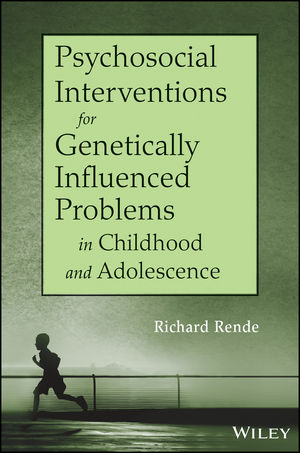
Psychosocial Interventions for Genetically Influenced Problems in Childhood and Adolescence (eBook)
John Wiley & Sons (Verlag)
978-1-118-22199-0 (ISBN)
How to weigh genetic factors while choosing the best psychosocial interventions
Psychosocial Interventions for Genetically Influenced Problems in Childhood and Adolescence explores empirically supported psychosocial interventions in light of our current understanding of the genome. It considers how interventions may be modified and enhanced as the products of genomic research continue to expand - and why they offer the most promise for making substantial gains in treatment and prevention.
Providing a clear, accessible assessment of our current knowledge, both of the genome and evidence based treatments, Psychosocial Interventions for Genetically Influenced Problems in Childhood and Adolescence provides practical advice to clinicians,policy makers, and others invested in treating young people who present with a variety of conditions including anxiety, depression, ADHD, autism, substance abuse, and dyslexia. Rende discusses the current understanding of genetic etiology of psychopathology, and explores the support, or lack thereof, for various modes of treatment in light of new genomic knowledge. The overall premise is that our advances in genetics will be put to best therapeutic use by fueling translational psychosocial interventions.
Key points raised include:
- The need for treating children suffering today, rather than waiting for a biological 'magic bullet'
- Discussion of how empirically-supported interventions mesh with genetic vulnerabilities
- Ways in which interventions may change as genetic research continues
Richard Rende, Ph.D., is a nationally and internationally recognized researcher who combines expertise at the intersection of developmental psychopathology and developmental behavioral genetics. As Associate Professor of Psychiatry and Human Behavior at Alpert Medical School of Brown University, he has been awarded multiple grants from 4 branches of the National Institutes of Health. He is the founder of Social Behavioral Research Applications (SBRA), a unique consultation service for industry, government, and academics. Rende developed the Red-Hot Parenting blog for Parents.com and a monthly column for the New Bedford Standard Times. His work has been featured on NPR, ABC News, The Huffington Post, Yahoo!, Time.com, CNN.com, and MSNBC.
How to weigh genetic factors while choosing the best psychosocial interventions Psychosocial Interventions for Genetically Influenced Problems in Childhood and Adolescence explores empirically supported psychosocial interventions in light of our current understanding of the genome. It considers how interventions may be modified and enhanced as the products of genomic research continue to expand and why they offer the most promise for making substantial gains in treatment and prevention. Providing a clear, accessible assessment of our current knowledge, both of the genome and evidence based treatments, Psychosocial Interventions for Genetically Influenced Problems in Childhood and Adolescence provides practical advice to clinicians,policy makers, and others invested in treating young people who present with a variety of conditions including anxiety, depression, ADHD, autism, substance abuse, and dyslexia. Rende discusses the current understanding of genetic etiology of psychopathology, and explores the support, or lack thereof, for various modes of treatment in light of new genomic knowledge. The overall premise is that our advances in genetics will be put to best therapeutic use by fueling translational psychosocial interventions. Key points raised include: The need for treating children suffering today, rather than waiting for a biological "e;magic bullet"e; Discussion of how empirically-supported interventions mesh with genetic vulnerabilities Ways in which interventions may change as genetic research continues
Richard Rende, Ph.D., is a nationally and internationally recognized researcher who combines expertise at the intersection of developmental psychopathology and developmental behavioral genetics. As Associate Professor of Psychiatry and Human Behavior at Alpert Medical School of Brown University, he has been awarded multiple grants from 4 branches of the National Institutes of Health. He is the founder of Social Behavioral Research Applications (SBRA), a unique consultation service for industry, government, and academics. Rende developed the Red-Hot Parenting blog for Parents.com and a monthly column for the New Bedford Standard Times. His work has been featured on NPR, ABC News, The Huffington Post, Yahoo!, Time.com, CNN.com, and MSNBC.
Preface ix
Acknowledgments xiii
1 Prelude: Great Expectations 1
Aren't Magic Bullets Possible? 10
So Aren't Similar Successes Imminent? 11
What Will be the Yield of Genetic Research in Terms of
Intervention? 14
Where Will All of This Lead? 17
2 Autism Spectrum Disorder: Can We Use Environmental
Intervention to Reprogram Genetic Effects? 21
Genomic Approaches to ASD 24
Is There a New Fundamental Etiological Model of ASD? 27
Genomics, Complex Disorders, Hype, and Hope 30
Using the Environment to Reprogram the Effects of Genes 34
What's Next? 41
References 44
3 Attention-Deficit/Hyperactivity Disorder and Reading
Disorder: Illuminating How the Environment Shapes Highly Heritable
Disorders 45
Genetic Models of ADHD and RD: Why Has Gene Discovery Been So
Elusive? 47
Why Would the Environment be Important for Highly Heritable
Disorders? 51
More Nuanced Models of Gene-Environment Interplay for ADHD
and RD 54
The Promise of Psychosocial Interventions 59
Concluding Remarks 66
References 67
4 Conduct Problems and Substance Use: The Underappreciated
Role of Shared Environmental Influences 69
Genetic Models of CP and SU 73
The Impact of Shared Environmental Influences 75
Getting Molecular About the Environment 81
A Developmental Gene-Environment Model 86
Family-Based Interventions and Genetic Epidemiology 90
Summary and Looking Ahead 95
References 96
5 Depression: The Importance of the Family as a Context for
Gene Expression 99
High-Risk Studies of Offspring of Depressed Parents 101
Genetic Models of MDD 104
GxE Interaction and Depression 108
Depression in Adolescents and Children 112
Who Should be Treated in Families at Risk? 116
Implications of the Parental Treatment Studies 120
References 124
6 Pediatric Bipolar Disorder: Complex Phenotypes, Genotypes,
and Environments 127
Current Thinking on the Genetics of BP 128
Is PBD an Early Manifestation of Genetic Risk to BP? 130
The Clinical Complexity of PBD 138
Emphasizing Psychosocial Interventions for PBD 143
Conclusions 148
References 150
7 Pediatric Anxiety Disorders: The Intersection of Genes and
Environments 153
The Heterogeneity of Anxiety Disorders: Focusing on
Anxiety-Related Behaviors in Childhood and Adolescence 154
Anxiety in the Family: The Intersection of Genes and Parenting
164
Genes, Environment, and Anxiety: Newer Methdologies 168
Concluding Remarks 174
References 177
8 The Future: Why Psychosocial Intervention Will Matter Even
More 179
Future Genetic Research and the Conceptualization of Disorders
183
Genomics May Refine Diagnosis and Point to Tailored
Interventions 188
Genomics Will Lead to Earlier Intervention 191
Genomics Will Accelerate the Development of Psychosocial
Interventions 193
Will We Discover Magic Bullets? 194
Author Index 197
Subject Index 203
| Erscheint lt. Verlag | 18.8.2014 |
|---|---|
| Sprache | englisch |
| Themenwelt | Geisteswissenschaften ► Psychologie ► Entwicklungspsychologie |
| Medizin / Pharmazie ► Medizinische Fachgebiete ► Psychiatrie / Psychotherapie | |
| Sozialwissenschaften ► Pädagogik ► Sozialpädagogik | |
| Sozialwissenschaften ► Soziologie | |
| Schlagworte | ADHD treatment • adolescent interventions • Adolescent Psychology • Adolescent Substance Abuse • Autism Therapy • behavior disorders treatments • bipolar therapy • child anxiety treatment • child cbt • child DBT • child depression treatment • child dyslexia • childhood interventions • Child Psychiatry • Child Psychology • Child Psychotherapy • Clinical psychology • Conduct Disorders • genetic risk factors mental health • genome and reading disorders • genomic research • Health & Behavioral Clinical Psychology • intervention techniques • Klinische Psychologie • Klinische Psychologie / Verhalten • mental health adolescents • mental health children • Psychologie • Psychology • Psychosocial Interventions for Biologically Based Problems in Childhood and Adolescence • psychosocial treatments • Psychotherapie • Psychotherapie u. Beratung • Psychotherapy & Counseling • Richard Rende • therapy modalities |
| ISBN-10 | 1-118-22199-0 / 1118221990 |
| ISBN-13 | 978-1-118-22199-0 / 9781118221990 |
| Informationen gemäß Produktsicherheitsverordnung (GPSR) | |
| Haben Sie eine Frage zum Produkt? |
 PDF (Adobe DRM)
Kopierschutz: Adobe-DRM
Adobe-DRM ist ein Kopierschutz, der das eBook vor Mißbrauch schützen soll. Dabei wird das eBook bereits beim Download auf Ihre persönliche Adobe-ID autorisiert. Lesen können Sie das eBook dann nur auf den Geräten, welche ebenfalls auf Ihre Adobe-ID registriert sind.
Details zum Adobe-DRM
Dateiformat: PDF (Portable Document Format)
Mit einem festen Seitenlayout eignet sich die PDF besonders für Fachbücher mit Spalten, Tabellen und Abbildungen. Eine PDF kann auf fast allen Geräten angezeigt werden, ist aber für kleine Displays (Smartphone, eReader) nur eingeschränkt geeignet.
Systemvoraussetzungen:
PC/Mac: Mit einem PC oder Mac können Sie dieses eBook lesen. Sie benötigen eine
eReader: Dieses eBook kann mit (fast) allen eBook-Readern gelesen werden. Mit dem amazon-Kindle ist es aber nicht kompatibel.
Smartphone/Tablet: Egal ob Apple oder Android, dieses eBook können Sie lesen. Sie benötigen eine
Geräteliste und zusätzliche Hinweise
Buying eBooks from abroad
For tax law reasons we can sell eBooks just within Germany and Switzerland. Regrettably we cannot fulfill eBook-orders from other countries.
aus dem Bereich


