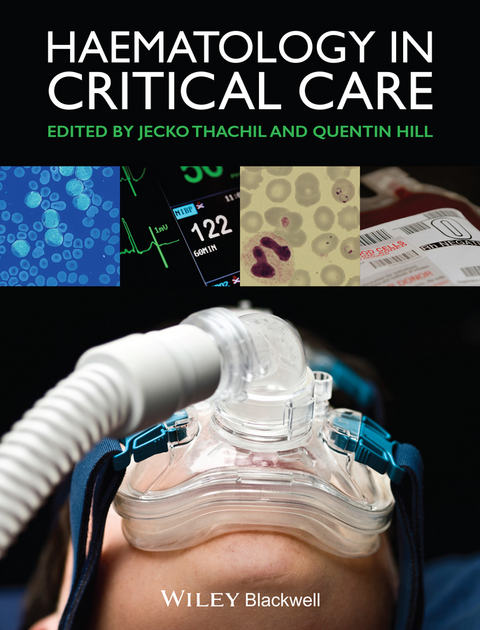
Haematology in Critical Care (eBook)
John Wiley & Sons (Verlag)
978-1-118-86916-1 (ISBN)
This will be a practical handbook for use in a clinical ICU setting for information on diagnosis and clinical management of haematological disease in critical care. There are currently no books on the market that significantly address haematology in critical care – all ICU based books have a broader focus of diagnosis and clinical management, rather than purely haematology based. Common procedures/interventions for a haematologist will include delivering critical care, often for life-threatening disease.
For unselected ICU admissions, every patient will have a full blood count and the great majority will have their coagulation profile checked. Many of these critically ill patients will have abnormalities in these tests that require interpretation. Many more will have clinical conditions such as thrombosis or bleeding and may require blood products.
Issues of thrombosis, bleeding, and transfusion are extremely common, and often complex, in critically ill patients. Haematology in Critical Care: A Practical Handbookprovidesa dependable source of expert guidance on how to handle common haematological problems seen in the critical care setting, as well as the acute care of patients with a primary haematological disorder. Full-time clinical haematologists, regularly attending on intensive care, the Editors begin with an approach to abnormal laboratory tests, following with a disease-orientated approach to topics such as coagulation and haematological malignancy. Other key topics include paediatric and neonatal care, transfusion, point of care testing and the emergency presentation of haematological disease. This title brings together two of the most highly scientific specialties in clinical practice, delivering a practical approach to these problems, and guiding the clinician through the diagnosis and management of common scenarios encountered in the ICU.
Dr Jecko Thachil, Honorary Consultant in Haemostasis and Thrombosis, Royal Liverpool Teaching Hospitals, Academic Clinical Lecturer, Infection and Global Health, University of Liverpool, Liverpool, UK Dr Thachil co-chairs the Disseminated Intravascular Coagulation Subcommittee of the International Society of Thrombosis and Haemostasis and is the review editor for Physician Information and Educational Resource for American College of Physicians. He has authored over seventy publications in peer reviewed journals and has co-authored the British committee of Standards in Haematology guideline for DIC. Dr Thachil also has research collaborations with intensive care staff in the northwest England and is the organizer of Haematology in Intensive Care educational sessions for the region. Dr Quentin A. Hill, Consultant Haematologist, Leeds Teaching Hospital NHS Trust, Honorary Senior Lecturer, University of Leeds, Leeds, UK Dr Hill has been principle investigator for a number of phase II and III clinical trials and has published 6 peer reviewed journal articles (5 as first author). He has also written book chapters for "Problem Solving in Haematology" published in March 2010 (ISBN: 1846920051, Atlas Medical Publishing, Ltd). He provides attending cover for a 40 bedded haematology unit. He often interacts with intensive care staff and has developed an interest in critical care issues during this time. Dr Hill has published a single author review on survival of critically ill patients with haematological malignancy in 2010 and has submitted a further paper on regional ICU outcomes for publication. Dr Hill has lectured on this subject regionally and nationally.
Chapter 1
Diagnostic Approach to Anaemia in Critical Care
Stephen F. Hawkins1 and Quentin A. Hill2
1 Department of Haematology, Royal Liverpool University Hospital, Liverpool, UK
2 Department of Haematology, Leeds Teaching Hospitals NHS Trust, Leeds, UK
Anaemia was defined by the World Health Organization as a haemoglobin (Hb) concentration less than 120 g/L (Hb < 36%) in females and less than 130 g/L (Hb < 39%) in males, but the lower level of the reference range for Hb may vary between laboratories. It is common in critically ill patients, occurring in up to 80% of those in intensive care units (ICUs) [1] with 50–70% having a Hb less than 90 g/L during their admission. By reducing oxygen delivery to the tissues, this may be tolerated poorly in those with cardiorespiratory compromise. In critical care, anaemia is commonly due to multiple factors such as inflammation, blood loss, renal impairment and nutritional deficiencies [2, 3] (see Table 17.1), but it is important to consider treatable causes and identify when more detailed investigation is needed. The role of transfusional support is considered in Chapter 17.
Tissue hypoxia exerts physiological control of Hb by triggering the release of erythropoietin (EPO) by the kidneys, which stimulates bone marrow (BM) erythropoiesis. Hb will increase so long as there are no underlying BM disorders (e.g. myelodysplasia) and there are adequate supplies of iron, vitamin B12 and folic acid. When a rapid marrow response occurs (e.g. following haemorrhage or replacement of a deficient vitamin), reticulocytes (young erythrocytes) enter the blood in large numbers and can be identified on the blood film (polychromasia) or by an elevated reticulocyte count. The normal lifespan for erythrocytes is 120 days, before being removed by the reticuloendothelial system (predominantly in the spleen and liver), but their lifespan may be shortened by inflammation, haemorrhage or haemolysis.
Diagnostic approach to anaemia in critical care
In the history, note pre-existing co-morbidities including renal and cardiac impairment. Also note medications, diet and symptoms suggestive of blood loss. Examine for jaundice, lymphadenopathy or organomegaly.
- If there is a sudden unexpected drop in Hb, this may be a sampling error; consider repeating the full blood count (FBC).
- Is the anaemia acute or chronic? This may inform the diagnosis, likely tolerance of anaemia and treatment strategy. Only 10–15% of ICU patients have chronic anaemia prior to admission [4].
- Is the anaemia isolated or are there other cytopenias? Thrombocytopenia (Chapter 3) is also a common finding (~40% of ICU patients) and will therefore often coexist with anaemia in critically ill patients. Common causes of both include sepsis, organ failure and acute blood loss, but important differentials include disseminated intravascular coagulation (DIC) (Chapter 9) and thrombotic microangiopathies (TMAs) (Chapter 11). Review the clotting and blood film. Haemophagocytic lymphohistiocytosis (HLH) is an important cause of fever and cytopenias that can present with single or multiple organ failure (see succeeding text under extrinsic causes of extravascular haemolysis).
- Pancytopenia may be an artefact (i.e. dilution during sampling) or result from BM failure or infiltration, infection, HLH, hypersplenism, drugs, autoimmune disease or megaloblastic anaemia. If pancytopenia is present, examine for splenomegaly and request a blood film and haematinics. If the cause remains unclear, the advice of a haematologist should be sought as a BM examination may be required.
If the cause of an isolated anaemia remains unclear, it is worth classifying on the basis of the mean cell volume (MCV) as this helps to direct further investigation (Figure 1.1).
Figure 1.1 Investigation of anaemia in critical care. MCV, mean cell volume; DIC, disseminated intravascular coagulation; TMAs, thrombotic microangiopathies; HLH, haemophagocytic lymphohistiocytosis; BM, bone marrow; AoCD, anaemia of chronic disease; PNH, paroxysmal nocturnal haemoglobinuria.
Normocytic anaemia (MCV within the normal range)
Anaemia is most commonly normocytic in critically ill patients and usually multifactorial [4]. Iatrogenic reasons include frequent blood sampling and haemodilution (intravenous fluid administration). Occult blood loss can occur as a result of gastrointestinal mucosal inflammation and contributed to by coagulation defects, thrombocytopenia and uraemia. Another important reason is secondary anaemia, also termed anaemia of chronic disease (AoCD) or anaemia of inflammation. This is the most common cause of anaemia in hospitalized patients and can be caused by infection, cancer, autoimmune disease or chronic kidney disease [5]. This results in a functional iron deficiency, whereby adequate iron stores are present but the availability of iron for erythropoiesis is reduced. Hepcidin, a peptide produced by the liver in response to inflammatory cytokines, may be at least in part responsible for this phenomenon. Typically, ferritin is elevated and serum iron and transferrin saturation are low. Iron supplementation usually produces no improvement (in contrast to true iron deficiency). In addition to functional iron deficiency, inflammation results in reduced EPO production, reduced marrow sensitivity to EPO and shortened red cell survival.
Check haematinics as combined deficiencies can result in a normal MCV. Additionally, due to the acute phase response, a normal ferritin does not exclude iron deficiency. Consideration should be given to the possibility of occult or recent bleeding. The anaemia is likely to resolve with improvement of the underlying conditions. Meanwhile, supportive management (including transfusion when required; see Chapter 17) is the mainstay of therapy, and blood sampling should be kept to a minimum.
Microcytic anaemia (MCV below the normal range)
This is often a result of iron deficiency (blood loss, malabsorption or dietary deficiency). It can also occur during prolonged and severe illness as an extreme form of AoCD. Less commonly, microcytosis can be due to a haemoglobinopathy (e.g. thalassaemia trait), acaeruloplasminaemia, myelodysplasia, hyperthyroidism, lead poisoning and some rare congenital conditions (e.g. congenital sideroblastic anaemia).
Iron deficiency can be associated with a thrombocytosis, especially with bleeding. Less frequently, severe iron deficiency may also result in a leukopenia and thrombocytopenia. The blood film may show hypochromic, microcytic red cells, polychromasia and pencil cell poikilocytes. The usual tests of iron status (ferritin and iron studies) are less likely to be informative in the critically ill patient. A reliable measure of iron storage is specially stained BM aspirate slides, but this may not identify acute blood loss and is not usually justifiable solely for this purpose. Instead, if the clinical picture and blood film are compatible, consider a trial of iron replacement and appropriate investigations to identify a cause.
Consider additional testing:
- Lead level if prominent basophilic stippling on film or clinical suspicion
- Thyroid function if relevant clinical symptoms/signs
- BM if dysplastic blood film (haematology referral)
- Hb electrophoresis if target cells, long-standing microcytosis, iron replete or not of northern European ethnicity
Macrocytic anaemia (MCV above the normal range)
The leading causes of macrocytic anaemia are alcohol abuse, megaloblastic anaemia (deficiency of vitamin B12 and/or folic acid) and accelerated erythropoiesis (e.g. in response to bleeding or haemolysis).
Other causes include medications (e.g. some chemotherapy agents, hydroxycarbamide, methotrexate, azathioprine, zidovudine, phenytoin), liver dysfunction, hypothyroidism, aplastic anaemia and myelodysplasia. Macrocytosis can occur in pregnancy, in Down syndrome and in smokers.
Spurious causes of macrocytosis include cold agglutinins (red cells agglutinate due to an autoantibody; this will correct by warming a repeat FBC sample), high white cell counts (e.g. acute leukaemia), severe hyperglycaemia (in patient or by sampling close to an intravenous dextrose infusion causing osmotic swelling) or an under-filled tube at venepuncture (increased concentration of EDTA anticoagulant).
- Initial Investigations would include liver and thyroid function, B12/folate levels and screening tests for haemolysis (lactate dehydrogenase [LDH], reticulocyte count, haptoglobin, direct Coombs’ test [DCT], bilirubin and blood film examination).
Alcohol excess may be suggested by the history, examination or other blood results (e.g. raised gamma glutamyl transferase). The resulting anaemia and macrocytosis are usually mild, in contrast to megaloblastic anaemia where the MCV may be as high as 120 fl. The blood film may show typical megaloblastic features such as oval macrocytosis and neutrophil hypersegmentation. Folic acid replacement should not be given unless the vitamin B12 level is known as by stimulating erythropoiesis, folic acid may aggravate B12 deficiency thereby precipitating subacute combined degeneration of the cord. In B12 deficiency, heart failure may arise through overenthusiastic blood transfusion, and B12 replacement is usually sufficient. If transfusion is judged essential, transfuse one unit slowly, consider diuretic cover, and then reassess.
Myelodysplasia is a clonal BM...
| Erscheint lt. Verlag | 26.3.2014 |
|---|---|
| Sprache | englisch |
| Themenwelt | Medizinische Fachgebiete ► Innere Medizin ► Hämatologie |
| Pflege ► Fachpflege ► Anästhesie / Intensivmedizin | |
| Schlagworte | abnormal • Acute • Approach • Care • Common • Critical • dependable • disorder • editors begin • Expert • guidance • Hämatologie • haematological • Haematology • Hämatologie • handbookprovidesa • handle • Hematology • Intensive/Critical Care • Intensivpflege • laboratory tests • Medical Science • Medizin • patients • Practical • Primary • Problems • source |
| ISBN-10 | 1-118-86916-8 / 1118869168 |
| ISBN-13 | 978-1-118-86916-1 / 9781118869161 |
| Informationen gemäß Produktsicherheitsverordnung (GPSR) | |
| Haben Sie eine Frage zum Produkt? |
 EPUB (Adobe DRM)
Kopierschutz: Adobe-DRM
Adobe-DRM ist ein Kopierschutz, der das eBook vor Mißbrauch schützen soll. Dabei wird das eBook bereits beim Download auf Ihre persönliche Adobe-ID autorisiert. Lesen können Sie das eBook dann nur auf den Geräten, welche ebenfalls auf Ihre Adobe-ID registriert sind.
Details zum Adobe-DRM
Dateiformat: EPUB (Electronic Publication)
EPUB ist ein offener Standard für eBooks und eignet sich besonders zur Darstellung von Belletristik und Sachbüchern. Der Fließtext wird dynamisch an die Display- und Schriftgröße angepasst. Auch für mobile Lesegeräte ist EPUB daher gut geeignet.
Systemvoraussetzungen:
PC/Mac: Mit einem PC oder Mac können Sie dieses eBook lesen. Sie benötigen eine
eReader: Dieses eBook kann mit (fast) allen eBook-Readern gelesen werden. Mit dem amazon-Kindle ist es aber nicht kompatibel.
Smartphone/Tablet: Egal ob Apple oder Android, dieses eBook können Sie lesen. Sie benötigen eine
Geräteliste und zusätzliche Hinweise
Buying eBooks from abroad
For tax law reasons we can sell eBooks just within Germany and Switzerland. Regrettably we cannot fulfill eBook-orders from other countries.
aus dem Bereich