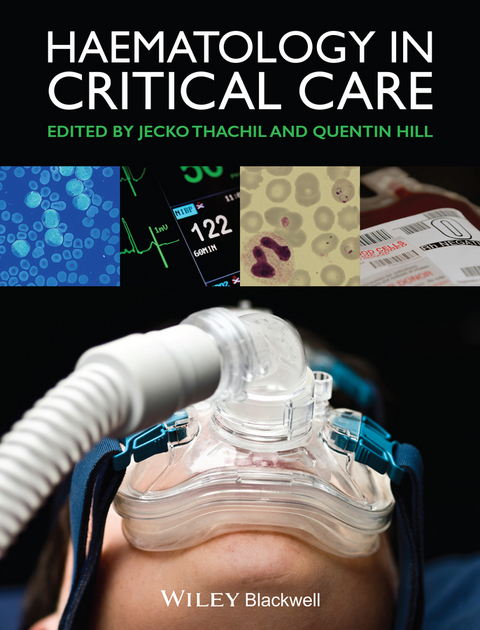
Haematology in Critical Care (eBook)
John Wiley & Sons (Verlag)
978-1-118-86917-8 (ISBN)
Issues of thrombosis, bleeding, and transfusion are extremely common, and often complex, in critically ill patients.
Haematology in Critical Care: A Practical Handbookprovidesa dependable source of expert guidance on how to handle common haematological problems seen in the critical care setting, as well as the acute care of patients with a primary haematological disorder.
Full-time clinical haematologists, regularly attending on intensive care, the Editors begin with an approach to abnormal laboratory tests, following with a disease-orientated approach to topics such as coagulation and haematological malignancy. Other key topics include paediatric and neonatal care, transfusion, point of care testing and the emergency presentation of haematological disease.
This title brings together two of the most highly scientific specialties in clinical practice, delivering a practical approach to these problems, and guiding the clinician through the diagnosis and management of common scenarios encountered in the ICU.
Dr Jecko Thachil, Honorary Consultant in Haemostasis and Thrombosis, Royal Liverpool Teaching Hospitals, Academic Clinical Lecturer, Infection and Global Health, University of Liverpool, Liverpool, UK
Dr Thachil co-chairs the Disseminated Intravascular Coagulation Subcommittee of the International Society of Thrombosis and Haemostasis and is the review editor for Physician Information and Educational Resource for American College of Physicians. He has authored over seventy publications in peer reviewed journals and has co-authored the British committee of Standards in Haematology guideline for DIC. Dr Thachil also has research collaborations with intensive care staff in the northwest England and is the organizer of Haematology in Intensive Care educational sessions for the region.
Dr Quentin A. Hill, Consultant Haematologist, Leeds Teaching Hospital NHS Trust, Honorary Senior Lecturer, University of Leeds, Leeds, UK
Dr Hill has been principle investigator for a number of phase II and III clinical trials and has published 6 peer reviewed journal articles (5 as first author). He has also written book chapters for 'Problem Solving in Haematology' published in March 2010 (ISBN: 1846920051, Atlas Medical Publishing, Ltd). He provides attending cover for a 40 bedded haematology unit. He often interacts with intensive care staff and has developed an interest in critical care issues during this time. Dr Hill has published a single author review on survival of critically ill patients with haematological malignancy in 2010 and has submitted a further paper on regional ICU outcomes for publication. Dr Hill has lectured on this subject regionally and nationally.
Issues of thrombosis, bleeding, and transfusion are extremely common, and often complex, in critically ill patients. Haematology in Critical Care: A Practical Handbookprovidesa dependable source of expert guidance on how to handle common haematological problems seen in the critical care setting, as well as the acute care of patients with a primary haematological disorder. Full-time clinical haematologists, regularly attending on intensive care, the Editors begin with an approach to abnormal laboratory tests, following with a disease-orientated approach to topics such as coagulation and haematological malignancy. Other key topics include paediatric and neonatal care, transfusion, point of care testing and the emergency presentation of haematological disease. This title brings together two of the most highly scientific specialties in clinical practice, delivering a practical approach to these problems, and guiding the clinician through the diagnosis and management of common scenarios encountered in the ICU.
Dr Jecko Thachil, Honorary Consultant in Haemostasis and Thrombosis, Royal Liverpool Teaching Hospitals, Academic Clinical Lecturer, Infection and Global Health, University of Liverpool, Liverpool, UK Dr Thachil co-chairs the Disseminated Intravascular Coagulation Subcommittee of the International Society of Thrombosis and Haemostasis and is the review editor for Physician Information and Educational Resource for American College of Physicians. He has authored over seventy publications in peer reviewed journals and has co-authored the British committee of Standards in Haematology guideline for DIC. Dr Thachil also has research collaborations with intensive care staff in the northwest England and is the organizer of Haematology in Intensive Care educational sessions for the region. Dr Quentin A. Hill, Consultant Haematologist, Leeds Teaching Hospital NHS Trust, Honorary Senior Lecturer, University of Leeds, Leeds, UK Dr Hill has been principle investigator for a number of phase II and III clinical trials and has published 6 peer reviewed journal articles (5 as first author). He has also written book chapters for "Problem Solving in Haematology" published in March 2010 (ISBN: 1846920051, Atlas Medical Publishing, Ltd). He provides attending cover for a 40 bedded haematology unit. He often interacts with intensive care staff and has developed an interest in critical care issues during this time. Dr Hill has published a single author review on survival of critically ill patients with haematological malignancy in 2010 and has submitted a further paper on regional ICU outcomes for publication. Dr Hill has lectured on this subject regionally and nationally.
Haematology in Critical Care: A Practical Handbook 3
Copyright 4
Contents 5
List of Contributors 7
Preface 11
Acknowledgements 12
Section 1 Approach to Abnormal Blood Tests 13
Chapter 1 Diagnostic Approach to Anaemia in Critical Care 15
Diagnostic approach to anaemia in critical care 15
References 20
Chapter 2 Leukopenia 21
Neutropenia 21
Lymphopenia 22
Management 22
References 23
Chapter 3 Thrombocytopenia in the Intensive Care Unit 24
Introduction 24
Prognostic significance 24
Clinical presentation 24
Specific characteristics of thrombocytopenia in the ICU 25
Causes of thrombocytopenia in the ICU 25
Diagnostic approach to thrombocytopenia in the ICU setting 26
Further reading 27
Chapter 4 High Blood Counts 28
Thrombocytosis 28
Leukocytosis 30
Polycythaemia 34
References 37
Chapter 5 The Abnormal Clotting Profile 38
Introduction 38
The principle of coagulation screen 38
Prothrombin time (PT) 38
INR 39
Activated partial thromboplastin time (APTT) 39
Thrombin time 40
Fibrinogen assay 41
Activated clotting time (ACT) 41
Heparin resistance 41
Anti-Xa assay 41
Pre-analytical variables 42
Further reading 42
Chapter 6 Understanding the Blood Film 43
Red cells 43
White cells 46
Platelets 46
Infection 47
References 48
Section 2 Approach to Coagulation Problems 49
Chapter 7 Venous Thromboembolism in Intensive Care 51
Introduction 51
Epidemiology 51
Risk factors for development of VTE in intensive care 51
Thromboprophylaxis 52
Diagnosis of VTE 54
Treatment of VTE 54
Special considerations 54
Summary 56
References 56
Chapter 8 Reversal and Monitoring of Anticoagulants 57
Introduction 57
General measures 57
General pro-haemostatic agents 60
Reversal of individual anticoagulants 60
Conclusion 62
Chapter 9 Disseminated Intravascular Coagulation 64
Introduction 64
Pathophysiology 64
Clinical features 64
Diagnosis 66
Differential diagnosis 67
Treatment 67
Chapter 10 Heparin-Induced Thrombocytopenia 70
Introduction 70
Pathogenesis/frequency 70
Thrombocytopenia in the ICU 71
Laboratory testing 71
Diagnosing HIT in the ICU 71
Treatment 72
Alternative anticoagulation therapies: Argatroban 72
Alternative anticoagulation therapies: Fondaparinux 73
Alternative anticoagulation therapies: New oral anticoagulants 73
Conclusion 73
References 73
Chapter 11 Thrombotic Microangiopathies 74
Introduction 74
Thrombotic thrombocytopenic purpura 74
Haemolytic uraemic syndrome (HUS) 77
Conclusion 79
References 79
Chapter 12 Critical Care of Patients with a Congenital Bleeding Disorder 81
Introduction 81
von Willebrand disease 81
The haemophilias 82
Rare bleeding disorders 83
Further reading 85
Section 3 Approach to Transfusion Problems 87
Chapter 13 Blood Components and Their Contents 89
Introduction 89
Blood transfusion and the regulatory framework 89
Donor selection and testing 89
Microbiological testing of donor blood 89
Processing of blood 90
Clinical and laboratory transfusion practice 92
Patient Blood Management 92
Clinical use of blood and components 93
Use of red cells 94
Use of fresh frozen plasma and cryoprecipitate 95
Clinical audit 95
Patient information and consent 96
References 96
Chapter 14 Transfusion Reactions 98
Introduction 98
Acute reactions 98
Delayed reactions 102
References 103
Chapter 15 The Management of Non-traumatic Massive Haemorrhage 105
Introduction 105
Massive transfusion: An outdated term? 105
Red cell transfusions 106
The coagulopathy of massive haemorrhage 106
Definitions of coagulopathy: Standard laboratory tests or thromboelastography? 106
Management of massive haemorrhage and its associated coagulopathy in specific clinical settings 107
References 111
Chapter 16 Plasma Exchange 112
Introduction 112
Technologies 112
Treatment plan 113
Indications 114
Complications 115
References 115
Section 4 Approach to Red Cell Problems 117
Chapter 17 Appropriate Haemoglobin in Intensive Care 119
Introduction 119
Background 119
Role of red cells and of transfusion 119
Risks of anaemia and of transfusion 120
Transfusion triggers in critical care 120
Ongoing areas of uncertainty 121
References 122
Chapter 18 Sickle Cell Disease and Thalassaemia in the Critical Care Setting 124
Introduction 124
Sickle cell disease 124
Diagnosis of SCD 124
Clinical manifestations of sickle cell anaemia 125
General principles of management of SCD 125
The acute chest syndrome 126
Stroke 126
Sepsis 127
Other complications of SCD 127
Admission to critical care unit with illness unrelated to the SCD 127
Transfusion in SCD patients in ICU 127
Preparation for general anaesthesia and post-operative care 128
Patients with thalassaemia in the critical care setting 128
References 129
Chapter 19 Management of Patients Who Refuse Blood Transfusion 130
Who refuses transfusion and why? 130
Consent for blood transfusion 131
Strategies to manage anaemia without blood transfusion 131
Conclusion 134
References 134
Section 5 Approach to White Cell Problems 135
Chapter 20 Infectious Complications in the Immunosuppressed Patient 137
Introduction 137
Neutropenic fever 137
Respiratory tract infection (RTI) 142
Catheter-related infections 144
Prevention 145
References 146
Chapter 21 Haematopoietic Stem Cell Transplantation (HSCT) 147
Introduction 147
Definitions and rationale for HSCT 147
Complications generating or featuring in a referral to critical care 149
Prognosis of HSCT patients requiring critical care 154
Conclusion 154
References 155
Chapter 22 Multiple Myeloma and Hyperviscosity Syndrome 156
Myeloma 156
Hyperviscosity syndrome (HVS) 159
References 159
Chapter 23 Palliative Care for the Patient with Haematological Malignancy in Intensive Care 160
Introduction 160
Palliative care needs of haematology patients 160
Models of palliative care provision 161
Palliative care assessment 161
Symptom management 161
Advance care planning 162
Withholding or withdrawing treatment 162
Managing symptoms around the time of treatment withdrawal 163
Terminal care 164
Communication 165
Place of care 165
Psychosocial and spiritual care 165
Food and fluids 165
Symptom management 166
Care after death 166
References 166
Section 6 Admission to Intensive Care 169
Chapter 24 Haematological Malignancy Outside Intensive Care: Current Practice and Outcomes 171
Acute leukaemia 171
Chronic leukaemia 173
Lymphoma 173
Multiple myeloma 175
References 175
Chapter 25 Early Care of the Unstable Patient: Preventing Admission to the Intensive Care Unit 177
Introduction 177
The role of the critical care outreach team 177
Diagnostic strategy in the patient with organ dysfunction: Achieving early diagnosis 178
Interventions aimed at preventing ICU admission 179
Early interventions in the ICU: Preventing deterioration to multiple organ failure 181
Summary 181
References 182
Chapter 26 Decisions to Intensify Treatment: Who Will Benefit from Intensive Care? 183
Decision to admit 183
Resolving disagreement 185
Continuing care 185
Areas of uncertainty 186
Conclusion 186
References 187
Section 7 Point-of-Care Testing 189
Chapter 27 The Relevance of Thromboelastography in Intensive Care Patients 191
Viscoelastic tests 191
VHA for evaluation of bleeding risk 193
VHA evaluation of thrombotic risk 193
Prediction of transfusion need 194
Transfusion algorithms 194
Conclusions 194
References 195
Section 8 Haematology Drugs in Critical Care 197
Chapter 28 Recombinant Activated Coagulation Factor VII (rFVIIa) in Critical Care 199
Background 199
Mechanism of action 199
Presentation and dosing 200
Frequently reported off-label use and evidence 200
Hazards of rFVIIa 201
Administration 201
Economics 202
Summary 203
References 203
Chapter 29 The Use of Haemostatic Drugs in Post-operative Bleeding 204
Introduction 204
General measures 205
Monitoring 205
Antifibrinolytics 205
Desmopressin (DDAVP) 206
Recombinant activated factor VII (rFVIIa) 206
Factor VIII inhibitor bypassing activity (FEIBA) 207
Recommended course of action 207
References 207
Chapter 30 Delivering Chemotherapy on Intensive Care 208
Introduction 208
Approach to the patient 209
Chemotherapy administration 209
Illustrative case study 1 213
Illustrative case study 2 214
Summary 214
References 214
Section 9 Haematology in Paediatric and Neonatal Intensive Care 217
Chapter 31 Neonatal Anaemia 219
Normal development of red cell production during the foetal and neonatal period 219
Normal blood values and impact of technical issues 219
Anaemia of prematurity 220
Anaemia in the neonate 220
References 224
Chapter 32 Haemolysis 225
Categorization of haemolytic processes 225
Immune-mediated haemolytic anaemia 226
Paroxysmal nocturnal haemoglobinuria (PNH) 227
Microangiopathic haemolytic anaemia 227
Red cell membrane disorders 228
Enzyme deficiencies leading to haemolysis 229
Haemoglobinopathies and thalassaemia 230
References 230
Chapter 33 Approach to Thrombocytopenia 231
General approach to thrombocytopenia 231
More common causes of childhood thrombocytopenia in ITU 231
More common causes of neonatal thrombocytopenia in ITU 232
Management of thrombocytopenia 235
References 235
Chapter 34 Blood Component Therapy in Children and Neonates 236
Introduction 236
Risks of transfusion 236
Special requirements 237
Transfusions in paediatric critical care 238
Transfusions in neonatal intensive care 241
References 243
Section 10 Haematological Emergencies 245
Chapter 35 Haematological Emergencies 247
Tumour lysis syndrome (TLS) 247
Superior vena cava (SVC) syndrome 250
Chemotherapy- or radiotherapy-induced lung injury 251
Malignant spinal cord compression 252
Renal failure following high-dose methotrexate 252
Inadvertent administration of intrathecal vincristine 253
Lymphoma involving the pericardium 254
References 254
Appendix A Adult, Paediatric and Neonatal Haematology Reference Intervals 255
References 259
Index 261
| Erscheint lt. Verlag | 13.3.2014 |
|---|---|
| Sprache | englisch |
| Themenwelt | Medizinische Fachgebiete ► Innere Medizin ► Hämatologie |
| Pflege ► Fachpflege ► Anästhesie / Intensivmedizin | |
| Schlagworte | abnormal • Acute • Approach • Care • Common • Critical • dependable • disorder • editors begin • Expert • guidance • Hämatologie • haematological • Haematology • Hämatologie • handbookprovidesa • handle • Hematology • Intensive/Critical Care • Intensivpflege • laboratory tests • Medical Science • Medizin • patients • Practical • Primary • Problems • source |
| ISBN-10 | 1-118-86917-6 / 1118869176 |
| ISBN-13 | 978-1-118-86917-8 / 9781118869178 |
| Informationen gemäß Produktsicherheitsverordnung (GPSR) | |
| Haben Sie eine Frage zum Produkt? |
 PDF (Adobe DRM)
Kopierschutz: Adobe-DRM
Adobe-DRM ist ein Kopierschutz, der das eBook vor Mißbrauch schützen soll. Dabei wird das eBook bereits beim Download auf Ihre persönliche Adobe-ID autorisiert. Lesen können Sie das eBook dann nur auf den Geräten, welche ebenfalls auf Ihre Adobe-ID registriert sind.
Details zum Adobe-DRM
Dateiformat: PDF (Portable Document Format)
Mit einem festen Seitenlayout eignet sich die PDF besonders für Fachbücher mit Spalten, Tabellen und Abbildungen. Eine PDF kann auf fast allen Geräten angezeigt werden, ist aber für kleine Displays (Smartphone, eReader) nur eingeschränkt geeignet.
Systemvoraussetzungen:
PC/Mac: Mit einem PC oder Mac können Sie dieses eBook lesen. Sie benötigen eine
eReader: Dieses eBook kann mit (fast) allen eBook-Readern gelesen werden. Mit dem amazon-Kindle ist es aber nicht kompatibel.
Smartphone/Tablet: Egal ob Apple oder Android, dieses eBook können Sie lesen. Sie benötigen eine
Geräteliste und zusätzliche Hinweise
Buying eBooks from abroad
For tax law reasons we can sell eBooks just within Germany and Switzerland. Regrettably we cannot fulfill eBook-orders from other countries.
aus dem Bereich