Diagnostic Imaging (eBook)
John Wiley & Sons (Verlag)
978-1-118-52423-7 (ISBN)
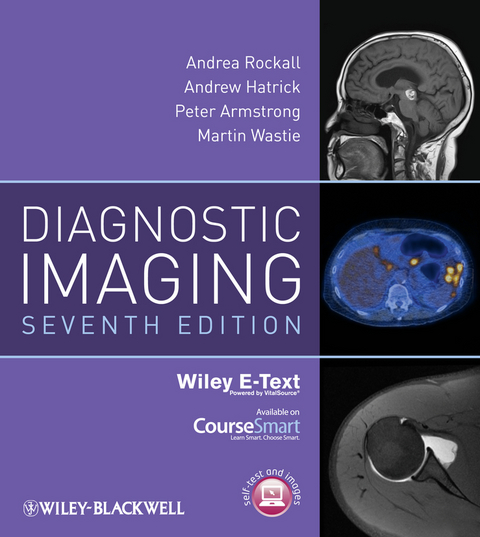
Diagnostic Imaging will help medical students, junior doctors, residents and trainee radiologists understand the principles behind interpreting all forms of imaging. Providing a balanced account of all the imaging modalities available - including plain film, ultrasound, computed tomography, magnetic resonance imaging, radionuclide imaging and interventional radiology - it explains the techniques used and the indications for their use.
Organised by body system, it covers all anatomical regions. In each region the authors discuss the most suitable imaging technique and provide guidelines for interpretation, illustrating clinical problems with normal and abnormal images.
Diagnostic Imaging is extensively illustrated throughout, featuring high quality full-colour images and more than 600 photographs. The images are downloadable in PowerPoint format from the brand new companion website at www.wileydiagnosticimaging.com, which also has over 100 interactive MCQs, to aid learning and teaching.
When you purchase the book you also receive access to the Wiley E-Text: Powered by VitalSource. This is an interactive digital version of the book, featuring downloadable text and images, highlighting and note-taking facilities, bookmarking, cross-referencing, in-text searching, and linking to references and abbreviations. Diagnostic Imaging is also available on CourseSmart, offering extra functionality as well as an immediate way to access the book. For more details, see www.coursesmart.com or 'The Anytime, Anywhere Textbook ' section.
Andrea Rockall is Professor of Radiology, Imperial College, London
Andrew Hatrick is Consultant General and Interventional Radiologist, Frimley Park Hospital NHS Foundation Trust
Peter Armstrong is formerly Professor of Radiology, Medical College of St Bartholomew's and the Royal London Hospitals, London, and formerly Professor and Vice-Chairman, University of Virginia, Charlottesville
Martin Wastie is formerly Professor of Radiology, University of Malaya Medical Centre, Kuala Lumpur, and formerly Consultant Radiologist, University Hospital, Nottingham
Diagnostic Imaging will help medical students, junior doctors, residents and trainee radiologists understand the principles behind interpreting all forms of imaging. Providing a balanced account of all the imaging modalities available including plain film, ultrasound, computed tomography, magnetic resonance imaging, radionuclide imaging and interventional radiology it explains the techniques used and the indications for their use. Organised by body system, it covers all anatomical regions. In each region the authors discuss the most suitable imaging technique and provide guidelines for interpretation, illustrating clinical problems with normal and abnormal images. Diagnostic Imaging is extensively illustrated throughout, featuring high quality full-colour images and more than 600 photographs. The images are downloadable in PowerPoint format from the brand new companion website at www.wileydiagnosticimaging.com, which also has over 100 interactive MCQs, to aid learning and teaching. When you purchase the book you also receive access to the Wiley E-Text: Powered by VitalSource. This is an interactive digital version of the book, featuring downloadable text and images, highlighting and note-taking facilities, bookmarking, cross-referencing, in-text searching, and linking to references and abbreviations. Diagnostic Imaging is also available on CourseSmart, offering extra functionality as well as an immediate way to access the book. For more details, see www.coursesmart.com or The Anytime, Anywhere Textbook section.
Andrea Rockall is Professor of Radiology, Imperial College, London Andrew Hatrick is Consultant General and Interventional Radiologist, Frimley Park Hospital NHS Foundation Trust Peter Armstrong is formerly Professor of Radiology, Medical College of St Bartholomew's and the Royal London Hospitals, London, and formerly Professor and Vice-Chairman, University of Virginia, Charlottesville Martin Wastie is formerly Professor of Radiology, University of Malaya Medical Centre, Kuala Lumpur, and formerly Consultant Radiologist, University Hospital, Nottingham
Cover 1
Title page 5
Copyright 6
Contents 7
Preface 9
Acknowledgements 10
List of Abbreviations 11
The Anytime, Anywhere Textbook 12
1: Technical Considerations 15
Use of the imaging department 15
Conventional radiography 15
Computed tomography 16
Computed tomography angiography 17
Artefacts 17
Contrast agents in conventional radiography and computed tomography 17
Ultrasound 19
Doppler effect 21
Radionuclide imaging 22
Positron emission tomography 25
Magnetic resonance imaging 26
Contrast agents for magnetic resonance imaging 30
Picture archiving and communication systems 31
Radiation hazards 31
2: Chest 33
Thoracic Disease 33
Imaging techniques 33
Plain chest radiograph 33
Computed tomography 37
Magnetic resonance imaging 38
Radionuclide lung scanning 38
Positron emission tomography 38
Ultrasound 38
Diseases of the chest with a normal chest radiograph 40
Obstructive airways disease 40
Small lesions 41
Pulmonary emboli without infarction 41
Infections 41
Diffuse pulmonary fibrosis 41
Pleural abnormality 41
Mediastinal masses 41
Abnormal chest signs 42
Silhouette sign 42
Radiological signs of lung disease 44
Air-space opacification 44
Pulmonary collapse (atelectasis) 45
Spherical opacities (lung mass, lung nodule) 54
Line or band-like opacities 58
Widespread small pulmonary opacities 60
Increased transradiancy of the lungs 62
Pleura 63
Pleural effusion 63
Pleural thickening (pleural fibrosis) 66
Pleural tumours 69
Pleural calcification 71
Pneumothorax 71
Mediastinum 73
Computed tomography and magnetic resonance imaging of the normal mediastinum 73
Mediastinal masses 74
Aortic aneurysm 81
Pneumomediastinum 82
Hilar enlargement 82
Lymph node enlargement 84
Diaphragm 84
Chest wall 85
Specific Disorders 85
Bacterial pneumonia 86
Viral and mycoplasma pneumonia 86
Lung abscess 86
Pulmonary tuberculosis 87
Primary tuberculosis 87
Postprimary tuberculosis 87
Fungal and parasitic diseases 90
Hydatid disease 91
Pneumonia in the immunocompromised host 91
Sarcoidosis 92
Diffuse interstitial pulmonary fibrosis 93
Usual interstitial pneumonia (cryptogenic fibrosing alveolitis, idiopathic pulmonary fibrosis) 93
Determining the cause of diffuse pulmonary fibrosis 93
Radiation pneumonitis 95
Collagen vascular diseases 95
Rheumatoid lung 95
Systemic lupus erythematosus 95
Scleroderma and dermatomyositis 96
Wegener’s granulomatosis 96
Pneumoconiosis 96
Coal workers’ pneumoconiosis 96
Asbestos-related disease 96
Diseases of the airways 96
Asthma 96
Bronchiolitis 97
Acute bronchitis 97
Chronic obstructive pulmonary disease 97
Cystic fibrosis 98
Respiratory distress in the newborn 100
Adult respiratory distress syndrome 100
Pulmonary emboli and infarction 101
Plain film abnormalities 101
Radionuclide lung scans 102
Computed tomography pulmonary angiography 102
Trauma to the chest 102
Carcinoma of the bronchus 105
Signs of a central tumour 105
Signs of a peripheral tumour 105
Spread of bronchial carcinoma 105
Metastatic neoplasms 108
Pulmonary metastases 108
Pleural metastases 109
Metastases to ribs 109
Lymphoma 113
3: Cardiac Disorders 115
Imaging techniques 115
Plain chest radiography 115
Echocardiography 121
Radionuclide studies 123
Computed tomography 126
Magnetic resonance imaging 126
Cardiac catheterization and angiography 126
Specific cardiac diseases 126
Heart failure 126
Ischaemic heart disease 127
Hypertensive heart disease and other myocardial diseases 129
Valvular heart disease 130
Pericardial effusion 133
Subacute bacterial endocarditis 135
Left atrial myxoma and other intracardiac masses 135
Congenital heart disease 135
4: Breast Imaging 137
Mammography 137
Breast ultrasound 137
Breast magnetic resonance imaging 141
Breast screening 141
5: Plain Abdomen 143
Intestinal gas pattern 143
Dilatation of the bowel 143
Pneumoperitoneum 146
Gas in an abscess 146
Gas in the wall of the bowel 146
Gas in the biliary system 149
Ascites 150
Abdominal calcification 150
Liver and spleen 152
Abdominal and pelvic masses 153
6: Gastrointestinal Tract 155
Imaging techniques: general principles 155
Contrast examinations 155
Computed tomography 156
Ultrasound examinations 156
Magnetic resonance imaging 156
Nuclear medicine 156
Basic descriptive terms 156
Oesophagus 157
Imaging techniques 157
Plain films 157
Barium swallow examination 157
Computed tomograpphy 160
Fluorodeoxyglucose positron emission tomography/computed tomography 160
Oesophageal abnormalities 160
Strictures of the oesophagus 160
Dilatation of the oesophagus 162
Other abnormalities of the oesophagus 164
Stomach and Duodenum 167
Imaging techniques 167
Barium meal examination 167
Computed tomography 167
Specific diseases of the stomach and duodenum 169
Peptic ulcer 169
Gastric carcinoma 170
Other gastric tumours 171
Gastric polyps 171
Lymphoma 172
Gastric outlet obstruction 172
Hiatus hernia 172
Small Intestine 173
Imaging techniques 175
Normal appearances of the small bowel 175
Imaging signs of disease of the small intestine 177
Dilatation 177
Mucosal abnormality 177
Narrowing 177
Ulceration 177
Specific diseases of the small intestine 178
Crohn’s disease 178
Small bowel ischaemia 181
Tuberculosis 181
Lymphoma 182
Malabsorption 182
Acute small bowel obstruction 183
Malrotation 184
Worm infestation 184
Large Intestine 184
Imaging techniques 184
Colonoscopy 184
Barium enema 185
Computed tomography pneumocolon 185
Magnetic resonance imaging 185
Nuclear medicine studies 185
Normal appearance of the colon 185
Imaging signs of disease of the large intestine 186
Narrowing of the lumen 186
Dilatation 187
Filling defects 188
Diverticula and muscle hypertrophy 188
Ulceration 188
Specific diseases of the colon 188
Inflammatory bowel disease 188
Diverticular disease 192
Appendicitis 194
Ischaemic colitis 194
Pneumatosis coli 197
Volvulus 197
Intussusception 197
Colorectal tumours 198
Hirschsprung’s disease (congenital aganglionosis) 202
Idiopathic megacolon (functional megacolon) 204
Anal fistula and perianal abscess 204
Specific Uses of Imaging in the Gastrointestinal Tract 204
Imaging investigation of the acute abdomen 204
Plain films 205
Barium or Gastrografin follow-through 205
Ultrasound 205
Computed tomography 205
Imaging investigation of acute bleeding from the gastrointestinal tract 206
Imaging investigation of abdominal trauma 208
7: Hepatobiliary System, Spleen and Pancreas 209
Liver 209
Imaging techniques 209
Ultrasound 209
Computed tomography 211
Magnetic resonance imaging 213
Liver masses 213
Malignant liver neoplasms 214
Benign liver masses 214
Liver abscesses 219
Cirrhosis of the liver and portal hypertension 219
Liver trauma 220
Fatty infiltration of the liver 221
Biliary System 222
Imaging techniques 222
Ultrasound 222
Magnetic resonance cholangiopancreatography 223
Endoscopic retrograde cholangiopancreatography 223
Percutaneous transhepatic cholangiogram 223
Hepatobiliary radionuclide scanning 223
Gall stones and cholecystitis 225
Cholecystitis 226
Jaundice 226
Pancreas 227
Pancreatic masses 230
Acute pancreatitis 231
Chronic pancreatitis 232
Pancreatic trauma 235
Spleen 235
Splenic trauma 235
8: Urinary Tract 237
Imaging techniques 237
Ultrasound 237
Urography 238
Magnetic resonance imaging 246
Radionuclide examination 247
Special techniques 251
Urinary tract disorders 251
Urinary calculi 251
Nephrocalcinosis 255
Urinary tract obstruction 255
Renal parenchymal masses 259
Urothelial tumours 265
Acute infections of the upper urinary tracts 266
Tuberculosis 270
Chronic pyelonephritis (reflux nephropathy) 271
Papillary necrosis 272
Renal trauma 272
Hypertension in renal disease 273
Renal failure 274
Congenital anomalies of the urinary tract 275
Bladder disorders 277
Bladder tumours 277
Bladder diverticula 278
Bladder calcification 278
Neurogenic bladder 278
Trauma to the bladder and urethra 280
Prostate and urethra disorders 281
Prostatic enlargement 281
Prostatic calcification 282
Bladder outflow obstruction 282
Scrotum and testes disorders 283
9: Female Genital Tract 287
Normal appearances 287
Ultrasound 287
Computed tomography 287
Magnetic resonance imaging 288
Positron emission tomography/computed tomography 288
Gynaecological pathology 288
Pelvic masses 288
Ovarian masses 289
Uterine masses 295
Pelvic inflammatory disease 296
Endometriosis 296
Detection of intrauterine contraceptive devices 296
Hysterosalpingography 296
Obstetric ultrasound 299
Ultrasound in the first trimester 300
Ultrasound in the second and third trimesters 301
Placental imaging 301
‘Large for dates’ uterus 301
‘Small for dates’ uterus: intrauterine growth retardation 302
Ultrasound for karyotyping 302
Fetal death 302
Ectopic pregnancy 302
10: Peritoneal Cavity and Retroperitoneum 305
Peritoneal Cavity 305
Peritoneal cavity disorders 305
Ascites 305
Peritoneal tumours 305
Intraperitoneal abscesses 307
Retroperitoneum 310
Imaging techniques 311
Computed tomography 311
Ultrasound 311
Magnetic resonance imaging 311
Retroperitoneal disorders 311
Retroperitoneal lymphadenopathy 311
Adrenal gland disorders 313
Retroperitoneal tumours 317
Aortic aneurysm 318
Retroperitoneal haematoma 321
Retroperitoneal and psoas abscesses 321
11: Bones 323
Imaging techniques 323
Plain bone radiographs 323
Ultrasound in musculoskeletal disease 324
Radionuclide bone imaging 326
Computed tomography in bone disease 327
Magnetic resonance imaging in bone disease 328
Bone disease diagnosis 328
Solitary lesions 328
Bone tumours 334
Osteomyelitis 339
Bone infarction 342
Multiple focal lesions 343
Metastases 343
Multiple myeloma 346
Lymphoma and leukaemia 347
Multiple periosteal reactions 347
Generalized decrease in bone density (osteopenia) 348
Osteoporosis 349
Rickets and osteomalacia 350
Hyperparathyroidism 351
Renal osteodystrophy 352
Generalized increase in bone density 353
Alteration of trabecular pattern and change in shape 354
Paget’s disease 354
Haemolytic anaemia 355
Sarcoidosis 355
Radiation-induced disease of bone 355
Changes in bone shape 360
Bone dysplasias 360
12: Joints 361
Imaging techniques 361
Plain film radiographs 361
Magnetic resonance imaging 361
Arthrography 361
Ultrasound 361
Arthritis 362
Signs indicating the presence of arthritis 362
Signs that point to the cause of arthritis 363
Diagnosis of arthritis 363
Rheumatoid arthritis 364
Gout 366
Calcium pyrophosphate dihydrate crystal deposition disease 367
Osteoarthritis 367
Haemophilia and bleeding disorders 368
Joint infections 368
Pyogenic arthritis 370
Tuberculous arthritis 370
Avascular (aseptic) necrosis 370
Osteochondritis 372
Internal derangement of the knee 373
Menisci 373
Cruciate ligaments 373
Collateral ligaments 373
Shoulder and rotator cuff disorders 373
Supraspinatus tendon tears 376
Calcific tendonitis 376
Miscellaneous joint conditions 377
Neuropathic joint 377
Synovial sarcoma (synovioma) 377
Slipped femoral epiphysis 377
Developmental dysplasia of the hip 377
Osteitis condensans ilii 382
Scleroderma 382
13: Spine 383
Imaging techniques 383
Radiographic signs of spinal abnormality 384
Disc space narrowing 384
Collapse of vertebral bodies 387
Pedicle abnormalities 389
Dense vertebrae 389
Spinal abnormalities 389
Spinal trauma 389
Degenerative spinal disease 395
Disc herniation 396
Spondylolisthesis 399
Infection 399
Inflammatory spondylarthropathy 403
Congenital abnormalities 405
Spinal cord and cauda equine compression 405
Intrinsic disorders of the spinal cord 405
Transverse myelitis and multiple sclerosis 411
14: Skeletal Trauma 413
Imaging techniques 413
Plain radiographs 413
Computed tomography 413
Magnetic resonance imaging 415
Radionuclide bone scanning 415
Imaging fractures 417
Imaging dislocations 417
Further plain film views 417
Specific injuries 421
Salter–Harris classification 421
Stress fracture 434
Insufficiency fracture 434
Pathological fracture 435
Non-accidental injury 435
Avulsion fractures 440
15: Brain 441
Imaging techniques 441
Computed tomography 441
Magnetic resonance imaging 446
Neurosonography 450
Specific brain disorders 450
Brain tumours 450
Stroke 454
Infection 457
Multiple sclerosis 461
Ageing 462
Dementia 464
Head injury 464
Extracerebral haematoma 466
Intracerebral lesion 466
Fracture 469
16: Orbits, Head and Neck 471
Sinuses 471
Opaque sinus 471
Nasopharynx 472
Orbits 473
Blowout fracture 474
Salivary glands 475
Sialography 475
Neck 475
Larynx 477
Thyroid imaging 477
Parathyroid imaging 479
17: Vascular and Interventional Radiology 485
Diagnostic vascular angiography 485
Arteriography 485
Magnetic resonance angiography 485
Computed tomography angiography 485
Ultrasound of the arterial system 487
Ultrasound venography 487
Contrast venography 488
Interventional radiology 489
Angioplasty and stents 489
Therapeutic embolization 492
Therapeutic ablation 492
Vascular catheterization for infusion 493
Inferior vena cava filters 493
Percutaneous needle biopsy 493
Percutaneous drainage of abscesses and other fluid collections 495
Transjugular liver biopsy 495
Transjugular intrahepatic portosystemic shunt 499
Interventional radiology of the gastrointestinal tract 499
Interventional radiology of the urinary tract 500
Interventional radiology of the biliary tract 500
Appendix: Computed Tomography Anatomy of the Abdomen 505
Index 0
"Overall, this is a useful introduction to radiology for
medical students and interns. It is helpful to have one reference
for a number of modalities for various types of organ imaging and
for many different medical conditions, although it does
underemphasize the value of radionuclide techniques."
(Doody's, 16 August 2013)
| Erscheint lt. Verlag | 13.3.2013 |
|---|---|
| Sprache | englisch |
| Themenwelt | Medizin / Pharmazie ► Gesundheitsfachberufe |
| Medizinische Fachgebiete ► Radiologie / Bildgebende Verfahren ► Radiologie | |
| Schlagworte | Account • anatomical • Authors • available • Balanced • Bildgebendes Diagnoseverfahren • Body • Film • forms • Guidelines • Indications • Interpretation • Interventional • Medical • Medical Science • Medizin • Modalities • plain • Principles • Radiologie u. Bildgebende Verfahren • Radiology & Imaging • Radionuclide • Region • resonance • students • suitable • System • techniques • use |
| ISBN-10 | 1-118-52423-3 / 1118524233 |
| ISBN-13 | 978-1-118-52423-7 / 9781118524237 |
| Informationen gemäß Produktsicherheitsverordnung (GPSR) | |
| Haben Sie eine Frage zum Produkt? |
 PDF (Adobe DRM)
Kopierschutz: Adobe-DRM
Adobe-DRM ist ein Kopierschutz, der das eBook vor Mißbrauch schützen soll. Dabei wird das eBook bereits beim Download auf Ihre persönliche Adobe-ID autorisiert. Lesen können Sie das eBook dann nur auf den Geräten, welche ebenfalls auf Ihre Adobe-ID registriert sind.
Details zum Adobe-DRM
Dateiformat: PDF (Portable Document Format)
Mit einem festen Seitenlayout eignet sich die PDF besonders für Fachbücher mit Spalten, Tabellen und Abbildungen. Eine PDF kann auf fast allen Geräten angezeigt werden, ist aber für kleine Displays (Smartphone, eReader) nur eingeschränkt geeignet.
Systemvoraussetzungen:
PC/Mac: Mit einem PC oder Mac können Sie dieses eBook lesen. Sie benötigen eine
eReader: Dieses eBook kann mit (fast) allen eBook-Readern gelesen werden. Mit dem amazon-Kindle ist es aber nicht kompatibel.
Smartphone/Tablet: Egal ob Apple oder Android, dieses eBook können Sie lesen. Sie benötigen eine
Geräteliste und zusätzliche Hinweise
Buying eBooks from abroad
For tax law reasons we can sell eBooks just within Germany and Switzerland. Regrettably we cannot fulfill eBook-orders from other countries.
aus dem Bereich