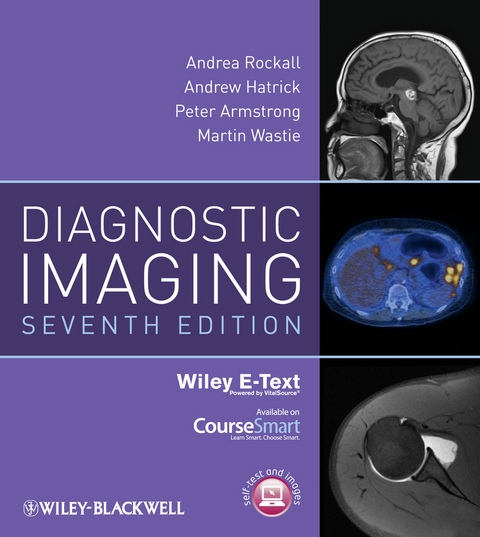
Diagnostic Imaging (eBook)
John Wiley & Sons (Verlag)
978-1-118-52424-4 (ISBN)
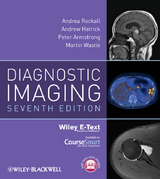
Diagnostic Imaging will help medical students, junior doctors, residents and trainee radiologists understand the principles behind interpreting all forms of imaging. Providing a balanced account of all the imaging modalities available - including plain film, ultrasound, computed tomography, magnetic resonance imaging, radionuclide imaging and interventional radiology - it explains the techniques used and the indications for their use.
Organised by body system, it covers all anatomical regions. In each region the authors discuss the most suitable imaging technique and provide guidelines for interpretation, illustrating clinical problems with normal and abnormal images.
Diagnostic Imaging is extensively illustrated throughout, featuring high quality full-colour images and more than 600 photographs. The images are downloadable in PowerPoint format from the brand new companion website at www.wileydiagnosticimaging.com, which also has over 100 interactive MCQs, to aid learning and teaching.
When you purchase the book you also receive access to the Wiley E-Text: Powered by VitalSource. This is an interactive digital version of the book, featuring downloadable text and images, highlighting and note-taking facilities, bookmarking, cross-referencing, in-text searching, and linking to references and abbreviations. Diagnostic Imaging is also available on CourseSmart, offering extra functionality as well as an immediate way to access the book. For more details, see www.coursesmart.com or 'The Anytime, Anywhere Textbook ' section.
Andrea Rockall is Professor of Radiology, Imperial College, London
Andrew Hatrick is Consultant General and Interventional Radiologist, Frimley Park Hospital NHS Foundation Trust
Peter Armstrong is formerly Professor of Radiology, Medical College of St Bartholomew's and the Royal London Hospitals, London, and formerly Professor and Vice-Chairman, University of Virginia, Charlottesville
Martin Wastie is formerly Professor of Radiology, University of Malaya Medical Centre, Kuala Lumpur, and formerly Consultant Radiologist, University Hospital, Nottingham
Diagnostic Imaging will help medical students, junior doctors, residents and trainee radiologists understand the principles behind interpreting all forms of imaging. Providing a balanced account of all the imaging modalities available including plain film, ultrasound, computed tomography, magnetic resonance imaging, radionuclide imaging and interventional radiology it explains the techniques used and the indications for their use. Organised by body system, it covers all anatomical regions. In each region the authors discuss the most suitable imaging technique and provide guidelines for interpretation, illustrating clinical problems with normal and abnormal images. Diagnostic Imaging is extensively illustrated throughout, featuring high quality full-colour images and more than 600 photographs. The images are downloadable in PowerPoint format from the brand new companion website at www.wileydiagnosticimaging.com, which also has over 100 interactive MCQs, to aid learning and teaching. When you purchase the book you also receive access to the Wiley E-Text: Powered by VitalSource. This is an interactive digital version of the book, featuring downloadable text and images, highlighting and note-taking facilities, bookmarking, cross-referencing, in-text searching, and linking to references and abbreviations. Diagnostic Imaging is also available on CourseSmart, offering extra functionality as well as an immediate way to access the book. For more details, see www.coursesmart.com or The Anytime, Anywhere Textbook section.
Andrea Rockall is Professor of Radiology, Imperial College, London Andrew Hatrick is Consultant General and Interventional Radiologist, Frimley Park Hospital NHS Foundation Trust Peter Armstrong is formerly Professor of Radiology, Medical College of St Bartholomew's and the Royal London Hospitals, London, and formerly Professor and Vice-Chairman, University of Virginia, Charlottesville Martin Wastie is formerly Professor of Radiology, University of Malaya Medical Centre, Kuala Lumpur, and formerly Consultant Radiologist, University Hospital, Nottingham
Preface vii
Acknowledgements viii
List of Abbreviations ix
The Anytime, Anywhere Textbook x
1 Technical Considerations 1
2 Chest 19
3 Cardiac Disorders 101
with the assistance of Dr Francesca Pugliese
4 Breast Imaging 123
with the assistance of Dr Sarah Vinnicombe
5 Plain Abdomen 129
6 Gastrointestinal Tract 141
7 Hepatobiliary System, Spleen and Pancreas 195
8 Urinary Tract 223
9 Female Genital Tract 273
10 Peritoneal Cavity and Retroperitoneum 291
11 Bones 309
with the assistance of Dr Kasthoori Jayarani
12 Joints 347
with the assistance of Dr Kasthoori Jayarani
13 Spine 369
with the assistance of Dr Rob Barker
14 Skeletal Trauma 399
with the assistance of Dr Muaaze Ahmad
15 Brain 427
with the assistance of Dr Rob Barker
16 Orbits, Head and Neck 457
with the assistance of Dr Polly Richards
17 Vascular and Interventional Radiology 471
Appendix: Computed Tomography Anatomy of the Abdomen 491
Index 497
"Overall, this is a useful introduction to radiology for
medical students and interns. It is helpful to have one reference
for a number of modalities for various types of organ imaging and
for many different medical conditions, although it does
underemphasize the value of radionuclide techniques."
(Doody's, 16 August 2013)
2
Chest
THORACIC DISEASE
Imaging Techniques
Plain Chest Radiograph
A routine chest radiograph (CXR) consists of a posteroanterior (PA) view, also known as a frontal view, with the optional addition of a lateral view (Fig. 2.1). Both should be exposed on full inspiration with the patient in the upright position. Films taken on expiration are difficult to interpret, because in expiration the lung bases appear hazy and the heart opacity increases in size (Fig. 2.2).
Fig. 2.1 Normal chest. (a) Posteroanterior view. The arrows point to the breast opacities of this female patient. (b) Lateral view. The vertebrae are more transradiant (i.e. blacker) as the eye travels down the spine, until the diaphragm is reached. Ao, aorta; T, trachea.
Fig. 2.2 Effect of expiration on chest films showing two films of the same patient taken one after the other. (a) Expiration. (b) Inspiration. On expiration the heart appears larger and the lung bases are hazy.
Even though chest films are the commonest x-ray examinations performed, they are amongst the most difficult to interpret. In developing your interpretation technique, a routine is necessary in order to avoid overlooking valuable radiological signs. The order in which one looks at the structures is unimportant; what matters is to follow a routine, otherwise significant abnormalities will be missed. One approach to examining the frontal and lateral chest films is presented below.
Trace the Diaphragm
The upper surfaces of the diaphragm should be clearly visible from one costophrenic angle to the other, except where the heart and mediastinum are in contact with the diaphragm. On a good inspiratory film, the dome of the right hemidiaphragm is at the level of the anterior end of the sixth rib, the right hemidiaphragm being up to 2.5 cm higher than the left.
Check the Size and Shape of the Heart
See Figures 2.1 and 2.3 and Chapter 3 for details.
Fig. 2.3 Normal but prominent thymus in a child aged 3 months. The thymus shows the characteristic ‘sail shape’ projecting to the right of the mediastinum (arrows). This appearance should not be confused with right upper lobe consolidation or collapse.
Check the Position of the Heart and Mediastinum
Normally, the trachea lies midway, or slightly to the right of the midpoint, between the medial ends of the clavicles. The position of the heart is variable; on average one-third lies to the right of the midline.
Look at the Mediastinum
The outline of the mediastinum and heart should be clearly seen, except where the heart lies in contact with the diaphragm. The right superior mediastinal border is usually straight or slightly curved as it passes downwards to merge with the right heart border. The left superior mediastinal border is ill-defined above the aortic arch. With increasing age, the aorta elongates. Elongation necessarily involves unfolding, because the aorta is fixed at the aortic valve and at the diaphragm. This unfolding results in the ascending aorta deviating to the right and the descending aorta to the left. In young children, the normal thymus is often clearly visualized. It may be very large and should not be mistaken for disease (Fig. 2.3).
Examine the Hilar Structures
The hila represent the pulmonary arteries and veins. Air within the major bronchi can be recognized, but the walls of the bronchi are not usually visible. The hilar lymph nodes in the normal patient are too small to recognize as discrete opacities. The left hilum is usually slightly higher in position than the right.
Examine the Lungs
The only structures that can be identified within normal lungs are the blood vessels, the interlobar fissures and the walls of certain larger bronchi seen end-on. The fissures can only be seen if they lie along the line of the x-ray beam; they are, after all, composed of just two layers of pleura. Usually, only the horizontal fissure is visible in the frontal projection, running from the right hilum to the sixth rib in the axilla. There is no equivalent to the horizontal fissure on the left. The oblique fissures are only visible on the lateral view. The fissures form the boundaries of the lobes, so knowing their position is essential for an appreciation of lobar anatomy (Fig. 2.4). In about 1% of people there is an extra fissure visible in the frontal view – the so-called azygos lobe fissure (Fig. 2.5).
Fig. 2.4 Position of the lobes and fissures. (a) The oblique (major) fissure is similar on the two sides. The oblique fissures are not visible on the frontal view; their position is indicated by dashed lines. (b) In the left lung the oblique fissure separates the upper lobe (UL) and lower lobe (LL). (c) In the right lung, there is an extra fissure – the horizontal (minor) fissure, which separates the upper lobe (UL) and middle lobe (ML). (The lingular segments of the upper lobe are analogous to the segments of the middle lobe.) T, trachea.
Fig. 2.5 The azygos lobe fissure. During normal intrauterine development the azygos vein migrates through the lung from the chest wall to lie within the mediastinum. (a) CXR in a patient with an azygos ‘lobe’, the vein (large arrow) fails to reach the tracheobronchial angle and, therefore, lies in the lower end of the azygos fissure (small arrows). (b) CT in the same patient. The azygos fissure can be clearly seen (small arrow). This variant is of no clinical significance.
Look for abnormal pulmonary opacities or translucencies. Do not mistake the pectoral muscles, breasts (see Fig. 2.1) or plaits of hair for pulmonary opacities. Skin lumps or the nipples may mimic pulmonary nodules. The nipples are usually in the fifth anterior rib space, but they are, in practice, rarely misdiagnosed because, in general, if one nipple is visible the other should also be seen.
A good method of finding subtle opacities on the frontal film is to compare one lung with the other, zone by zone. Detecting ill-defined opacities on the lateral view can be difficult.
Check the Integrity of the Ribs, Clavicles and Spine and Examine the Soft Tissues
The bones of the chest should be checked for fractures and metastases. Any rib notching should be noted as it may indicate coarctation of the aorta. In females, check that both breasts are present. Following mastectomy the breast opacity cannot be defined. The reduction in the soft tissue bulk leads to an increased transradiancy of that side of the chest, which should not be confused with pulmonary disease.
Assess the Technical Quality of the Film
Technical factors are important as incorrect exposure may hide disease, and faulty centring or projection may mimic pathology. The correctly exposed routine PA chest film is one in which the ribs and spine behind the heart can be identified but the lungs are not overexposed. Unless one can see through the heart, lower lobe lesions may be completely missed. A straight film is one where the medial ends of the clavicles are equidistant from the thoracic vertebrae.
Computed Tomography
Technique
A routine chest computed tomography (CT) examination consists of contiguous sections. Intravenous contrast medium is given in many cases, particularly when the purpose of the examination is to visualize the mediastinum, the hila or the pulmonary blood vessels. The images are usually viewed at both lung and mediastinal and bone window settings (Fig. 2.6) (see Fig. 1.2 for an explanation of CT windows and levels).
Fig. 2.6 Chest CT illustrating the different window centres (levels) used for the lungs and mediastinum. (a) Lung settings. A negative centre (minus 700 Hounsfield units [HU]) and a wide window width (1000 HU) shows the lungs to advantage, but there is no detail of mediastinal structures, the mediastinum being uniformly white. In this example, the lung vessels are the only identifiable opacities originating from within the lung. Note the peripheral left lung cancer (arrow). (b) Mediastinal settings. A centre close to average soft tissue density (40 HU) and a narrow window width (400 HU) shows the structures within the mediastinum clearly, but the lungs are blacked out. The lung cancer is arrowed.
Thin sections can be used to produce images with higher spatial resolution – so-called high resolution CT (HRCT). HRCT better demonstrates pulmonary parenchymal disease and bronchiectasis.
Indications
There are many indications for CT in chest disease, notably:
- Evaluating abnormalities on a CXR.
- Investigating causes of breathlessness:
- acute, e.g. ?pulmonary embolus
- chronic, e.g. interstitial lung disease.
- Staging of cancer.
- Evaluation of vascular anatomy, e.g. thoracic aortic aneurysms/dissection (Fig. 2.7).
- Performing CT-guided biopsy of a lung/pleural/mediastinal mass.
Fig. 2.7 Aortic aneurysm. (a) Example of the use of contrast-enhanced CT to diagnose an aortic aneurysm. The lumen of the aneurysm (*) enhances brightly. Much of the aneurysm is lined by clot. (b) The CXR shows a mass (arrows), but the precise diagnosis of aortic aneurysm cannot be made.
Normal Images
Just as on CXRs, the only structures seen on CT within the normal lungs are blood vessels, pleural fissures and the walls of bronchi. Vessels within the...
| Erscheint lt. Verlag | 11.3.2013 |
|---|---|
| Sprache | englisch |
| Themenwelt | Medizin / Pharmazie ► Gesundheitsfachberufe |
| Medizinische Fachgebiete ► Radiologie / Bildgebende Verfahren ► Radiologie | |
| Schlagworte | Account • anatomical • Authors • available • Balanced • Bildgebendes Diagnoseverfahren • Body • Film • forms • Guidelines • Indications • Interpretation • Interventional • Medical • Medical Science • Medizin • Modalities • plain • Principles • Radiologie u. Bildgebende Verfahren • Radiology & Imaging • Radionuclide • Region • resonance • students • suitable • System • techniques • use |
| ISBN-10 | 1-118-52424-1 / 1118524241 |
| ISBN-13 | 978-1-118-52424-4 / 9781118524244 |
| Informationen gemäß Produktsicherheitsverordnung (GPSR) | |
| Haben Sie eine Frage zum Produkt? |
 EPUB (Adobe DRM)
Kopierschutz: Adobe-DRM
Adobe-DRM ist ein Kopierschutz, der das eBook vor Mißbrauch schützen soll. Dabei wird das eBook bereits beim Download auf Ihre persönliche Adobe-ID autorisiert. Lesen können Sie das eBook dann nur auf den Geräten, welche ebenfalls auf Ihre Adobe-ID registriert sind.
Details zum Adobe-DRM
Dateiformat: EPUB (Electronic Publication)
EPUB ist ein offener Standard für eBooks und eignet sich besonders zur Darstellung von Belletristik und Sachbüchern. Der Fließtext wird dynamisch an die Display- und Schriftgröße angepasst. Auch für mobile Lesegeräte ist EPUB daher gut geeignet.
Systemvoraussetzungen:
PC/Mac: Mit einem PC oder Mac können Sie dieses eBook lesen. Sie benötigen eine
eReader: Dieses eBook kann mit (fast) allen eBook-Readern gelesen werden. Mit dem amazon-Kindle ist es aber nicht kompatibel.
Smartphone/Tablet: Egal ob Apple oder Android, dieses eBook können Sie lesen. Sie benötigen eine
Geräteliste und zusätzliche Hinweise
Buying eBooks from abroad
For tax law reasons we can sell eBooks just within Germany and Switzerland. Regrettably we cannot fulfill eBook-orders from other countries.
aus dem Bereich