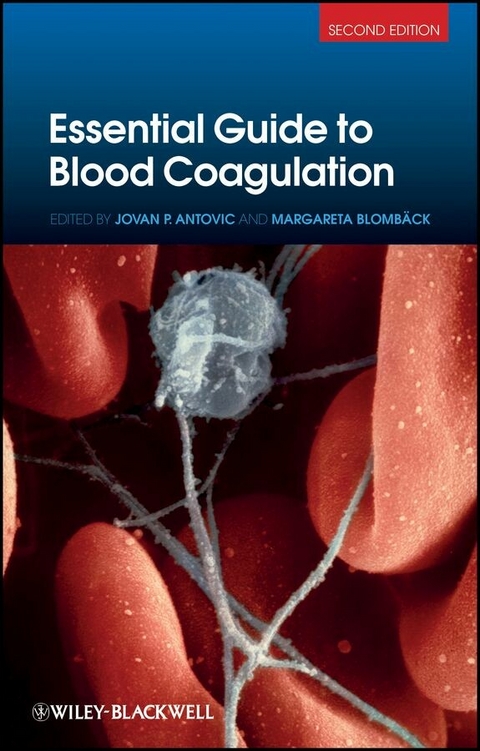
Essential Guide to Blood Coagulation (eBook)
John Wiley & Sons (Verlag)
978-1-118-32767-8 (ISBN)
A practical guide to laboratory diagnosis and treatment of hemostatic disorders.
This concise book distils the most clinically up-to-date information on thrombotic and bleeding disorders, including the latest treatment strategies, for key conditions and diseases. Essential Guide to Blood Coagulation covers both the stable and the acute stages of hereditary and acquired bleeding and thrombotic disorders.
Faced with a bleeding patient, it may be difficult to determine whether blood loss is due to a local factor, or an underlying hemostatic defect. There are a range of laboratory tests which can be performed to identify the cause of bleeding in a patient. This book highlights the tests that can be used in the laboratory to aid diagnosis.
Essential Guide to Blood Coagulation has been updated to include the new anticoagulants and now has a dedicated chapter on antiplatelet drugs. This invaluable guide will help all those treating patients to expand their knowledge of hemostatic disorders.
TITLES OF RELATED INTEREST
Hemophilia and Hemostasis: A Case-Based Approach to Management
Second Edition
Alice Ma, Harold Roberts, Miguel Escobar
ISBN: 978-0-470-65976-2
Quality in Laboratory Hemostasis and Thrombosis
Second Edition
Steve Kitchen, John Olson, Eric Preston (due May 2013)
ISBN: 978-0-470-67119-1
Edited by
Jovan P. Antovic and Margareta Blombäck
Department of Molecular Medicine and Surgery, Coagulation Research, Karolinska Institutet; Clinical Chemistry, Karolinska University Hospital,
Stockholm, Sweden
A practical guide to laboratory diagnosis and treatment of hemostatic disorders.This concise book distils the most clinically up-to-date information on thrombotic and bleeding disorders, including the latest treatment strategies, for key conditions and diseases. Essential Guide to Blood Coagulation covers both the stable and the acute stages of hereditary and acquired bleeding and thrombotic disorders. Faced with a bleeding patient, it may be difficult to determine whether blood loss is due to a local factor, or an underlying hemostatic defect. There are a range of laboratory tests which can be performed to identify the cause of bleeding in a patient. This book highlights the tests that can be used in the laboratory to aid diagnosis. Essential Guide to Blood Coagulation has been updated to include the new anticoagulants and now has a dedicated chapter on antiplatelet drugs. This invaluable guide will help all those treating patients to expand their knowledge of hemostatic disorders. TITLES OF RELATED INTEREST Hemophilia and Hemostasis: A Case-Based Approach to ManagementSecond EditionAlice Ma, Harold Roberts, Miguel EscobarISBN: 978-0-470-65976-2 Quality in Laboratory Hemostasis and ThrombosisSecond EditionSteve Kitchen, John Olson, Eric Preston (due May 2013)ISBN: 978-0-470-67119-1
Edited by Jovan P. Antovic and Margareta Blombäck Department of Molecular Medicine and Surgery, Coagulation Research, Karolinska Institutet; Clinical Chemistry, Karolinska University Hospital, Stockholm, Sweden
Essential Guide to Blood Coagulation 3
Contents 7
List of contributors 12
Preface 14
Abbreviations 15
PART 1 GENERAL HEMOSTASIS 17
CHAPTER 1 Schematic presentation of the hemostatic system 19
CHAPTER 2 Proposals for sampling instructions 22
Points to note prior to sampling 22
Sampling time and patient preparation 23
Referrals for coagulation analyses 24
Sampling 24
Analyses of plasma 24
Technique 25
For DNA investigation (genetic analyses) 26
Reference 26
CHAPTER 3 Laboratory investigations 27
Nomenclature 27
Reference intervals for laboratory investigations 29
Screening analyses 29
Pt-Bleeding time 30
Other proposed analyses when bleeding time is increased in spite of normal platelet count 30
Special analyses 36
Coagulation factors 36
Anticoagulants 39
Protein C anticoagulant system 40
Platelet function 42
Fibrinolysis 43
Markers of coagulation activation (hypercoagulation markers) 45
Activating peptides: general remarks 45
P-prothrombin fragment 1+2 (F1+2) 45
P-thrombin-antithrombin (TAT) complex 45
DNA analyses 45
DNA-based diagnosis of hemophilia A and B 45
DNA-based diagnosis in VWD 46
DNA-based diagnosis in other hereditary bleeding disorders 47
DNA-based diagnosis in thromboembolic disorders 47
Global hemostatic assays and bedside methods 47
Endogenous thrombin potential (ETP) 47
Overall hemostatic potential (OHP) 47
Thromboelastography (TEG®)/ROTEM®) 48
Point-of-care tests (POCT) also used as a routine 48
Useful components in research studies 48
Fibrin-gel structure 48
P-plasmin-plasmin inhibitor complex 48
P-t-PA-PAI complex 49
P-thrombin time 49
P-ecarin clotting time 49
P-C1-esterase inhibitor 49
P-elastase 49
P-heparin co-factor II (HC II) 49
P-plasminogen activator inhibitor 2 (PAI-2) 49
P-protein C inhibitor 50
P-APC-protein C inhibitor (PCI) complex 50
P-TAFI 50
P-VWF cleaving protease = ADAMTS-13 50
P-tissue factor pathway inhibitor (TFPI) 51
P-tissue factor (TF) 51
Platelet-activating predictors 51
P-thromboglobulin (?-TG), P-platelet factor 4 (PF4) 51
Platelet P-selectin (CD62P) or P-soluble P-selectin 52
PLT-fibrinogen, PLT-VWF 52
Microparticles (MP) 52
Other non-hemostatic variables of importance P/S-CRP 52
Combinations of assays suggested for various hemostatic abnormalities 54
References 54
PART 2 BLEEDING DISORDERS 55
CHAPTER 4 Hereditary bleeding disorders 57
General remarks about hemophilia A and B 57
General remarks about von Willebrand disease 58
Factor concentrates used for treatment of hemophilia A and B and VWD in Sweden in 2012 59
General remarks about factor concentrates 59
Treatment strategy in severe forms of hemophilia and VWD 60
Home/self-treatment 60
Treatment in trauma and acute bleedings 60
Recommendations for desired initial plasma concentrations at different types of bleedings 61
Prophylaxis against joint bleedings 62
Surgery in patients with bleeding disorders 63
Tooth extraction in a hemophilia patient 63
Caution in patients with bleeding disorders 64
Pain-killing drugs allowed in hemophilia 64
Other important issues in more severe forms of hemophilia and VWD 64
Risk of hepatitis 65
Treatment principles for different types of bleeding disorders (severe, moderate, and milder forms of hemostatic defects) 65
Hematuria 65
Nose bleeding 66
Gum bleeding 66
Menorrhagia 66
Pregnancy and delivery 66
Treatment with tranexamic acid 67
Contraindication 67
Rare bleeding disorders 67
Severe platelet function defect (e.g. Glanzmann thrombasthenia) 68
Mild hemostatic defects 68
Blood sampling in bleeding disorders 70
Bleeding risk charts 70
CHAPTER 5 Critical bleeding 72
Introduction 72
Definition of massive bleeding 72
Transfusion coagulopathy 72
Recommendations to obtain optimal hemostasis 73
Management 74
Role of massive transfusion protocols in massive bleeding 74
During continuous bleeding, aim for the following levels 74
Choice of plasma 74
Local procedures 75
Additional treatment 75
Fibrinogen concentrate 75
Prothrombin complex concentrate (PCC) 75
Recombinant factor VIIa 75
Concentrates of other coagulation factors 76
Cryoprecipitates 76
Tranexamic acid 76
Desmopressin 76
Local hemostatic drugs 76
Complicating factors 77
Kidney failure 77
Liver failure 77
Reduced vitamin K absorption 77
Malignancies 77
Ongoing treatment with antiplatelet and anticoagulant drugs 77
CHAPTER 6 Investigation of increased bleeding tendency 78
Introduction 78
Diagnosis 78
Laboratory tests 79
Reasons for pathologic screening analyses and further actions 80
Causes of prolonged bleeding time 80
Causes of thrombocytopenia 80
Hereditary thrombocytopenias 81
Acquired thrombocytopenia 81
Causes of prolonged activated partial thromboplastin time (APT time) 81
Possible causes 81
Causes of elevated PT(INR) 82
Investigation of bleeding tendency: practical aspects 82
Elective investigation in non-acute bleeding tendency 82
Preoperative investigation 83
Acute investigation in postoperative or post-traumatic bleeding 83
PART 3 THROMBOEMBOLIC DISORDERS 85
CHAPTER 7 Venous thrombosis and pulmonary embolism 87
Introduction 87
Incidence of thrombosis in different clinical materials 87
Venous thrombosis 88
Diagnosis 88
Tools for confirming or excluding clinical suspicion of venous thrombosis 90
Vein thrombosis in the arm 91
Vein thrombosis in v portae, v hepatica (Budd–Chiari syndrome) and v mesenterica 91
Superficial thrombophlebitis 91
Pulmonary embolism 91
Clinical suspicion 91
Tools for confirming or excluding clinical suspicion of PE 93
Treatment of VTE 95
Primary prophylaxis against VTE 107
Physical prophylaxis in connection with surgery 108
Drug prophylaxis in patients with a medical diagnosis 108
Drug prophylaxis in surgery 108
CHAPTER 8 Investigation of thromboembolic tendency 110
Introduction 110
Venous thromboembolism 111
Possible hereditary defect 111
Investigation prior to prescribing oral contraceptives or postmenopausal HRT 111
Acquired defects 112
Phospholipid antibodies and lupus anticoagulant 112
Arterial thromboembolism 112
Disseminated intravascular coagulation 112
Suspected or manifest DIC 112
Hypercoagulation (not acute DIC) 112
CHAPTER 9 Heart disease 113
Ischemic heart disease 113
Stable ischemic heart disease 113
Unstable angina pectoris/non ST-elevation myocardial infarction (NSTEMI) 113
ST-elevation myocardial infarction (STEMI) 114
Percutaneous coronary intervention (PCI) in ischemic heart disease 115
Atrial fibrillation 118
Planned electroconversion 119
Cardiac valve prosthesis 119
New oral anticoagulants in the treatment of heart disease 120
CHAPTER 10 Antiplatelet drug therapy and reversal of its effects 121
Introduction 121
ASA 121
ADP (P2Y12) receptor antagonists 122
GPIIb/IIIa receptor antagonists 122
Phosphodiesterase inhibitors and other antiplatelet compounds 124
Combined antithrombotic treatment 124
Benefit–risk assessment 124
Platelet transfusion 125
CHAPTER 11 New oral anticoagulants: focus on currently approved oral factor Xa and thrombin inhibitors 127
Clinical pharmacology of NOACs 127
Rivaroxaban 127
Apixaban 128
Dabigatran 129
Possibility of and need for therapeutic monitoring of NOACs 130
Clinical aspects of NOACs 130
Results of clinical trials 132
Summary 132
Some characteristics of the individual NOACs 134
Summary 134
Considerations to be taken when using NOACs in some emergency situations 135
Summary 135
CHAPTER 12 Stroke and transient ischemic attack 137
Antithrombotic secondary stroke prevention 137
Atrial fibrillation and TIA or stroke 138
Thrombolysis in stroke 138
Cerebral venous thrombosis and dissection of precerebral arteries 139
Recurrent TIA 140
Prophylactic treatment against DVT and PE 140
CHAPTER 13 Peripheral artery surgery 141
Prophylaxis against reocclusion in peripheral vascular surgery or percutaneous transluminal angioplasty (PTA) 141
Peri- and postoperative treatment 141
Thrombolysis in acute ischemia 142
PART 4 SPECIAL HEMOSTASIS 143
CHAPTER 14 Hemostasis in obstetrics and gynecology 145
Introduction 145
Thrombosis during pregnancy 147
Diagnosis of DVT and PE during pregnancy 148
Treatment with anticoagulation 150
Treatment of acute DVT/PE during pregnancy 151
Treatment at partus and postpartum 153
Breastfeeding 154
Special cases 154
Heart disease: treatment of women with mechanical heart valve prostheses 155
Thromboprophylaxis in obstetrics and gynecology 156
Thromboprophylaxis during pregnancy, partus, and postpartum 157
General comments on thromboprophylaxis 159
Thromboprophylaxis at birth 160
Thromboprophylaxis in the puerperium 160
Thromboprophylaxis in antithrombin deficiency 161
Ongoing treatment with VKA drugs and with recurrent DVT/PE history 161
Thromboprophylaxis at caesarean section 163
Thromboprophylaxis at vaginal delivery 164
Blood sampling in children of women with severe forms of thrombophilia 164
Obstetric epidural/spinal analgesia (anesthesia) 164
In high-dose prophylaxis and treatment 164
In ASA medication (75–160 mg) 165
In platelet function defi ciency 165
In pre-eclampsia 165
In idiopathic thrombocytopenia purpura (ITP) 165
In von Willebrand disease 165
In carriers of hemophilia A or B 166
In antiphospholipid syndrome (SLE) 166
Complications during pregnancy 166
Hemophilia, VWD 166
Idiopathic thrombocytopenia purpura 167
Monitoring during pregnancy 167
Treatment during pregnancy 167
Delivery 167
The newborn infant 168
Essential thrombocytosis/thrombocythemia (ET) 168
Pre-eclampsia 168
Acute fatty liver of pregnancy (AFLP) 169
Thrombotic thrombocytopenia purpura (TTP) 169
Prophylaxis against pre-eclampsia 169
Postpartum bleeding 171
General procedures 171
Thromboprophylaxis in legal and spontaneous abortions 172
Thromboprophylaxis in gynecologic surgery 172
Oral contraceptive (OC) pills and hormone replacement therapy (HRT) 173
Investigation before oral contraceptives, advice concerning oral contraceptives 173
Acute oral contraceptives (p-pills) 175
Investigation prior to postclimacteric substitution treatment 175
Investigation prior to artificial insemination (IVF) 176
Investigation in repeated miscarriages 176
Investigation in menorrhagia (for treatment see Chapter 4) 177
CHAPTER 15 Hemostasis in children 178
Introduction 178
Bleeding disorders in children 182
Bleeding in newborns 182
Coagulation factor deficiencies 183
Acquired bleeding tendency 186
Thromboembolic disorders in children 188
Venous thrombosis 188
Heparin-induced thrombocytopenia 193
Sinus venous thrombosis 193
Arterial thrombosis 194
Stroke 195
CHAPTER 16 Emergency conditions associated with coagulation: DIC, HIT and TTP/HUS 198
Disseminated intravascular coagulation 198
Definition 198
Pathophysiology 198
The clinical picture 199
Laboratory diagnosis of DIC 200
Treatment monitoring 200
Treatment 201
Heparin-induced thrombocytopenia 204
HIT type 1 204
HIT type 2 204
Thrombotic microangiopathies 206
Thrombotic thrombocytopenic purpura and hemolytic-uremic syndrome 206
Reference 206
Index 207
"Nevertheless, this book could one day become the
'oxford handbook' - equivalent for
coagulation." (The Haem Trainee, 1
August2013)
"This book would be useful to those wanting an
introduction to coagulation disorders. More experienced
practitioners will likely find its treatment of coagulation
disorders too superficial for their needs."
(Doody's, 23 August 2013)
| Erscheint lt. Verlag | 20.2.2013 |
|---|---|
| Sprache | englisch |
| Themenwelt | Medizin / Pharmazie ► Allgemeines / Lexika |
| Medizinische Fachgebiete ► Innere Medizin ► Kardiologie / Angiologie | |
| Schlagworte | Acute • Bleeding • Blood • Blutgerinnung • Book • clinically • coagulation • concise • Conditions • Diagnosis • disorders • Essential • faced • Guide • Hemostatic • Hereditary • Information • Latest • Medical Science • Medizin • Practical • Stable • Strategies • Thrombose u. Hämostase • Thrombose u. Hämostase • Thrombosis & Hemostasis • thrombotic • Treatment • uptodate |
| ISBN-10 | 1-118-32767-5 / 1118327675 |
| ISBN-13 | 978-1-118-32767-8 / 9781118327678 |
| Informationen gemäß Produktsicherheitsverordnung (GPSR) | |
| Haben Sie eine Frage zum Produkt? |
 PDF (Adobe DRM)
Kopierschutz: Adobe-DRM
Adobe-DRM ist ein Kopierschutz, der das eBook vor Mißbrauch schützen soll. Dabei wird das eBook bereits beim Download auf Ihre persönliche Adobe-ID autorisiert. Lesen können Sie das eBook dann nur auf den Geräten, welche ebenfalls auf Ihre Adobe-ID registriert sind.
Details zum Adobe-DRM
Dateiformat: PDF (Portable Document Format)
Mit einem festen Seitenlayout eignet sich die PDF besonders für Fachbücher mit Spalten, Tabellen und Abbildungen. Eine PDF kann auf fast allen Geräten angezeigt werden, ist aber für kleine Displays (Smartphone, eReader) nur eingeschränkt geeignet.
Systemvoraussetzungen:
PC/Mac: Mit einem PC oder Mac können Sie dieses eBook lesen. Sie benötigen eine
eReader: Dieses eBook kann mit (fast) allen eBook-Readern gelesen werden. Mit dem amazon-Kindle ist es aber nicht kompatibel.
Smartphone/Tablet: Egal ob Apple oder Android, dieses eBook können Sie lesen. Sie benötigen eine
Geräteliste und zusätzliche Hinweise
Buying eBooks from abroad
For tax law reasons we can sell eBooks just within Germany and Switzerland. Regrettably we cannot fulfill eBook-orders from other countries.
aus dem Bereich