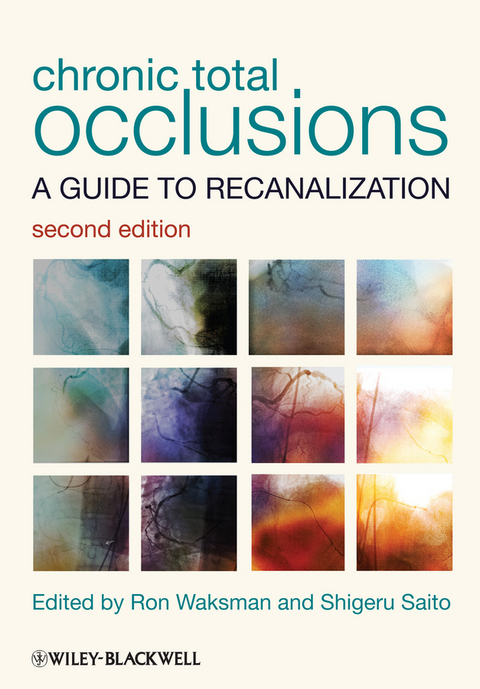
Chronic Total Occlusions (eBook)
John Wiley & Sons (Verlag)
978-1-118-54247-7 (ISBN)
Edited by
Ron Waksman, MD, FACC
Division of Cardiology, MedStar Washington Hospital Center, Washington, DC, USA
Shigeru Saito, MD, FACC, FSCAI, FJCC
Cardiology & Catheterization Laboratories, Shonan Kamakura General Hospital, Kamakura, Japan
"e;Chronic total occlusions continue to represent one of the greatest challenges to interventional cardiologists."e; - Cardiovascular Research Foundation - Chronic Total Occlusions or CTOs can be found in 30% of patients with coronary artery disease. Despite advances, CTOs remain one of the most frequently identified lesions in interventional cardiology yet least likely to be successfully treated. The prevalence of the disorder is vexing. The threat to your patients is significant. The condition is complex. And, treatment remains a challenge. Learn how to approach CTOs from internationally-recognized physician-educators Turn to Chronic Total Occlusions: A Guide to Recanalization, 2e for expert insight into the world of CTOs and clear, practical guidance you can apply directly and immediately in your cath lab. Offering the most comprehensive information available, this completely updated second edition provides you wih: Full-color images from the diagnostic modalities that are essential in identifying CTOs Data on indications and efficacy from the most recent clinical trials Practical guidance on the selection and use of the latest wires and devices Even more tips and tricks from leading operators from the world s busiest centers Clinical cases to illustrate some of the more complex scenarios and common complications And more! Chronic Total Occlusions: A Guide to Recanalization, 2e is the guide you can count on to improve the CTO success rate at your facility. Order your copy today!
Edited by Ron Waksman, MD, FACC Division of Cardiology, MedStar Washington Hospital Center, Washington, DC, USA Shigeru Saito, MD, FACC, FSCAI, FJCC Cardiology & Catheterization Laboratories, Shonan Kamakura General Hospital, Kamakura, Japan
"This is a very helpful book for those interested in
invasive treatment of CTOs. The authors provide practical
explanations, supplemented by detailed imaging and pragmatic
discussions of the latest advances in their treatment."
(Doody's, 4 October 2013)
CHAPTER 1
The pathobiology of CTO
Sergey Yalonetsky, Azriel B. Osherov & Bradley H. Strauss
Schulich Heart Centre, Sunnybrook Health Sciences Centre, University of Toronto, Toronto, ON, Canada
Introduction
Chronic total occlusion (CTO) is defined as occlusion age of at least one month, with angiographic thrombolysis in myocardial infarction (TIMI) flow grade 0 or 1 [1]. CTOs are classified as “early chronic” and “late chronic” if their age is 1–3 months old and > 3 months old respectively. The current understanding of CTO development is based on animal CTO models as well as on autopsy and imaging studies in humans. Recent progress in elucidating CTO pathobiology has led our group to identify several novel biological targets to facilitate guidewire crossing during percutaneous coronary intervention (PCI).
Current paradigm of CTO evolution
The development of CTOs includes several specific stages with unique histologic characteristics present at each stage. The initial acute event leading to the development of a CTO is in many cases a ruptured atherosclerotic plaque with bidirectional thrombus formation [2]. Clinically the arterial occlusion may develop insidiously with minimal symptoms or may present as an acute coronary syndrome. In patients with minimal or no symptoms, the timing of the occlusive event cannot be clearly identified. In fact, the age of approximately 60% of CTO cases cannot be reliably dated by symptoms [3]. In patients with ST segment elevation myocardial infarction (STEMI) not treated with reperfusion therapy, an occluded infarct related artery has been found in 87% of patients within 4 hours, in 65% within 12–24 hours, and in 45% at 1 month [4, 5]. Up to 30% of patients treated with thrombolytic therapy alone have a chronically occluded artery 3–6 months after MI [6]. In patients treated with percutaneous coronary intervention (PCI) during evolving acute myocardial infarction (AMI), approximately 6–11% will have chronic occlusion of an infarct related artery at 6 months, due to either initial treatment failure or late re-occlusion [7].
Characterization of CTO development in human studies is problematic since CTOs are often diagnosed at a very late stage, and data regarding initial stages in their evolution is lacking. Several animal models have been developed to systematically define the development stages of a CTO; however these models have certain characteristics that could potentially limit their relevance to humans, such as the lack of underlying atherosclerotic substrate or significant calcification. In this chapter we shall review the current understanding of CTO pathobiology.
Development of CTOs
Acute arterial occlusion due to atherosclerotic plaque rupture with thrombus formation seems to be a common initiating event, which then triggers an inflammatory reaction. The freshly formed thrombus contains platelets and erythrocytes within a fibrin mesh, which is followed by an invasion of acute inflammatory cells. Jaffe et al. [8] have recently shown that an acute inflammatory response during the first 2 weeks after the initial event is accompanied by patchy formation of a proteolycan-enriched extracellular matrix and myofibroblast infiltration into the thrombotic occlusion. At the initial part of the intermediate stage (6 weeks), there is marked negative arterial remodeling and disruption of the internal elastic lamina accompanied by intense intraluminal neovascularization and increased CTO perfusion. Total microvessel cross-sectional area increases 2-fold along with a nearly 3-fold increase in the size of individual intraluminal vessels. However, the latter intermediate stage (12 weeks) is characterized by decreasing microvessel formation and CTO perfusion which further declines at the advanced stage (18–24 weeks). A progressive decrease in the CTO perfusion coincides with gradual replacement of proteoglycans by collagen in the extracellular matrix. Accumulation of collagen and calcium characterize the later stages of CTO maturation (Figures 1.1 and 1.2). The density of the fibrocalcific tissue is highest at the proximal and distal ends of the lesion compared to the body. Thus, the composition of the CTO evolves over time with remarkable spatial variability along the length of the CTO. From a pathobiology standpoint, three specific regions of the CTO have been identified:
Human coronary artery autopsy studies [10] have shown that the lumen of the CTO in some cases contains organized thrombus. Recanalization channels were observed in nearly 60% of lesions. Unlike the preclinical rabbit femoral artery model, the frequency of lumen recanalization and sizes of the channels were similar in different CTO ages. The intimal plaques within the CTO contained collagen, calcium, elastin, cholesterol clefts, foam cells, giant cell atherophagocytes, mononuclear cells (lymphocytes, monocytes), and red blood cells. “Soft” or cholesterol-laden lesions were more prevalent in younger CTOs age (< 1 year); however the amount of cholesterol-laden and foam cells declined with advancing CTO age. Older age CTOs typically contained hard fibrocalcific lesions (“hard plaque”). Iron and hemosiderin depositions could be observed at sites of previous intimal plaque hemorrhage. Extensive recanalization of the intimal plaques by neovascular channels was frequently evident particularly within and adjacent to the sites infiltrated by inflammatory cells (lymphocytes and macrophages). In some cases, intimal neovascular channels directly communicate with adventitial vasa vasorum, while their communication with lumen recanalization channels was rarely observed. Neovascular channels were also observed in the vascular medial layer; the extent of medial neovascularization was proportional to the cellular inflammation in the intimal plaque. The adventitia of the vessel is usually extensively revascularized in CTOs of all ages. Again, the extent of adventitial neovascularization is correlated to adventitial cellular inflammation. Munce et al. have shown in a rabbit peripheral artery CTO model that a large rise in extravascular vessels surrounding the occluded artery occurred at early time points, which was followed by a significant increase in intravascular vessels within the central body of the occlusion. The temporal and geographic pattern of microvessel formation and the presence of connecting microvessels support the thesis that the extravascular vessels may indeed initiate formation of the intravascular channels within the center of the occlusion. However, as the CTO matures beyond 6 weeks, a reduction in the size and number of central intravascular microchannels was demonstrated, suggesting that many of the vessels in this region become nonfunctional [11].
Figure 1.1 Hematoxylin-eosin stained human coronary CTO, demonstrating extensive collagen-rich fibrous tissue, several patches of calcification (Ca), two small microvessels (MV), and a large necrotic area (necrotic). (Courtesy of Dr. Jagdish Butany, University Health Network, Toronto, ON, Canada.)
Figure 1.2 Elastin-trichrome stained human coronary CTO, demonstrating fibrous tissue (lighter staining material inside the lumen), with two distinct areas of calcification (Ca) and two microvessels (MV). M = media. (Courtesy of Dr. Jagdish Butany, University Health Network, Toronto, ON, Canada.)
Neovascularization and angiogenesis
There are three types of microvessel formation in arteries with advanced atherosclerotic lesions. The first pattern occurs in the vasa vasorum, which is the fine network of microvessels in the adventitia and outer media. These vessels proliferate in atherosclerosis and in response to vascular injury such as angioplasty and stenting [10, 12, 13]. Hypoxia in the outer layers of the vessel wall appears to act as an important stimulus [13]. Occasionally in CTOs these adventitial blood vessels are well developed and can be recognized as “bridging collaterals.” Such microchannels, which can recanalize the distal lumen, may result from thrombus derived from angiogenic stimuli [14], and can be recognized on an angiogram by the appearance of a well defined stump leading into the CTO. Second, neovascularization can develop within occlusive atherosclerotic intimal plaques, predominantly in response to chronic inflammation [15]. The localization of plaque vessels in so-called “hot spots” in the shoulders of atheromas may predispose these plaques to rupture and acute coronary events [16, 17]. The third type is the pattern of intraluminal microvessel formation or “recanalization channels.” These microvessels generally range in size from 100 to 200 µm, but can be as large as 500 µm [10]. In contrast to the vasa vasorum which run in radial...
| Erscheint lt. Verlag | 7.2.2013 |
|---|---|
| Sprache | englisch |
| Themenwelt | Medizin / Pharmazie ► Allgemeines / Lexika |
| Medizinische Fachgebiete ► Innere Medizin ► Kardiologie / Angiologie | |
| Schlagworte | Advances • Artery • Cardiologists • Cardiovascular • challenges • Chronic • continue • coronary • ctos • despite • Disease • Foundation • Greatest • Interventional • Interventional cardiology • Invasive Kardiologie • Kardiologie • least • Medical Science • Medizin • patients • Remain • Research • total occlusions |
| ISBN-10 | 1-118-54247-9 / 1118542479 |
| ISBN-13 | 978-1-118-54247-7 / 9781118542477 |
| Informationen gemäß Produktsicherheitsverordnung (GPSR) | |
| Haben Sie eine Frage zum Produkt? |
 EPUB (Adobe DRM)
Kopierschutz: Adobe-DRM
Adobe-DRM ist ein Kopierschutz, der das eBook vor Mißbrauch schützen soll. Dabei wird das eBook bereits beim Download auf Ihre persönliche Adobe-ID autorisiert. Lesen können Sie das eBook dann nur auf den Geräten, welche ebenfalls auf Ihre Adobe-ID registriert sind.
Details zum Adobe-DRM
Dateiformat: EPUB (Electronic Publication)
EPUB ist ein offener Standard für eBooks und eignet sich besonders zur Darstellung von Belletristik und Sachbüchern. Der Fließtext wird dynamisch an die Display- und Schriftgröße angepasst. Auch für mobile Lesegeräte ist EPUB daher gut geeignet.
Systemvoraussetzungen:
PC/Mac: Mit einem PC oder Mac können Sie dieses eBook lesen. Sie benötigen eine
eReader: Dieses eBook kann mit (fast) allen eBook-Readern gelesen werden. Mit dem amazon-Kindle ist es aber nicht kompatibel.
Smartphone/Tablet: Egal ob Apple oder Android, dieses eBook können Sie lesen. Sie benötigen eine
Geräteliste und zusätzliche Hinweise
Buying eBooks from abroad
For tax law reasons we can sell eBooks just within Germany and Switzerland. Regrettably we cannot fulfill eBook-orders from other countries.
aus dem Bereich