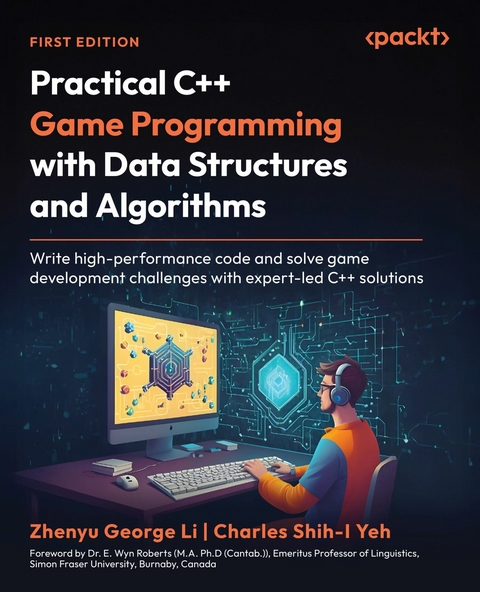
Practical C++ Game Programming with Data Structures and Algorithms (eBook)
428 Seiten
Packt Publishing (Verlag)
978-1-83588-987-9 (ISBN)
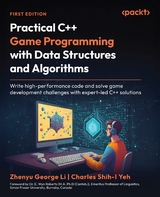
Creating responsive, intelligent games takes more than just following engine tutorials. It requires solving real development challenges with practical, efficient code. This book bridges theory and practice with proven algorithms and techniques grounded in real-world production needs, emphasizing clean, portable C++ implementations.
Starting with raylib and the custom Knight engine layer, you'll be introduced to a simple object-oriented scene and game object system. From there, you'll build responsive gameplay systems using essential data structures and algorithms, progressing through 2D rendering, collision detection, effects, and camera control before advancing to 3D graphics environments built using shaders, lighting, quad-tree terrain, and dynamic camera setups.
You'll animate characters using skeletal rigs, interpolation, and inverse kinematics for fluid movement and then develop game AI using FSMs, behavior trees, A* pathfinding, and steering behaviors. The book also covers neural networks, exploring their underlying theories, training processes, and tools. Throughout, the code is written in legacy-compatible C++ to ensure broad support across platforms and compilers.
By the end, you'll have gained the skills to build game systems that not only work but also scale, perform, and adapt like professional-grade code.
Learn C++ game programming through real-world demos of AI systems, animation, and rendering to build scalable, high-performance games using patterns you can reuse across any game engineKey FeaturesBuild real-time 2D and 3D games using C++ with practical, executable examplesGain proficiency in game programming domains like AI pathfinding, camera systems, animation, and rendering effectsBoost runtime efficiency with practical techniques like object pooling, LOD patterns, and terrain partitioning to create smoother, more responsive gameplay systemsBook DescriptionCreating responsive, intelligent games takes more than just following engine tutorials. It requires solving real development challenges with practical, efficient code. This book bridges theory and practice with proven algorithms and techniques grounded in real-world production needs, emphasizing clean, portable C++ implementations. Starting with raylib and the custom Knight engine layer, you ll be introduced to a simple object-oriented scene and game object system. From there, you'll build responsive gameplay systems using essential data structures and algorithms, progressing through 2D rendering, collision detection, effects, and camera control before advancing to 3D graphics environments built using shaders, lighting, quad-tree terrain, and dynamic camera setups. You ll animate characters using skeletal rigs, interpolation, and inverse kinematics for fluid movement and then develop game AI using FSMs, behavior trees, A* pathfinding, and steering behaviors. The book also covers neural networks, exploring their underlying theories, training processes, and tools. Throughout, the code is written in legacy-compatible C++ to ensure broad support across platforms and compilers. By the end, you ll have gained the skills to build game systems that not only work but also scale, perform, and adapt like professional-grade code.What you will learnUse C++ data structures and algorithms to build core gameplay featuresImplement 2D/3D rendering with shaders, particle effects, and terrain systemsDesign camera systems like third-person, top-down, and split-screen viewsOptimize performance using object pooling and LODAnimate characters using skeletal rigging, interpolation, and inverse kinematicsBuild game AI with FSMs, behavior trees, pathfinding, and steeringApply neural network concepts in a turret defense projectWho this book is forThis book is for junior game developers, hobbyists, and computer science students entering game development, as well as C++ programmers looking to strengthen their skills. While some familiarity with C++ is helpful, the examples are explained step by step to remain approachable. Whether you're starting out or reinforcing your skills before diving into game engines down the road, this book offers a clear and practical foundation to make you a more effective developer, regardless of which tools you choose later.]]>
Contents
- Preface
- Part 1: Data Structure and Algorithm Fundamentals
- Gearing Up: C++ for Game Development
- Data Structures in Action: Building Game Functionality
- Algorithms Commonly Utilized in Game Development
- Part 2: Graphics Algorithms in Practice
- 2D Rendering and Effects
- The Camera and Camera Controls
- 3D Graphics Rendering
| Erscheint lt. Verlag | 30.6.2025 |
|---|---|
| Vorwort | Dr. E. Wyn Roberts |
| Sprache | englisch |
| Themenwelt | Mathematik / Informatik ► Informatik ► Programmiersprachen / -werkzeuge |
| Informatik ► Software Entwicklung ► Spieleprogrammierung | |
| Informatik ► Theorie / Studium ► Algorithmen | |
| ISBN-10 | 1-83588-987-5 / 1835889875 |
| ISBN-13 | 978-1-83588-987-9 / 9781835889879 |
| Informationen gemäß Produktsicherheitsverordnung (GPSR) | |
| Haben Sie eine Frage zum Produkt? |
 EPUB (Ohne DRM)
Digital Rights Management: ohne DRM
Dieses eBook enthält kein DRM oder Kopierschutz. Eine Weitergabe an Dritte ist jedoch rechtlich nicht zulässig, weil Sie beim Kauf nur die Rechte an der persönlichen Nutzung erwerben.
Dateiformat: EPUB (Electronic Publication)
EPUB ist ein offener Standard für eBooks und eignet sich besonders zur Darstellung von Belletristik und Sachbüchern. Der Fließtext wird dynamisch an die Display- und Schriftgröße angepasst. Auch für mobile Lesegeräte ist EPUB daher gut geeignet.
Systemvoraussetzungen:
PC/Mac: Mit einem PC oder Mac können Sie dieses eBook lesen. Sie benötigen dafür die kostenlose Software Adobe Digital Editions.
eReader: Dieses eBook kann mit (fast) allen eBook-Readern gelesen werden. Mit dem amazon-Kindle ist es aber nicht kompatibel.
Smartphone/Tablet: Egal ob Apple oder Android, dieses eBook können Sie lesen. Sie benötigen dafür eine kostenlose App.
Geräteliste und zusätzliche Hinweise
Buying eBooks from abroad
For tax law reasons we can sell eBooks just within Germany and Switzerland. Regrettably we cannot fulfill eBook-orders from other countries.
aus dem Bereich