Sustainable Cloud Development (eBook)
280 Seiten
Packt Publishing (Verlag)
978-1-83620-840-2 (ISBN)
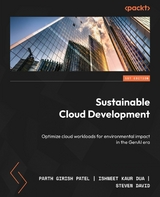
Written by three seasoned AWS solution architects, sustainability mentors, and thought leaders, Sustainable Cloud Development equips cloud professionals with actionable strategies to design, build, and optimize workloads that minimize environmental impact, while maintaining performance and scalability.
This book combines practical insights, best practices, and case studies to help you align your cloud operations with global sustainability goals. From foundational concepts such as carbon footprint measurement to advanced techniques such as sustainable software architecture, generative AI lifecycle optimization, and cost-efficient cloud practices, this book covers every aspect of sustainable cloud development. You'll get to grips with key tools, including AWS Cost Explorer, for analyzing costs and usage over time to right-size deployments; auto scaling for automatically scaling compute resources dynamically based on demand; Amazon Trusted Advisor for reviewing optimization recommendations across critical areas such as cost, performance, and security; and Amazon CloudWatch for detailed monitoring and threshold-based alerting around all resources and applications.
This book serves as a practical blueprint for optimizing your cloud workloads for both high performance and a minimal environmental footprint.
Reduce cloud costs and carbon footprint with sustainable design, GenAI, and green architecture principlesKey FeaturesDiscover sustainable cloud practices, including carbon footprint analysis, optimization, and securityExplore best practices, insights, and case studies for implementing sustainable solutions like generative AI workloadsLearn cost-saving strategies through efficient resource use and business alignmentPurchase of the print or Kindle book includes a free PDF eBookBook DescriptionWritten by three seasoned AWS solution architects, sustainability mentors, and thought leaders, Sustainable Cloud Development equips cloud professionals with actionable strategies to design, build, and optimize workloads that minimize environmental impact, while maintaining performance and scalability. This book combines practical insights, best practices, and case studies to help you align your cloud operations with global sustainability goals. From foundational concepts such as carbon footprint measurement to advanced techniques such as sustainable software architecture, generative AI lifecycle optimization, and cost-efficient cloud practices, this book covers every aspect of sustainable cloud development. You ll get to grips with key tools, including AWS Cost Explorer, for analyzing costs and usage over time to right-size deployments; auto scaling for automatically scaling compute resources dynamically based on demand; Amazon Trusted Advisor for reviewing optimization recommendations across critical areas such as cost, performance, and security; and Amazon CloudWatch for detailed monitoring and threshold-based alerting around all resources and applications. This book serves as a practical blueprint for optimizing your cloud workloads for both high performance and a minimal environmental footprint.What you will learnExplore the principles of sustainable cloud computing and application performance analysisDiscover best practices for data lifecycle management, storage optimization, and networking efficiencyUnderstand and analyze the carbon footprint of cloud applicationsImplement sustainable software architecture and coding patternsOptimize the lifecycle and consumption of generative AI modelsAlign cloud services with sustainability goals and global regulationsExplore eco-friendly generative AI practices, including efficient model deploymentWho this book is forThis book is for cloud architects, engineers, DevOps professionals, and IT sustainability specialists who want to align their cloud practices with environmental goals. It also caters to software developers eager to build green, efficient solutions. A basic understanding of cloud services and IT infrastructure is necessary.]]>
Preface
Cloud computing is transforming industries—but what if it could also help transform the planet?
This book is more than a guide to cloud infrastructure; it’s a call to action for building sustainable, efficient systems that balance innovation with environmental responsibility.
You’ll explore practical strategies for reducing energy consumption, improving data management, and optimizing networks to minimize environmental impact. You’ll learn how to embed sustainability into every layer of cloud development, from architecture and design patterns to security, monitoring, and DevOps workflows.
We also address cost optimization, showing how sustainable practices can align with your bottom line. The book dives into emerging challenges such as generative AI, with actionable steps to reduce its energy footprint while maintaining performance and scalability.
With real-world case studies and actionable insights, this book will equip you to make informed decisions that benefit your business and the planet. Finally, it outlines what’s next for cloud technology, highlighting how industry leaders and policymakers can work together to shape a more sustainable future.
Who this book is for
Cloud architects and software architects, cloud engineers and DevOps professionals, software developers, and IT sustainability professionals—these people should have a basic understanding of software, IT, and cloud applications. The book is particularly valuable for those specializing in or interested in environmental sustainability and carbon footprint reduction in cloud computing. The content is designed for a beginner to intermediate-level audience, catering to both those learning about sustainability in cloud computing and those implementing sustainable practices. You will benefit from topics ranging from carbon footprint measurement and analysis to sustainable coding practices, with a focus on the importance of sustainability in cloud computing and the environmental impact of cloud applications.
What this book covers
Chapter 1, Foundation of Sustainable Cloud Computing and Carbon Footprint Analysis, introduces the foundations and explores the environmental impact of cloud services, examining energy consumption and carbon emissions associated with data centers, while also discussing emerging best practices for promoting sustainability in cloud computing.
Chapter 2, Energy and Compute Efficiency in Cloud Infrastructure, explores strategies for optimizing resource utilization, including auto-scaling, load balancing, and leveraging cloud-native technologies. The chapter also discusses how customers can lower their carbon footprint and contribute to a more sustainable IT ecosystem through these efficiency measures.
Chapter 3, Sustainable Data Management and Storage Optimization, focuses on sustainable data management practices in cloud-based systems, addressing the growing need for efficient data handling as data volumes increase exponentially. It explores strategies to optimize data storage and retrieval operations while minimizing environmental impact.
Chapter 4, Network Optimization for Sustainability, delves into network optimization for sustainable cloud computing, addressing the critical role of network traffic and data transfers in the environmental impact of cloud applications. As the volume of data traversing networks continues to grow exponentially, this chapter explores innovative strategies for efficient network management that minimize ecological impact while maximizing performance.
Chapter 5, Security, Observability, and Monitoring in Sustainable Cloud Development, explores the integration of security, observability, and monitoring in sustainable cloud development. It highlights how these elements work together to ensure efficient resource utilization, minimize environmental impact, and foster a secure cloud ecosystem.
Chapter 6, Sustainable Software Architecture and Design Patterns, focuses on the concept of sustainable software architecture and its importance in today’s digital landscape. It explores the principles, strategies, and best practices for designing and developing software systems that prioritize resource efficiency, scalability, and long-term maintainability.
Chapter 7, Sustainable Environment Alignment with Business Usage Patterns, focuses on aligning cloud environments with business usage patterns to achieve environmental sustainability. It explores strategies for optimizing cloud resource utilization, reducing waste, and minimizing the environmental impact of cloud operations.
Chapter 8, Sustainable DevOps and CI/CD Practices, explores how organizations can balance rapid software delivery with environmental responsibility. It focuses on strategies for creating more eco-friendly CI/CD workflows without compromising speed or quality.
Chapter 9, Cost Optimization through Sustainable Operation, explores the relationship of cost optimization and sustainability in IT operations. It demonstrates how these two objectives can be mutually reinforced, showing that adopting sustainable approaches often leads to significant cost savings while reducing environmental impact.
Chapter 10, Optimizing the GenAI Lifecycle for Sustainability, explores strategies to minimize environmental impact at each stage, from project design and data management to model training and deployment. By implementing eco-friendly practices and leveraging efficient technologies, organizations can enhance resource utilization while achieving their sustainability goals in GenAI applications.
Chapter 11, Optimizing the Consumption of GenAI Foundational Models, explains the various aspects of optimizing GenAI consumption, exploring best practices, techniques, and strategies that enable organizations to maximize the benefits of this groundbreaking technology while minimizing its environmental footprint and operational costs.
Chapter 12, Case Studies and Best Practices, explores several key sustainability case studies and walks through examples of how a sustainable development approach can be applied to improve on the element of a sustainable approach to running a business.
Chapter 13, Pillars of a Sustainable Technology Future, discusses the multifaceted approach needed to create an environmentally responsible and ethically sound technological landscape in the rapidly advancing IT industry. The chapter emphasizes the need for collaborative efforts from industry leaders, policymakers, and innovators to ensure that technological progress aligns with our collective responsibility to the planet and society.
To get the most out of this book
This book assumes you have a foundational understanding of cloud computing concepts, basic software development principles, and general IT infrastructure. Familiarity with major cloud service providers (such as AWS, Azure, and GCP) and their core services is beneficial but not required. A basic grasp of environmental sustainability concepts will enhance comprehension, though the book will introduce and explain key terms and principles as needed. No specific programming language knowledge is necessary, as the focus is on high-level concepts and strategies rather than code implementation.
| Software/hardware discussed in the book | Operating system requirements |
| Cloud computing platforms (AWS, Azure, GCP) | Windows, macOS, or Linux in CSP platform |
| Sustainability analysis tools | Windows, macOS, or Linux in CSP platform |
| Energy efficiency monitoring software | Windows, macOS, or Linux in CSP platform |
As this book primarily focuses on theoretical concepts and strategies, there are no specific software installation requirements. However, you may benefit from having access to a computer with internet connectivity to explore referenced resources, sustainability calculators, or cloud provider documentation mentioned throughout the text.
While this book provides a comprehensive overview of sustainable cloud computing practices, the field is rapidly evolving. You are encouraged to stay informed about the latest developments in cloud technology and environmental sustainability through industry publications, academic journals, and reputable online resources.
Sustainable IT content...
| Erscheint lt. Verlag | 28.3.2025 |
|---|---|
| Sprache | englisch |
| Themenwelt | Sachbuch/Ratgeber ► Freizeit / Hobby ► Sammeln / Sammlerkataloge |
| Mathematik / Informatik ► Informatik ► Grafik / Design | |
| Mathematik / Informatik ► Informatik ► Programmiersprachen / -werkzeuge | |
| Wirtschaft ► Allgemeines / Lexika | |
| ISBN-10 | 1-83620-840-5 / 1836208405 |
| ISBN-13 | 978-1-83620-840-2 / 9781836208402 |
| Informationen gemäß Produktsicherheitsverordnung (GPSR) | |
| Haben Sie eine Frage zum Produkt? |
 EPUB (Ohne DRM)
Digital Rights Management: ohne DRM
Dieses eBook enthält kein DRM oder Kopierschutz. Eine Weitergabe an Dritte ist jedoch rechtlich nicht zulässig, weil Sie beim Kauf nur die Rechte an der persönlichen Nutzung erwerben.
Dateiformat: EPUB (Electronic Publication)
EPUB ist ein offener Standard für eBooks und eignet sich besonders zur Darstellung von Belletristik und Sachbüchern. Der Fließtext wird dynamisch an die Display- und Schriftgröße angepasst. Auch für mobile Lesegeräte ist EPUB daher gut geeignet.
Systemvoraussetzungen:
PC/Mac: Mit einem PC oder Mac können Sie dieses eBook lesen. Sie benötigen dafür die kostenlose Software Adobe Digital Editions.
eReader: Dieses eBook kann mit (fast) allen eBook-Readern gelesen werden. Mit dem amazon-Kindle ist es aber nicht kompatibel.
Smartphone/Tablet: Egal ob Apple oder Android, dieses eBook können Sie lesen. Sie benötigen dafür eine kostenlose App.
Geräteliste und zusätzliche Hinweise
Buying eBooks from abroad
For tax law reasons we can sell eBooks just within Germany and Switzerland. Regrettably we cannot fulfill eBook-orders from other countries.
aus dem Bereich