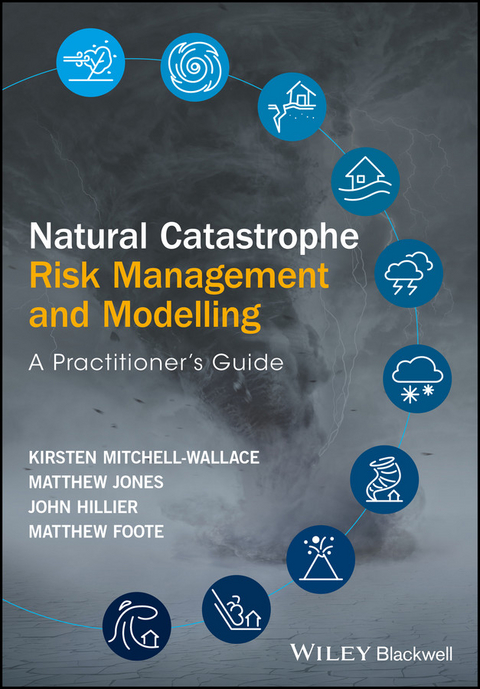
Natural Catastrophe Risk Management and Modelling (eBook)
John Wiley & Sons (Verlag)
978-1-118-90606-4 (ISBN)
This book covers both the practical and theoretical aspects of catastrophe modelling for insurance industry practitioners and public policymakers. Written by authors with both academic and industry experience it also functions as an excellent graduate-level text and overview of the field.
Ours is a time of unprecedented levels of risk from both natural and anthropogenic sources. Fortunately, it is also an era of relatively inexpensive technologies for use in assessing those risks. The demand from both commercial and public interests-including (re)insurers, NGOs, global disaster management agencies, and local authorities-for sophisticated catastrophe risk assessment tools has never been greater, and contemporary catastrophe modelling satisfies that demand.
Combining the latest research with detailed coverage of state-of-the-art catastrophe modelling techniques and technologies, this book delivers the knowledge needed to use, interpret, and build catastrophe models, and provides greater insight into catastrophe modelling's enormous potential and possible limitations.
- The first book containing the detailed, practical knowledge needed to support practitioners as effective catastrophe risk modellers and managers
- Includes hazard, vulnerability and financial material to provide the only independent, comprehensive overview of the subject, accessible to students and practitioners alike
- Demonstrates the relevance of catastrophe models within a practical, decision-making framework and illustrates their many applications
- Includes contributions from many of the top names in the field, globally, from industry, academia, and government
Natural Catastrophe Risk Management and Modelling: A Practitioner's Guide is an important working resource for catastrophe modelling analysts and developers, actuaries, underwriters, and those working in compliance or regulatory functions related to catastrophe risk. It is also valuable for scientists and engineers seeking to gain greater insight into catastrophe risk management and its applications.
Kirsten Mitchell-Wallace, PhD is EMEA Regional Head of Catastrophe Management at SCOR, Zürich, Switzerland
Matthew Jones, PhD is Director at Cat Risk Intelligence, UK
John Hillier, PhD is Senior Lecturer in Physical Geography at Loughborough University, Loughborough, UK
Matthew Foote is Group Head of Exposure Management at Argo Group International Holdings, London, UK
This book covers both the practical and theoretical aspects of catastrophe modelling for insurance industry practitioners and public policymakers. Written by authors with both academic and industry experience it also functions as an excellent graduate-level text and overview of the field. Ours is a time of unprecedented levels of risk from both natural and anthropogenic sources. Fortunately, it is also an era of relatively inexpensive technologies for use in assessing those risks. The demand from both commercial and public interests including (re)insurers, NGOs, global disaster management agencies, and local authorities for sophisticated catastrophe risk assessment tools has never been greater, and contemporary catastrophe modelling satisfies that demand. Combining the latest research with detailed coverage of state-of-the-art catastrophe modelling techniques and technologies, this book delivers the knowledge needed to use, interpret, and build catastrophe models, and provides greater insight into catastrophe modelling s enormous potential and possible limitations. The first book containing the detailed, practical knowledge needed to support practitioners as effective catastrophe risk modellers and managers Includes hazard, vulnerability and financial material to provide the only independent, comprehensive overview of the subject, accessible to students and practitioners alike Demonstrates the relevance of catastrophe models within a practical, decision-making framework and illustrates their many applications Includes contributions from many of the top names in the field, globally, from industry, academia, and government Natural Catastrophe Risk Management and Modelling: A Practitioner s Guide is an important working resource for catastrophe modelling analysts and developers, actuaries, underwriters, and those working in compliance or regulatory functions related to catastrophe risk. It is also valuable for scientists and engineers seeking to gain greater insight into catastrophe risk management and its applications.
Kirsten Mitchell-Wallace, PhD is EMEA Regional Head of Catastrophe Management at SCOR, Zürich, Switzerland Matthew Jones, PhD is Director at Cat Risk Intelligence, UK John Hillier, PhD is Senior Lecturer in Physical Geography at Loughborough University, Loughborough, UK Matthew Foote is Group Head of Exposure Management at Argo Group International Holdings, London, UK
Natural Catastrophe Risk Management and Modelling 1
Contents 7
List of Contributors and Acknowledgements 15
Main Authors 16
Contributors 18
Foreword 27
1: Fundamentals 29
1.1 Overview 29
1.1.1 What Is Included 29
1.1.2 What Is Not Included 29
1.1.3 Why Read This Chapter? 29
1.2 Catastrophes, Risk Management and Insurance 30
1.3 What Are Catastrophe Models? 33
1.4 Why Do We Need Catastrophe Models? 34
1.5 History of Catastrophe Models 35
1.6 Who Provides and Uses Catastrophe Models? 38
1.7 What Are Catastrophe Models Used For? 39
1.8 Anatomy of a Catastrophe Model 40
1.8.1 Hazard 41
1.8.2 Vulnerability 42
1.8.3 Exposure 43
1.8.4 Loss and Financial Perspectives 43
1.8.5 Platform 45
1.8.5.1 Computational Power and Catastrophe Models 45
1.8.5.2 Platform Database Management and Data Structures 46
1.8.5.3 Exposure and Result Database Structures 46
1.9 Model Input 47
1.9.1 Exposure 48
1.9.1.1 Location 48
1.9.1.2 Exposure Value 49
1.9.1.3 Exposure Characteristics: Primary and Secondary Modifiers 51
1.9.2 Financial Structure 52
1.9.3 Portfolio Hierarchy 53
1.10 Model Output: Metrics and Risk Measures 54
1.10.1 Common Metrics 54
1.10.1.1 Annual Average Loss (AAL) or Average Annual Loss 55
1.10.1.2 Standard Deviation (SD) Around the AAL 55
1.10.1.3 Exceedance Frequency (EF) 55
1.10.1.4 Occurrence Exceedance Probability (OEP) 55
1.10.1.5 Aggregate Exceedance Probability (AEP) 55
1.10.1.6 Value at Risk (VaR) 55
1.10.2 Exceedance Probability Curve Characteristics 55
1.10.3 More Advanced Metrics 57
1.10.3.1 Tail Value at Risk (TVaR) or Tail Conditional Expectation (TCE) 57
1.10.3.2 Excess VaR (xVaR) and Excess TVaR (xTVaR) 57
1.10.3.3 Excess Average Annual Loss (XSAAL) 57
1.10.4 Event Loss Tables and Year Loss Tables 57
1.10.5 Event Loss Table (ELT) 57
1.10.5.1 Limitations and Benefits of ELTs 59
1.10.5.2 Calculating the Mean Loss Across All Events (the AAL) 59
1.10.5.3 Calculating the SD of Loss for One Event and Across All Events 59
1.10.5.4 Calculating the Exceedance Frequency (EF) Without Secondary Uncertainty 60
1.10.5.5 Calculating the Exceedance Frequency with Secondary Uncertainty 60
1.10.5.6 Calculating the OEP 61
1.10.5.7 Calculating the AEP 61
1.10.5.8 Correlation between ELTS 61
1.10.5.9 Use in Simulation: Generating YLTs 62
1.10.5.10 Combining ELTs 64
1.10.6 Year Loss Table (YLT) 64
1.10.6.1 Limitations and Benefits of YLTs 64
1.10.6.2 Calculating Metrics from YLTs 65
1.11 Statistical Basics for Catastrophe Modelling 66
1.11.1 Discrete Distributions 68
1.11.1.1 Poisson 68
1.11.1.2 Negative Binomial 69
1.11.2 Continuous Distributions 70
1.11.2.1 Beta 70
1.11.2.2 Pareto (One Parameter) 71
1.11.3 Coherent Risk Measures 72
Notes 72
References 73
2: Applications of Catastrophe Modelling 75
2.1 Overview 75
2.1.1 What Is Included 75
2.1.2 What Is Not Included 76
2.1.3 Why Read This Chapter? 76
2.2 Introduction 76
2.3 Risk Transfer, the Structure of the (Re)insurance Industry and Catastrophe Modelling 77
2.4 Insurance and Reinsurance 80
2.4.1 What Is Insurance? 80
2.4.2 What Is Reinsurance? 81
2.4.2.1 Proportional Treaties 81
2.4.2.1.1 Quota Share 82
2.4.2.1.2 Surplus 83
2.4.2.2 Non-Proportional Treaties 84
2.4.2.2.1 Per Risk Excess of Loss 85
2.4.2.2.2 Per Event or Per Occurrence Excess of Loss, i.e., Catastrophe Excess of Loss 85
2.4.2.2.3 Aggregate Excess of Loss 87
2.4.2.2.4 Stop Loss 87
2.4.2.2.5 Other Treaty Types 87
2.4.2.3 Reinsurance Programmes 87
2.5 Catastrophe Risk Management and Catastrophe Modelling 88
2.5.1 What Are Catastrophe Risk Management and Exposure Management? 88
2.5.2 Catastrophe Risk Management Metrics 89
2.5.3 Catastrophe Risk Management Data 90
2.5.4 Exposure Data 91
2.5.4.1 Data Quality and Exposure Analysis 91
2.5.4.2 Practicalities of Exposure Data Transformation 92
2.5.4.3 Non-Standard Exposures 93
Static Versus Non-Static Exposure 96
2.5.4.4 Understanding the Impacts of Exposure Data Choices 97
2.5.5 Common Tools Used in Catastrophe Risk Management 98
2.6 Underwriting and Pricing 98
2.6.1 What Is Underwriting? 98
2.6.2 What Is Pricing? 101
2.6.2.1 Expected Loss 102
2.6.2.1.1 Experience Rating 102
2.6.2.1.2 Exposure Rating 104
2.6.2.2 Expenses 104
2.6.2.3 Profit (and Risk Loading) 105
2.6.2.4 Technical Price from Profit, Expenses and Expected Loss 106
2.6.2.5 Risk-Based Capital: Calculation and Allocation in Profitability Calculations 107
2.6.3 Practicalities of Using Catastrophe Model Output for Pricing 109
Outline placeholder 0
Exposure Development 109
Insurance to Value 110
Allocated Loss Adjustment Expenses 110
Secondary Perils or Non-Modelled Aspects 110
Underwriting Judgement 110
View of Risk 111
2.6.3.1 Calculating Pricing Metrics from ELTs and YLTs 111
2.6.4 Pricing Specifics for Insurance and Reinsurance 111
2.6.4.1 Insurance Pricing Specifics 111
2.6.4.2 Reinsurance Pricing Specifics 116
2.6.4.2.2 Validating the Catastrophe Pricing 119
2.6.4.2.3 Incorporating Non-Modelled Perils 122
2.6.4.2.4 Reinsurance Pricing Metrics 123
2.6.4.2.5 Pricing Curves 124
2.7 Accumulation, Roll-Up and Capacity Monitoring 125
2.7.1 What Is Accumulation? 125
2.7.1.1 Exposure Accumulation 125
2.7.1.2 Loss Accumulation 126
2.7.1.3 Scenario Modelling Case Study: Lloyd's Realistic Disaster Scenarios 129
2.7.2 Use in Underwriting and Risk Management 129
2.7.2.1 Capacity Allocation and Monitoring 131
2.7.3 Practicalities of Accumulation 132
2.8 Portfolio Management and Optimization 133
2.8.1 What Is Portfolio Management? 133
2.8.2 What Is Portfolio Optimization? 135
2.8.3 Using Catastrophe Models in Optimization 136
2.8.4 Optimization Methods 137
2.9 Event Response and Integration with Claims Team 139
2.9.1 Early Estimation of Claims 139
2.9.1.1 Damage Factor on Exposure 140
2.9.1.2 Market Share Analysis 140
2.9.1.3 Applying Event Footprints to the Portfolio 141
2.9.2 Claims Stresses and Inflation 142
2.9.3 Lessons Learnt Analysis 143
2.10 Capital Modelling, Management and Dynamic Financial Analysis 144
2.10.1 Risk Appetite and Risk Tolerance 144
2.10.2 Why Capital Models? 145
2.10.3 What Is a Capital Model? 146
2.10.4 The Structure of Capital Models 146
2.10.5 Capital Models and Catastrophe Models 148
2.10.6 What is Dynamic Financial Analysis (DFA)? 148
2.11 Regulation and Best Practice in Catastrophe Modelling 149
2.11.1 The Evolution of Catastrophe Modelling as a Profession and Best Practice 149
2.11.1.1 Introduction 149
2.11.1.2 Significant Developments 150
2.11.1.3 Industry Initiatives, Professional Bodies and Accreditations 151
2.11.2 Rating Agencies 153
2.11.3 Regulation and Catastrophe Modelling 154
2.11.3.1 Risk of Insolvency 154
2.11.3.2 Risk of Inadequate Pricing 155
2.11.3.3 Risk Management System Failures 156
2.11.4 Case Study: Catastrophe Models and Solvency Regulation, Solvency II 156
2.11.4.1 Selected Solvency II Pillar I Requirements in a Catastrophe Modelling Context 157
2.11.4.2 Conclusion 160
2.11.5 Case Study: Regulation of Catastrophe Models for Ratemaking 163
2.11.5.1 Membership of the FCHLPM 163
2.11.5.2 FHCLPM Model Standards 164
2.11.5.3 Approval Process 164
2.12 Case Study: Catastrophe Modelling for Reinsurance and Retrocession Purchase 165
2.12.1 Introduction 165
2.12.2 Determining the Total Limit Required 166
2.12.3 Layering of a CAT XL Programme 168
2.12.4 Price 168
2.12.5 Cost Allocation 169
2.12.6 Conclusion 169
2.13 Government Schemes and Insurance 170
2.13.1 Introduction 170
2.13.2 Government Schemes with Standalone Products Managed by a Central Organization 172
2.13.3 Government Schemes Where Catastrophe Cover Is Provided as an Add-on to a Fire Policy 172
2.13.4 Government-Backed Reinsurance/Pooling Schemes 172
2.13.5 Private Insurance Company Pools Supported by Government Legislation 172
2.13.6 Case Study: UK Flood Re 180
2.13.6.1 Background 180
2.13.6.2 Legal Establishment 180
2.13.6.3 Structure and Mechanisms 180
2.13.6.4 Costs and Premiums 180
2.13.6.5 Reinsurance 181
2.13.6.6 Which Properties Are Covered by the Fund? 181
2.13.6.7 Flood Re's Operating Lifetime 181
2.14 Catastrophe Models and Applications in the Public Sector 182
2.14.1 Introduction 182
2.14.2 Public Sector Catastrophe Models 182
2.14.3 Applications of Public Sector Catastrophe Models 183
2.14.4 Case Study: Country Disaster Risk Profiles (CDRP) 184
2.15 Insurance Linked Securities 186
2.15.1 What Are Insurance Linked Securities? 186
2.15.2 From Insurance to Reinsurance to ILS 187
2.15.3 Common ILS Instruments 188
2.15.4 Preliminaries of ILS Instrument: Measurement and Layering of Losses 188
2.15.4.1 How Losses Are Measured 188
2.15.4.2 Layering of Losses 189
2.15.5 Pricing an ILS Contract 190
2.15.5.1 The Concept of a Thin Layer 190
2.15.5.2 Pricing a Thin Layer 190
2.15.6 Pricing Cat Bonds with the Thin Layer Model 191
2.15.7 Growth of the Market for ILS 192
2.15.8 Conclusion 194
2.16 Effective use of Catastrophe Models 195
2.16.1 Treatment of Uncertainty in Catastrophe Models 195
2.16.1.1 Philosophical Classification of Uncertainty 195
2.16.1.2 Actuarial Classification of Uncertainty 196
2.16.1.3 Source Classification of Uncertainty 196
2.16.1.4 Catastrophe Model Treatment of Uncertainty in Practice 199
2.16.1.5 Practical Approaches to Deal with Uncertainty 203
2.16.1.6 Future of Uncertainty Reporting 206
2.16.2 Importance of Framework: A Tool, Not an Answer 207
Notes 209
References 209
3: The Perils in Brief 215
3.1 Overview 215
3.1.1 What Is Included 215
3.1.2 What Is Not Included 219
3.1.3 Why Read This Chapter? 219
3.X Structure of the Sections 220
3.X.1 What Is the Peril? 220
3.X.2 Damage Caused by the Peril 220
3.X.3 Forecasting Ability and Mitigation 220
3.X.4 Representation in Industry Catastrophe Models 221
3.X.5 Secondary Perils and Non-Modelled Items 221
3.X.6 Key Past Events 221
3.X.7 Open Questions/Current Hot Topics/Questions to Ask Your Vendor 221
3.X.8 Non-Proprietary Data Sources 221
Meteorological Perils (I.E. 'Wind-Driven') 222
3.2 Tropical Cyclones 222
3.2.1 What Is the Peril? 222
3.2.2 Damage Caused by the Peril 226
3.2.3 Forecasting Ability and Mitigation 226
3.2.4 Representation in Industry Catastrophe Models 227
3.2.5 Secondary Perils and Non-Modelled Items 228
3.2.6 Key Past Events 228
3.2.7 Open Questions/Current Hot Topics/Questions to Ask Your Vendor 229
3.2.8 Nonproprietary Data Sources 230
Acknowledgements 230
3.3 Extra-Tropical Cyclones 230
3.3.1 What Is the Peril? 230
3.3.2 Damage Caused by the Peril 233
3.3.3 Forecasting Ability and Mitigation 234
3.3.4 Representation in Industry Catastrophe Models 234
3.3.5 Secondary Perils and Non-Modelled Items 235
3.3.6 Key Past Events 235
3.3.7 Open Questions/Current Hot Topics/Questions to Ask Your Vendor 236
3.3.8 Nonproprietary Data Sources 237
3.4 Severe Convective Storms 237
3.4.1 What Is the Peril? 237
3.4.2 Damaged Caused by the Peril 241
3.4.3 Forecasting Ability and Mitigation 242
3.4.4 Representation in Industry Catastrophe Models 243
3.4.5 Secondary Perils and Non-modelled Items 244
3.4.6 Key Past Events 244
3.4.7 Open Questions/Current Hot Topics/Questions to Ask Your Vendor 244
3.4.8 Nonproprietary Data Sources 245
Hydrological Perils (I.E. 'Rain-Driven') 246
3.5 Inland Flooding 246
3.5.1 What Is the Peril? 246
3.5.2 Damage Caused by the Peril 249
3.5.3 Forecasting Ability and Mitigation 249
3.5.4 Representation in Industry Catastrophe Models 251
3.5.5 Secondary Perils and Non-Modelled Items 256
3.5.6 Key Past Events 256
3.5.7 Open Questions/Current Hot Topics/Questions to Ask Your Vendor 257
3.5.8 Nonproprietary Data Sources 257
Acknowledgements 258
3.6 Shrink-Swell Subsidence 258
3.6.1 What Is the Peril? 258
3.6.2 Damage Caused Caused by the Peril 259
3.6.3 Forecasting Ability and and Mitigation 259
3.6.4 Representation in Industry Catastrophe Models 260
3.6.5 Key Past Events 260
3.7 Earthquakes 260
3.7.1 What Is the Peril? 260
3.7.2 Damage Caused by the Peril 265
3.7.3 Forecasting Ability and Mitigation 267
3.7.4 Representation in Industry Catastrophe Models 268
3.7.5 Secondary Perils and Non-Modelled Items 270
3.7.6 Key Past Events 271
3.7.7 Open Questions/Current Hot Topics/Questions to Ask Your Vendor 271
3.7.8 Nonproprietary Data Sources 272
3.8 Mass Movement 273
3.8.1 What Is the Peril? 273
3.8.2 Damage Caused by the Peril 274
3.8.3 Forecasting Ability and Mitigation 274
3.8.4 Representation in Industry Catastrophe Models 275
3.8.5 Secondary Perils and Non-Modelled Items 275
3.8.6 Key Past Events 276
3.8.7 Open Questions/Current Hot Topics/Questions to Ask Your Vendor 277
3.8.8 Nonproprietary Data Sources 277
3.9 Tsunami 278
3.9.1 What Is the Peril 278
3.9.2 Damaged Caused by the Peril 279
3.9.3 Forecasting Ability and Mitigation 280
3.9.4 Representation in Industry Catastrophe Models 280
3.9.5 Secondary Perils and Non-Modelled Items 280
3.9.6 Key Past Events 281
3.9.7 Open Questions/Current Hot Topics/Questions to Ask Your Vendor 281
3.9.8 Nonproprietary Data Sources 281
3.10 Volcanoes 282
3.10.1 What Is the Peril? 282
3.10.2 Damage Caused by the Peril 284
3.10.3 Forecasting Ability and Mitigation 284
3.10.4 Representation in Catastrophe Models 285
3.10.5 Secondary Perils and Non-Modelled Items 285
3.10.6 Key Past Events 285
3.10.7 Open Questions/Current Hot Topics/Questions to Ask Your Vendor 286
3.10.8 Non-Proprietary Data Sources 286
References 286
4: Building Catastrophe Models 325
4.1 Overview 325
4.1.1 What Is Included 325
4.1.2 What Is Not Included 326
4.1.3 Why Read This Chapter? 326
4.2 Introduction 326
4.3 Hazard 329
4.3.1 Deterministic Versus Probabilistic Hazard Models 330
4.3.1.1 Hazard Event Footprints 332
4.3.2 Representing the Hazard Severity 335
4.3.3 Understanding the Historical Hazard 336
4.3.3.1 Measurements of Intensity at a Location 337
4.3.3.2 Spatially Distributed (Areal) Measurements of Intensity 338
4.3.3.3 Case Study: Windstorm Gudrun (Erwin) in Sweden, January 2005 338
4.3.3.4 Catalogues of Historical Events 340
4.3.3.5 Case Study: Using Other Evidence to Supplement the Written Record - Cascadia Earthquake 341
4.3.4 Deterministic Hazard Models: Historical Reconstructions 343
4.3.5 Site-Based Extrapolation: A Local Solution 344
4.3.5.1 Case Study: Extrapolation of Discharge to High Return Periods in a Single-Location Flood Risk Model 345
4.3.6 Building a Probabilistic Event-Set 347
4.3.6.1 Stochastic Event Set Resampling (`Boiling Down´) 348
4.3.6.2 Event-Hazard Transformation 351
4.3.6.3 Case Study: A Regional Probabilistic Earthquake Hazard Model 353
4.3.6.4 Case Study: High-Definition Regional Precipitation-Induced Inland Flood Model 355
4.3.6.5 Case Study: Building a Stochastic Event Set for European Windstorm Using Storms Generated by Climate and Weather Models 356
4.3.6.6 Case Study: Creating a Tropical Cyclone Model: North Atlantic Hurricanes 357
4.3.7 Secondary or Consequent Perils 359
4.3.7.1 Case Study: Secondary Peril Modelling: Rainfall-Induced and Coastal Flooding Associated with Typhoon 360
4.3.8 Time-Dependent Hazard Modelling and Clustering of Catastrophe Events 361
4.4 Exposure Models and Databases 362
4.4.1 Economic or Insured Exposure Data? 364
4.4.2 Economic and Insurance Industry Exposure Database Development Approaches 365
4.4.3 Bottom-Up Industry Exposure Database Development 367
4.4.3.1 Challenges in Bottom-Up Exposure Modelling and the Role of Trending Models 367
4.4.3.2 Case Study: Developing a European Insurance Industry Exposure Database 368
4.5 Vulnerability 369
4.5.1 Vulnerability Function Development 371
4.5.1.1 Secondary Uncertainty in Vulnerability Functions 373
4.5.1.2 Case Study: Conditional Vulnerability and Chance of Loss Estimation 374
4.5.2 Empirical Vulnerability Approaches 376
4.5.2.1 Empirical Vulnerability Functions: Property Vulnerability 377
4.5.2.2 Constructing Empirical Property Vulnerability Functions from Per-Location Claims Data 379
4.5.2.3 Case Study: European Windstorm Vulnerability 380
4.5.3 Analytical Vulnerability Approaches 383
4.5.3.1 Case Study: Analytical Approach of Development of Vulnerability Functions 384
4.5.4 Use of Design Codes in Vulnerability Function Development 385
4.5.4.1 Representing Building Codes in Catastrophe Model Vulnerability Components 387
4.5.5 Using Buildings Damage to Determine Other (Non-Structural) Types of Loss 390
4.5.6 Vulnerabilities for Non-Standard Exposures 391
4.5.6.1 Case Study: Understanding Crop Vulnerability to Hail 392
4.5.7 Validating Vulnerability Models 393
4.6 Integrating Model Components and the Geographical Framework 395
4.6.1 Relative Spatial Resolution/Nominal Scale of Source Data 395
4.6.2 Geodetic and Coordinate Bases of Data Sources 396
4.6.3 Relative Vintage of Source Data 396
4.6.4 Point Representation Versus Cell, Area Geographies 396
4.6.5 Data Generalization, Interpolation and Smoothing 397
4.7 The Financial Model 397
4.7.1 Why We Need a Financial Model 397
4.7.2 Uncertainty 399
4.7.2.1 Types of Uncertainty 399
4.7.2.2 Primary Uncertainty 399
4.7.2.3 Uncertainty Correlation 400
4.7.3 Case Study: Combining Distributions: Convolution 401
4.7.4 Applying Financial Structures 405
4.7.5 Case Study: Back-Allocation 406
4.7.6 Financial Model Output 406
4.8 Model Validation 407
4.9 Conclusion 409
Note 409
References 409
5: Developing a View of Risk 417
5.1 Overview 417
5.1.1 What Is Included 417
5.1.2 What Is Not Included 417
5.1.3 Why Read This Chapter? 417
5.2 Introduction 418
5.2.1 Why Develop a View of Risk? 418
5.2.2 What Developing a View of Risk Involves 420
5.2.3 Practical Considerations in a Resource-Constrained World 420
5.2.4 Insurance Versus Reinsurance 421
5.3 Governance and Model Change Management 422
5.3.1 Governance 422
5.3.2 The View of the Risk Process 423
5.3.3 Prioritization 424
5.3.4 Vendor Selection and High-Level Model Evaluation 425
5.3.5 Detailed Model Evaluation 425
5.3.6 Non-Modelled Peril Evaluation 426
5.3.7 Sign-off 427
5.3.8 Implementation 427
5.3.9 Review Triggers and Frequency 428
5.3.10 Other Governance Aspects 428
5.4 How to Develop a View of Risk 429
5.4.1 Understanding What Is in the Model 429
5.4.2 Analysing Model Output (Including Sensitivity Testing) 433
5.4.2.1 Data Quality and Exposure Coding 433
5.4.2.2 Defining the Input and Output Resolution 433
5.4.2.3 Analysis Metrics, Perspectives and Dimensions 434
5.4.2.4 Model Version 434
5.4.2.5 Geographical Variations 435
5.4.2.6 Geocoding 439
5.4.2.7 Coverage Type 441
5.4.2.8 Primary and secondary modifiers 442
5.4.2.9 Financial Structures 443
5.4.2.10 Model Settings and Correlated Loss Components 444
5.4.3 Actual Versus Modelled, Comparing to Own Company Experience 447
5.4.3.1 Event-Specific Comparisons 448
5.4.3.2 Exceedance Frequency Curves 452
5.4.4 Comparing Multiple Models 455
5.4.5 Using Industry Data 457
5.4.6 Considering the Time Period of Risk 462
5.4.7 Understanding What Is Not in the Model: Non-Modelled Risk 463
5.4.7.1 Definition and Categorization of Non-Modelled Risk (NMR) 464
5.4.7.2 Identification of NMR 465
5.4.7.3 Quantification of NMR 468
5.5 Implementing a View of Risk 470
5.5.1 Different Uses in a Company 470
5.5.2 Consistency in an Organization 471
5.5.3 Methods of Implementation: Single Model 471
5.5.3.1 Adjusting the Input Exposure 472
5.5.3.2 Adjusting the Outputs: Event Loss Table Scalings 472
5.5.3.3 Adjusting Specific Model Components 474
5.5.4 Methods of Implementation: Multiple Models 474
5.5.4.1 Different Methods for Blending Output 476
5.5.4.2 Implementing Frequency and Severity Blends in ELT/YLTS 478
5.5.4.3 Choosing the Weights 479
5.6 Conclusion 480
Notes 480
References 480
6: Summary and the Future 483
6.1 Overview 483
6.2 Key Themes in the Chapters 483
6.2.1 Chapter1: Introduction 483
6.2.2 Chapter 2 Applications of Catastrophe Modelling 484
6.2.3 Chapter 3 The Perils in Brief 484
6.2.4 Chapter 4 Building a Catastrophe Model 485
6.2.5 Chapter 5 Developing a View of Risk 485
6.3 The Future: Progress, Challenges and Issues 486
6.3.1 Future Changes in Climate 486
6.3.2 Modelling Dependency between Perils 488
6.3.3 Open Modelling and Open Architectures 489
6.3.4 The Role of Modelling in Disaster Risk Financing 491
6.3.5 Changing Global Demographics and Growing Insurance Penetration 492
References 492
Glossary 495
Index 523
End User License Agreement 535
| Erscheint lt. Verlag | 24.4.2017 |
|---|---|
| Sprache | englisch |
| Themenwelt | Mathematik / Informatik ► Mathematik |
| Naturwissenschaften ► Biologie ► Ökologie / Naturschutz | |
| Naturwissenschaften ► Geowissenschaften | |
| Technik ► Bauwesen | |
| Technik ► Umwelttechnik / Biotechnologie | |
| Schlagworte | actuarial modeling data selection • actuarial modeling strategies • actuarial risk assessment • Angew. Wahrscheinlichkeitsrechn. u. Statistik / Modelle • Applied Probability & Statistics - Models • Bauingenieur- u. Bauwesen • catastrophe management • Catastrophe modeling • catastrophe modeling applications • catastrophe modeling data • catastrophe modeling data selection • catastrophe modeling design • catastrophe modeling for financial analysts • catastrophe modeling for insurers • catastrophe modeling software • catastrophe modeling strategies • catastrophe modeling technologies • catastrophe risk modeling technologies • catastrophe risk modeling theory • cat modeling • cat modeling examples • Civil Engineering & Construction • earthquake risk modeling • Environmental Science • Environmental Studies • Erd- u. Grundbau • global warming risk modeling • how to build catastrophe models • insurance risk modeling • man-made catastrophe risk modeling • modeling catastrophe risk • modeling insurance risk • natural disaster risk modeling • Naturkatastrophe • risk management modeling • Soil (Civil Engineering) • Statistics • Statistik • terrorism risk modeling • Umweltforschung • Umweltwissenschaften • what is cat modeling |
| ISBN-10 | 1-118-90606-3 / 1118906063 |
| ISBN-13 | 978-1-118-90606-4 / 9781118906064 |
| Informationen gemäß Produktsicherheitsverordnung (GPSR) | |
| Haben Sie eine Frage zum Produkt? |
 PDF (Adobe DRM)
Kopierschutz: Adobe-DRM
Adobe-DRM ist ein Kopierschutz, der das eBook vor Mißbrauch schützen soll. Dabei wird das eBook bereits beim Download auf Ihre persönliche Adobe-ID autorisiert. Lesen können Sie das eBook dann nur auf den Geräten, welche ebenfalls auf Ihre Adobe-ID registriert sind.
Details zum Adobe-DRM
Dateiformat: PDF (Portable Document Format)
Mit einem festen Seitenlayout eignet sich die PDF besonders für Fachbücher mit Spalten, Tabellen und Abbildungen. Eine PDF kann auf fast allen Geräten angezeigt werden, ist aber für kleine Displays (Smartphone, eReader) nur eingeschränkt geeignet.
Systemvoraussetzungen:
PC/Mac: Mit einem PC oder Mac können Sie dieses eBook lesen. Sie benötigen eine
eReader: Dieses eBook kann mit (fast) allen eBook-Readern gelesen werden. Mit dem amazon-Kindle ist es aber nicht kompatibel.
Smartphone/Tablet: Egal ob Apple oder Android, dieses eBook können Sie lesen. Sie benötigen eine
Geräteliste und zusätzliche Hinweise
Buying eBooks from abroad
For tax law reasons we can sell eBooks just within Germany and Switzerland. Regrettably we cannot fulfill eBook-orders from other countries.
aus dem Bereich