


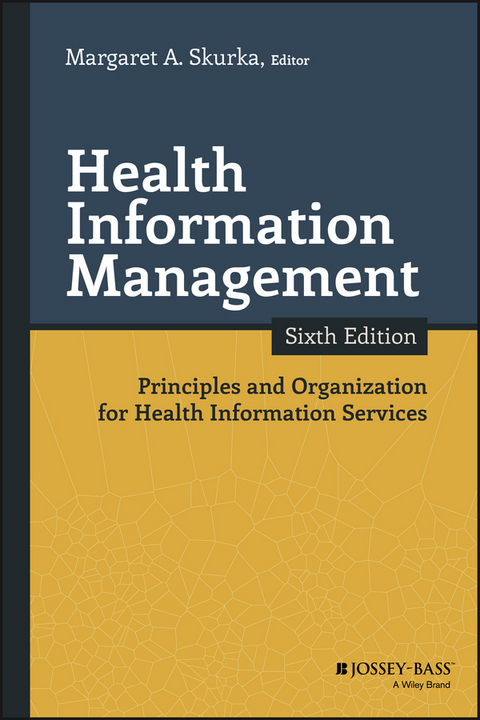
Health Information Management (eBook)
John Wiley & Sons (Verlag)
978-1-119-15123-4 (ISBN)
The Updated and Extensively Revised Guide to Developing Efficient Health Information Management Systems
Health Information Management is the most comprehensive introduction to the study and development of health information management (HIM). Students in all areas of health care gain an unmatched understanding of the entire HIM profession and how it currently relates to the complex and continuously evolving field of health care in the United States.
This brand-new Sixth Edition represents the most thorough revision to date of this cornerstone resource. Inside, a group of hand-picked HIM educators and practitioners representing the vanguard of the field provide fundamental guidelines on content and structure, analysis, assessment, and enhanced information. Fully modernized to reflect recent changes in the theory and practice of HIM, this latest edition features all-new illustrative examples and in-depth case studies, along with:
- Fresh and contemporary examinations of both electronic and print health records, data management, data privacy and security, health informatics and analytics, and coding and classification systems
- An engaging and user-friendly pedagogy, complete with learning objectives, key terms, case studies, and problems with workable solutions in every chapter
- Ready-to-use PowerPoint slides for lectures, full lesson plans, and a test bank for turnkey assessments
A must-have resource for everyone in health care, Health Information Management, Sixth Edition, puts everything you need at your fingertips.
MARGARET A. SKURKA, MS, RHIA, CCS is a Professor and Director of the Health Information Technology Program at Indiana University Northwest in Gary. She has served as Assistant Dean and Department Chair of HIM for the past 40-plus years at the university. She has been actively involved in the American Health Information Management Association for her entire career and is a recipient of its highest honor of Distinguished Member. Most recently, she was named a Chancellor's Professor by Indiana University Northwest, one of its highest honors.
The Updated and Extensively Revised Guide to Developing Efficient Health Information Management Systems Health Information Management is the most comprehensive introduction to the study and development of health information management (HIM). Students in all areas of health care gain an unmatched understanding of the entire HIM profession and how it currently relates to the complex and continuously evolving field of health care in the United States. This brand-new Sixth Edition represents the most thorough revision to date of this cornerstone resource. Inside, a group of hand-picked HIM educators and practitioners representing the vanguard of the field provide fundamental guidelines on content and structure, analysis, assessment, and enhanced information. Fully modernized to reflect recent changes in the theory and practice of HIM, this latest edition features all-new illustrative examples and in-depth case studies, along with: Fresh and contemporary examinations of both electronic and print health records, data management, data privacy and security, health informatics and analytics, and coding and classification systems An engaging and user-friendly pedagogy, complete with learning objectives, key terms, case studies, and problems with workable solutions in every chapter Ready-to-use PowerPoint slides for lectures, full lesson plans, and a test bank for turnkey assessments A must-have resource for everyone in health care, Health Information Management, Sixth Edition, puts everything you need at your fingertips.
MARGARET A. SKURKA, MS, RHIA, CCS is a Professor and Director of the Health Information Technology Program at Indiana University Northwest in Gary. She has served as Assistant Dean and Department Chair of HIM for the past 40-plus years at the university. She has been actively involved in the American Health Information Management Association for her entire career and is a recipient of its highest honor of Distinguished Member. Most recently, she was named a Chancellor's Professor by Indiana University Northwest, one of its highest honors.
Cover 1
Title Page 5
Copyright 6
Contents 7
About the Editor 9
About the Contributors 11
Preface 17
Acknowledgments 19
Chapter 1: Health Information Management and the Healthcare Institution 21
Responsibility of the Board of Directors 22
Responsibility of the President/Chief Executive Officer (CEO) 24
Responsibility of the Medical Staff 26
Credentialing and Privileges 26
Authentication 27
Functions of the HIM Department 27
The HIM Professional 28
Educational Requirements 30
More on Certification 33
Career Opportunities 36
HIM Jobs 37
New Role 38
What Is HIM’s Role in Information Governance? 40
Relationships with Other Departments 41
Conclusion 42
References 43
Chapter 2: Health Record Content and Structure of the Health Record 45
Health Record Content 46
Use of Abbreviations in the Health Record 47
Joint Commission, Federal Conditions of Participation, and State Content Standards 48
Inpatient Records 50
Observation Patient Records 52
Ambulatory Care Records 53
Emergency Care Records 55
Home Health Records 56
Long-Term Care and Rehabilitation Records 57
Hospice Records 59
Behavioral Health Care 59
Records in Other Healthcare Settings 60
Secondary Health Data 61
Master Patient Index 62
Minimum Data Elements 62
Back-Up Measures 65
Disease and Operation Indexes or Databases 65
Physician Index 66
Registers Maintained by Healthcare Facilities 66
Patient Register 66
Birth and Death Registers 67
Operating Room Register 68
Emergency Department Register 68
Special Registries 68
Conclusion 72
References 73
Chapter 3: The Health Record: Electronic and Paper 75
Record Identification Systems 76
Alphabetical Filing 76
Numerical Identification 77
Unit Numbering System 77
Serial Numbering System 79
Serial-Unit Numbering System 80
Unique Health Identifiers 80
Filing Systems for Paper-Based Records 81
Alphabetical Filing 81
Numerical Filing Systems 81
Straight Numerical Filing System 82
TD Filing 82
Considerations in Filing Systems 84
Miscellaneous Patient Forms 86
Chart Requisition and Tracking Systems 86
Logistical, Space, and Equipment Considerations 88
The Permanent File 89
Record Assembly and Analysis 91
Coding and Abstracting 91
Release of Information 91
Medical Transcription 92
Department Management 92
Physician Record Completion 93
Quality Assessment, Utilization Management, and Other Functions 93
Additional Space and Equipment Considerations 94
System and Equipment Selection 95
Impact of the Electronic Health Record 96
Health Information Management in Multisite Systems 98
Conclusion 99
References 100
Chapter 4: Healthcare Topics in Data Governance and Data Management 101
Introduction 101
Data Governance 101
Data Management 106
Working Examples/Case Scenario 115
Discussion 123
References 124
Chapter 5: Health Law, Data Privacy and Security, Fraud, and Abuse 125
The U.S. Legal System 126
Classifications of Law 126
Sources of Law 127
The U.S. Court System and the Legal Process 128
The Legal Process 129
Theories of Liability 133
Breach of Contract 133
Negligent Torts 134
Intentional Torts 138
Legal Requirements Affecting Health Information Management 140
HIPAA: A Primer 141
Privacy, Confidentiality, and Security 144
Access, Use, and Disclosure 145
Security of Electronic Protected Health Information 150
Fraud and Abuse Implications for HIM and Corporate Compliance 153
Fraud and Abuse in Health Care 153
Fraud and Abuse Defined 154
Laws to Combat Fraud and Abuse 156
Role of Documentation and HIM Professional 158
Conclusion 158
References 159
Chapter 6: Informatics, Analytics, Data Use, and System Support 163
The Field of Health Informatics 164
Health Informatics: Defined 164
History of Health Informatics 164
Subspecialties of Health Informatics 165
Data Analytics 166
Data Analytics: Defined 166
Sources of Data 166
Why Collect and Analyze Data? 169
Examples of Data Collection and Analysis in Health Care 171
Application of Basic Statistical Techniques and Presentation of Data 175
Types of Statistics 175
Statistics Definitions 176
Types of Statistical Data 177
Healthcare Facility Statistical Terminology 178
Healthcare Facility Rates 180
Mortality Rates 182
Autopsy Rates 182
Presenting the Data 182
Conclusion 188
References 188
Chapter 7: Coding, Compliance, and Classification Systems 191
International Classification of Diseases 197
Background 197
Development of the ICD-10-CM/PCS 198
Oncology 203
Mental Disorders 204
SNOMED CT 205
Current Procedural Terminology (CPT) 207
ICD-10-CM/PCS and DRGs in Reimbursement 210
DRGs and Their Application for Severity 211
ICD-10-CM and Outpatient Reimbursement 211
Coding Quality 212
Coding Ethics and Optimization in Coding 216
Compliance in Coding 218
Challenges and Technology Advancements in Coding 221
Conclusion 222
References 223
Chapter 8: Clinical Documentation Improvement 225
Managing Coding Audits 230
Computer-Assisted Coding: A Review of Accuracy of CAC Coding Assignments 231
Implement Provider Querying to Resolve Discrepancies 232
How to Begin the Query Process 233
Communicating with Physicians 235
Physician Education 240
CDI External Coding Audits 241
CDI and the Case Mix Index 242
Conclusion 243
References 244
Chapter 9: Revenue Cycle and Reimbursement 247
Administrative Functions of the Revenue Cycle 248
Federal Regulation of Meaningful Use 248
Lack of Consensus Regarding Interoperability Standards 249
Information Governance 250
Identity Theft 253
Privacy and Security 254
Security Breaches 255
Healthcare Facilities Are Facing Collection Issues 255
Negotiating Contracts with Commercial Payers 256
Charge Description Master (CDM) 257
Revenue Codes and the Form CMS-1450 (UB-04) 258
Example of Revenue Codes 259
Clinical Documentation Improvement (CDI) 260
Necessity of a CDM Team 261
Charge Capture 262
Fraud and Abuse 263
ICD-10-CM and ICD-10-PCS Required Restructuring of the Revenue Cycle 263
Determination of Which Codes Are Placed in the Charge Master 264
Clean Claim Submission 265
Remittance Processing 265
Denial Management 266
Revenue Cycle Key Performance Indicators 266
Conclusion 267
References 267
Chapter 10: Strategic, Financial, and Organizational Management 273
Utilize Health Information to Support Enterprise-Wide Decision Support 273
Strategic Planning 277
Develop Information Management Plans That Support the Organization's Current and Future Strategy and Goals 278
General Principles of Management Utilized in the Administration of Health Information Services 281
Health Information Exchange 283
Use Cases 285
HIM Contribution to HIE 288
Budget Planning 289
Types of Budgets 289
Budgeting Principles 292
Step in the Budget Cycle 293
Overview Human Resources Including Labor/Employment Laws 296
Future Roles of the HIM Professional 298
Job Descriptions and AHIMA’s Career Map 299
References 299
Index 303
EULA 315
| Erscheint lt. Verlag | 7.3.2017 |
|---|---|
| Reihe/Serie | Jossey-Bass Public Health |
| Jossey-Bass Public Health/Health Services Text | Jossey-Bass Public Health/Health Services Text |
| Sprache | englisch |
| Themenwelt | Informatik ► Weitere Themen ► Bioinformatik |
| Medizin / Pharmazie ► Allgemeines / Lexika | |
| Studium ► Querschnittsbereiche ► Prävention / Gesundheitsförderung | |
| Veterinärmedizin | |
| Schlagworte | Areas • brandnew • Care • Comprehensive • cornerstone • currently • Educators • Efficient • entire • extensively • Field • fundamental • Gesundheitsdaten • Gesundheits- u. Sozialwesen • Guide • Guidelines • Health • Health & Social Care • Information • Öffentlicher Gesundheitsdienst u. Gesundheitspolitik • Profession • Public Health Services & Policy • represents • resource • Revision • sixth • thorough • unmatched • Vanguard |
| ISBN-10 | 1-119-15123-6 / 1119151236 |
| ISBN-13 | 978-1-119-15123-4 / 9781119151234 |
| Informationen gemäß Produktsicherheitsverordnung (GPSR) | |
| Haben Sie eine Frage zum Produkt? |
 PDF (Adobe DRM)
Kopierschutz: Adobe-DRM
Adobe-DRM ist ein Kopierschutz, der das eBook vor Mißbrauch schützen soll. Dabei wird das eBook bereits beim Download auf Ihre persönliche Adobe-ID autorisiert. Lesen können Sie das eBook dann nur auf den Geräten, welche ebenfalls auf Ihre Adobe-ID registriert sind.
Details zum Adobe-DRM
Dateiformat: PDF (Portable Document Format)
Mit einem festen Seitenlayout eignet sich die PDF besonders für Fachbücher mit Spalten, Tabellen und Abbildungen. Eine PDF kann auf fast allen Geräten angezeigt werden, ist aber für kleine Displays (Smartphone, eReader) nur eingeschränkt geeignet.
Systemvoraussetzungen:
PC/Mac: Mit einem PC oder Mac können Sie dieses eBook lesen. Sie benötigen eine
eReader: Dieses eBook kann mit (fast) allen eBook-Readern gelesen werden. Mit dem amazon-Kindle ist es aber nicht kompatibel.
Smartphone/Tablet: Egal ob Apple oder Android, dieses eBook können Sie lesen. Sie benötigen eine
Geräteliste und zusätzliche Hinweise
Buying eBooks from abroad
For tax law reasons we can sell eBooks just within Germany and Switzerland. Regrettably we cannot fulfill eBook-orders from other countries.


