Statistics for Health Care Management and Administration (eBook)
John Wiley & Sons (Verlag)
978-1-118-71276-4 (ISBN)
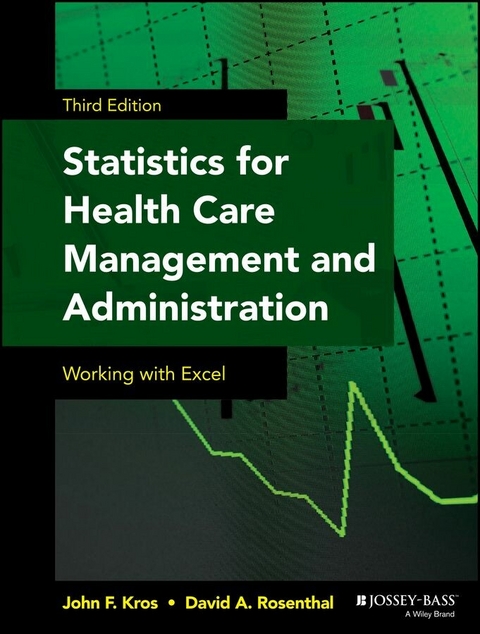
Statistics for Health Care Management and Administration is a unique and invaluable resource for students of health care administration and public health. The book introduces students to statistics within the context of health care, focusing on the major data and analysis techniques used in the field. All hands-on instruction makes use of Excel, the most common spreadsheet software that is ubiquitous in the workplace. This new third edition has been completely retooled, with new content on proportions, ANOVA, linear regression, chi-squares, and more, Step-by-step instructions in the latest version of Excel and numerous annotated screen shots make examples easy to follow and understand.
Familiarity with statistical methods is essential for health services professionals and researchers, who must understand how to acquire, handle, and analyze data. This book not only helps students develop the necessary data analysis skills, but it also boosts familiarity with important software that employers will be looking for.
- Learn the basics of statistics in the context of Excel
- Understand how to acquire data and display it for analysis
- Master various tests including probability, regression, and more
- Turn test results into usable information with proper analysis
Statistics for Health Care Management and Administration gets students off to a great start by introducing statistics in the workplace context from the very beginning.
JOHN F. KROS, PHD, is the Vincent K. McMahon Distinguished Professor of Business in the Marketing and Supply Chain Management Department in the College of Business at East Carolina University.
DAVID A. ROSENTHAL, PHD, is Professor and Chair of Health Care Management at Baptist Memorial College of Health Sciences.
JOHN F. KROS, PHD, is the Vincent K. McMahon Distinguished Professor of Business in the Marketing and Supply Chain Management Department in the College of Business at East Carolina University. DAVID A. ROSENTHAL, PHD, is Professor and Chair of Health Care Management at Baptist Memorial College of Health Sciences.
Cover???????????????????????? 1
Title Page?????????????????????????????????? 5
Copyright???????????????????????????????? 6
Contents?????????????????????????????? 7
Preface???????????????????????????? 15
Introducing Excel 15
So How Did We Get to Here? 15
Intended Level of the Textbook 16
Textbook Organization 16
Leading by Example(s) 17
Acknowledgments???????????????????????????????????????????? 19
The Authors???????????????????????????????????? 21
Part 1?????????????????????????? 25
Chapter 1 Statistics and Excel?????????????????????????????????????????????????????????????????????????? 27
1.1 How This Book Differs from Other Statistics Texts???????????????????????????????????????????????????????????????????????????????????????????????????????????????????????? 27
1.2 Statistical Applications in Health Policy and Health Administration???????????????????????????????????????????????????????????????????????????????????????????????????????????????????????????????????????????????????????????? 28
Exercises for Section 1.2???????????????????????????????????????????????????????????????? 38
1.3 What Is the "Big Picture"??????????????????????????????????????????????????????????????????????????? 39
1.4 Some Initial Definitions?????????????????????????????????????????????????????????????????????? 40
Exercises for Section 1.4???????????????????????????????????????????????????????????????? 50
1.5 Five Statistical Tests 52
Exercises for Section 1.5???????????????????????????????????????????????????????????????? 54
Key Terms???????????????????????????????? 55
Chapter 2 Excel as a Statistical Tool???????????????????????????????????????????????????????????????????????????????????????? 57
2.1 The Basics?????????????????????????????????????????? 57
Exercises for Section 2.1???????????????????????????????????????????????????????????????? 59
2.2 Working and Moving Around in a Spreadsheet?????????????????????????????????????????????????????????????????????????????????????????????????????????? 60
Exercises for Section 2.2???????????????????????????????????????????????????????????????? 65
2.3 Excel Functions???????????????????????????????????????????????????? 65
Exercises for Section 2.3???????????????????????????????????????????????????????????????? 70
2.4 The =IF() Function?????????????????????????????????????????????????????????? 71
Exercises for Section 2.4???????????????????????????????????????????????????????????????? 74
2.5 Excel Graphs?????????????????????????????????????????????? 75
Exercises for Section 2.5???????????????????????????????????????????????????????????????? 80
2.6 Sorting a String of Data?????????????????????????????????????????????????????????????????????? 81
Exercise for Section 2.6?????????????????????????????????????????????????????????????? 84
2.7 The Data Analysis Pack?????????????????????????????????????????????????????????????????? 85
2.8 Functions That Give Results in More than One Cell???????????????????????????????????????????????????????????????????????????????????????????????????????????????????????? 87
Exercises for Section 2.8???????????????????????????????????????????????????????????????? 90
2.9 The Dollar Sign ($) Convention for Cell References?????????????????????????????????????????????????????????????????????????????????????????????????????????????????????????? 91
Key Terms???????????????????????????????? 93
Chapter 3 Data Acquisition: Sampling and Data Preparation???????????????????????????????????????????????????????????????????????????????????????????????????????????????????????????????? 95
3.1 The Nature of Data?????????????????????????????????????????????????????????? 95
Exercises for Section 3.1???????????????????????????????????????????????????????????????? 102
3.2 Sampling?????????????????????????????????????? 103
Exercises for Section 3.2???????????????????????????????????????????????????????????????? 117
3.3 Data Access and Preparation???????????????????????????????????????????????????????????????????????????? 118
Exercises for Section 3.3???????????????????????????????????????????????????????????????? 131
3.4 Missing Data?????????????????????????????????????????????? 132
Key Terms 134
Chapter 4 Data Display: Descriptive Presentation, Excel Graphing Capability???????????????????????????????????????????????????????????????????????????????????????????????????????????????????????????????????????????????????????????????????? 135
4.1 Creating, Displaying, and Understanding Frequency Distributions???????????????????????????????????????????????????????????????????????????????????????????????????????????????????????????????????????????????????? 135
Exercises for Section 4.1???????????????????????????????????????????????????????????????? 153
4.2 Using the Pivot Table to Generate Frequencies of Categorical Variables?????????????????????????????????????????????????????????????????????????????????????????????????????????????????????????????????????????????????????????????????? 155
Exercises for Section 4.2???????????????????????????????????????????????????????????????? 159
4.3 A Logical Extension of the Pivot Table: Two Variables???????????????????????????????????????????????????????????????????????????????????????????????????????????????????????????????? 159
Exercises for Section 4.3???????????????????????????????????????????????????????????????? 164
Key Terms???????????????????????????????? 164
Chapter 5 Basic Concepts of Probability???????????????????????????????????????????????????????????????????????????????????????????? 165
5.1 Some Initial Concepts and Definitions???????????????????????????????????????????????????????????????????????????????????????????????? 165
Exercises for Section 5.1???????????????????????????????????????????????????????????????? 174
5.2 Marginal Probabilities, Joint Probabilities, and Conditional Probabilities?????????????????????????????????????????????????????????????????????????????????????????????????????????????????????????????????????????????????????????????????????????? 174
Exercises for Section 5.2???????????????????????????????????????????????????????????????? 184
5.3 Binomial Probability?????????????????????????????????????????????????????????????? 185
Exercises for Section 5.3???????????????????????????????????????????????????????????????? 195
5.4 The Poisson Distribution?????????????????????????????????????????????????????????????????????? 197
Exercises for Section 5.4???????????????????????????????????????????????????????????????? 202
5.5 The Normal Distribution???????????????????????????????????????????????????????????????????? 202
Key Terms???????????????????????????????? 205
Chapter 6 Measures of Central Tendency and Dispersion: Data Distributions???????????????????????????????????????????????????????????????????????????????????????????????????????????????????????????????????????????????????????????????? 207
6.1 Measures of Central Tendency and Dispersion???????????????????????????????????????????????????????????????????????????????????????????????????????????? 207
Exercises for Section 6.1???????????????????????????????????????????????????????????????? 220
6.2 The Distribution of Frequencies???????????????????????????????????????????????????????????????????????????????????? 221
Exercises for Section 6.2???????????????????????????????????????????????????????????????? 232
6.3 The Sampling Distribution of the Mean???????????????????????????????????????????????????????????????????????????????????????????????? 233
Exercises for Section 6.3???????????????????????????????????????????????????????????????? 243
6.4 Mean and Standard Deviation of a Discrete Numerical Variable?????????????????????????????????????????????????????????????????????????????????????????????????????????????????????????????????????????????? 244
Exercises for Section 6.4???????????????????????????????????????????????????????????????? 246
6.5 The Distribution of a Proportion?????????????????????????????????????????????????????????????????????????????????????? 246
Exercises for Section 6.5???????????????????????????????????????????????????????????????? 251
6.6 The t Distribution?????????????????????????????????????????????????????????? 251
Exercises for Section 6.6???????????????????????????????????????????????????????????????? 256
Key Terms???????????????????????????????? 257
Part 2?????????????????????????? 259
Chapter 7 Confidence Limits and Hypothesis Testing?????????????????????????????????????????????????????????????????????????????????????????????????????????????????? 261
7.1 What Is a Confidence Interval??????????????????????????????????????????????????????????????????????????????????? 261
Exercises for Section 7.1???????????????????????????????????????????????????????????????? 267
7.2 Calculating Confidence Limits for Multiple Samples?????????????????????????????????????????????????????????????????????????????????????????????????????????????????????????? 268
Exercises for Section 7.2???????????????????????????????????????????????????????????????? 270
7.3 What Is Hypothesis Testing????????????????????????????????????????????????????????????????????????????? 271
Exercises for Section 7.3???????????????????????????????????????????????????????????????? 273
7.4 Type I and Type II Errors???????????????????????????????????????????????????????????????????????? 274
Exercises for Section 7.4???????????????????????????????????????????????????????????????? 290
7.5 Selecting Sample Sizes?????????????????????????????????????????????????????????????????? 291
Exercises for Section 7.5???????????????????????????????????????????????????????????????? 293
Key Terms???????????????????????????????? 294
Chapter 8 Statistical Tests for Categorical Data?????????????????????????????????????????????????????????????????????????????????????????????????????????????? 295
8.1 Independence of Two Variables???????????????????????????????????????????????????????????????????????????????? 295
Exercises for Section 8.1???????????????????????????????????????????????????????????????? 306
8.2 Examples of Chi-Square Analyses???????????????????????????????????????????????????????????????????????????????????? 307
Exercises for Section 8.2???????????????????????????????????????????????????????????????? 313
8.3 Small Expected Values in Cells?????????????????????????????????????????????????????????????????????????????????? 314
Exercises for Section 8.3???????????????????????????????????????????????????????????????? 316
Key Terms???????????????????????????????? 317
Chapter 9 t Tests for Related and Unrelated Data?????????????????????????????????????????????????????????????????????????????????????????????????????????????? 319
9.1 What Is a t Test????????????????????????????????????????????????????????? 319
Exercises for Section 9.1???????????????????????????????????????????????????????????????? 326
9.2 A t Test for Comparing Two Groups???????????????????????????????????????????????????????????????????????????????????????? 327
Exercises for Section 9.2???????????????????????????????????????????????????????????????? 340
9.3 A t Test for Related Data???????????????????????????????????????????????????????????????????????? 342
Exercises for Section 9.3???????????????????????????????????????????????????????????????? 345
Key Terms???????????????????????????????? 345
Chapter 10 Analysis of Variance???????????????????????????????????????????????????????????????????????????? 347
10.1 One-Way Analysis of Variance???????????????????????????????????????????????????????????????????????????????? 347
Exercises for Section 10.1?????????????????????????????????????????????????????????????????? 363
10.2 ANOVA for Repeated Measures?????????????????????????????????????????????????????????????????????????????? 364
Exercises for Section 10.2?????????????????????????????????????????????????????????????????? 372
10.3 Factorial Analysis of Variance???????????????????????????????????????????????????????????????????????????????????? 373
Exercises for Section 10.3?????????????????????????????????????????????????????????????????? 386
Key Terms???????????????????????????????? 388
Chapter 11 Simple Linear Regression???????????????????????????????????????????????????????????????????????????????????? 389
11.1 Meaning and Calculation of Linear Regression???????????????????????????????????????????????????????????????????????????????????????????????????????????????? 389
Exercises for Section 11.1?????????????????????????????????????????????????????????????????? 397
11.2 Testing the Hypothesis of Independence???????????????????????????????????????????????????????????????????????????????????????????????????? 398
Exercises for Section 11.2?????????????????????????????????????????????????????????????????? 404
11.3 The Excel Regression Add-In?????????????????????????????????????????????????????????????????????????????? 405
Exercises for Section 11.3?????????????????????????????????????????????????????????????????? 412
11.4 The Importance of Examining the Scatterplot?????????????????????????????????????????????????????????????????????????????????????????????????????????????? 412
11.5 The Relationship between Regression and the t Test???????????????????????????????????????????????????????????????????????????????????????????????????????????????????????????? 415
Exercises for Section 11.5?????????????????????????????????????????????????????????????????? 416
Key Terms???????????????????????????????? 417
Chapter 12 Multiple Regression: Concepts and Calculation?????????????????????????????????????????????????????????????????????????????????????????????????????????????????????????????? 419
12.1 Introduction???????????????????????????????????????????????? 419
Exercises for Section 12.1?????????????????????????????????????????????????????????????????? 430
Key Terms???????????????????????????????? 431
Chapter 13 Extensions of Multiple Regression?????????????????????????????????????????????????????????????????????????????????????????????????????? 433
13.1 Dummy Variables in Multiple Regression???????????????????????????????????????????????????????????????????????????????????????????????????? 433
Exercises for Section 13.1?????????????????????????????????????????????????????????????????? 444
13.2 The Best Regression Model?????????????????????????????????????????????????????????????????????????? 445
Exercises for Section 13.2?????????????????????????????????????????????????????????????????? 455
13.3 Correlation and Multicolinearity???????????????????????????????????????????????????????????????????????????????????????? 456
Exercises for Section 13.3?????????????????????????????????????????????????????????????????? 459
13.4 Nonlinear Relationships?????????????????????????????????????????????????????????????????????? 459
Exercises for Section 13.4?????????????????????????????????????????????????????????????????? 471
Key Terms???????????????????????????????? 472
Chapter 14 Analysis with a Dichotomous Categorical Dependent Variable???????????????????????????????????????????????????????????????????????????????????????????????????????????????????????????????????????????????????????? 473
14.1 Introduction to the Dichotomous Dependent Variable???????????????????????????????????????????????????????????????????????????????????????????????????????????????????????????? 474
14.2 An Example with a Dichotomous Dependent Variable: Traditional Treatments???????????????????????????????????????????????????????????????????????????????????????????????????????????????????????????????????????????????????????????????????????? 475
Exercises for Section 14.2?????????????????????????????????????????????????????????????????? 486
14.3 Logit for Estimating Dichotomous Dependent Variables???????????????????????????????????????????????????????????????????????????????????????????????????????????????????????????????? 487
Exercises for Section 14.3?????????????????????????????????????????????????????????????????? 499
14.4 A Comparison of Ordinary Least Squares, Weighted Least Squares, and Logit?????????????????????????????????????????????????????????????????????????????????????????????????????????????????????????????????????????????????????????????????????????? 500
Exercises for Section 14.4?????????????????????????????????????????????????????????????????? 504
Key Terms???????????????????????????????? 504
Appendix A Multiple Regression and Matrices 505
An Introduction to Matrix Math?????????????????????????????????????????????????????????????????????????? 505
Addition and Subtraction of Matrices?????????????????????????????????????????????????????????????????????????????????????? 506
Multiplication of Matrices?????????????????????????????????????????????????????????????????? 507
Matrix Multiplication and Scalars???????????????????????????????????????????????????????????????????????????????? 508
Finding the Determinant of a Matrix???????????????????????????????????????????????????????????????????????????????????? 508
Matrix Capabilities of Excel?????????????????????????????????????????????????????????????????????? 510
Explanation of Excel Output Displayed with Scientific Notation?????????????????????????????????????????????????????????????????????????????????????????????????????????????????????????????????????????? 513
Using the b Coefficients to Generate Regression Results???????????????????????????????????????????????????????????????????????????????????????????????????????????????????????????? 514
Calculation of All Multiple Regression Results?????????????????????????????????????????????????????????????????????????????????????????????????????????? 515
Exercises for Appendix A?????????????????????????????????????????????????????????????? 518
References?????????????????????????????????? 521
Glossary?????????????????????????????? 523
Index???????????????????????? 537
EULA 562
Chapter 1
Statistics and Excel
Learning Objectives
- Understand how this book differs from other statistics texts
- Understand how knowledge of statistics may be beneficial to health policy or health administration professionals
- Understand the “big picture” with regard to the use of statistics for health policy and administration
- Understand the definitions of the following terms:
- Populations and samples
- Random and nonrandom samples
- Types of random samples
- Variables, independent and dependent
- Identify the five separate statistical tests: chi-square test, the t test, analysis of variance (ANOVA), regression analysis, and Logit
Statistics is a subject that for many people is pure tedium. For others, it is more likely to be anathema. Still others find statistics interesting, even stimulating, but they are usually in the minority in any group.
This book is premised on the recognition that in the health care industry, as indeed among people in any industry or discipline, there are at least these three different views of statistics, and that any statistics class is likely to be made up more of the first two groups than the last one. This book provides an introduction to statistics in health policy and administration that is relevant, useful, challenging, and informative.
1.1 How This Book Differs from Other Statistics Texts
The primary difference between this statistics text and most others is that this text uses Microsoft Excel as the tool for carrying out statistical operations and understanding statistical concepts as they relate to health policy and health administration issues. This is not to say that no other statistics texts use Excel. Levine, Stephan, Szabat (2013) have produced a very useable text, Statistics for Managers Using Microsoft Excel. But their book focuses almost exclusively on non–health-related topics. We agree that the closer the applications of statistics are to students' real-life interests and experiences, the more effective students will be in understanding and using statistics. Consequently, this book focuses its examples entirely on subjects that should be immediately familiar to people in the health care industry.
Excel, which most people know as a spreadsheet program for creating budgets, comparing budgeted and expended amounts, and generally fulfilling accounting needs, is also a very powerful statistical tool. Books that do not use Excel for teaching statistics generally leave the question of how to carry out the actual statistical operations in the hands of the student or the instructor. It is often assumed that relatively simple calculations, such as means, standard deviations, and t tests, will be carried out on paper or with a calculator. For more complicated calculations, the assumption is usually that a dedicated statistical package, such as SAS, SPSS, STATA, or SYSTAT, will be used. There are at least two problems with this approach that we hope to overcome in this book. First, calculations done on paper, or even those done with a calculator, can make even simple statistical operations overly tedious and prone to errors in arithmetic. Second, because dedicated statistical packages are designed for use rather than for teaching, they often obscure the actual process of calculating the statistical results, thereby hindering students' understanding of both how the statistic is calculated and what the statistic means.
In general, this is not true of Excel. It is true that when using this book, a certain amount of time must be devoted to the understanding of how to use Excel as a statistical tool. But once that has been done, Excel makes the process of carrying out the statistical procedures under consideration relatively clear and transparent. The student should end up with a better understanding of what the statistic means, through an understanding of how it is calculated, and not simply come away with the ability to get a result by entering a few commands into a statistical package. This is not to say that Excel cannot be used to eliminate many of the steps needed to get particular statistical results. A number of statistical tests and procedures are available as add-ins to Excel. However, using Excel as a relatively powerful—yet transparent—calculator can lead to a much clearer understanding of what a statistic means and how it may be used.
1.2 Statistical Applications in Health Policy and Health Administration
When teaching statistics to health policy and health administration students, we often encounter the same question: “All these statistics are fine, but how do they apply to anything I am concerned with?” The question not only is a reasonable one, but also points directly to one of the most important and difficult challenges for a statistics teacher, a statistics class, or a statistics text. How can it be demonstrated that these statistics have any real relevance to anything that the average person working in the health care industry ever needs to know or do?
To work toward a better understanding of why and when the knowledge of statistics may be useful to someone working in health policy or health administration, we've selected six examples of situations in which statistical applications can play a role. All six of these examples were inspired by real problems faced by students in statistics classes, and they represent real statistical challenges that students have faced and hoped to solve. In virtually every case, the person who presented the problem recognized it as one that could probably be dealt with using some statistical tool. But also in every case, the solution to the problem was not obvious in the absence of some understanding of statistics. Although these case examples are not likely to resonate with every reader, perhaps they will give many readers a little better insight into why knowledge of statistics can be useful.
Documentation of Medicare Reimbursement Claims
The Pentad Home Health Agency provides home health services in five counties of an eastern state. The agency must be certain that its Medicare reimbursement claims are appropriately and correctly documented in order to ensure that Medicare will process these claims and issue benefits in a timely manner. All physician orders, including medications, home visits for physical therapy, home visits of skilled nursing staff, and any other orders for service, must be correctly documented on a Form CMS-485. Poorly or otherwise inadequately prepared documentation can lead to rejection or delay in processing of the claim for reimbursement by the Centers for Medicare and Medicaid Services (CMS).
Pentad serves about 800 clients in the five-county region. In order to assure themselves that all records are properly documented, the administration runs a chart audit of 1 in 10 charts each quarter. The audit seeks to determine (1) whether all orders indicated in the chart have been carried out and (2) if the orders have been correctly documented in the Form CMS-485. Orders that have not been carried out, or orders incorrectly documented, lead to follow-up training and intervention to address these issues and ensure that the orders and documentation are properly prepared going forward.
Historically, the chart audit has been done by selecting each tenth chart, commencing at the beginning or at the end of the chart list. Typically, the chart audit determines that the majority of charts, usually 85 to 95 percent, have been correctly documented. But there are occasionally areas, such as in skilled nursing care, where the percentage of correct documentation may fall below that level. When this happens, the administration initiates appropriate corrective action.
Sampling, Data Display, and Probability
One of the questions of the audit has been the selection of the sample. Because the list of clients changes relatively slowly, the selection of every tenth chart often results in the same charts being selected for audit from one quarter to the next. That being the case, a different strategy for chart selection is desirable. It has been suggested by statisticians that using a strictly random sample of the charts might be a better way to select them for quarterly review, as this selection would have a lesser likelihood of resulting in a review of the same charts from quarter to quarter. But how does one go about drawing a strictly random sample from any population? Or, for that matter, what does “strictly random” actually mean and why is it important beyond the likelihood that the same files may not be picked from quarter to quarter? These questions are addressed by statistics, specifically the statistics associated with sample selection and data collection.
Another question related to the audit concerns when to initiate corrective action. Suppose a sample of 1 in 10 records is drawn (for 800 clients that would be 80 records) and it is discovered that 20 of the records have been incorrectly documented. Twenty of 80 records incorrectly documented would mean that only 75 percent of the records were correctly documented. This would suggest that an intervention should be initiated to correct the documentation problem. But it was a sample of the 800 records that was examined, not the entire 800. Suppose that the 20 incorrectly documented records were, by the luck of the draw, so to speak, the only incorrectly documented records in the entire 800. That would mean that only 2.5 percent of the cases were incorrectly documented.
If the required...
| Erscheint lt. Verlag | 15.12.2015 |
|---|---|
| Reihe/Serie | Public Health / Epidemiology and Biostatistics |
| Public Health / Epidemiology and Biostatistics | Public Health/Epidemiology and Biostatistics |
| Sprache | englisch |
| Themenwelt | Informatik ► Office Programme ► Excel |
| Medizin / Pharmazie ► Allgemeines / Lexika | |
| Medizin / Pharmazie ► Gesundheitswesen | |
| Studium ► Querschnittsbereiche ► Epidemiologie / Med. Biometrie | |
| Studium ► Querschnittsbereiche ► Prävention / Gesundheitsförderung | |
| Schlagworte | Ãffentlicher Gesundheitsdienst u. Gesundheitspolitik • beginner statistics • data analysis methods • David A. Rosenthal • Gesundheits- u. Sozialwesen • Health & Social Care • health care administration statistical literacy • health care statistics textbook • health services data analysis • health services quantitative methods • introduction to statistics • John F. Kros • Learning Statistics • Öffentlicher Gesundheitsdienst u. Gesundheitspolitik • Public Health • public health data handling • Public Health Services & Policy • statistics and health reform • statistics for health administration • Statistics for Health Care Management and Administration: Working with Excel, 3rd Edition • statistics for public health • statistics guide • statistics in Excel • statistics in SPSS • statistics methods • statistics textbook • using Excel for statistics |
| ISBN-10 | 1-118-71276-5 / 1118712765 |
| ISBN-13 | 978-1-118-71276-4 / 9781118712764 |
| Informationen gemäß Produktsicherheitsverordnung (GPSR) | |
| Haben Sie eine Frage zum Produkt? |
 PDF (Adobe DRM)
Größe: 19,6 MB
Kopierschutz: Adobe-DRM
Adobe-DRM ist ein Kopierschutz, der das eBook vor Mißbrauch schützen soll. Dabei wird das eBook bereits beim Download auf Ihre persönliche Adobe-ID autorisiert. Lesen können Sie das eBook dann nur auf den Geräten, welche ebenfalls auf Ihre Adobe-ID registriert sind.
Details zum Adobe-DRM
Dateiformat: PDF (Portable Document Format)
Mit einem festen Seitenlayout eignet sich die PDF besonders für Fachbücher mit Spalten, Tabellen und Abbildungen. Eine PDF kann auf fast allen Geräten angezeigt werden, ist aber für kleine Displays (Smartphone, eReader) nur eingeschränkt geeignet.
Systemvoraussetzungen:
PC/Mac: Mit einem PC oder Mac können Sie dieses eBook lesen. Sie benötigen eine
eReader: Dieses eBook kann mit (fast) allen eBook-Readern gelesen werden. Mit dem amazon-Kindle ist es aber nicht kompatibel.
Smartphone/Tablet: Egal ob Apple oder Android, dieses eBook können Sie lesen. Sie benötigen eine
Geräteliste und zusätzliche Hinweise
Zusätzliches Feature: Online Lesen
Dieses eBook können Sie zusätzlich zum Download auch online im Webbrowser lesen.
Buying eBooks from abroad
For tax law reasons we can sell eBooks just within Germany and Switzerland. Regrettably we cannot fulfill eBook-orders from other countries.
 EPUB (Adobe DRM)
Kopierschutz: Adobe-DRM
Adobe-DRM ist ein Kopierschutz, der das eBook vor Mißbrauch schützen soll. Dabei wird das eBook bereits beim Download auf Ihre persönliche Adobe-ID autorisiert. Lesen können Sie das eBook dann nur auf den Geräten, welche ebenfalls auf Ihre Adobe-ID registriert sind.
Details zum Adobe-DRM
Dateiformat: EPUB (Electronic Publication)
EPUB ist ein offener Standard für eBooks und eignet sich besonders zur Darstellung von Belletristik und Sachbüchern. Der Fließtext wird dynamisch an die Display- und Schriftgröße angepasst. Auch für mobile Lesegeräte ist EPUB daher gut geeignet.
Systemvoraussetzungen:
PC/Mac: Mit einem PC oder Mac können Sie dieses eBook lesen. Sie benötigen eine
eReader: Dieses eBook kann mit (fast) allen eBook-Readern gelesen werden. Mit dem amazon-Kindle ist es aber nicht kompatibel.
Smartphone/Tablet: Egal ob Apple oder Android, dieses eBook können Sie lesen. Sie benötigen eine
Geräteliste und zusätzliche Hinweise
Buying eBooks from abroad
For tax law reasons we can sell eBooks just within Germany and Switzerland. Regrettably we cannot fulfill eBook-orders from other countries.
aus dem Bereich