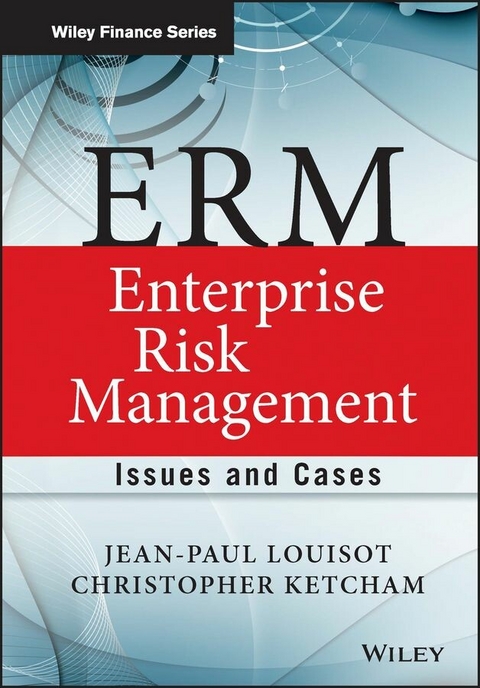
Despite enterprise risk management's relative newness as a recognized business discipline, the marketplace is replete with guides and references for ERM practitioners. Yet, until now, few case studies illustrating ERM in action have appeared in the literature. One reason for this is that, until recently, there were many disparate, even conflicting definitions of what, exactly ERM is and, more importantly, how organizations can use it to utmost advantage. With efforts underway, internationally, to mandate ERM and to standardize ERM standards and practices, the need has never been greater for an authoritative resource offering risk management professionals authoritative coverage of the full array of contemporary ERM issues and challenges. Written by two recognized international thought leaders in the field, ERM-Enterprise Risk Management provides that and much more.
- Packed with international cases studies illustrating ERM best practices applicable across all industry sectors and business models
- Explores contemporary issues, including quantitative and qualitative measures, as well as potential pitfalls and challenges facing today's enterprise risk managers
- Includes interviews with leading risk management theorists and practitioners, as well as risk managers from a variety of industries
- An indispensable working resource for risk management practitioners everywhere and a valuable reference for researchers, providing the latest empirical evidence and an exhaustive bibliography
Professor Jean-Paul Louisot, ARM, FIRM, holds a mining engineer degree, a Master in Economics and an MBA from the Kellogg School of Management and is a member of Beta Gamma Sigma. He has worked in risk management for nearly forty years, as a broker, an underwriter and a risk-manager. Since 1993, his activity focuses on teaching and coaching post graduate students and risk management professionals, while still acting as a part-time risk manager for several clients developing ERM programs. As curriculum director for CARM_Institute, Ltd, he supervises the ARM and EFARM (European Fellow in Applied Risk Management) programmes. After nine years at Paris 1 Panthéon Sorbonne University, he now teaches postgraduate courses in Risk Management at the Institut Catholique de Lille and in various universities, including the IACA in Vienna. He is a frequent speaker in professional conferences in Europe, in Australia, and in the USA. He has published a number of articles and studies on risk management and developed the first edition of the ERM course at The Institutes (ARM 57). He is currently working on his Doctorat en sciences de Gestion at University Paris 1 Panthéon Sorbonne and plans to complete the process in 2014.
Christopher H. Ketcham, Ph.D., CPCU, recently retired as Visiting Assistant Professor at the University of Houston Downtown College of Business Insurance and Risk Management department. While at UHD, Chris developed and taught seven courses for the new online curriculum for insurance and risk management undergraduate majors in this AACSB accredited school. Chris consults with industry and the independent insurance agent community on areas of practical risk management, ethics, and strategic planning. With Jean-Paul Louisot he was co-editor of the first edition of the textbook Enterprise-Wide Risk Management: Developing and Implementing published by The Institutes for their ARM-E designation. Chris's work in ethics extends to issues associated with emerging technologies such as private space exploration.
A wealth of international case studies illustrating current issues and emerging best practices in enterprise risk management Despite enterprise risk management's relative newness as a recognized business discipline, the marketplace is replete with guides and references for ERM practitioners. Yet, until now, few case studies illustrating ERM in action have appeared in the literature. One reason for this is that, until recently, there were many disparate, even conflicting definitions of what, exactly ERM is and, more importantly, how organizations can use it to utmost advantage. With efforts underway, internationally, to mandate ERM and to standardize ERM standards and practices, the need has never been greater for an authoritative resource offering risk management professionals authoritative coverage of the full array of contemporary ERM issues and challenges. Written by two recognized international thought leaders in the field, ERM-Enterprise Risk Management provides that and much more. Packed with international cases studies illustrating ERM best practices applicable across all industry sectors and business models Explores contemporary issues, including quantitative and qualitative measures, as well as potential pitfalls and challenges facing today's enterprise risk managers Includes interviews with leading risk management theorists and practitioners, as well as risk managers from a variety of industries An indispensable working resource for risk management practitioners everywhere and a valuable reference for researchers, providing the latest empirical evidence and an exhaustive bibliography
PROFESSOR JEAN-PAUL LOUISOT, ARM, FIRM, holds a Mining Engineering Degree, a Master in Economics and an MBA from the Kellogg School of Management and is a member of Beta Gamma Sigma. He has worked in risk management for nearly forty years, as a broker, an underwriter and a risk-manager. Since 1993, his activity focuses on teaching and coaching postgraduate students and risk management professionals, while still acting as a part-time risk manager for several clients developing ERM programmes. As curriculum director for CARM Institute, Ltd, he supervises the ARM and EFARM (European Fellow in Applied Risk Management) programmes. After nine years at Paris 1 Panthéon Sorbonne University, he now teaches postgraduate courses in Risk Management at the Institut Catholique de Lille and in various universities, including the IACA in Vienna. He is a frequent speaker at professional conferences in Europe, in Australia, and in the USA. He has published a number of articles and studies on risk management and developed the first edition of the ERM course at The Institutes. He is currently working on his Doctorat en sciences de Gestion at University Paris 1 Panthéon Sorbonne and plans to complete this in 2014. CHRISTOPHER KETCHAM, Ph.D., CPCU, CFP¯®, CIC, CRM, CISR, recently retired as Visiting Assistant Professor at the University of Houston Downtown's College of Business Insurance and Risk Management department. While at UHD, Chris developed and taught seven courses for the new online curriculum for insurance and risk management undergraduate majors in this AACSB accredited school. Chris consults with industry and independent insurance agent communities on areas of practical risk management, ethics, and strategic planning. With Jean-Paul Louisot he was co-editor of the first edition of the textbook Enterprise-Wide Risk Management: Developing and Implementing published by The Institutes for their ARM-E designation. Chris's work in ethics extends to issues associated with emerging technologies such as private space exploration.
ERM Enterprise Risk Management 3
Contents 7
Contributor List 9
About the Editors 11
Acknowledgements 12
Introduction 13
Case Studies 14
The Articles 16
The References 17
ISO 31000 and Guide 73: 2009 Definitions 17
ISO 31000 and Guide 73: 2009 Select Terms and Their Definitions 19
Part I ERM Articles 21
1 Establishing the Internal and External Contexts 23
1.1 Managing Risks to Enable Strategy 23
1.1.1 The Origin of Modern Risk Management 23
1.1.2 Strategic Risk Management? 24
1.1.3 Ethics, Sustainable Development, and Governance (ESG) 25
1.1.4 Where Are We Heading? Why and For Whom? How? 25
1.1.5 Fundamentals in Risk Management 27
1.1.6 Risk Management Process 27
1.1.7 From Risk Management to Good Governance 29
1.2 Strategy, Constraint, Risk Management and the Value Chain 32
1.2.1 Strategy and Constraint 32
1.2.2 The Value Chain 33
1.2.3 Risk Management and Strategy 35
1.2.4 Towards Creating Strategy 36
1.2.5 A Simple Strategy 37
1.2.6 Summary 38
Reference 39
1.3 The Risk of Group Decision Making Within Organizations: A Synthesis 39
1.3.1 Outline 39
1.3.2 Fundamentals – Setting the Frame 39
1.3.3 Observed Limitations of Human Thinking 40
1.3.4 Organizing and Processing Information – The Human Cognitive Process 42
1.3.5 Summary 48
1.3.6 Behavioral Decision Making in Groups – Power of the Crowd 48
1.3.7 How Organizations Deal With Decisions – Will ERM Assist? 53
Bibliography 56
References 57
2 Risk Assessment 61
2.1 Risk Quantification: Cornerstone for Rational Risk Management 61
2.1.1 Why Is Risk Quantification Needed? 62
2.1.2 Causal Structure of Risk 63
2.1.3 Increasing Awareness of Exposures and Stakes 63
2.1.4 Risk Quantification for Risk Control 64
2.1.5 Risk Quantification for Risk Financing 66
2.1.6 Conclusion 67
Reference 68
2.2 Brief Overview of Cindynics 68
2.2.1 Basic Concepts 70
2.2.2 Dysfunctions 71
2.2.3 General principles and axioms 74
2.2.4 Perspectives 75
Bibliography 75
2.3 Risk Assessment or Exposure Diagnostic 76
2.3.1 Foreword 76
2.3.2 Threats and Opportunities: How to deal with uncertainty in a changing world? 76
2.3.3 How to Manage the Risks Derived From Partners Resources? 81
2.3.4 Are There Any “Free” Resources? Taking into Account Externalities 83
2.3.5 What Do We Mean by Peril or Hazard? 85
2.3.6 Is It Possible to Develop an Efficient Classification for Perils and Hazards? 86
2.3.7 VoR or Velocity of Risk? 90
2.3.8 What About Business Impact Analysis? 91
2.3.9 Why Must Risk-Management Objectives Be Clearly Defined? 91
2.3.10 Managing Risks or Containing the Cost of Risk, Is It the Same Objective? 93
2.3.11 Why Is the Concept of Resilience Becoming So Popular With Board Members? 94
2.3.12 How to Conduct an Exposure Diagnostic? 95
2.3.13 How to Analyze and Evaluate Risks? 97
2.3.14 Risk Centres and How to Use Them for Risk Assessment 98
2.3.15 Risk Map or Risk Matrix: What for? 100
2.3.16 Why Does It Make Sense to Invest in a System to Gather and Transform Information? 101
2.4 Managing the Collection of Relevant Data for an ERM Program: The Importance of Efficient and Neutral Questionnaires 104
2.4.1 Conception Stage 104
2.4.2 Construction Stage 107
2.4.3 Administration Stage 109
2.4.4 Analysis Stage 111
Appendix A: Questionnaire on Corporate Reputation 112
2.5 Enterprise Risk Analytics Systems 116
2.5.1 Enterprise Risk Management Analysis Information Orchestration 116
2.5.2 Making the Case for Enterprise Analytics Systems to the Board 119
Reference 123
2.6 Emerging Enterprise Risks Facing the US Healthcare Industry 123
3 Select and Implement the Appropriate Risk Management Technique 129
3.1 Risk to Reputation 129
3.1.1 What is Reputation? 130
3.1.2 Why is Reputation Valuable? 131
3.1.3 The Stakeholder Perspective: Who Counts? 132
3.1.4 Reputational Risk: Risk or Impact? Threat or Opportunity? 133
3.1.5 Key Sources of Reputational Risk 133
3.1.6 Implementing Risk Management for the Risks to Reputation 135
3.1.7 Evaluating and Prioritizing Reputational Risks 135
3.1.8 Developing Risk Responses 136
3.1.9 Monitoring and Reporting 137
3.1.10 Roles and Responsibilities 138
3.1.11 Overcoming the Barriers to Effective Reputation Risk Management 139
3.1.12 Building Resilience Through Sustainable Reputation: The Way Forward 139
3.1.13 Reputational Risk Management – A Vital Element of an ERM Program 140
References and Further Reading 143
3.2 Disturbance Management 143
3.2.1 Business Continuity Planning 146
3.2.2 Strategic Redeployment Planning (SRP) 147
3.2.3 Specific Elements Common to BCP and SRP 149
3.2.4 Summary 152
4 Monitor Results and Revise 155
4.1 Business Ethics and Risk Management 155
4.1.1 Defining What Business Ethics Is 156
4.1.2 Business Ethics: “Good to Have” or Business Imperative? 157
4.1.3 ERM: A Rules or a Values-Based Approach? 159
4.1.4 Building Ethical Risk Management in Organizations 160
References and Bibliography 166
4.2 Governance, Risk, Compliance: the New Paradigm of Risk Management 166
5 Communicate and Consult 175
5.1 Communication as a Risk Mitigation Tool 175
5.1.1 Risks Perception and Reality: Communication of Risks 175
5.1.2 Conditions and Objectives of the Communication of Risks 176
5.1.3 Basic Principles for Efficient Communication on Risks 178
5.1.4 Which Stakeholders Need to Be Informed of Risks? 180
5.1.5 Tips for Communicating Risks to the Major Group of Stakeholders 181
Part II Case Studies 183
6 Case Study Protocol 185
Appendix A – Case Study Interview Questions 185
7 Case Study: Risk Management Implementation in China 187
7.1 Market background 187
7.2 Chinas SOEs and SASAC 188
7.3 Current Development 188
7.4 Implementation Case Study 190
7.4.1 Implementation Case I 190
7.4.2 Implementation Case II 191
7.4.3 Implementation Case III 192
7.5 Lessons Learned 193
7.6 Questions for Students and Practitioners 194
Appendix A 194
8 Case Study: Agreeing Upon the Scope of the Project and the Job of the ERM Risk Manager 207
8.1 Scope of the Project 207
8.2 Job Description for ERM 208
8.3 Questions for Students and Practitioners 209
9 Case Study: Wellcome Trust 211
9.1 Generalities and Presentation 211
9.2 The ERM Program 212
9.3 The Benefits of ERM: Cost and benefit analysis 215
9.4 The Problems or Challenges Associated With ERM 216
9.5 Recommendations for Others Seeking to Implement ERM 216
9.6 Questions for Students and Practitioners 217
10 Case Study: Large Health Insurer in the US 219
10.1 The Large Health Insurer Today 219
10.2 Implications of the Affordable Care Act 219
10.3 Why ERM for This Insurer 220
10.4 ERM Reporting Structure and ERM Department Structure 221
10.5 The ERM Initiative Today 222
10.6 The Risk Management Process 225
10.7 Surprises 228
10.8 How Can an Organization Sustain an ERM Initiative over Time? 229
10.9 How Does This Insurer Risk Management Program Measure ERM Success? 231
10.10 Questions for Students and Practitioners 231
Appendix A 233
Project Committee Risk Assessment – User Guide 233
Appendix B 236
Risk Evaluation Tool 236
11 Case Study: Three Steps for Bringing Risk Management Back in House 237
11.1 Memorial Hermann 237
11.2 The Decision to Bring Risk Management Back InHouse 238
11.3 Step One – Laying the Groundwork: Re-establish Risk Management 239
11.4 Second Step – Introducing New Approaches: The ERM Council 244
11.5 The Third Step – Evolving Towards Enterprise Risk Management: Narrative Risk Description 245
11.6 Tangible Results at MH 246
11.7 Recommendations for Other Risk Managers 247
11.8 Questions for Students and Practitioners 247
References 247
12 Case Study: University of California 249
12.1 The University of California and the Office of Risk Services 249
12.2 Why ERM? 250
12.3 Critical Strategic Risks 251
12.4 ERM Accomplishments 252
12.5 ERM Progress Over Time 253
12.6 The “Upside of Risk” 254
12.7 Challenges Facing Higher Education and the University of California 255
12.8 Recommendations for Others Engaged With ERM 256
12.9 Where Further Research and Analysis is Needed 257
Appendix A: UC Enterprise Risk Management Tools 258
Questions for Students and Practitioners 259
13 Case Study: Managing Risk at the OPAC du Rhône 261
13.1 The organization 261
13.1.1 Context 261
13.2 Activity 261
13.3 Turnover and Competition 262
13.4 Main stakeholders 262
13.5 Vision and Social License to Operate 262
13.6 The identified Need for ERM 263
13.7 Summary 263
Questions for Students and Practitioners 267
ERM References for Practitioners 269
Further Reading 273
Index 275
ERMEnterprise Risk ManagementIssues and Cases 5
Jean-Paul LouisotChristopher Ketcham 5
| Erscheint lt. Verlag | 18.3.2014 |
|---|---|
| Reihe/Serie | The Wiley Finance Series | Wiley Finance Series |
| Sprache | englisch |
| Themenwelt | Mathematik / Informatik ► Mathematik ► Finanz- / Wirtschaftsmathematik |
| Recht / Steuern ► Wirtschaftsrecht | |
| Wirtschaft ► Betriebswirtschaft / Management ► Finanzierung | |
| Wirtschaft ► Betriebswirtschaft / Management ► Unternehmensführung / Management | |
| Schlagworte | business risk management • business risk management case studies • business risk management strategies • business risk management techniques • business risk management tools • enterprise management tools • Enterprise Risk Management • enterprise risk management best practices • enterprise risk management case studies • enterprise risk management framework • Enterprise risk management models • enterprise risk management policy • Enterprise Risk Management Process • enterprise risk management solutions • enterprise risk management system • enterprise risk management techniques • ERM • ERM best practices • ERM case studies • ERM techniques • ERM tools • Finance & Investments • Finanz- u. Anlagewesen • manage enterprise risk • Operational Risk Management • operation risk management case studies • risk enterprise management • Risk Management • what is ERM |
| ISBN-13 | 9781118539491 / 9781118539491 |
| Informationen gemäß Produktsicherheitsverordnung (GPSR) | |
| Haben Sie eine Frage zum Produkt? |
 PDF (Adobe DRM)
Kopierschutz: Adobe-DRM
Adobe-DRM ist ein Kopierschutz, der das eBook vor Mißbrauch schützen soll. Dabei wird das eBook bereits beim Download auf Ihre persönliche Adobe-ID autorisiert. Lesen können Sie das eBook dann nur auf den Geräten, welche ebenfalls auf Ihre Adobe-ID registriert sind.
Details zum Adobe-DRM
Dateiformat: PDF (Portable Document Format)
Mit einem festen Seitenlayout eignet sich die PDF besonders für Fachbücher mit Spalten, Tabellen und Abbildungen. Eine PDF kann auf fast allen Geräten angezeigt werden, ist aber für kleine Displays (Smartphone, eReader) nur eingeschränkt geeignet.
Systemvoraussetzungen:
PC/Mac: Mit einem PC oder Mac können Sie dieses eBook lesen. Sie benötigen eine
eReader: Dieses eBook kann mit (fast) allen eBook-Readern gelesen werden. Mit dem amazon-Kindle ist es aber nicht kompatibel.
Smartphone/Tablet: Egal ob Apple oder Android, dieses eBook können Sie lesen. Sie benötigen eine
Geräteliste und zusätzliche Hinweise
Buying eBooks from abroad
For tax law reasons we can sell eBooks just within Germany and Switzerland. Regrettably we cannot fulfill eBook-orders from other countries.
aus dem Bereich