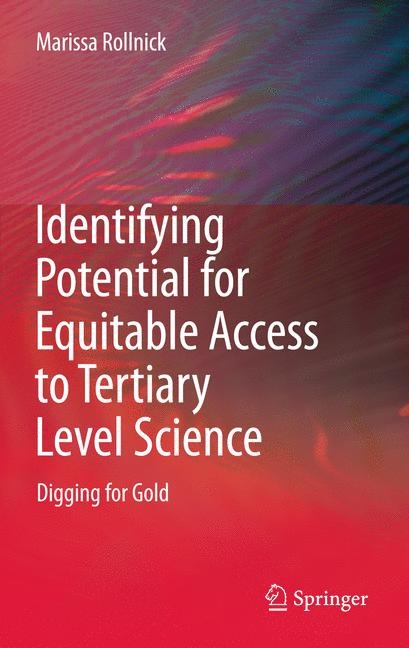
Identifying Potential for Equitable Access to Tertiary Level Science (eBook)
VII, 183 Seiten
Springer Netherland (Verlag)
978-90-481-3224-9 (ISBN)
Higher education internationally is in a state of transition and transformation, leading to an increase in the level of participation, and a consequent increase in number of non traditional and underprepared students. The appearance of these students provides a particular challenge in the sciences where adequate grounding is crucial. One response to this challenge has been the provision of access, foundation or 'second chance programmes' which operate on different models internationally. In South Africa, where the push for equity is strong in the wake of the apartheid era, programmes have generally been established at all tertiary institutions with some of the most successful of these programmes based at universities characterised by a high research output. Consequently in the last decade there has been a great deal of research into the effectiveness of these programmes both at a micro and macro level. Similar research in other countries exists, but is patchy and often based on small groups of students. This book provides valuable information on what research has to say about disadvantaged and under prepared science students and how they learn - what works and what does not work. It provides an examination of issues related to the programmes, their structure, student selection and adjustment. Issues such the learning of these students, their communicative ability and laboratory work come under the spotlight. Although examining the issue internationally, the book draws heavily on lessons from South Africa where there has been considerably experience of such programmes.
Higher education internationally is in a state of transition and transformation, leading to an increase in the level of participation, and a consequent increase in number of non traditional and underprepared students. The appearance of these students provides a particular challenge in the sciences where adequate grounding is crucial. One response to this challenge has been the provision of access, foundation or "e;second chance programmes"e; which operate on different models internationally. In South Africa, where the push for equity is strong in the wake of the apartheid era, programmes have generally been established at all tertiary institutions with some of the most successful of these programmes based at universities characterised by a high research output. Consequently in the last decade there has been a great deal of research into the effectiveness of these programmes both at a micro and macro level. Similar research in other countries exists, but is patchy and often based on small groups of students. This book provides valuable information on what research has to say about disadvantaged and under prepared science students and how they learn - what works and what does not work. It provides an examination of issues related to the programmes, their structure, student selection and adjustment. Issues such the learning of these students, their communicative ability and laboratory work come under the spotlight. Although examining the issue internationally, the book draws heavily on lessons from South Africa where there has been considerably experience of such programmes.
Contents 5
Contributors 6
Introduction 7
References 11
Issues in Student Access 13
Issues in Access Programmes 14
Introduction 14
Naming the Students and the Programmes 16
Why Is There a Need for Access Programmes? 16
What Form Do Access Programmes Take? 19
Broad Conceptual Descriptions 22
Aims and Philosophies of Programmes 26
Philosophical and Logistical Issues 29
Factors Influencing the Quality of the Programmes 31
Relationship to Higher Education Policy 36
Curriculum Structure 38
Conclusion 40
References 40
A Survey of Programmes: Successes in Science Access 43
Introduction 43
Types of Programmes Offered Internationally 43
A Survey of Programmes 49
Programmes in Developed Countries 51
Programmes in Southern Africa 53
Three Successful Programmes 55
The ScottishWider Access Programme 58
General College Minnesota 60
Conclusion 62
Appendix 1: Programmes in Developed Countries 63
Appendix 2: Programmes in Southern Africa 65
References 67
Selection and the Identification of Potential 70
Introduction 70
Equity in Admission 71
Why Disadvantaged Students Do Not Apply 75
Measures Used for Selection and Their Effectiveness 76
Predictors of Academic Achievement 84
Conclusions 87
References 87
Adjustment of Under-Prepared Students to Tertiary Education 91
Introduction 91
The Gap Between Secondary and Tertiary Education 92
Adjustment to Higher Education 98
Conclusions 105
References 106
Lessons from Africa 109
Research on Teaching and Learning in Access Courses 110
Introduction 110
Theoretical Underpinnings 111
Factors that Impact on Learning 112
StudentsÌ Knowledge Base 115
Conceptions of Learning 117
Metacognition 121
The Effectiveness of Various Teaching and Learning Strategies 123
Concluding Remarks 128
References 130
Experimental Work in Science 135
Introduction 135
StudentsÌ Understanding of Measurement and Uncertainty 137
Relationships Between Understanding of Measurement and Previous Experience with LaboratoryWork 139
Communication Through ReportWriting 140
A Research-Based Laboratory Curriculum 144
Conclusion 149
References 150
Language and Communicative Competence 153
Introduction 153
Theoretical Models 154
Models of Language Support 159
Findings from Research 163
Accessing Text 167
The Way Forward 168
References 169
Conclusion 172
References 178
Index 180
| Erscheint lt. Verlag | 20.7.2010 |
|---|---|
| Zusatzinfo | VII, 183 p. |
| Verlagsort | Dordrecht |
| Sprache | englisch |
| Themenwelt | Geisteswissenschaften |
| Mathematik / Informatik ► Mathematik | |
| Naturwissenschaften | |
| Sozialwissenschaften ► Pädagogik ► Bildungstheorie | |
| Sozialwissenschaften ► Pädagogik ► Erwachsenenbildung | |
| Sozialwissenschaften ► Politik / Verwaltung | |
| Technik | |
| Schlagworte | academic development • ACCESS • access to education • disadvantaged students • Education • equal learning opportunities • higher education • learning • Science • science education • second chance programmes • South Africa • Teaching • tertiary level • underprepared students |
| ISBN-10 | 90-481-3224-X / 904813224X |
| ISBN-13 | 978-90-481-3224-9 / 9789048132249 |
| Informationen gemäß Produktsicherheitsverordnung (GPSR) | |
| Haben Sie eine Frage zum Produkt? |
 PDF (Wasserzeichen)
DRM: Digitales Wasserzeichen
Dieses eBook enthält ein digitales Wasserzeichen und ist damit für Sie personalisiert. Bei einer missbräuchlichen Weitergabe des eBooks an Dritte ist eine Rückverfolgung an die Quelle möglich.
Dateiformat: PDF (Portable Document Format)
Mit einem festen Seitenlayout eignet sich die PDF besonders für Fachbücher mit Spalten, Tabellen und Abbildungen. Eine PDF kann auf fast allen Geräten angezeigt werden, ist aber für kleine Displays (Smartphone, eReader) nur eingeschränkt geeignet.
Systemvoraussetzungen:
PC/Mac: Mit einem PC oder Mac können Sie dieses eBook lesen. Sie benötigen dafür einen PDF-Viewer - z.B. den Adobe Reader oder Adobe Digital Editions.
eReader: Dieses eBook kann mit (fast) allen eBook-Readern gelesen werden. Mit dem amazon-Kindle ist es aber nicht kompatibel.
Smartphone/Tablet: Egal ob Apple oder Android, dieses eBook können Sie lesen. Sie benötigen dafür einen PDF-Viewer - z.B. die kostenlose Adobe Digital Editions-App.
Buying eBooks from abroad
For tax law reasons we can sell eBooks just within Germany and Switzerland. Regrettably we cannot fulfill eBook-orders from other countries.
aus dem Bereich