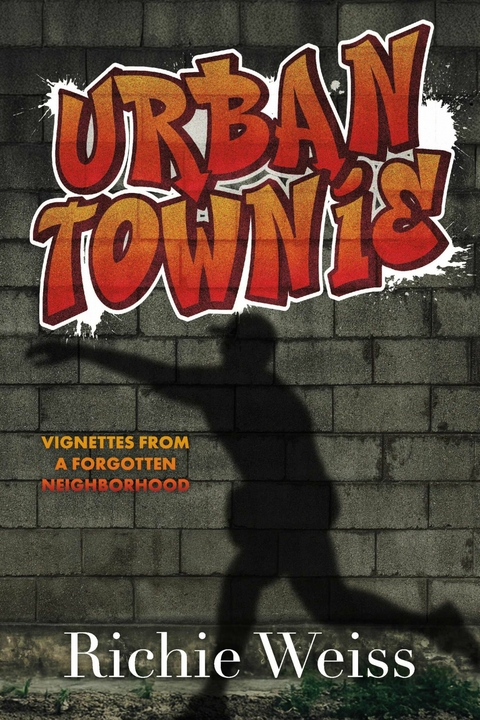
Urban Townie (eBook)
228 Seiten
Bookbaby (Verlag)
979-8-3178-1389-5 (ISBN)
Born and raised on the gritty yet colorful streets of 1970s Greenwich Village, Weiss is pure New York. In his debut work, 'Urban Townie: Vignettes from a Forgotten Neighborhood,' he explores the confusing and zany social incongruities of coming of age in America's original bohemian rhapsody. His education spans the full New York spectrum - from the raw edges of inner-city public schools to the progressive halls of a Riverdale prep, and ultimately to NYU Business School. Professionally, he's worn many hats: shmata purveyor in the Garment Center, taxi driver, construction worker, and for 25 years, a player in the high-stress, high-stakes world of Manhattan commercial real estate. Now, Weiss has turned to storytelling, discovering his true calling as a fresh literary voice for New York. Weiss draws upon a unique linguistic cadence to breathe new life into a once-glorious past with messaging that remains relevant today. He's playful yet provocative, evoking a style and substance reminiscent of the Chazz Palminteri classic 'A Bronx Tale.'
As a native New Yorker, I am often asked to characterize my experience growing up in the eccentric Greenwich Village of the 1970s. The Village was larger-than-life, an alternative universe, a progressive ideal for a new generation. But it ain't that simple. A lesser-known dark side existed in the neighborhood. Intolerant voices chose not to embrace the burgeoning progress, resulting in social paradox and dubious choices amongst many of the neighborhood youth. We were just kids however, no different from anywhere else, experiencing the triumphs and traumas of boyhood, albeit in a world of complicated dualities. We were Urban Townies. "e;Urban Townie: Vignettes from a Forgotten Neighborhood"e; is a satirical, coming-of-age memoir told through a series of humorous, self-contained short stories. This anthology of growing up in Manhattan delivers the triumphs and traumas of boyhood with raw honesty and a distinctly New York sense of humor. Each sketch offers a window into a different moment of urban adolescence, exploring identity, masculinity, sexual confidence, and self-discovery in a rapidly shifting cultural landscape. These accounts offer a fresh and honest perspective of the New York story, with a playful and distinctive cadence. The storytelling is suspenseful and compelling. The message is both laughable and profound. I invite the reader to join my friends and family through the misadventures of our youth. We battle fear, insecurity, parental warfare, sexual drama and anger, albeit with levity, satire and a self-effacing style. An important theme I explore is the struggle for sexual confidence and certainty in an abruptly transforming environment of choices and lifestyles, without the explanations available to us today. "e;Urban Townie"e; is a progressive experience, but also edgy and complex. It's a journey of discovery and catharsis in a setting that was equal parts wonderful and onerous. The Woke Generation might have to step outside its comfort zone to embrace parts of it, but Urban Townie is ultimately a plea for forgiveness and compassion. In today's polarized sociopolitical climate, we must find the space for constructive fence mending.
PART ONE: THE EARLY YEARS
Vignette I - 1964
It was a labor of love and war.
Edna’s splintered team of doulas and doctors wrestled me into the world at the old St. Vincent’s Hospital 2 on the corner of Seventh Avenue and West 12th Street, in the early hours of August 2, 1964.
Across the triangle from the Greenwich Theater and the La Marionetta pizza joint.
It was a time of emerging freedoms, new insights, and social change.
A world where Bob Dylan got his start at Gerde’s Folk City 3 on West Fourth, and Dylan Thomas held forth at The White Horse Tavern 4 on Hudson.
Only blocks away, the world remained unchanged and unchallenged on Sullivan Street. If you walked south, you might still smell the old-world aroma of Palermo as Nonni simmered her sauces from an open window in the kitchen as she listened to her favorite Italian operas. Walking north, you would find the same old men playing chess in silence up the Street in Washington Square.
The country’s most powerful boss 5 ordered mob hits from his social club between Bleecker and West Third. He walked the neighborhood in a ratty bathrobe, slippers, and an old crumpled hat, and managed to fool the FBI for years with his get-up.
If you grew up amidst such confusing juxtapositions, it wasn’t easy to figure out who you were or who you wanted to be.
We glorified the tough Italian and Irish kids eager to break heads with their Jake La Motta accents.
Sometimes, we joined the peacenik hippies in Union Square or Washington Square, protesting international violence and social inequity.
We admired the black dudes with their slick dribbles and Earl Monroe spins. They came from all over the City to play ball at the West Fourth Street basketball courts. Earlier, they listened to Curtis Mayfield and Marvin Gaye on their transistor radio. Later, it was Shalamar, Chic, and then Run-DMC blasting on the box. They were the coolest.
Or maybe we were marching ahead like the other jerk-off white boys, joining the mad race to make big money.
We were all of them.
The Village was an eclectic salad of flavors, cultures, and characters.
And for a long time, it mixed well.
Then, years later, it lost its flavor.
Our friend, Tony’s father was Broadway icon Jerry Orbach, and Joie’s dad was the colorful Mafia big-shot Joey Gallo. More surprising was that Orbach and Gallo were buddies, too—until they gunned down Crazy Joe at Umberto’s Clam House on Mulberry Street as payback for taking down a boss.
After all, they shared a table at my brother’s Bar-Mitzvah at the Fifth Avenue Hotel on West Ninth Street, next door to where my boy Putzy Hirsch grew up.
My grandmother spoke 95% Yiddish, while Jon’s grandmother spoke 95% Italian. Somehow, both managed to send their kids to Columbia.
It was a world of paradox and progress, dueling dualities and ultimately learning and conciliation. A place where the creative intellect and the compassion of its residents encouraged the changes and nourished the culture.
It was a peculiar place.
And I was a peculiar child.
My name is Richie, but there were many names. In my neighborhood, you had to have a nickname.
My mother enjoyed telling the story of my birth and how I refused to come out. When I finally did, I was crying, grasping, gripping, and groping, hoping to be sucked back in.
I used to vomit a lot.
I am not sure why she was so proud of this.
At that moment, I realized I had entered into what Sergeant Hartman described in Stanley Kubrick’s Full Metal Jacket as a “world of shit.”
Somewhere deep inside of me, I knew that horror was lurking.
I was not wrong.
August 2, 1964, is a significant date in world history. The day I arrived, U.S. naval operators in the South China Sea received dubious orders to engage enemy torpedo boats in the Gulf of Tonkin. This staged incident touched off a significant escalation of U.S. involvement in Southeast Asia, and many regard the date as the official onset of the American war in Vietnam.
But the war in Asia was nothing compared to the Thirty-Year War between my parents, Edna and Arnold. I was immediately launched to the front lines.
“It’s your fault.” I could hear the faint cries from Edna as they cut a hole through the deep, dark adjoining closets from their bedroom to mine as I attempted to fall asleep.
My closet door would never close. It would remain ajar, leaving an empty void into the darkness, keeping me uneasy and leaving me on edge.
I was forced to listen to the piped-in cries that formed the foundation of my fears.
“This is a mockery of a marriage you forced me into with your bullshit charisma and your empty promises. You sure fooled me. You keep holding me back with your smothering presence. And you choke me with your fucking insecurities.”
“Please, Edna, try to settle down.”
Arnold had yet to learn that the worst thing to say to an angry woman is to tell her to settle down. By 1964, a formal state of war had yet to be declared on the entire male species.
“I wanted to play the guitar. You told me it was a waste of time. You talked me out of the policy class at the New School. Even Abzug told me to sign up. And let’s not start with the volunteer homeless program on the Lower East Side…
“You get anxious when I look the other way, and my attention isn’t on you.
“You are a child.
“You are a wuss.
“You make me sick.”
Then she cranked her hysteria up an octave and cried, “I could have been another Eleanor Roosevelt!”
Just earlier, my father had rocked me to sleep with a soothing lullaby, assuring me that I would be safe.
These messages raged against each other, fashioning the wounds and tremors I would carry my entire life.
Arnold was tall and strong, six-three, two-hundred. Bright, handsome, and self-assured. He had a big personality that would impress you and put you at ease at the same time.
He graduated with honors from Columbia and was a star quarterback in high school. Hardly the type you’d suspect to commit the sins that Edna accused him of.
So why in the hell would he put up with this kind of abuse?
Edna was not off target.
As a child, Edna developed a thirst for freedom borne from the obsessions of an overprotective mother. She left home at age sixteen to live with an older boyfriend. When she left, she broke her mother’s heart. Her need for independence and her subsequent guilt were in constant conflict.
Edna lived through erratic states of joy, anger, and sadness. Contemporary shrinks would have diagnosed her with some uncertain level on today’s Bipolar scale.
My parents preceded the Hippie movement in Greenwich Village and much of the Beat Era as well. They were a bit on the older side. Some considered them bohemians, but by no means radicals or socialists.
People of all shapes, sizes, and perspectives attended my parents’ raucous dinner parties at our Abingdon Square apartment at 302 West 12th Street on Eighth Avenue. 6
Across the Park from the Village Nursing Home.
It seems that Americans, who dated back to World War II and the Great Depression, disagreed less on matters than today’s categorical partisanship.
Their friends called them Arnie and Edie. They threw the best dinner parties in the West Village, and there was no runner-up.
Arnie’s martinis were the tops downtown, and he made them by the pitcher.
Bernie Isaacson would take to our Baldwin piano and rock the upbeat melodies of days past - days of swing and standards, evenings of Nat King Cole and Lena Horne, of Glenn Miller and early Frank.
Bernie would ogle and flirt in between tunes with my brother’s sixteenyear-old girlfriend, Nicole.
“C’mere doll and sit next to me. Big Barry won’t mind, will ya kid?”
Bernie attempted to be cute while unable to glance north of Nicole’s neck.
She had a fabulous rack and she knew it.
And she didn’t mind if they knew it too.
She had yet to learn that these men would be forever vilified for noticing such an enormous pair of truths.
For no one dared to doubt Bernie’s character. He was one of the first lawyers on the scene in Washington to protest the communist witch hunts in the film industry in ‘47. He provided free counsel to several entertainers accused of left-wing affiliations.
Bernie had two little girls at home. He was beyond reproach.
Couples would dance to the lively piano, usually with someone else’s partner.
Edie delivered heartfelt, booze-drenched orations on social injustice. As she preached, the uniformed, colored woman in the kitchen doled out appetizers on pretty china.
Her name was Estelle.
“Stella, hon, would you bring out another rack of those cocktail franks.” Edie ordered. “No one can do them like you.”
We loved Estelle and considered her a member of the family. Edna assured everyone she was the best...
| Erscheint lt. Verlag | 16.10.2025 |
|---|---|
| Sprache | englisch |
| Themenwelt | Literatur ► Biografien / Erfahrungsberichte |
| ISBN-13 | 979-8-3178-1389-5 / 9798317813895 |
| Informationen gemäß Produktsicherheitsverordnung (GPSR) | |
| Haben Sie eine Frage zum Produkt? |
 EPUB (Ohne DRM)
Größe: 3,2 MB
Digital Rights Management: ohne DRM
Dieses eBook enthält kein DRM oder Kopierschutz. Eine Weitergabe an Dritte ist jedoch rechtlich nicht zulässig, weil Sie beim Kauf nur die Rechte an der persönlichen Nutzung erwerben.
Dateiformat: EPUB (Electronic Publication)
EPUB ist ein offener Standard für eBooks und eignet sich besonders zur Darstellung von Belletristik und Sachbüchern. Der Fließtext wird dynamisch an die Display- und Schriftgröße angepasst. Auch für mobile Lesegeräte ist EPUB daher gut geeignet.
Systemvoraussetzungen:
PC/Mac: Mit einem PC oder Mac können Sie dieses eBook lesen. Sie benötigen dafür die kostenlose Software Adobe Digital Editions.
eReader: Dieses eBook kann mit (fast) allen eBook-Readern gelesen werden. Mit dem amazon-Kindle ist es aber nicht kompatibel.
Smartphone/Tablet: Egal ob Apple oder Android, dieses eBook können Sie lesen. Sie benötigen dafür eine kostenlose App.
Geräteliste und zusätzliche Hinweise
Buying eBooks from abroad
For tax law reasons we can sell eBooks just within Germany and Switzerland. Regrettably we cannot fulfill eBook-orders from other countries.
aus dem Bereich