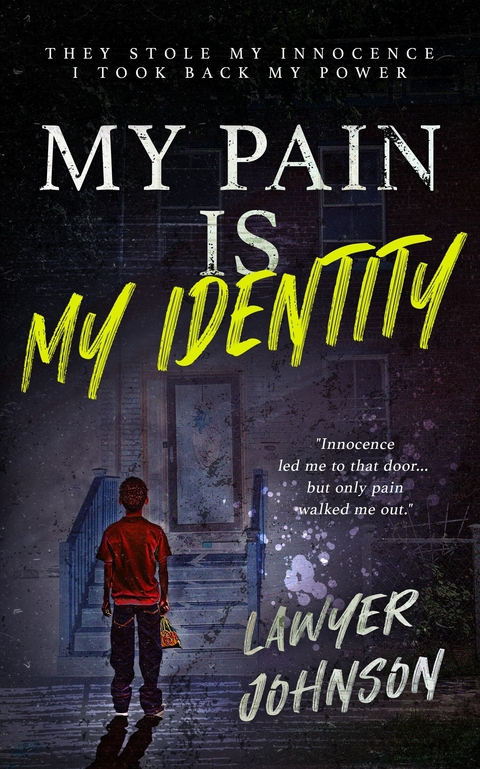
My Pain Is My Identity (eBook)
210 Seiten
Publishdrive (Verlag)
979-8-9928079-3-6 (ISBN)
My Pain Is My Identity is not just a memoir-it's the story of how childhood trauma can shatter a life... and how courage can rebuild it.
At seven years old in Newburgh, New York, Lawyer Johnson's innocence was stolen, and he carried that secret into the housing projects of Goldsboro, North Carolina, where violence and chaos shaped his teenage years. By the time he reached the crack-era streets of Brooklyn, his trauma had twisted into rage, betrayal, and hustling that led straight to a prison cell.
But the cages that were supposed to break him became the fire that revealed his strength. From Rikers Island to North Carolina prisons, Johnson wrestled with the scars of abuse and began the long fight toward healing.
Today, he is a thriving entrepreneur and motivational voice who turned the wound that defined him into a testimony that inspires others. My Pain Is My Identity is raw, emotional, and fearless-a lifeline for survivors and anyone searching for hope after devastation.
If you've ever carried a secret too heavy to speak, this book will show you that silence can be broken-and healing is possible.
Prologue
It was a summer morning. I was seven years old.
My neighbor—a man I trusted—offered me cookies if I’d help him move something in his basement. With the innocence only a child could have, I followed him downstairs.
That moment—just one decision, made without hesitation—became the invisible line that split my life in two: before and after.
Before that day, I was a joyful boy who idolized Michael Jackson and dreamed of becoming a firefighter, maybe even a soldier. I believed the world was good, that people were kind, and that I was safe. But after? After, I became something else—suspicious, angry, broken, and self-destructive. What happened in that basement didn’t just take something from me—it changed who I was at my core. And it would take over forty years to fully understand how those moments set me on a path from Green Acres housing projects to Rikers Island, from childhood trauma to incarceration, from breaking out of jail to breaking generational curses.
This is the story of what was stolen from me… of what I stole from others. But more than that, it’s the story of how I reclaimed my soul—and how I now help others reclaim theirs.
To understand the weight of what I lost, you first have to know who I was before.
Before the Basement
Before everything changed, my life was made up of small joys. Saturday mornings were the best: no school, cartoons on the TV, and a pantry full of cereal my mom kept stocked just for us. She was the queen of snacks—frozen pot pies, pizzas, TV dinners, Wonder Bread with peanut butter and jelly. My sisters, Gigi and Sarah, would fight over the sticker that came in the bread bag while I lounged in front of the TV, watching Space Ghost and Justice League, waiting for my friends to come outside to play.
Gigi, my big sister, was always four years ahead of me in everything—life, fashion, attitude—but no matter how cool she got, she never stopped looking out for me. We had a bond rooted in respect and love. I learned a lot just by watching how our mother raised her. She’d roll her eyes at being asked to walk Sarah and me to the store, too embarrassed to be seen as a babysitter, but she did it anyway. Gigi had swag—Lee and Levi jeans, colorful Izod shirts. And sometimes, I'd sneak into her closet and “borrow” them. She wasn’t thrilled when I got grass stains on her Levi’s, but that didn’t stop me.
There was one time Mom sent Gigi to the mall with money to buy clothes for all of us. I saw a pair of Nikes I wanted more than anything, but they were expensive. I begged. She hesitated, then gave in. I asked her what she’d tell Mom when she noticed the missing money. She looked at me and said, “Don’t worry about it. I’ll make up an excuse.” That was Gigi—protective, cool, selfless.
And then there was Sarah. If Gigi was the cool older sister, Sarah was the warrior. She never backed down from anything. My mom used to joke that she must have dropped Sarah on her head as a baby because she was wild. But to me, she was just fearless. She was loyal, she was funny, and she was my protector. I never doubted she had my back.
Sarah was the kind of sister who would jump into a fight I was already winning, just to make sure. Her favorite move? Biting. One time, she sank her teeth into a kid’s back who was messing with me. He ran home crying. That’s who Sarah was—ride or die.
When I cut my leg on a busted bike frame and had to get stitches, Sarah was right there beside me in the emergency room. When the doctor gave me a numbing shot and I cried out, I heard her yelling from the hallway, “Don’t be hurting my brother!”
We lived on North Miller Street, where kids of all ages played together. Terrance, my best friend since I was two, lived in the same building. We idolized the Jackson Five, especially Michael. My mom had every one of their albums. When “Ben” came out, we played it until the record cracked.
Being the baby of the family had its perks. When Stretch Armstrong hit the shelves, I had one. When I was into war movies, Mom bought me green Army men, tanks, walkie-talkies—you name it. When Reggie Jackson was big, she got me his candy bars, the bat, the helmet. My birthday cakes were always decked out with whatever I loved that year. One had a giant football on it that said, “Happy Birthday, Lawyer!”
What made my childhood even sweeter was having my cousins close by. My Aunt D.—Mom’s older sister—had four kids: Remi, Todd, Tanisha, and Natasha. Holidays were spent at their house, packed with laughter and dance battles. Easter was my favorite. Aunt D. and Mom would dye eggs and hide them around the house. And Uncle F., My Aunt D.’s husband, had a basement workshop with a foosball table and enough space for us to ride Big Wheels around in circles.
We had each other’s backs. If one cousin had beef, the whole crew got involved. One time, Todd got into a fight with a kid named Sammy. We all jumped in. During the chaos, I bit someone’s leg—only to find out it was Todd’s. Sarah had already sunk her teeth into Sammy. Tanisha covered for me, saying, “Lawyer was just trying to help. They had on the same pants!”
Tanisha was tough. She didn’t take crap from anyone. One time we were racing down a hill, and she fell and got the wind knocked out of her. I panicked because I thought she was dying. I’d seen mouth-to-mouth on TV, so I tried it. She came to, cursed me out, and we’ve laughed about it ever since.
When my mom had to be hospitalized, I stayed with Aunt D. and Uncle F. I hated it. Aunt D. was strict; no junk food, no colorful cereals. I wasn’t allowed to leave the table until I finished my bland oatmeal. I missed my mom desperately.
Then came the moment I snapped.
We were watching TV, and Todd was sprawled out on the floor. I was so full of anger and frustration from missing my mom that I stabbed him in the butt with a giant safety pin. He screamed, ran to my Uncle F., and I got the beating of my life and was locked in a dark room. But I didn’t care. I just wanted my mother.
When she finally came home, I wouldn’t let go of her hand. The world was right again. She didn’t even unpack before cooking our favorite meal.
Those were the last pure moments of my childhood. Before fear. Before shame. Before silence.
Before…… the basement.
My mother was, and will always be, my hero. Her strength and sacrifice filled our home with everything we needed—warmth, food, and unconditional love. But even with her unwavering presence, there was still a missing piece in our family picture. A silence that echoed louder the older I got.
It was the absence of my father.
I never met him. Never saw a picture. But that didn’t stop me from wondering. From asking. From dreaming.
“Where’s my dad?”
“What does he look like?”
“What’s his name?”
Every time I asked, my mother gave me the same calm, steady answers. “His name is Smitty. He looked like Richard Roundtree. Handsome man.” She’d smile gently, like she was trying to protect me from a truth too heavy for a child to carry. Maybe she thought that if she painted him in a good light, it would help me feel less abandoned.
But the truth lingered in the silence between us.
He wasn’t there and that void felt massive, especially when I’d see my friends with their dads or even just a grandfather picking them up after school. I had no grandfathers. Both were gone before I could form memories. There was no man in my life I could look to and say, That’s who I’ll grow up to be.
And still, I held out hope.
Sometimes, when I’d burst into our apartment after playing outside, sweaty and tired, I’d find a man sitting with my mother. A stranger. One wore binoculars around his neck. I didn’t know who he was, but I asked him all about them. He let me look through them for a minute before Mom ushered him into the bedroom. I wondered, could that be my father? I never asked. I was too afraid of the answer. So I carried the questions quietly.
In those moments, I built a version of my father in my mind—a perfect man. Strong, cool, loving. He wore nice clothes, had a slick car, and wore jewelry like the men on TV. He’d toss a football with me, teach me how to ride a bike, show up at my school plays, and tell me he was proud. He was everything I needed him to be—because I had nothing else to hold onto.
At night, I’d lie in bed and imagine him coming to rescue me, especially after the abuse. I imagined him bursting through that basement door, face twisted in rage, fists flying, grabbing that sick man and beating the life out of him. He’d turn to me and say, “You’re safe now. No one will ever touch you again.” And I would believe him.
That fantasy played on a loop in my head for years. It was both a comfort and a curse. Because when I opened my eyes, reality reminded me: no one came.
The pain of his absence grew heavier with time. It became a part of me—a quiet ache that never left. And it taught me something dangerous: not to expect protection. Not to believe in safety. And worst of all, not to speak my truth.
Because when that neighbor hurt me, I told no one.
My mother noticed something was off. She’d ask, “Why don’t you want to play outside anymore?” Or “Why are you always hanging around me?” I didn’t have the words. I didn’t have the courage. I just said, “I want to be with you.” But what I meant was: I’m scared. I don’t feel safe out there. That man is still out there.
But I couldn’t say it. I was afraid she wouldn’t...
| Erscheint lt. Verlag | 25.9.2025 |
|---|---|
| Sprache | englisch |
| Themenwelt | Literatur ► Biografien / Erfahrungsberichte |
| Schlagworte | abuse survival story • Childhood trauma memoir • Healing Journey • incarceration and redemption • mental health recovery resilience • resilience and overcoming pain |
| ISBN-13 | 979-8-9928079-3-6 / 9798992807936 |
| Informationen gemäß Produktsicherheitsverordnung (GPSR) | |
| Haben Sie eine Frage zum Produkt? |
 EPUB (Ohne DRM)
Digital Rights Management: ohne DRM
Dieses eBook enthält kein DRM oder Kopierschutz. Eine Weitergabe an Dritte ist jedoch rechtlich nicht zulässig, weil Sie beim Kauf nur die Rechte an der persönlichen Nutzung erwerben.
Dateiformat: EPUB (Electronic Publication)
EPUB ist ein offener Standard für eBooks und eignet sich besonders zur Darstellung von Belletristik und Sachbüchern. Der Fließtext wird dynamisch an die Display- und Schriftgröße angepasst. Auch für mobile Lesegeräte ist EPUB daher gut geeignet.
Systemvoraussetzungen:
PC/Mac: Mit einem PC oder Mac können Sie dieses eBook lesen. Sie benötigen dafür die kostenlose Software Adobe Digital Editions.
eReader: Dieses eBook kann mit (fast) allen eBook-Readern gelesen werden. Mit dem amazon-Kindle ist es aber nicht kompatibel.
Smartphone/Tablet: Egal ob Apple oder Android, dieses eBook können Sie lesen. Sie benötigen dafür eine kostenlose App.
Geräteliste und zusätzliche Hinweise
Buying eBooks from abroad
For tax law reasons we can sell eBooks just within Germany and Switzerland. Regrettably we cannot fulfill eBook-orders from other countries.
aus dem Bereich