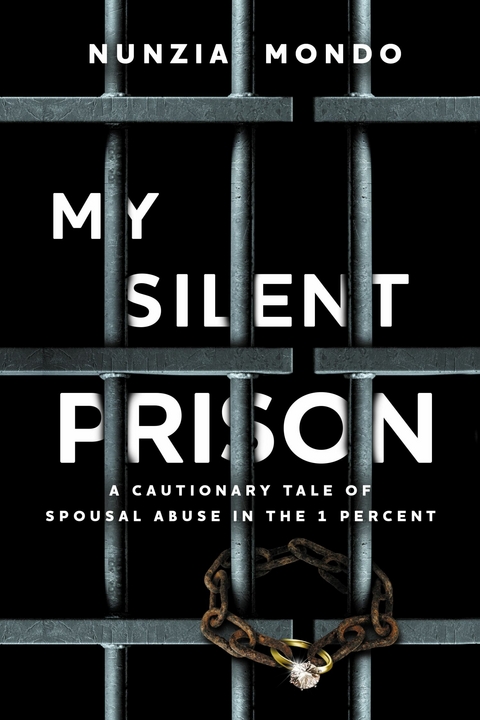
My Silent Prison (eBook)
206 Seiten
Houndstooth Press (Verlag)
978-1-5445-4700-8 (ISBN)
Nunzia Mondo hails from New England. After graduating from college and working in finance during the 1980s, she left NYC to complete graduate studies in London. She married a British classmate who was transferred abroad and went on to become a successful entrepreneur. For the next twenty-seven years, she lived a life of boundless expat luxury, all the while suffering nonstop abuse from her cruel, entitled husband. A betrayal that couldn't be pretended away forced her to take the once unthinkable step of divorce. She now lives in her favorite city in reduced circumstances, and thanks God every day for her freedom.
"e;I hope my story won't be yours."e;Expensive homes. Household help. First-class travel. Gorgeous clothes and exquisite jewelry. Everyone thought Nunzia Mondo had it all. No one knew about the constant, corrosive verbal abuse she endured from her husband. No one knew about the black eyes she suffered at his hands. The cumulative effect on Nunzia of thirty years of emotional and physical violence was confusion, physical ailments, and destruction of her self-esteem. Unable to share her reality with others, she convinced herself that she was inherently faulty. Who would have believed her anyway? My Silent Prison is more than one woman's memoir of persevering through a living hell. With self-deprecating wit and empathy, Nunzia shines a spotlight on the darkness of living through spousal abuse, illuminating the way for others in similar situations to do what she ultimately did: escape decades of captivity and reclaim her life.
Introduction
Well before Freud came up with psychoanalysis, he accessed his own unconscious by sitting down and writing for three days, a method of self-examination based on an influential essay penned in 1823 by Ludwig Börne, “How to Become an Original Writer in Three Days.”
Freud’s principal clients were the bored, frivolous upper-class Viennese ladies known as “the Hysterics.” They spilled their secrets and dreams, free-associating on his green couch at Berggasse 19. As I type, it occurs to me that I could be their twenty-first-century counterpart. Nevertheless, I hope both you and my shrink will take me seriously.
Initially, this book was just for me—and writing it has taken far more than three days. I attacked the project in fits and starts but persisted in the vain hope that committing thirty-plus years of hell to paper would help me make sense of an adult life that started out with so much promise. My piecemeal efforts have gone some way toward helping me sort out, understand, grieve, forgive, and move on. But the scarring that I, a well-educated woman living a prosperous and comfortable life, received at the hands of a cruel, fickle, and abusive husband will never be totally healed.
As I delved into my own sordid story, I had to face the profound damage I had caused my children because of my determination to keep my marriage and family together. There are no words to express the sorrow and heartsickness I’ll carry to my grave for subjecting them to such crippling dysfunction. I cannot adequately express the remorse I feel for not sticking to my guns the time I grabbed my toddlers and sleeping baby and fled the house almost three decades ago. Or later, when the kids were older and I left several times on my own, for always caving in to my ex-husband’s entreaties to return—entreaties accompanied by promises to change, promises to seek help.
As my story revealed itself over the course of months and years, I also recognized my duty to provide personal insight into spousal abuse for the abused, or potentially abused, of any socioeconomic circumstance, race, gender, or sexual orientation. It’s in this light that I confess a horrifying epiphany. It was only when I conducted this postmortem that I realized I’d gotten stuck in this quagmire partly because of my implicit and unexamined belief that spousal abuse didn’t happen to the likes of us. It was my delusion—no, let’s be honest, my prejudice—that intimate partner violence was the preserve of African Americans, Hispanics, and white trash, the final term itself a form of gross disrespect and abuse. No one is trash, and neither you nor I have the right to label another person with such demeaning language. Words can kill, and once you’ve fired them from your rocket launcher, there’s no taking them back.
***
This is my story. It’s true, but to protect the guilty as well as the innocent, I’ve changed identifying details of certain characters and events. However, the essence of each anecdote I recount remains, and many incidents went down exactly as described. Where necessary, I’ve been intentionally vague about sources of information. I’ve also thrown in the occasional red herring to put you off the scent. You won’t figure out who I am; I promise, though, that you know a spouse or partner who’s inhabiting a silent prison much like the one I belatedly escaped.
Herein, I’ll regale you with incredible tales of my thirty-year relationship with my ex-husband, Tom. I refrain from analysis to the extent possible; nevertheless, it has sometimes been necessary for me to explain certain behaviors in mental health terms. I highlight the cycle of abuse as I experienced it against the backdrop of Tom’s borderline personality disorder (BPD).1 In 2021, Katherine Collison and Donald Lynam of Purdue University conducted a meta-analysis of 163 studies and found that BPD and antisocial personality disorder are “significantly and positively related” to perpetration of intimate partner violence.2 From my vantage point, a detailed chronology and analysis of my own marriage suggests a powerful link between Tom’s BPD and the abuse I endured.
However, it would be irresponsible and unjust of me to go beyond the scope of these findings and make any general claims about the correlation between personality disorders and spousal abuse. What are the root causes of spousal abuse? Experts have many different answers, from certain beliefs and ideologies around gender to the abuser’s own childhood traumas. Indeed, each abuser has been subject to their own set of pernicious influences over a lifetime. My aim is to start a fruitful conversation among my readers on spousal abuse, which destroys individuals, families, and our social fabric.
My story, particularly its sequencing, has gone through several iterations. I hope my final version, which is presented thematically, not only provides optimal education and a bit of entertainment but also makes sense to victims; their friends, families, and colleagues; professionals in mental health and the justice system; and those of you who are simply interested in the subject of abuse.
Now that I’ve come to grips with how incredibly long my story is, I’m including only the most illuminating examples of the abusive behavior I experienced. The abused among my readers will clamor for more as they take a scant teaspoon of solace from learning they’re not alone. Others of you will think I’ve become mired in detail, losing the forest for the trees. I’ve done my level best to present an accurate and complete picture, which, in my view, has necessitated confronting and fleshing out many unsavory moments from my relationship with my ex-husband. I hope I’ve struck a balance for all my intended audiences.
***
I end this introduction with some warnings and an appeal.
First of all, while the vast majority of cases of spousal abuse are women victimized by men, we shouldn’t kid ourselves. Women also victimize men with cruel and mercurial behavior and sometimes physical violence. The particular tragedy of male victims is that when they finally lash out with an ill-considered slap across the face or a push—because, quite frankly, relentless abuse can make even the saintliest of us snap—they often end up in legal trouble, losing visitation with or custody of their kids and sometimes going to prison. We shouldn’t forget about partner abuse in the LGBTQ community either. For a host of reasons, this is an issue that has long been swept under the carpet. In 2015, a review of forty-two studies by the Williams Institute at UCLA Law School concluded that the prevalence of intimate partner violence in nonheterosexual relationships is as high as, and possibly higher than, in heterosexual relationships, a finding confirmed by subsequent studies in both the US and the UK.3
The fact is, people fall in love, lured by seeming adoration that sweeps them off their feet and, in the process, fall into the trap of disordered or unhappy souls who crave love but are incapable of true love and intimacy. Depending on the personalities and circumstances of both abuser and victim, their sick dance can last for decades—or a lifetime. Many victims hold out the hope that they’ll finally reach their partners with logic. Unfortunately, abusers don’t operate in the realm of logic. Indeed, logic is the abuser’s worst enemy. A logical argument that calmly and constructively responds to what he just said or did isn’t a reason to reconsider but, rather, a reason to escalate. Reason is a red rag to a bully.4
If you believe you’re the victim of any of the categories of abuse I describe in this book, please conduct a brutally honest assessment of your relationship. If you conclude that abuse is an abiding feature of your marriage, you need to think seriously about extricating yourself. Take legal advice, consult mental health professionals, and ask for assistance from government agencies or other organizations qualified to help domestic abuse victims. If you do decide to exit, you will need to plan and execute carefully and quietly for your own sake and that of vulnerable family members. Think about it: your departure is likely to enrage your partner further. By the same token, remaining in the relationship in the hope that you can school him in the subject of abuse and help him reform is almost certainly a grand delusion that could subject you to more hell. Over time, you’ll lose your self-esteem, your health, your sanity, and possibly even your life. Take off your rose-colored specs and trust yourself to know whether you need to leave for the life of peace and freedom you so deserve.
Finally, although I again admonish anyone involved with an abuser to consider leaving as soon as practically possible—because he is exceedingly unlikely to change and you will not be spared—we should remember abusers are people, too,...
| Erscheint lt. Verlag | 12.8.2025 |
|---|---|
| Sprache | englisch |
| Themenwelt | Literatur ► Biografien / Erfahrungsberichte |
| ISBN-10 | 1-5445-4700-5 / 1544547005 |
| ISBN-13 | 978-1-5445-4700-8 / 9781544547008 |
| Informationen gemäß Produktsicherheitsverordnung (GPSR) | |
| Haben Sie eine Frage zum Produkt? |
 EPUB (Ohne DRM)
Größe: 1,7 MB
Digital Rights Management: ohne DRM
Dieses eBook enthält kein DRM oder Kopierschutz. Eine Weitergabe an Dritte ist jedoch rechtlich nicht zulässig, weil Sie beim Kauf nur die Rechte an der persönlichen Nutzung erwerben.
Dateiformat: EPUB (Electronic Publication)
EPUB ist ein offener Standard für eBooks und eignet sich besonders zur Darstellung von Belletristik und Sachbüchern. Der Fließtext wird dynamisch an die Display- und Schriftgröße angepasst. Auch für mobile Lesegeräte ist EPUB daher gut geeignet.
Systemvoraussetzungen:
PC/Mac: Mit einem PC oder Mac können Sie dieses eBook lesen. Sie benötigen dafür die kostenlose Software Adobe Digital Editions.
eReader: Dieses eBook kann mit (fast) allen eBook-Readern gelesen werden. Mit dem amazon-Kindle ist es aber nicht kompatibel.
Smartphone/Tablet: Egal ob Apple oder Android, dieses eBook können Sie lesen. Sie benötigen dafür eine kostenlose App.
Geräteliste und zusätzliche Hinweise
Buying eBooks from abroad
For tax law reasons we can sell eBooks just within Germany and Switzerland. Regrettably we cannot fulfill eBook-orders from other countries.
aus dem Bereich