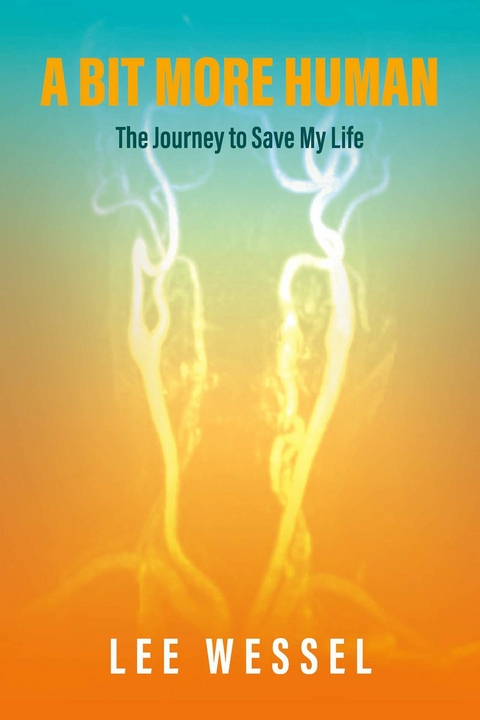
Bit More Human (eBook)
116 Seiten
Bookbaby (Verlag)
979-8-3509-9583-1 (ISBN)
In 2017, Lee Wessel was diagnosed with a genetic syndrome that led her to focus on value and purpose in life. She spoke with over 1,000 people about their perspectives on their healthcare as a patient advocate for a regional radiology group. With over 20 years of experience in business development and strategy, she oversaw North American sales while working at the nation's first artificial heart company and oversaw strategic initiatives at the country's oldest foundation dedicated solely to science. Lee used her knowledge and what she learned on her journey to help others focus on meaning and purpose. She credits her work in healthcare and having a courageous heart as the key to surviving a difficult diagnosis. She lives in Tucson, Arizona with her husband and her chihuahua.
A study with the National Institutes of Health (Hajat C, Stein, 2018) estimates that approximately one-third of all adults suffer from multiple chronic conditions. This book is about how it took the author six months to get a diagnosis (instead of what was then 10 years, if ever). Today, many people are searching for answers and solutions to undiagnosed or mistreated health challenges. "e;A Bit More Human"e; is for people who can't do what they are used to doing whether they are facing restrictions on diet, movement, hobbies, or work responsibilities due to health concerns. This book is meant to help people who are struggling under the weight of their new reality and to give them the perspective to recognize that, yes, life is different, but it's not lost. There are still areas that can be enjoyed and nurtured. It is a place to turn to when they don't necessarily want to have others around but need some solace, like friendship in a book or a comforting cup of tea.
Chapter 2: Pain in the Neck
I didn’t relax after Ray’s memorial service or coddle my back after it was tweaked at the airport. Two weeks later, I was speaking at a national healthcare conference in Los Angeles. A new colleague, who needed to be introduced to the group, was coming with me. She liked her creature comforts and was hard to please (translation: high maintenance).
The hotel room in Los Angeles was musty. I should have requested for another room, but I wasn’t in the habit of putting my own needs first. The hotel staff, already taxed during a busy time, would have had to find a new spot for me, but for some reason, I chose to bear it instead. The nights were filled with tossing and turning, contorting what was already a hypermobile body.
Early in the morning, before my presentation, some of us participated in a high-intensity boot camp class. Both the class and the presentation went well. The next day, my mother flew in to see me. Sitting in a restaurant with her that evening, my neck began to hurt. My head was turned to the side to look at her, so I moved my chair to position myself better. The neck pain continued through the evening and throughout the next day. In fact, it got much worse.
An Early Clue
Three days after arriving home, it felt as though someone was stabbing me in the back of the neck. The pain was much worse than it had been when I’d torn my shoulder in a skiing accident years earlier. I’d had no problem skiing the rest of the day, though I was not able to lift my arm and had to wear a sling for six weeks.
My husband drove me to urgent care. The healthcare provider noted that whatever was happening to my neck must be excruciatingly painful because my BP was abnormally high. At first, the physicians thought the pain was a nerve issue or a bone spur. Acetaminophen, X-rays, and a then a CT-scan were ordered. Nothing showed up as the cause, but there was still a lot of pain. A primary care physician suggested the painkiller naproxen, followed by six weeks of physical therapy. In a side comment, the physical therapist (PT) mentioned she read a study about how cardiovascular issues can show up as neck pain. About five weeks after the trip to Los Angeles, the pain went away.
Out of an abundance of caution, I visited two chiropractors in July whom I’d seen before. One was a traditional practitioner who used what’s called a drop table. The second utilized low and non-force adjustments. Neither of the chiropractors used a quick turn of my neck as an adjustment because stroke and vertebral artery tears can be caused by chiropractic manipulation.6 At the time, the pain seemed to stem from a structural pain rather than a vascular cause.
One of my chiropractors had assessed hypermobility years before after seeing pictures of my body alignment. When I told her about the physical therapy and the (still elevated) high BP from the neck pain, she said it sounded like something I should look up, called Ehlers-Danlos syndrome (EDS). She referred me to a healthcare provider in town who could screen for it.
At home, I learned EDS affects collagen in a person’s body. The symptoms were similar to mine—hyper flexibility (my mom is super flexible too), sleep issues, and occasionally brain fog, among other things.
According to the Mayo Clinic7:
Ehlers-Danlos syndrome is a group of inherited disorders that affect your connective tissues—primarily your skin, joints, and blood vessel walls. Connective tissue is a complex mixture of proteins and other substances that provide strength and elasticity to the underlying structures in your body.
People who have Ehlers-Danlos syndrome usually have overly flexible joints and stretchy, fragile skin. This can become a problem if you have a wound that requires stitches because the skin often isn’t strong enough to hold them.
A more severe form of the disorder, called Ehlers-Danlos syndrome, vascular type, can cause the walls of your blood vessels, intestines, or uterus to rupture. Because Ehlers-Danlos syndrome, vascular type, can have serious potential complications in pregnancy, you may want to talk to a genetic counselor before starting a family.
The EDS physician my chiropractor recommended was not taking new patients, and the wait to even get tested was six months. Because the online definition of EDS didn’t seem particularly urgent or related to the neck pain, I decided to forgo making an appointment to get tested.
High BP: The Contributing Factors
Next was a follow-up visit with my primary care physician. An excellent nurse practitioner was covering for the doctor, who was out of town, and we explored potential reasons for my high BP. I still didn’t think anything was seriously wrong. I told her about the recent numerous sad and stressful deaths, work pressure, and relationship challenges.
We talked about trying to get the BP down by speaking up more at home and work, where I historically felt I should keep the peace. In the past, I’d felt like I was strong enough to shoulder whatever feelings and challenges came my way. The realization that some situations weren’t working as well as I would’ve liked, such as my social life and my career, began to take form. More time was needed for rest and recovery. Boundaries needed to be established. Better communication about my feelings needed to be practiced.
As these changes were underway, the nurse wanted me to start medication for high BP, and she was wise to say so. (I didn’t comprehend the danger—at all.) I wanted to try other methods to reduce stress such as connecting more to the community. Many of my friends had moved out of town, and closeness with others was missing from my life. I had been previously overworked, but in my new job, I was underemployed. Frustration and loneliness were pervasive.
Speaking to the nurse about these things brought me to tears. Opportunities for a great social life were so easy in the bigger, less insulated cities I’d lived in previously. I moved to this new town a few months after my spouse and I started dating. He had two daughters and his family here, so the choice was made to be near them. I soon felt isolated, and it ended up being a career-crushing decision, transitioning from being the CEO of a statewide alliance organization affiliated with the Kennedy Center in Washington, D.C. to working temp jobs.
I finally secured a role at a small, national, not-for-profit medical device company, and I decided to enroll in graduate school. (I thought the lack of career opportunities was due to not having a business degree, but it turns out that what I knew wasn’t the problem—not knowing anyone was.) At first, the new job was great, and within three months, a promotion to head of national sales was bestowed. But the long hours and national focus—rather than community—meant little time or opportunity to develop new, local friendships. Soon, the company faced supplier and regulatory issues, and I was laid off, along with many others. I ended up taking a small role at a local healthcare organization, primarily to have consistency and stability.
The nurse practitioner listened patiently as I explained that being very sociable and fast-talking in a slow-paced town where many people grew up or had lived most of their adult lives together wasn’t a great combination. Important human connection was no longer a part of my life. It was depressing and added to the daily lack of joy, fun, and levity. I toned down the speed and intensity of my conversational style and eventually made a few friends. And then, one by one, each of them left for job opportunities in bigger cities. I kept trying to find a niche and was told by one well-connected person, “Not everyone wants to be friends.” She meant herself. She didn’t want to be friends. Her remark stunned me a bit. It was so blunt, but true.
After brushing myself off, I created a meet-up group called Vivas las Divas. Over 100 people quickly signed up (I wasn’t the only lonely person in this town!), and a core group of ten regularly attended outings. Only one person from the group became a close friend, and my social life was far from robust. Ten years into living in my new home, I had acquaintances but not the closeness I wanted.
“What about your husband? Does he have close friends?” she asked empathetically.
My spouse, I told her, worked long hours. When he wasn’t working, we transported his daughters across town to and from volleyball practice and dance lessons. She knew there weren’t any quick ways across town because the community prefers local streets to highways in their backyards. I understand the preference, but it meant we traveled all evening a few times a week. Our weekly dates fell by the wayside. We were beginning to burn out from work, and we were exhausted.
By the time I finished the story about how unhappy and stressed I was, I was sobbing. The nurse hugged me. She made me promise to monitor my BP and go to the ER if it reached an urgent level, which was 180 for the top number (systolic) or 120 (diastolic) for the lower number. I promised and went straight to the pharmacy to purchase a BP cuff and an activity tracker.
That evening, my husband brought home flowers and cooked dinner for me. I hadn’t discussed any of my doctors’ visits with him, and I didn’t want to have “the talk” about needing more closeness with him when he already made such a nice gesture. He noticed the activity tracker I was wearing and asked about it. We discussed...
| Erscheint lt. Verlag | 3.4.2025 |
|---|---|
| Sprache | englisch |
| Themenwelt | Literatur ► Biografien / Erfahrungsberichte |
| ISBN-13 | 979-8-3509-9583-1 / 9798350995831 |
| Informationen gemäß Produktsicherheitsverordnung (GPSR) | |
| Haben Sie eine Frage zum Produkt? |
 EPUB (Ohne DRM)
Größe: 567 KB
Digital Rights Management: ohne DRM
Dieses eBook enthält kein DRM oder Kopierschutz. Eine Weitergabe an Dritte ist jedoch rechtlich nicht zulässig, weil Sie beim Kauf nur die Rechte an der persönlichen Nutzung erwerben.
Dateiformat: EPUB (Electronic Publication)
EPUB ist ein offener Standard für eBooks und eignet sich besonders zur Darstellung von Belletristik und Sachbüchern. Der Fließtext wird dynamisch an die Display- und Schriftgröße angepasst. Auch für mobile Lesegeräte ist EPUB daher gut geeignet.
Systemvoraussetzungen:
PC/Mac: Mit einem PC oder Mac können Sie dieses eBook lesen. Sie benötigen dafür die kostenlose Software Adobe Digital Editions.
eReader: Dieses eBook kann mit (fast) allen eBook-Readern gelesen werden. Mit dem amazon-Kindle ist es aber nicht kompatibel.
Smartphone/Tablet: Egal ob Apple oder Android, dieses eBook können Sie lesen. Sie benötigen dafür eine kostenlose App.
Geräteliste und zusätzliche Hinweise
Buying eBooks from abroad
For tax law reasons we can sell eBooks just within Germany and Switzerland. Regrettably we cannot fulfill eBook-orders from other countries.
aus dem Bereich