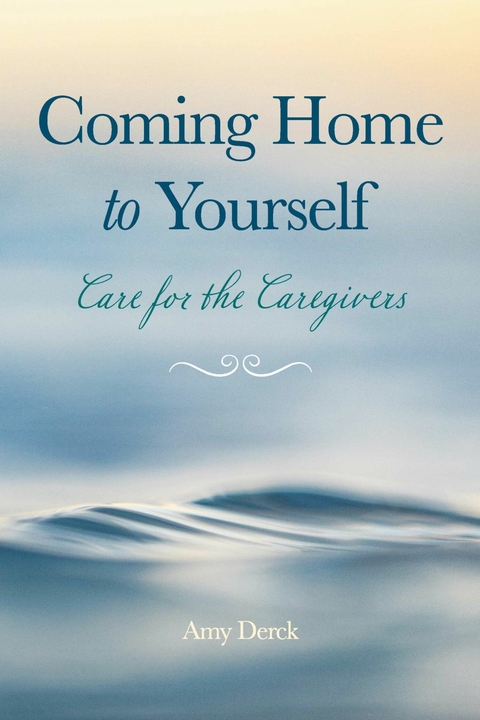
Coming Home to Yourself (eBook)
236 Seiten
Bookbaby (Verlag)
979-8-3509-8067-7 (ISBN)
Amy Derck began her helping career after completing her Master of Arts in Counseling degree from University of North Carolina at Charlotte. She first helped women move from welfare to self-sufficiency as part of the Family Support Act in 1990. Later she assisted teens at risk for delinquency coordinating with the justice and school systems, and community support services through the North Carolina Delinquency, Prevention and Remediation Program. Amy spent the last fifteen years of her career employed as a counselor/advisor at Central Piedmont Community College, Matthews Campus in Charlotte, North Carolina, and then Craven Community College, Havelock Campus in New Bern, North Carolina. Her clients included young and older adults, military, and early college students as they navigated the world of college, career, and life changes. When Amy's husband's Multiple Myeloma progressed requiring additional care, she retired to meet his increased needs. After twenty years of caregiving until her husband's passing in 2024, Amy now continues her helping career through her passion and understanding for caregivers by providing inspiration and practices in her upcoming book, Coming Home to Yourself, Care for the Caregivers, (February 2025). She is also working on offering connection for caregivers through her upcoming website, http://www.thecaregivermentorforcaregivers.com, in late October.
: In "e;Coming Home to Yourself: Care for the Caregivers"e;, Amy Derck offers a poignant blend of memoir and practical guidance from her twenty-year caregiving journey for her husband, who battled Multiple Myeloma. From the moment of diagnosis, Amy found herself in a world of medical uncertainty, yet was determined to maintain joy and love in their life. Her inward journey became one of transformation-moving from denial to acceptance, from overwhelm to resilience, and from adversity to self-discovery. With heartfelt reflections, Amy invites readers into the intimate dynamics of caregiving, offering them inspiration and practical strategies for managing stress and embracing self-care. Understanding the emotional toll caregiving can take, she lights the way with hope, empowering others to find strength in their own journeys. Amy's book is a compassionate companion for anyone who feels lost in caregiving, guiding them toward resilience and finding peace within themselves.
Chapter 1:
Denial
“If time is my measure,
then let me fill it to the brim,
pouring out my best, sharing my heart,
loving all I can, giving all I have.
let no day be wasted,
no chance taken for granted,
no moment passed by unseen
for the blessing It reveals.”
Steven Charleston
JANUARY 2004
A cold, gloomy winter’s day. January 9th. A new year full of promises for exercising more and eating less, scraping down the popcorn ceiling which was a carryover from last year’s resolutions, and talk of living a more mindful life which made us smile when we clinked our champagne glasses on New Year’s Eve. Mindfulness has been our resolution for the past three years. In all honesty, we tried. We read a book or two but found it difficult to integrate the concept of mindfulness into our busy lives.
Then a slip and fall and an x-ray led to a message from our primary care physician (PCP). “You have an appointment with Dr. Jacobs next Friday morning at nine.” My stomach churned, wishing I hadn’t allowed the pulsing red light on the answering machine to lure me in.
Gary wasn’t home yet from work, although he had called me shortly after the slip and fall to say it was quite painful, but he was okay. The x-ray was a requirement to satisfy Workman’s Compensation. I was relieved knowing it might satisfy the curious ongoing pulled hamstring issue hanging around his left leg since August.
I turned to prepping Friday night dinner, loaded the Dead Can Dance CD, one of our Friday night favorites, and wondered again, why the Doc wouldn’t just tell him over the phone if the hip was cracked or if he needed a referral to an orthopedist. As I stirred the garlic slices into the warm olive oil, my mind wandered back to the message, wishing I had ignored the red flashing light. Should I wait till the weekend was almost over, knowing he would worry all weekend about what was wrong with him that the Doc had to see him in person? Since our Friday night end-of-the-week celebrations were as sacred as our daily coffee conversations in the still-dark mornings before tasks of the day disturbed the peace, I decided I would tell him on Saturday. Besides, not only was it unpleasant to return to work after the Christmas holidays, but the day with its gray hanging clouds and damp chill in the air added to the misery. The aroma of tomatoes and acknowledging that the Doc’s office is closed all weekend settled my mind. Whether Gary found out today or tomorrow made no difference.
“Did the Doc call?” Gary limped into the kitchen, briefcase in hand.
“How’s the leg?” The limp lingering from August, now a bit worse, clearly showed his pain.
“I can’t believe I fell—I’ve never fallen. I hope the x-ray shows something they can fix. I’m tired of this pain.”
“Did they give you any ibuprofen?”
As I poured us glasses of wine, Gary relayed the story of his fall and pulled out a bottle of ibuprofen he had picked up at the pharmacy.
“Did you check the messages on the phone?”
Unable to distract him and not wanting to lie, I explained the message. Gary jumped from the sofa and ran to the phone. I noticed his limp slowed him down to a fast walk. He played the message several times, listening for a light or serious tone from the nurse. He mulled over the question all weekend while we shared logical explanations as to why the Doc had to see him rather than refer him to an ortho guy, or just give him the news over the phone. I suggested that the Doc might want to show him the x-ray in person and that all was well, or that there may be a hairline crack that would heal with rest. By Sunday night we decided Gary would call the Doc’s office on Monday and ask the nurse for the news over the phone. Besides, he had a meeting on Friday and would have to change the appointment anyway.
After talking with the nurse on Monday, who insisted Gary had to come in for the visit, a week of wondering, handwringing, and worry followed. I accompanied him on Friday morning, the weekend before his fifty-fourth birthday. Doc Jacobs had been my Primary Care Provider for many years before Gary and I were married. He always wore a smile and had a joke when he entered the room. But this morning, he wasn’t smiling. His face was ashen, and his eyes serious. I clasped my hands, squeezing hard, hoping to keep myself together. I knew then, something was terribly wrong. Gary made a joke as he usually does, but Doc Jacobs didn’t smile and got right down to business.
He explained the x-ray they took in August when Gary was first having pain in his left hip and leg must have been misread, as they hadn’t seen anything. However, this slip and fall x-ray now showed he had a shadow appearing like a four-centimeter hole in his left ischium (lower back part of the hip bone). The small exam room went quiet. Doc Jacobs began explaining that he had contacted Doc Hughes, a hematologist who could see him March first for further information.
“A hematologist?” we both asked in unison. “Why not an orthopedist?” I asked.
Doc Jacobs lowered his head, “I think this has to do with cancer. I’m not sure, but Doc Hughes will do some testing and will know more. I’m so sorry to have to give you that news.”
And I knew he was sorry as we all sat in silence, not quite knowing what to do next. Doc Jacobs waited, allowing his words to hang in the air until we could absorb them enough to stand up, thank him, and walk out of the exam room.
I barely got the door open when tears flowed from my eyes.
“Cancer?” Gary said. “That can’t be. No one in my family has ever had cancer.” When we reached the car, he suggested we walk down to Caribou Coffee and have a cup of coffee before going home. The coffee was warm and comforting. “What do we do?”
I was clueless. The only thing running through my mind was Cancer, Cancer, Cancer.
“We’ll get through this,” he said, reaching across the table for my hand. At his touch, my tears began to run faster, accompanied by a few gasps. I had run out of Kleenex, and Gary left and returned with a pile of napkins.
“I can’t go home yet.” I said.
“Me neither. What do we do? I must wait almost three weeks to see the hematologist. It must not be that urgent.”
I had made plans in mid-December for his birthday surprise. A two-day stay-over birthday weekend at The Grove Park Inn, an old resort/hotel in the mountains in Asheville with killer views, excellent food, and a new grotto spa. Would he want to go? Should I even suggest it? We finished our coffee and sat staring down at the table. My tears were dry, and I told him about the surprise birthday trip I had planned. “I can understand if you don’t feel like it.”
He smiled at me, and now his tears fell down his face. “Thank you…but I don’t know.” Dabbing at his eyes with a napkin, he sighed and squeezed my hand, “I think that would be the best thing to do. I don’t think I’m ready to go home.”
The mountains, snow flurries, and the huge fireplace in the lodge-like lobby comforted us, reminiscent of our younger years back in Ohio, enjoying snowy days, and feeling safe with our families around the fireplace. We quietly rocked in front of the flames, inhaling the woodsy aroma of the burning, crackling logs. It was peaceful even though there were other travelers there. We walked around the lodge. We rocked. In the morning, we ate breakfast at a table by the windows, sipping our coffee, and staring out at the misty mountains and the sunrise. “I think it will all be okay. Don’t you?” He said.
“I do. We’ll just take it day by day, like we always do.”
We floated in the cave-like grotto pool, then shared a private room for pedicures complete with champagne, chocolates, and fruit. Gary engaged the nail technicians in conversation about how we met, and they enjoyed his stories and sense of humor. As we were walking out the door, he paused, turned, and told them he had just found out he had cancer. The words were now spoken, out there floating, becoming a reality. We were ready to go home, ready to meet Doc Hughes, and find out the next step in our journey.
The trip to the mountains, although initially seemed silly considering the news, was the key to moving forward from Denial in a slow pace towards Acceptance. It gave us the space to absorb and process the news, something which we both somehow knew we couldn’t do at home.
When I returned to work on Tuesday, I spent my lunchtime browsing the internet, looking up blood cancers and other cancers involving the bones, and discovered a cancer by the name of Multiple Myeloma (MM). It appeared to be a rare blood cancer that affected the bones. I learned most folks didn’t know they had it until they sneezed and broke a rib or picked up a heavy object and broke their arm. One man I read about swung his golf club and broke his arm. That was all due to the MM creating lesions or holes in the bones, weakening their structure and eventually, with a little pressure, breaking. I continued my lunchtime research, and another day found a page dedicated to the stories of those who have had MM and have died. Their symptoms seemed similar to what Gary had been experiencing last year around the time the limp had begun.
Most of the folks in the stories only lived two to three years. We had only been married six years. We were still newlyweds putting our previous divorced lives...
| Erscheint lt. Verlag | 25.4.2025 |
|---|---|
| Sprache | englisch |
| Themenwelt | Literatur ► Biografien / Erfahrungsberichte |
| ISBN-13 | 979-8-3509-8067-7 / 9798350980677 |
| Informationen gemäß Produktsicherheitsverordnung (GPSR) | |
| Haben Sie eine Frage zum Produkt? |
 EPUB (Ohne DRM)
Größe: 3,2 MB
Digital Rights Management: ohne DRM
Dieses eBook enthält kein DRM oder Kopierschutz. Eine Weitergabe an Dritte ist jedoch rechtlich nicht zulässig, weil Sie beim Kauf nur die Rechte an der persönlichen Nutzung erwerben.
Dateiformat: EPUB (Electronic Publication)
EPUB ist ein offener Standard für eBooks und eignet sich besonders zur Darstellung von Belletristik und Sachbüchern. Der Fließtext wird dynamisch an die Display- und Schriftgröße angepasst. Auch für mobile Lesegeräte ist EPUB daher gut geeignet.
Systemvoraussetzungen:
PC/Mac: Mit einem PC oder Mac können Sie dieses eBook lesen. Sie benötigen dafür die kostenlose Software Adobe Digital Editions.
eReader: Dieses eBook kann mit (fast) allen eBook-Readern gelesen werden. Mit dem amazon-Kindle ist es aber nicht kompatibel.
Smartphone/Tablet: Egal ob Apple oder Android, dieses eBook können Sie lesen. Sie benötigen dafür eine kostenlose App.
Geräteliste und zusätzliche Hinweise
Buying eBooks from abroad
For tax law reasons we can sell eBooks just within Germany and Switzerland. Regrettably we cannot fulfill eBook-orders from other countries.
aus dem Bereich