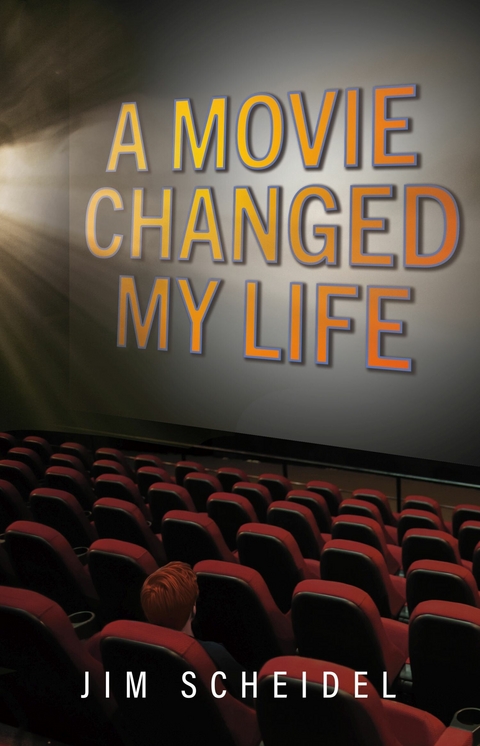
Movie Changed My Life (eBook)
180 Seiten
Bookbaby (Verlag)
979-8-3509-9220-5 (ISBN)
During his career as an Architect, that spanned over 45 years, Jim has put his talents towards a wide variety of project types. During his early years he worked on residential, commercial, industrial, medical and hospitality projects. For the past 32 years he has served the Leisure Entertainment Industry in the delivery of a wide range of rides, shows and attractions in theme parks around the world that have entertained millions of theme park guests. His career has taken him on a journey he never could have dreamed of as a young man, graduating from Architectural School. Aside from having the opportunity to work alongside some of the most talented and creative men and women in the entertainment industry, it afforded him the opportunity to visits places far from his home in Redondo Beach, California. His job as an entertainment Architect has taken him across the United States, into Canada and Mexico, across the pond to a variety of countries in Western Europe, the Korean Peninsula, Mainland China from Shanghai to Tibet, Hong Kong, Australia, Qatar in the Middle East and Russia. He has teamed with the undisputed leaders of the Entertainment Industry, including Walt Disney Imagineering, Universal Studios, Paramount, Warner Bros., DreamWorks, Six Flags Theme Parks, Knott's Berry Farm, Legoland, Lotte World in South Korea, Samsung Everland in Seoul and Ocean Park Hong Kong. He also led his team in master planning the Olympic Village for the 2018 Winter Olympics in South Korea. He led his firm, the Cuningham Group, in becoming one of the most respected international Architectural firms in the Entertainment Industry. During his career he opened branch offices in Seoul, South Korea, Madrid in Spain and Beijing in the Peoples Republic of China. In 2020 Jim retired as the Chairman of the Board at Cuningham Group, turning the reigns over to the next generation of young Architects. His focus now is on continuing to travel around the world pursuing pleasure, not the next project.
A Movie Changed My Life is the memoir of an architect who worked in the entertainment industry, primarily theme parks, for more than thirty-two years. From a young, yet-to-be-employed, newly graduated architect knocking on doors trying to land an interview, to chairman of the board and director of the entertainment sector of a renowned international architecture firm . . . it's "e;one hell of a ride,"e; as the author aptly sums up at the conclusion of this captivating memoir. Scheidel's international business dealings take him to China, Russia, Korea, and other countries, exploring foreign business culture and experiencing fascinating and sometimes bizarre customs along the way. From sampling such delicacies as live baby octopus to enduring a "e;massage"e; more akin to torture, the author grants the reader an inside look at the life of an accomplished architect traveling the globe.
2.
BACK TO THE PAST
So, just how did I end up in that seat on April 28, 1988, in my first Back to the Future: The Ride meeting? That, in and of itself, is an interesting if somewhat nonlinear, story. Let me back up just a bit to put things in context.
The Virginian
I was born at Queen of Angels Hospital in Hollywood, California, in the spring of 1952 and basically grew up in a restaurant. My parents owned The Virginian, a small, family-run restaurant in Highland Park, a suburb just east of downtown Los Angeles. When I say “family run,” I really mean it. My mom, dad, aunt, grandmother, brother, and I all worked there together. Family bonding at its finest, whether we intended it or not. Owning a restaurant had long been my father’s dream.
My father was an interesting guy. He grew up in a New York orphanage, running away as soon as he turned eighteen. He walked, hitchhiked, and eventually caught a ride in an empty box car on a freight train heading west. His journey ultimately took him to Los Angeles, where he would head out to see what the future had in store for him. He was a tough and resourceful guy. Growing up in an orphanage in New York in the 1920s will do that to you.
When he first got off the freight train, he was immediately picked up by LA Police and arrested. They charged him with the crime of stowing away on a freight train, as well as vagrancy. He didn’t have the required $2.00 in his pocket as proof that he was not a vagrant but a respectable member of society. This was the law at the time—if you had more than $2.00 you were good to go on your way; less than that, you were not. Today, he just would have been considered homeless and largely overlooked.
They detained him at the police station overnight, taking him back to the freight train yard the following morning, handing him a freight train schedule while informing him that it was a crime to catch a ride on a freight train. As soon as they turned to leave, he ran like hell the other way and never looked back.
The moment that changed his life was landing a job as a parking valet, at the Tick Tock Tea Room in the heart of Hollywood. The Tick Tock is long gone now, but for years it offered homestyle cooking for locals and tourists alike.
He moved slowly up in ranks at the Tick Tock from valet, to dishwasher, line cook, pastry chef, and so on. He found his passion in preparing meals for others and knew that someday he wanted to open his own restaurant and cook his food.
He also found time to meet a young girl at the Hollywood Roller Bowl. They were a roller-skating dance team—yes, this tough guy from New York, who typically sported a black hat tipped to one side, a roller-skating dance partner. The parents of this young girl did not like the looks of this young man. They continually advised their daughter to “stay away from the kid in the black hat.” Their advice went unheeded. The young girl and my dad eventually got married.
His job at the Tick Tock, dream of opening his own restaurant, and wedding plans were put on hold for five years due to World War II. Interesting enough, my dad’s draft number was that of the first group of men drafted in the United States. This was the only lottery he ever won.
During the war, he drove a tank under the command of General George S. Patton until he was injured by friendly fire, ultimately ending up in the Military Police in India, of all places. His primary responsibility was guarding Italian prisoners of war, who weren’t all that interested in escaping (three square meals a day and no one shooting at you). After the war, he returned to Los Angeles, where he married my mother and was intent on opening his own restaurant.
And he did. Southern-style cooking was brought to the streets of Highland Park. When I say “Southern-style cooking,” I mean real Southern-style cooking. It was never clear to me how a kid of German and Swedish heritage who was raised in an orphanage in New York (I doubt the menu at the orphanage offered dishes inspired by the Deep South) developed Southern culinary skills—but he did. As a kid, it never occurred to me to ask.
The menu offered such gastronomical delights as braised short ribs, chicken fried steak with country gravy, meat loaf with mashed potatoes and gravy, ham hock and lima beans, liver and onions, black-eyed peas, mustard greens, turnips, hominy, and his infamous cornbread. For dessert, there was incredible bread pudding with whipped cream. And he appropriately called the restaurant “The Virginian.” He claimed it was simply a coincidence that my mother’s name was Virginia.
From the time I was old enough to be of any help, I reported to the restaurant after school, where I worked until closing and cleanup. Summer vacation meant that I got to work at the restaurant all day, with a brief break in the afternoon before the dinner rush. I must admit that we did close down the restaurant for a week each summer for a family vacation. Oftentimes we spent the week at a tiny beachfront inn in Malibu.
Some of my most treasured childhood memories are from those days on the beach in Malibu. I enjoyed building sandcastles with turrets and hidden tunnels (perhaps an indication as to my eventual occupation). I could spend hours jumping over waves and riding them to shore on my rubber raft (this was well before the invention of the boogie board). I spent afternoons walking along the beach with my mother collecting seashells. I loved everything about being at the beach and told myself at that moment that someday I would live near the ocean.
Meanwhile . . . back to The Virginian:
The restaurant’s clientele included a broad assortment of humanity, from auto mechanics to newspaper editors to police to people in the entertainment industry, sometimes traveling a long distance to sample real Southern cooking—yes, by that guy of German and Swedish descent, raised in a New York orphanage. Bold of them, considering the sketchy neighborhood, long before the more recent gentrification of Highland Park.
On a couple occasions, I saw my dad eject an unruly, usually drunken patron who was being rude to my mom or another customer. In one instance, a six-foot-two mountain of a man resisted being relocated to the sidewalk by brandishing a knife. My dad, of about five-foot-six, threw a right hook into the man’s jaw, dropping him to the floor, and promptly dragged the unconscious man outside. As I said previously, my dad was a tough guy.
Don’t get me wrong, my dad also had a soft spot in his heart. He would take a Thanksgiving dinner, with all of the trimmings, to poor families in the neighborhood, large pans of his truly amazing freshly baked cinnamon rolls to the local fire and police departments on Easter, feed stray dogs and attempt to find homes for them and feed the homeless that sometimes came to the back door of the restaurant. He cried at the funeral of his mother-in-law, the only mother he ever really knew.
My dad also cried when my brother and I left for college. I think it was both because he would miss us and proud that we were going to college—the sons of a man who never graduated from high school. He was both a simple and complex man.
My dad was an extremely hard worker, and he imbedded into me a deep work ethic. He worked so hard and long, however, that he was typically missing at school events like an open house or parent-teacher conference. This was a trait I swore to myself that I would not replicate.
My dad liked to bet on football and the ponies. He took me to my first horse race when I was ten. I thought it was incredibly exciting, and I loved to feel the energy of the crowd as the horses ran down the home stretch. I was also intrigued by the broad range of emotions as the winners crossed the finish line. My dad won six out of seven races that day and a couple of thousand dollars. Keep in mind, this was the early sixties, and that was a lot of money.
When I got home, I asked my mom why my dad didn’t just bet on horse races instead of working so hard at the restaurant. She said, “Well honey, he doesn’t always win.” I take my family to the horse races at Santa Anita Park once a year, between Christmas and New Year’s, as a silent tribute to the man. We just bet a few dollars and really just go for the pageantry of it all and the fabulous prime rib sandwiches.
At any rate, working in a restaurant from the time I could wash a dish until I graduated from high school convinced me of one thing . . . I did not want to own a restaurant. I do, however, have a passion for cooking and prepare the majority of meals for my family.
Owning a small family restaurant is a seven-days-a-week undertaking, which you keep repeating week after week until you die. When my father died, the restaurant, to which he had dedicated thirty years of his life, died with him, never to reopen again.
Postscript: My dad always prided himself in running a truly old-fashioned “family” restaurant. Therefore, for the entire time he owned and ran The Virginian, he refused to sell alcohol. This may have had something to do with the fact that he ended up in an orphanage because his father and mother were raging alcoholics and unable to properly care for their children.
Now, don’t get me wrong, my dad was no teetotaler and would occasionally have a beer on a hot day, or maybe a Mai Tai if he and my mother went out to a nice dinner. While the beer fit his demeaner, I had no idea where the taste for a Mai Tai came from....
| Erscheint lt. Verlag | 20.2.2025 |
|---|---|
| Sprache | englisch |
| Themenwelt | Literatur ► Biografien / Erfahrungsberichte |
| ISBN-13 | 979-8-3509-9220-5 / 9798350992205 |
| Informationen gemäß Produktsicherheitsverordnung (GPSR) | |
| Haben Sie eine Frage zum Produkt? |
 EPUB (Ohne DRM)
Größe: 2,0 MB
Digital Rights Management: ohne DRM
Dieses eBook enthält kein DRM oder Kopierschutz. Eine Weitergabe an Dritte ist jedoch rechtlich nicht zulässig, weil Sie beim Kauf nur die Rechte an der persönlichen Nutzung erwerben.
Dateiformat: EPUB (Electronic Publication)
EPUB ist ein offener Standard für eBooks und eignet sich besonders zur Darstellung von Belletristik und Sachbüchern. Der Fließtext wird dynamisch an die Display- und Schriftgröße angepasst. Auch für mobile Lesegeräte ist EPUB daher gut geeignet.
Systemvoraussetzungen:
PC/Mac: Mit einem PC oder Mac können Sie dieses eBook lesen. Sie benötigen dafür die kostenlose Software Adobe Digital Editions.
eReader: Dieses eBook kann mit (fast) allen eBook-Readern gelesen werden. Mit dem amazon-Kindle ist es aber nicht kompatibel.
Smartphone/Tablet: Egal ob Apple oder Android, dieses eBook können Sie lesen. Sie benötigen dafür eine kostenlose App.
Geräteliste und zusätzliche Hinweise
Buying eBooks from abroad
For tax law reasons we can sell eBooks just within Germany and Switzerland. Regrettably we cannot fulfill eBook-orders from other countries.
aus dem Bereich