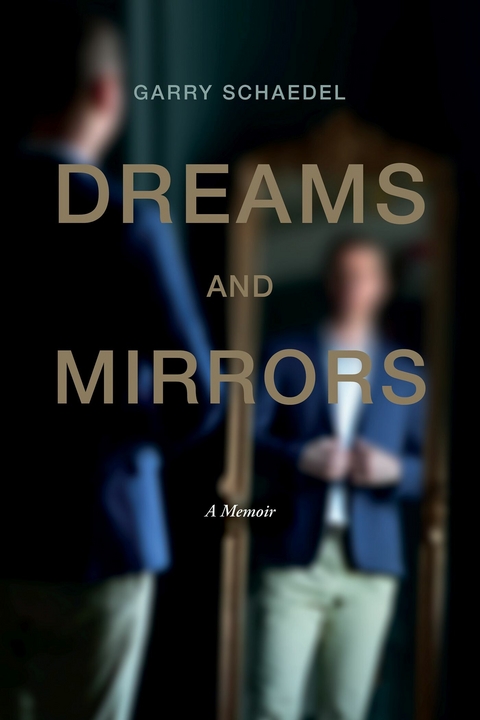
Dreams and Mirrors (eBook)
296 Seiten
Bookbaby (Verlag)
979-8-3509-7076-0 (ISBN)
Garry's memoir recounts his experiences of abuse and trauma in a dysfunctional family, acknowledging his advantages in gender, race, and socio-economic status. Growing up in New Jersey, he attended Catholic schools and later chose St. Michael's College in Vermont for a fresh start. His book delves into his journey of recovery, including overcoming PTSD, and offers insights from his public health background to help others facing similar challenges. Garry's career includes being a VISTA volunteer, a Peace Corps/VISTA recruiter, and earning a Master's in Human Services. He worked extensively in health care administration in Vermont, culminating as the Division Director for Health Promotion and Disease Prevention. In 2014, he received the National Child Health Advocate Award from the American Academy of Pediatrics for his contributions to children's health in Vermont. He is a devoted husband and father, finding healing through family and running.
The book also delves into Garry's own experience with physical and emotional abuse and trauma that he struggled with for decades. In his book he offers insights from his career in public health, providing clear information on topics like Adverse Childhood Experiences (A.C.E.), PTSD beyond military contexts, and classical emotional abuse. He addresses common doubts survivors face, helping them validate their experiences. A significant part of Garry's healing came from therapy and a pivotal moment when his young daughter uttered six words that led him toward deeper recovery. Running also became a therapeutic outlet, enhancing his self-image and serving as a way to honor lost loved ones through dedicated races. "e;Dreams and Mirrors"e; is both a personal narrative and a resource for others dealing with the aftermath of abuse.
Chapter 3
The Start-Fingers
During my freshman English literature class in college, Dr. Carey Kaplan had us write a one-page piece about our first childhood memory and submit them to her. For discussion during the next class, she printed out a few and distributed them to us for review. I wrote a version of the following.
It is my first childhood memory. I was three. I know this because when I was three, my family moved from a small, cramped three-bedroom house with one bathroom to a six-bedroom house with four bathrooms. When we moved, there were seven children. My youngest brother arrived two years later, after the move. In the prior house, I shared a bed with my sister who was eleven at the time. My younger brother slept in a crib in our room. It was a tiny, dark room with almost no room to walk around the bed, the crib, and a single dresser. My four older brothers shared one room, with two in each of the double beds. It too was tiny, brighter in color, but with more clothes on the floor than mine and my sister’s.
Sometimes I would watch my sister hold my younger brother in her lap. I tried to get her attention and sit in her lap too.
“Garry, you can’t both sit in my lap at the same time,” she would say.
“But I want to, I want to sit with you too,” I would say. My pouting lower lip showed my sadness.
“Here, Garry, here is one of my baby dolls that you can hold.” She placed her doll in my hands. “There, now we both have babies we can hold.”
My sister and I were bonding. She was holding my younger brother, but she was looking at and talking to me. She gave me the baby doll as a present, the baby doll not much smaller than me.
Sometime after my sister gave me the baby doll, a brother, five years older than me, took it from me. We were in the small kitchen when he opened a drawer. I was small so I could not see inside it. I could just see the white paint over the front of the drawer. He pulled out a knife.
“Garry, look at this.” With a knife, he proceeded to cut off two middle fingers of the doll. “Look, we are going to plant the fingers in the ground. They are like seeds, and we’ll watch them grow.”
He took me a short distance to the backyard, where there was already a small garden. He planted these “seeds” into the ground. “Let’s watch and see how the doll grows,” he said. He watered them, and we left the garden area.
Later in the day, he took me to the backyard, and he showed me the seeds had grown into an arm, the doll’s arm (missing two fingers) standing straight in the air.
“Garry, when this doll grows all the way up, it’s going to take your place in the family.” I turned away, and he laughed. I gasped with tears running down my face; I ran into the house via the kitchen door.
There my father stood, slurping a cup of coffee. I ran towards his legs, holding on to them, seeking protection. I tried to tell my father what happened. I could not see my father’s face, just his dark colored pants. They were dress pants, brown in color, baggy, and nondescript. They resembled the style of pants worn by actors such as Humphrey Bogart in the 1950s. I grabbed onto his pant legs, holding on for dear life. Crying, I told him what had just happened.
“Daddy, he, he took my doll and cut off two fingers. He, he planted them, and now they are growing. He, he said, when it grows bigger, it, it is going to take my place in the family.”
He took no steps to comfort me. In frustration, he said, “Come on,” and we walked out of the house to the backyard. I walked behind him, afraid, peeking around his leg to check out the arm, to make sure it was not coming for me. When we got to the arm, he pulled it out of the dirt. He showed me that it was not true. “It’s just a doll’s arm. He planted the rest of the doll’s arm.” He did not say anything that provided me confidence or comfort. He threw the dirt-covered baby doll arm, minus two fingers, on the ground, and then walked away. I slowly picked up the arm and instantly dropped it as well. Terrorized, I ran into the house and hid under the kitchen table.
Dr. Kaplan printed her favorites and distributed them for discussion on several pieces of paper. Mine was on the first page she distributed. After she handed them out, she looked right at me and said, “Garry, this was a powerful story that was well written. It is also so sad and frightening.”
I had no idea of the power of the story. I had not told the story before. I did not know what to do with her praise and empathy. Ironically, her kind words planted a “seed” in me, something positive I rarely ever heard. What I experienced was not normal. What I wrote about touched Dr. Kaplan, and she empathized with me.
Auntie Em
During the actual move to our new house, my mother brought my younger brother and me to her parents’, my grandparents’, house. They were the only grandparents we knew since both my father’s parents died before my parents had met. My mother was her parents’ only child.
My grandparents lived in a very small, two-story, brick row house. At the time, the house was about one hundred years old in the Central Ward of Newark, New Jersey. Then it was on a street called High Street; now it is called Dr. Martin Luther King Jr. Boulevard. Although their house was directly across from St. Michael’s hospital, my mother was literally born in their house.
My mother dropped us off in the evening; my grandparents fed us and put us to bed. During the following day, we played in their backyard. It was very small, and it abutted a brick warehouse. The warehouse was so tall, not much daylight came into their yard. There were a few trees in the adjacent neighbors’ backyards. Wire fencing separated the backyards.
After we ate lunch, my grandfather called me out to the backroom as he opened the door to the yard. He bent over with some peanuts in his hand. Slowly, cautiously, a squirrel came up to his hand, opened its mouth, and took a peanut out of his hand. It then scampered away. The squirrel chewed on it and came back for another. The squirrel seemed like a trained dog looking for treats.
After the second time, my grandfather had me bend over closer to the ground and put out my hand with a few peanuts in it. As the squirrel approached, he said, “Garry, be very still. Try not to move.”
As a three-year-old, I must have done all right. The squirrel cautiously came over and took a peanut from my hand the same way he did for my grandfather. Almost instantly I shot up and yelled, “Grandpa!” I was so happy and excited. My excitement had the opposite impact on the squirrel. It took off and climbed into one of the adjacent neighbors’ trees.
That night, my grandparents turned on their small television in their backroom. It was the first time I ever saw The Wizard of Oz. I recall being afraid of the Wicked Witch and the flying monkeys. I was sad and afraid to see Dorothy crying, alone, and the hourglass rapidly running out of time. But then, in the snow globe, Auntie Em is there, calling for Dorothy. Dorothy calls to Auntie Em, “I am here,” pleading to be rescued by Auntie Em from the Wicked Witch. Then it all suddenly changes. Auntie Em’s image in the snow globe turns into the Wicked Witch, who is laughing, imitating, and mocking Dorothy. I gasped, “Grandma!”
My grandmother was in another room. “Grandma!” It was nighttime, and my grandmother often took out her hearing aid towards the end of the day. She did not hear me. She would have come to me if she had.
“Grandma, I’m afraid,” I said. I just closed my eyes and covered my ears with both hands. I did not want to see any more. What Dorothy hopes for is real: to be saved by a loved one. What Dorothy sees is the opposite. In the end, Dorothy makes it back to Kansas.
My personal journey of hoping for one thing, love, affection, and support, but receiving the opposite, would mirror what I saw Dorothy experience as the hourglass changed from hope to the cause of her fear.
Livingston
The new house we moved to with the six bedrooms was on the far edge of our town in Livingston, New Jersey. Old home movies show the neighborhood still under construction when we moved there. In the home movie, unpaved streets, houses being built, and wooded areas surround our new house. We were one of the first families to move onto our expanding street. Our house sat atop a one-acre property with a slight hill from the street to the built-in garage. The houses varied in style and size. Some were ranch houses, other split ranches; ours was a two-story house. All were iconic, mid-century, modern in appearance. Like the inside of our house, the outside was, as my friend described, “battleship gray” with white trim.
The neighborhood lacked a sense of community, at least in our part of it. While there were few fences separating properties, the forty plus houses in the neighborhood was segregated by family background: religion, and the schools children attended. Everyone was Caucasian. While I became friends with other kids in the neighborhood and hung out at their houses, my parents never became friends with my friends’ parents. They would only entertain the parents of my older siblings who attended private...
| Erscheint lt. Verlag | 18.10.2024 |
|---|---|
| Sprache | englisch |
| Themenwelt | Literatur ► Biografien / Erfahrungsberichte |
| ISBN-13 | 979-8-3509-7076-0 / 9798350970760 |
| Informationen gemäß Produktsicherheitsverordnung (GPSR) | |
| Haben Sie eine Frage zum Produkt? |
 EPUB (Ohne DRM)
Größe: 2,8 MB
Digital Rights Management: ohne DRM
Dieses eBook enthält kein DRM oder Kopierschutz. Eine Weitergabe an Dritte ist jedoch rechtlich nicht zulässig, weil Sie beim Kauf nur die Rechte an der persönlichen Nutzung erwerben.
Dateiformat: EPUB (Electronic Publication)
EPUB ist ein offener Standard für eBooks und eignet sich besonders zur Darstellung von Belletristik und Sachbüchern. Der Fließtext wird dynamisch an die Display- und Schriftgröße angepasst. Auch für mobile Lesegeräte ist EPUB daher gut geeignet.
Systemvoraussetzungen:
PC/Mac: Mit einem PC oder Mac können Sie dieses eBook lesen. Sie benötigen dafür die kostenlose Software Adobe Digital Editions.
eReader: Dieses eBook kann mit (fast) allen eBook-Readern gelesen werden. Mit dem amazon-Kindle ist es aber nicht kompatibel.
Smartphone/Tablet: Egal ob Apple oder Android, dieses eBook können Sie lesen. Sie benötigen dafür eine kostenlose App.
Geräteliste und zusätzliche Hinweise
Buying eBooks from abroad
For tax law reasons we can sell eBooks just within Germany and Switzerland. Regrettably we cannot fulfill eBook-orders from other countries.
aus dem Bereich