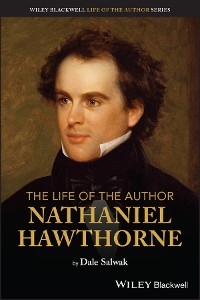
The Life of the Author: Nathaniel Hawthorne (eBook)
John Wiley & Sons (Verlag)
978-1-119-77183-8 (ISBN)
The first major Hawthorne biography to be published in two decades, featuring original scholarship on both unpublished and published sources
The Life of the Author: Nathaniel Hawthorne presents a rich and nuanced portrait of one of America’s greatest writers, exploring the thoughts and ideas of a man whose profound insights about the human condition continue to resonate in the modern day. Accessible to those with little knowledge of Hawthorne, this unique volume uses a new biographical approach based on exhaustive primary research that provides readers with a better understanding of the artist and his work.
Author Dale Salwak challenges the presumption that Hawthorne was a reclusive, eccentric, and alienated man whose relevance to modern times is diminishing. Drawing from his forty-five years’ experience reading, studying, and teaching Hawthorne, the author reveals a more approachable Hawthorne. In-depth and reflective chapters explore topics such as the circumstances that led Hawthorne to become a writer, the influence of Sophia Hawthorne on her husband’s work, the theory of the unfulfilled homoerotic relationship between Hawthorne and Herman Melville, and more.
- Offers a fresh reading of Hawthorne’s life and work from birth to death
- Provides new perspectives on Hawthorne and stories surrounding his work
- Draws from a wide variety of sources, including novels, tales, children’s books, notebooks, and personal letters to and from Hawthorne
- Suggests new strategies for teaching Hawthorne to today’s students
- Includes a detailed index and comprehensive introductory and concluding chapters
Highlighting Hawthorne’s special contributions to American literature, The Life of the Author: Nathaniel Hawthorne is essential reading for scholars, lecturers, and college students taking courses including Literary History, American Literature, and History of the Novel as well as anyone interested in biography, literature, and creativity
DALE SALWAK is Professor of English and American Literature at Citrus College, California. He is the author of 28 books including Living with a Writer, Teaching Life: Letters from a Life in Literature, Writers and Their Mothers, and studies of Kingsley Amis, John Braine, Philip Larkin, Barbara Pym, and Carl Sandburg, amongst others. He is a frequent contributor to the (London) Times Higher Education magazine and the Times Educational Supplement.
DALE SALWAK is Professor of English and American Literature at Citrus College, California. He is the author of 28 books including Living with a Writer, Teaching Life: Letters from a Life in Literature, Writers and Their Mothers, and studies of Kingsley Amis, John Braine, Philip Larkin, Barbara Pym, and Carl Sandburg, amongst others. He is a frequent contributor to the (London) Times Higher Education magazine and the Times Educational Supplement.
Acknowledgments ix
List of Illustrations xi
Introduction 1
1 Under the Spell of Hawthorne 6
2 The Formative Years (1804-1825) 14
3 Fanshawe: A Tale (1828) 25
4 The Dark Years (1825-1837) 35
5 A Voice Refined (1837-1842) 51
6 The Middle Years (1842-1849) 63
7 Nathaniel and Sophia (1837-1860) 80
8 The Scarlet Letter (1850) 91
9 Hawthorne and Melville (1850-1860) 106
10 The House of the Seven Gables (1851) 118
11 The Blithedale Romance (1852) 131
12 The Marble Faun (1853-1860) 144
13 The Final Years (1860-1864) 163
Conclusion 183
References 189
Index 197
1
Under the Spell of Hawthorne
Hawthorne’s birthplace, 27 Union Street, Salem.
Source: Library of Congress.
A man of a deep and noble nature has seized me in this
seclusion. His wild, witch‐voice rings through me; …
—Herman Melville (Crowley 1970: 111)
When those of us with an unbounded love for literature begin reading, we enter the psyche of another and allow our own world to be subsumed in the world created by the author. In so doing, there are times when we are touched within by some sort of awe, even euphoria. We feel edified. We feel transformed. We feel more fully and pleasurably alive.
We call such flashes of intense insight “aha” moments – as in now I see, now I know, now I understand. Christianity refers to them as “epiphanies” – from the Greek epiphaneia, meaning “a manifestation” (Petridou 2016: 6). Virginia Woolf (1976) called them “moments of being” (70), and William Wordsworth (2012 [1805]) referred to them as “spots of time” in The Prelude (XI, line 257).
Whatever we call them, once these eureka moments occur and we have considered them afterward in calm reflection, we find ourselves in sync with the rhythm of life in a fresh way: the world is put into clearer perspective; we begin to move in a direction that is different from anything we’d ever imagined, a direction that we know is just right for us. This describes fairly accurately how many of us respond (as did Herman Melville) to the life and work of Nathaniel Hawthorne. But why? What is it about this particular author’s temperament and artistry that casts such a powerful (almost hypnotic) spell, one that draws us in so quickly and holds us so tenaciously? Why is it that the novels and tales give so many of his devoted readers such a personal experience? Why does Brenda Wineapple’s (2003) assessment – “Once read, his stories never vanish” – ring so very true? (381)
Certainly, his appeal to the reading public lies partly in his fulfillment of what Vladimir Nabokov (1980) identified as the fundamental requirements of any great writer: he is a storyteller, a teacher, but above all, an astute enchanter (5). He points us in the direction of a new discovery, a new conquest, a great new adventure. He often catches us unaware, transporting us to a world we are fascinated by but never knew existed. He speaks to anyone at any age and in any state of mind who is willing to press the pause button and listen. As he specifies in his preface to The House of the Seven Gables, Hawthorne strives both to present “the truth of the human heart” – his great subject – and to connect “a by‐gone time with the very Present that is flitting away from us” (Works X, 1, 2).
“[E]very man and woman contains the truth of every man and woman who has ever lived,” wrote Robertson Davies (1997), “and that truth is cloaked in the muddy vesture of everyday life” (137). The context may be different from our own, and on the surface, the characters may be quite unlike us, but what remains constant is the human heart. What separates one generation from another is superficial. We share with Hawthorne’s characters identical needs, desires, fears, and potential for good or, alas, evil. C.S. Lewis (1961 [1942]) refers to this as the doctrine of “The Unchanging Human Heart,” and my belief in it underscores what I say both in the classroom and in this book (62). Quite remarkably, Hawthorne meets us at our point of need.
The seductive appeal of his works, including those that were aimed at children, lies in their invitation to each of us to read as if we, and not solely the characters therein, were its true subject. We find ourselves unraveling a mystery that we’ve always known but didn’t know we knew. Hawthorne very often creates a story with a setting and characters so enchanting and so seemingly real that we end up disregarding the fact that it is fiction.
The Russian poet Kornei Chukovsky (1971) showed the vital importance of enchantment to the growth of the intellect. He described a policy instituted by the Soviet government in the 1920s that banned all fantasy from the education of children in favor of simple, realistic, factual stories. One of the educators, curious about the effects of this ruling, began to keep a diary of her own child’s development. She found that her son began to make up his own fantasies as if to compensate for what he was being denied. He had never heard a fairy tale, never read a ghost story, but talking tigers, birds, and bugs, as well as beautiful maidens, castles, and underground cities, soon consumed his imaginative world. Chukovsky concluded: “Fantasy is the most valuable attribute of the human mind and it should be diligently nurtured from earliest childhood, as one nurtures musical sensitivity and not crushed” (116–117).
Hawthorne never outgrew his need for creative play, and neither do we; many mature and rational adults enjoy imaginative tales, ghost stories, and science fiction. In his writings, events and situations oftentimes occur beyond the realm of the ordinary. He associated the paranormal and the ghostly with the genre of romance in which the purely imaginary could co‐exist alongside the mundane. It is “a neutral territory,” he wrote in “The Custom‐House,” “somewhere between the real world and fairy‐land, where the Actual and the Imaginary may meet, and each imbue itself with the nature of the other. Ghosts might enter here, without affrighting us” (Works I, 36). The eerie atmosphere in The House of the Seven Gables raises the question, “What does it mean to be haunted by the past?” We are drawn into the tale by its realistic elements, then surprised by weird and abnormal details that convince us that the supernatural affects everyday life. He uses the classic techniques of the ghost story for serious, moral purposes.
Hawthorne’s tales also offer perhaps the most eloquent instances of the gratifying triumph over fear – what H.P. Lovecraft (1994 [1927]) called “the oldest and strongest emotion” of humankind (1). Horror stories and tales of the supernatural are a means by which both children and adults can bravely confront frightening adversaries, such as death, ghosts, and the unknown, by reading about them in a safe, even light‐hearted context. Hawthorne’s characters and settings and mysterious plots express a variety of ideas about the relationship of the individual to the culture. Some reveal human fragility; some satirize and therefore deflate certain stereotypes about death; others make compelling statements about our own worst nightmares. Any horror loses at least some of its magnitude once we have looked squarely upon it. “When we become the dark,” said American novelist P. D. Cacek, “the shadows seem less frightening” (Bannatyne 2011: 42).
One of my colleagues makes Hawthorne a centerpiece of the semester as his students examine the dark side of the literary imagination. Mary Shelley’s gothic novel Frankenstein (1823), Robert Louis Stevenson’s The Strange Case of Dr. Jekyll and Mr. Hyde (1886), and Bram Stoker’s Dracula (1897), or the hauntings of Henry James’s Turn of the Screw (1898) are just a handful of obvious examples his students explore to accompany Hawthorne. It’s a short leap from discussions about horror to the witches in Shakespeare’s Macbeth (1606) or the ghost in Hamlet (1599/1601) – both of which Hawthorne had read as a child. The course also places the works of Edgar Allan Poe, an enthusiastic promoter of Hawthorne, within a literary tradition of supernatural tales that goes beyond entertaining to deeper emotional and moral concerns. As Hawthorne did early on, the students are encouraged to keep a fear journal – in which they write down their nightmares and discover how wicked other people are or could be.
So, what did Hawthorne discover? “There is evil in every human heart,” he wrote in an early journal entry (dated 25 October 1836), “which may remain latent, perhaps, through the whole of life; but circumstances may rouse it to activity. To imagine such circumstances. A woman, tempted to be false to her husband, apparently through mere whim, – or a young man to feel an instinctive thirst for blood, and to commit murder” (Works VIII, 29–30). Hawthorne’s early notebooks are replete with “morbid anatom[ies]” of the human heart (McFarland 2004: 22). Ghosts appear with a purpose – to warn, to encourage, to punish, or to provide an alter ego.
In their power and subtlety, these stories create a gripping, tension‐laden atmosphere. For some spirits, like myself, curling up in the safety of our beds with a terrifying book will do the trick: as the wind blows and a barren branch taps at the window, we can experience once again, without warning, and as if from a reservoir not of years but of centuries, the haunting memories of childhood fears that Hawthorne brings to life so vividly. This brings me to another reason we fall under Hawthorne’s spell: A sense of place is at the heart of everything he wrote. He rendered physical settings with such dreamlike clarity that we never doubt...
| Erscheint lt. Verlag | 3.11.2022 |
|---|---|
| Reihe/Serie | The Life of the Author | The Life of the Author |
| Sprache | englisch |
| Themenwelt | Literatur ► Biografien / Erfahrungsberichte |
| Literatur ► Romane / Erzählungen | |
| Geisteswissenschaften ► Sprach- / Literaturwissenschaft | |
| Schlagworte | Hawthorne, Nathaniel • Hawthorne scholarship • Hawthorne works • Hawthorne writing • Literarische Biographien • Literary Biography • Literature • Literaturwissenschaft • Nathaniel Hawthorne • Nathaniel Hawthorne biography • Nathaniel Hawthorne family relations • Nathaniel Hawthorne life • Nathaniel Hawthorne works • reading Hawthorne • teaching Hawthorne |
| ISBN-10 | 1-119-77183-8 / 1119771838 |
| ISBN-13 | 978-1-119-77183-8 / 9781119771838 |
| Informationen gemäß Produktsicherheitsverordnung (GPSR) | |
| Haben Sie eine Frage zum Produkt? |
 EPUB (Adobe DRM)
Kopierschutz: Adobe-DRM
Adobe-DRM ist ein Kopierschutz, der das eBook vor Mißbrauch schützen soll. Dabei wird das eBook bereits beim Download auf Ihre persönliche Adobe-ID autorisiert. Lesen können Sie das eBook dann nur auf den Geräten, welche ebenfalls auf Ihre Adobe-ID registriert sind.
Details zum Adobe-DRM
Dateiformat: EPUB (Electronic Publication)
EPUB ist ein offener Standard für eBooks und eignet sich besonders zur Darstellung von Belletristik und Sachbüchern. Der Fließtext wird dynamisch an die Display- und Schriftgröße angepasst. Auch für mobile Lesegeräte ist EPUB daher gut geeignet.
Systemvoraussetzungen:
PC/Mac: Mit einem PC oder Mac können Sie dieses eBook lesen. Sie benötigen eine
eReader: Dieses eBook kann mit (fast) allen eBook-Readern gelesen werden. Mit dem amazon-Kindle ist es aber nicht kompatibel.
Smartphone/Tablet: Egal ob Apple oder Android, dieses eBook können Sie lesen. Sie benötigen eine
Geräteliste und zusätzliche Hinweise
Buying eBooks from abroad
For tax law reasons we can sell eBooks just within Germany and Switzerland. Regrettably we cannot fulfill eBook-orders from other countries.
aus dem Bereich