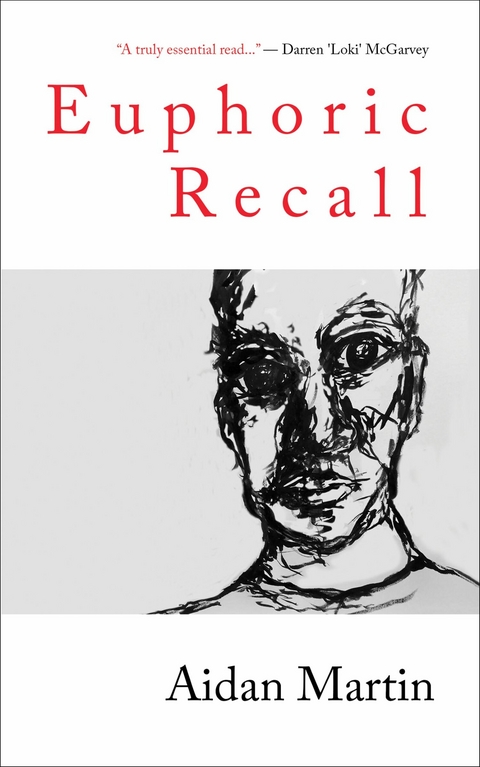
Euphoric Recall (eBook)
190 Seiten
Guts Publishing (Verlag)
978-1-9998823-7-2 (ISBN)
Aidan Martin is a bestselling author, public speaker, and co-founder of the recovery organisation, The Scheme Livi, in Livingston, Scotland. His debut memoir, Euphoric Recall, was widely acclaimed. He received awards from Authors' Foundation and K Blundell Trust towards his first novel, The Lost Boys of Ladywell. He also recently hosted an STV documentary called Let's Talk About Trauma. Aidan lives in Livingston, Scotland.
Chapter Two:
Birth of an Addiction
Long before we had a home computer or the Internet, I discovered hardcore porn. My very first addiction began at the remarkably young age of ten. It continued developing through the stages of my life when I was leaving primary school and beginning high school. Contrary to some addiction stereotypes, parts of my childhood were very happy, however, there were many things I struggled with in my early teens that fuelled my desire for instant gratification. Once experienced, this became a life-long ambition second to none.
Born in 1986 to a working-class family, I grew up in an area called Ladywell. Much like the surrounding areas, it was made up of social housing schemes where people didn’t have a lot. Some of the kids came from impoverished families that were on welfare or lacked credible role models. Livingston, only two decades old, was in continuous development to manage the overspill from Glasgow and Edinburgh. Everyone in my street knew each other’s names. The schooling system was extremely poor at my local high school with many troubled children from different areas—many of them socially deprived—all sandwiched in together. Fighting to survive was normal for lads like me.
When it came to matters such as attendance, behaviour and educational standards, my school had a very poor reputation. Bullying was so extreme that one of my classmates ended up being interviewed on the national TV show GMTV to discuss how suicidal she felt. The reason the poor girl was bullied? She had big breasts for her age. I recall seeing scores of people regularly chasing her home after school. Looking back, the frightening thing was that it didn’t seem out of place to witness such events at the time.
I lived with my mum and my older brother Shayne, who many would confuse as my twin as we got older. By the time I was a few months old, my biological father was no longer in my life. He had a notorious reputation. Saughton Prison was a regular stopover for him. He was well known for wild partying, violent fights, womanising, and spending his earnings from oil rigs on substances. Working the rigs made him very well built and he often smashed up our home in drunken rages. My older brother still remembers it well. My grandparents, from Mum’s side, lived around the corner and became second parents to my older brother and me. So much so that my brother ended up moving in with them in his early teens.
Working three jobs to provide for her family, my mum, like many other single parents of the time, relied on my grandparents for support. My biological father, who I refer to as Billy, was not involved. Mum and Billy were only in their early twenties. One of my mother’s jobs was working as a barwoman. This is where she met the man who brought me up, technically my stepfather, but the man I grew to call Dad. His family emigrated from Ireland whilst Mum’s family moved from Scotland to Manchester back to Scotland again. My mum’s mother, my granny, was Irish too, so they shared that in common.
Growing up in Livingston—a town that was still developing—reflected my own struggles with my identity. Not knowing my biological father, throughout my childhood people would stop me in the street and say things like, “You’re Billy’s lad aren’t you? …You’re his double!” before going off on a tangent about how outrageous he was. The stories were always told with such affection and nostalgia as if he were some kind of loveable rogue. Honestly, I always thought one day he would turn up wearing a leather jacket with some wild story about an adventure, explaining his absence from my life. That never happened though.
Violence, gang fights, drink and drug use were normal for lads in my street. It was a social norm to hear of people being stabbed, murdered, raped or houses being broken into. We even had a well-known, much-loved alcoholic in the area called ‘Mad Rab’ who all the kids would go and get a chase from. He hung around with other alcoholics outside the pub my parents worked in. Community was an important thing back then though. There was no social media like we have now. People spoke to each other in the street. Whenever you heard the ice cream van or the chippy van, the neighbours in the street would line up having conversations whilst puffing fags, some in their dressing gowns and slippers, ready to purchase their goods.
My favourite memories were playing football with my friends on this little patch of grass in the middle of our street. We played day and night. The hours came and went. We would steal parts of fences from neighbours’ gardens and use them to build football goals or gang huts in the woods. I even developed a fascination with ants and spent hours with my friends looking for hives under rocks or in rotten tree stumps, observing their little colonies at work. We made up loads of other games such as ‘fugitive’ in which one kid would be on the run whilst the rest of the street hunted down the outlaw! Imagination was key. Looking back I can see how much I thrived on fantasy.
I always had one eye on the older kids though. Everyone looked up to them with equal admiration and intimidation. They hung around in large groups wearing an assortment of clothes. This ranged from tracksuit bottoms and hooded tops to jeans with Rockport boots. Sometimes they sported thick gold chains hanging over their tee shirts which went well with the black eyes and ‘nookies’ on their necks. My friends and I often watched them getting smashed on White Lightning and MD2020. Seeing drug deals was just another norm. As were the times we saw them being chased by the police. When those kids were tearing up the streets I felt such a buzz and I wished it was me too. In contrast, I also remember these were the first times I would experience anxiety and fear in the pit of my stomach.
Fighting with other kids started to become another social norm for me. By the time I was ten I was sneaking hammers out of my parents’ shed to protect myself against whichever group of lads I was fighting with. I almost got suspended from primary school for that. It was pure survival where I grew up. Much like my mother, I was gobby and never knew when to back down, especially if my friends were in trouble. There were rarely any fair fights or ‘square go’s’. We fought in groups or if it was one-on-one people would jump in or weapons would be used. It was a no-win situation. If you lost the fight your pride and reputation was shattered. If you won the fight you had to watch your back for someone getting revenge on you and jumping you with their mates.
These experiences highlighted the difference between my relationship with my mum and dad as well. For example, when telling my mum that some lad was giving me grief she would tell me to close my fist and hit them right back. If I needed a cry, she would hug me and tell me she loved me. Her crazy sense of humour reflected that of my grandparents, and I felt accepted. My dad was a provider and showed his love in practical ways such as teaching us not to lie, and to work hard at school. He advocated taking care of your responsibilities in life. However, our relationship lacked affection and often felt stiff or cold. If I told my dad a kid at school was bullying me his response would be to tell a teacher. If I hit another kid back in self-defence, I got punished. I couldn’t relate to that. I felt it wasn’t a realistic expectation in the hostile environment I grew up in.
At the same time, everyone was constantly telling me how funny and wild my biological father Billy was. I don’t mean this to come across too harshly, but I felt my dad never showed much interest in my life and passions. We didn’t tell each other “I love you” very often. On one hand I felt like I couldn’t live up to this myth-like legend of my biological father who quite frankly fucked off and abandoned us. On the other, I never felt a natural chemistry or acceptance with my dad. We were very different people.
Over the years other behaviours contributed to feeling alienated from my dad. Fantasy played a big role in how I functioned as a child. One of my rituals was to run around with a toy figure in my hand, in a world of my mind’s creation. I particularly loved to do this with my collection of wrestling figures or my Teenage Mutant Ninja Turtles figures. At some stage my dad decided I was too old to do this. This meant I had to do it in secret. When caught doing it my dad would punish me, and it made me feel like I was a freak. Catching me in the act on one occasion, he threw my favourite wrestling figure, Virgil, in the bin. I felt devastated and misunderstood.
When my older brother Shayne moved into my grandparents’ house, this created more problems for me. The more time I spent there, the more my dad tried to restrict me. He felt my grandparents had become too involved after my brother moved in, which wasn’t an unreasonable assumption. What he could never understand was how accepted and normal I felt at my gran and grandad’s house. All my dad had achieved by restricting me was adding more secrets to my life.
Cementing my feelings of disaffection for my dad were his authoritarian measures. I believe much of it came from his Catholic upbringing. I always felt that religion focused too heavily on shame and guilt. The birth of my younger brother Declan, when I was seven, magnified things. I witnessed my dad expressing a very real love, pride and affection for his infant son in ways I never felt from him. I certainly don’t believe my dad meant to make me feel that way. But I felt that difference between me and my younger brother. Scunnering me with feelings of jealousy and envy, it only...
| Erscheint lt. Verlag | 1.10.2020 |
|---|---|
| Verlagsort | London |
| Sprache | englisch |
| Themenwelt | Literatur ► Biografien / Erfahrungsberichte |
| Schlagworte | addiction • books about addiction and recovery • books on trauma • child abuse books • drug addiction books true life • Livingston • Mental Health • mental health books for men • Recovery • recovery memoir • Sexual Abuse • sexual addiction • Trauma • West Lothian • Working-class |
| ISBN-10 | 1-9998823-7-7 / 1999882377 |
| ISBN-13 | 978-1-9998823-7-2 / 9781999882372 |
| Informationen gemäß Produktsicherheitsverordnung (GPSR) | |
| Haben Sie eine Frage zum Produkt? |
 EPUB (Wasserzeichen)
DRM: Digitales Wasserzeichen
Dieses eBook enthält ein digitales Wasserzeichen und ist damit für Sie personalisiert. Bei einer missbräuchlichen Weitergabe des eBooks an Dritte ist eine Rückverfolgung an die Quelle möglich.
Dateiformat: EPUB (Electronic Publication)
EPUB ist ein offener Standard für eBooks und eignet sich besonders zur Darstellung von Belletristik und Sachbüchern. Der Fließtext wird dynamisch an die Display- und Schriftgröße angepasst. Auch für mobile Lesegeräte ist EPUB daher gut geeignet.
Systemvoraussetzungen:
PC/Mac: Mit einem PC oder Mac können Sie dieses eBook lesen. Sie benötigen dafür die kostenlose Software Adobe Digital Editions.
eReader: Dieses eBook kann mit (fast) allen eBook-Readern gelesen werden. Mit dem amazon-Kindle ist es aber nicht kompatibel.
Smartphone/Tablet: Egal ob Apple oder Android, dieses eBook können Sie lesen. Sie benötigen dafür eine kostenlose App.
Geräteliste und zusätzliche Hinweise
Buying eBooks from abroad
For tax law reasons we can sell eBooks just within Germany and Switzerland. Regrettably we cannot fulfill eBook-orders from other countries.
aus dem Bereich