Bittersweet (eBook)
176 Seiten
Bookbaby (Verlag)
978-1-7326172-1-6 (ISBN)
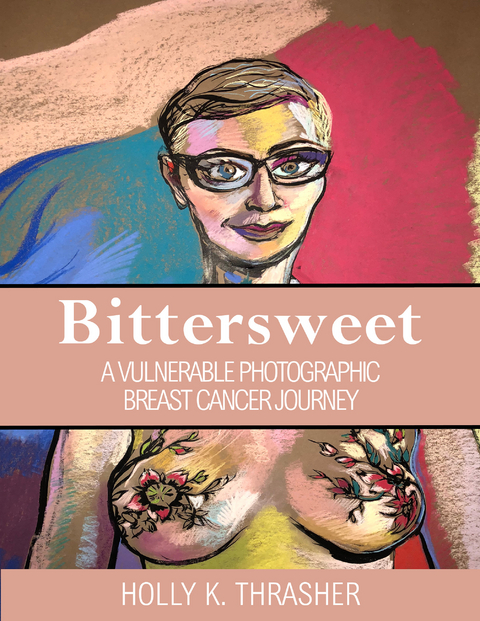
Five days before Holly Thrasher lost both breasts to a double mastectomy, her husband, Wiley, suggested they document the journey with photos. The very vulnerable breast photos show the transformation of her breasts from double mastectomy, through breast reconstruction, and ultimately healing and empowering her as a breast cancer survivor. Bittersweet demystifies and eliminates the fear of losing your breasts and life to cancer with before and after photos and everything in between. Follow Holly's journey as she shares the painful and uplifting process of losing and rebuilding a woman's breasts, written and experienced by a wife, mother, and breast cancer survivor and thriver.
Chapter Two: Breast Cancer Journey Begins, November 2015
My parents, John and Carol, were just teenagers when they met at a Christian Science youth group in the 1950’s. They were both being raised by devoted Christian Science mothers and attended church regularly. They became friends as teenagers but lost touch after high school. A mutual friend re-introduced them, they fell in love, and married in 1961. They continued to practice their religion together as a couple. As I was growing up, I remember them each with their leather-bound copy of Science and Health with Keys to the Scriptures by Mary Baker Eddy. It was the guide book for Christian Scientists. They would read their weekly lesson and use blue chalk pens to highlight the most important passages. They were devoted students developing their intricate web of prayer, positive thinking, and denial.
We were expected to attend Sunday School at the Christian Science Church in Santa Barbara every Sunday with my parents. As we learned lessons in prayer and were gently guided toward the idea that sickness and disease did not exist, those ideas were challenged over the years by regular sleepovers at the Gordin’s house. Dr. David Gordin was an orthopedic surgeon and father of four; Suzy, David, Andrea and Stacy. His wife, Marianne, was a stunning Italian woman with dark hair and eyes, olive skin and a radiant smile. Marianne was a nurse and took care of her family and everyone else’s too. There were always a lot of kids at the house and Marianne served us meals from huge pots of pasta in her gourmet kitchen. My sisters and I each had a Gordin in our grade at school and we all became close friends.
I remember meeting Andrea Gordin for the first time in Kindergarten at Laguna Blanca School, the private day school we all attended. One Saturday morning, I woke up at the Gordin’s after a fun sleepover with a terrible sore throat. I was supposed to stay another night and didn’t want to go home early. I told Dr. Gordin I felt sick and my throat really hurt. He took a look at my throat and opened the medicine cupboard in Marianne’s kitchen. He instructed me to open my mouth and he sprayed a red, cherry flavored concoction into the back of my throat. My throat immediately felt better and I was able to run back out into their yard to play and continued my sleepover. There was no cupboard at my house with any type of medicines. The most we had were band aids and we never had a can of antiseptic spray that all the other moms generously sprayed on open wounds.
We also never had a television growing up, so we created ways to live without it. Stacy and Andrea spent the weekend at our house quite frequently and on that particular weekend, we laced up our roller skates and hit the driveway. Someone got the brilliant idea that we should leash our two hyper Dalmatian dogs, Becky and Falstaff, and let them pull us up and down the street at break neck speed. It all started out innocently enough until Stacy took a fall that put an end to the fun.
Stacy went down hard when the leashes crossed each other and tangled up, her well-worn, 1970’s style roller skates came out from under her and she landed on her side on the hard, black asphalt. Stacy gripped her arm to her chest as tears streamed down her face. Stacy almost never cried, so we knew it must be serious. We helped Stacy into the house and alerted our mom to her injury.
My mom assessed the situation and told Stacy that she was just fine. Stacy put on a brave face, but by evening, she was crying again and wanted to talk to her dad. Stacy phoned her dad and told him what had happened, but my mom had already spoken to the experienced orthopedic surgeon, and planted the seed of doubt in him that anything was wrong with her arm. Stacy was denied an early ride home and basically told to “suck it up.”
As we all prepared for bed that night we felt pretty upset for Stacy. In the middle of the night, we woke up to find her sobbing. My sister Sarah and I woke my parents and told them in no uncertain terms, that Stacy’s arm was broken and she needed to go home. Dr. Gordin arrived early that morning and felt her arm from wrist to shoulder, proclaiming that it was indeed broken. I felt a mix of anger and confusion as to why Stacy was forced to endure a broken arm for more than half a day before her dad reset the bone and put a cast on it. The lessons that I heard at church on Sunday mornings that taught me that a broken arm was not real, began to make no sense to me. A broken arm was real and I had witnessed it. My mom expressed regret over Stacy’s broken arm but never admitted that it was indeed broken.
I began to question everything that I had been taught and I began to form the opinion that Christian Science was wrong to deny medical treatment and replace it with prayer. As I had more and more experiences with actual illnesses of my own and saw others healed with medicines and doctor visits, my religious rebellion continued to grow. Why were other kids getting the attention they deserved when injured? Why were we being trained to ignore our illnesses and pretend our symptoms didn’t exist?
We had loving and involved Christian Science parents, but once I reached my teenage years, I did not identify with the ideas that were being taught. I never thought of myself as a practicing Christian Scientist and once out of the house, I never pursued the religion. Both my sisters, June and Sarah, felt the same as I did about the religion. Although we tried to respect our parents’ beliefs, it was not always easy. There was a voice deep inside me that would not let me practice the religion, an intimate knowing, that it was not right for me and that it would not end well for any of us if we stuck to that belief system. That questioning voice inside me was right, and it cost my parent’s their lives far too early.
My dad’s sudden death in 1999 came as a surprise. We had been conditioned to be positive and never thought about the worst-case scenario. He had ignored his high blood pressure and heart condition for years, and continued to work in the high stress restaurant industry. It was obvious that my dad was at risk but we had been trained to never entertain that idea. His unexpected death took a toll on my mom as they had spent the last forty years together.
Three years after his death, just as the fog of grief started to lift and joy was back in our lives, my sisters and I sat at our mom’s bedside as she took her last death rattled breath. She had died of cancer, most likely breast cancer from the symptoms, but we would never know for sure as my mom had refused all medical intervention. She died in a Christian Science facility in Pasadena and we never asked for an autopsy as we had agreed to honor her beliefs and wishes.
Losing both parents in my early 30’s only three years apart felt like a boulder had rolled down a mountain and rested on my chest. Vance was a happy go lucky eighteenth month old at the time and I had one foot in the world of grief and the other in the land of the living. I was resolved that I would never let that happen to me. I took a proactive approach toward my health and I was not going to practice prayer as my parents had. Old habits are hard to break, especially the ones that you are not even aware of.
In January of 2014, an old friend from high school, Andrea, lost her battle with breast cancer. The very next month, a second, high school friend, Julianne, also lost her life from breast cancer. How could this happen? Both woman, in their 40’s were loving mothers, wives, and friends. They were just like me. They had everything to live for. They both left behind young children and devastated husbands. It felt surreal and totally unfair. Even though we had not seen each other in person for years, we had been following each other’s lives through social media. Their deaths hit me hard. I felt an overwhelming sense of loss, as if the rug had once again been pulled out from under me. I could hear my dad say, “Life isn’t fair,” and in the back of my mind, I knew it wasn’t. I made an appointment for a mammogram that month to honor both of their deaths and to put my mind at ease. If it could happen to them, it could happen to me.
I had always thought of myself as proactive, opposite of what my parents had chosen for themselves. Every month I saw a lymphatic therapist because there was more than one spot on both breasts that was intermittently sore. I was sure that the small lump just to the right and below my left nipple was just a cyst. Every year I had a breast thermography and every year the results came back normal. Nothing to worry about. Out of an abundance of caution, I got a baseline mammogram in 2004 at the age of 35 to compare against any future mammograms.
In 2009, I had a second mammogram which was miserable. The pressure of the mammogram caused a thick yellow fluid to be expelled out of my left nipple. The nurse doing the mammogram questioned if I had ever had any kind of discharge before. I told her that I hadn’t, but she didn’t seem concerned about it. I was told it was most likely a cyst that burst. It was incredibly sore that evening and I spent several days icing what felt like internal bruising. After that experience, I had sworn off any future mammograms, but fear was a very powerful motivator. To honor my friends, I got past that fear and made an appointment for a mammogram. It was February 2014 and my latest mammogram results came back with “suspicious findings” in my left breast. They had compared the new mammogram to my previous two and recommended an ultrasound guided biopsy. I was told not to...
| Erscheint lt. Verlag | 6.10.2018 |
|---|---|
| Sprache | englisch |
| Themenwelt | Literatur ► Biografien / Erfahrungsberichte |
| ISBN-10 | 1-7326172-1-X / 173261721X |
| ISBN-13 | 978-1-7326172-1-6 / 9781732617216 |
| Informationen gemäß Produktsicherheitsverordnung (GPSR) | |
| Haben Sie eine Frage zum Produkt? |
 EPUB (Adobe DRM)
Größe: 21,5 MB
Kopierschutz: Adobe-DRM
Adobe-DRM ist ein Kopierschutz, der das eBook vor Mißbrauch schützen soll. Dabei wird das eBook bereits beim Download auf Ihre persönliche Adobe-ID autorisiert. Lesen können Sie das eBook dann nur auf den Geräten, welche ebenfalls auf Ihre Adobe-ID registriert sind.
Details zum Adobe-DRM
Dateiformat: EPUB (Electronic Publication)
EPUB ist ein offener Standard für eBooks und eignet sich besonders zur Darstellung von Belletristik und Sachbüchern. Der Fließtext wird dynamisch an die Display- und Schriftgröße angepasst. Auch für mobile Lesegeräte ist EPUB daher gut geeignet.
Systemvoraussetzungen:
PC/Mac: Mit einem PC oder Mac können Sie dieses eBook lesen. Sie benötigen eine
eReader: Dieses eBook kann mit (fast) allen eBook-Readern gelesen werden. Mit dem amazon-Kindle ist es aber nicht kompatibel.
Smartphone/Tablet: Egal ob Apple oder Android, dieses eBook können Sie lesen. Sie benötigen eine
Geräteliste und zusätzliche Hinweise
Buying eBooks from abroad
For tax law reasons we can sell eBooks just within Germany and Switzerland. Regrettably we cannot fulfill eBook-orders from other countries.
aus dem Bereich