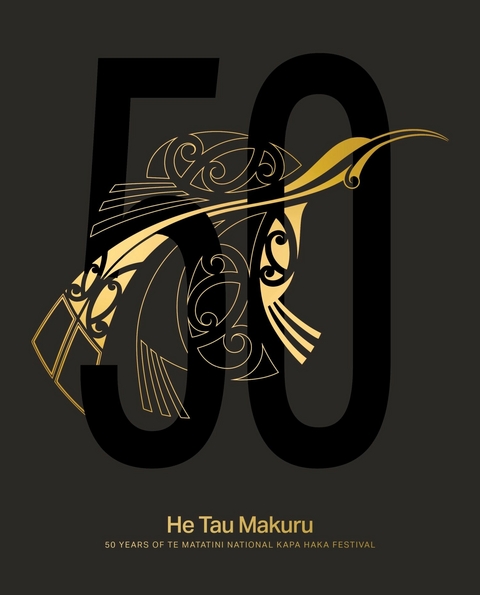
He Tau Makuru (eBook)
360 Seiten
Huia Publishers (Verlag)
978-1-77550-874-8 (ISBN)
The following lists show the taonga that groups competeto win for each discipline.
Trophies for aggregate disciplines
Whakaeke
Te Taonga a Te Whānau o Waipareira Trust
Mōteatea
Te Taonga a Te Kani Te Ua
Waiata ā-Ringa
Te Taonga a Ikaroa
Poi
Te Taonga a Aotea District Māori Council
Haka
Te Taoka Te Ngākau Aroha o Te Waipounamu
Whakawātea
Te Taonga Whakamaumahara ki a Wi Te Tau Huata
Te Kairangi o te Mita o te Reo
Te Taonga o te Mita o te Reo
Trophies for non-aggregate disciplines
In the list that follows, ‘Titonga Hou – Mōteatea’, ‘Titonga Hou – Waiata ā-Ringa’, ‘Titonga Hou – Poi’ and ‘Titonga Hou – Haka’ are non-aggregate disciplines that relate to lyrics and music. ‘Titonga Waiata Hou’ is the category for best original composition overall.
Waiata Tira (optional)
Te Taonga a Te Rōpū Waiata Māori o Aotearoa
Manukura Tāne
Te Taonga a Dr Bruce Gregory
Manukura Wahine
Te Korowai Manukura Wahineme Te Taonga a Atareta Maxwell
Kākahu
Te Taonga Whakamaumahara ki a Wairākau Paia Waipara
Titonga Hou – Mōteatea
Te Taonga Whakamaumaharaki a Mauriora Kingi
Titonga Hou – Waiata ā-Ringa
He Tohu Aroha nā Te Whenua Moemoeā
Titonga Hou – Poi
Te Taonga Whakamaumahara ki a Ngahiraka Busby
Titonga Hou – Haka
Te Taonga Whakamaumahara ki a Anaru Skip Paenga
Titonga Waiata Hou
Te Taonga Whakamaumahara ki a Tā Kīngi Īhaka
Te Kairangi o te Reo ā-Tuhi
Te Taonga a Te Tai Pūkarukaru o Poutini
Te Toa Whakaihuwaka – The Grand Champion
Duncan McIntyre Ngāpō and Pīmia Wehi Trophy
Te Toa Whakaihuwaka
He Tohu Huia Kaimanawa nā Te Matatini mō Ngāpō rāua ko Pīmia Wehi – Ngāpō & Pīmia Wehi Duncan McIntyre Trophy
The group that is named Te Toa Whakaihuwaka receives the Ngāpō Pīmia Wehi Duncan McIntyre Trophy. The original trophy was donated by the Rt Hon. Duncan McIntyre, who was the Minister of Māori Affairs during the first festival in 1972. At that time, there was a resurgence and revival of Māori language traditions, especially among rangatahi. The trophy was donated to promote the pursuit of excellence by rangatahi in te reo Māori and its traditions. In 2019, a new trophy was carved in memory of the late Ngāpō and Pīmia Wehi. The original Duncan McIntyre trophy sits upon the newly carved He Tohu Huia Kaimanawa nā Te Matatini mō Ngāpō rāua ko Pīmia Wehi.
Whakaeke
Te Taonga a Te Whānau o Waipareira Trust
This trophy was donated by Te Whānau o Waipareira Trust, and modelled on the Trust’s logo, designed by Mei Collins. The design is based on the Trust’s motto, ‘Kōkiri i roto i te kotahitanga’ – ‘Progressively act in unity’, which was created by several kaumātua. The design reflects the unrelenting power and force of the tides, the three baskets of knowledge, productivity and a new lease of life. It was first presented at the 1994 festival in Hāwera.
Mōteatea
Te Taonga a Te Kani Te Ua
This trophy was donated by Te Aitanga-a-Māhaki in 1972. Carved by Moni Taumaunu (Ngāti Porou) and Bill Mau (Ngāpuhi), it was made from an 8-foot strainer post found on the slopes of Mangatū. Its base is made out of a piece of timber from Hato Paora College near Feilding. In the design, two hands hold the sides of a receptacle representing Tāne fashioning Hineahuone from Papatūānuku.
Waiata ā-Ringa
Te Taonga a Ikaroa
This trophy was donated by Ngāti Pōneke Young Māori Club through the Minister of Māori Affairs, Rt Hon Duncan McIntyre, in 1972. At the time, Ngāti Pōneke Young Māori Club were at the forefront of Māori performing arts especially in this category. The group had won the Wellington and Ikaroa district competitions and performed at festivals in Tauranga, Ngāruawāhia and the Hui Aranga. Ngāti Pōneke Young Māori Club has the distinction of being the trophy’s first winner.
Poi
Te Taonga a Aotea District Māori Council
When the 1972 Polynesian Festival Competition was first mooted, the national committee acknowledged that Taranaki were the premier exponents of the poi in its traditional forms – poi harakeke, poi raupō and poi atua, etc. These and other forms of poi were performed at tangi. It was further noted that Tohu Kākahi, the Parihaka chief, adopted the poi as his symbol of peace and goodwill, at the same time that Te Whiti o Rongomai adopted the white feather as his symbol. Aotea was given the opportunity to donate a trophy in 1972. The trophy was donated by the Aotea District Māori Council on behalf of the Aotea district.
Haka
Te Taoka Te Ngākau Aroha o Te Waipounamu
This trophy was presented to the then Polynesian National Committee by Timua Crofts on behalf of the Waitaha Cultural Council in 1972. It was designed in the form of Mt Aoraki and represents two main themes – ‘Te reo o Aoraki’ and ‘Te ngākau aroha’. Both these elements have significance for Ngāi Tahu. At the time of donation, Ngāi Tahu dialect and reo among its own members were not regarded as strong and vibrant, compared to those of other tribal groups. Te reo o Aoraki, in the form of the tupuna maunga, Aoraki, was seen as the pinnacle to which Ngāi Tahu should aspire. ‘Te ngākau aroha’, on the other hand, represents Ngāi Tahu maintaining and retaining their Māori heart and the values of aroha and manaakitanga. The saying ‘te ngākau aroha’ was devised by Te Aritaua Pitama and adopted as the motto for the then active kapa haka, Te Whetū Ariki o Kahukura.
Whakawātea
Te Taonga Whakamaumahara ki a Wi Te Tau Huata
This trophy was presented by the whānau of Canon Wi and Ybel Huata in recognition of the couple’s great contribution to composing, tutoring and writing music, and their leadership of numerous kapa haka. It recognises their involvement with He Toa Takitini – a kapa haka which performed at the festival in 1972 – and from which many people went on to form or lead other groups.
Te Kairangi o te Mita o te Reo
Te Taonga o te Mita o te Reo
This trophy was donated by Mobil Oil New Zealand Ltd and represents the company’s commitment to supporting and fostering the arts in general and Māori art and language in particular. In donating the trophy, Mobil Oil sought to recognise those involved in ensuring a new generation of Māori achieve fluency in te reo.
Waiata Tira
Te Taonga a te Rōpū Waiata Māori o Aotearoa
The original trophy was presented by the Tai Tokerau District in 1972. In 1996, a new trophy was presented by the National Māori Choir. The new trophy includes white glass pieces; the kōwhaiwhai depicted in it represent the opera ‘Ka Awatea’ performed by the donor group. The red glass background represents the throat from which the greenstone originated, and the trophy as a whole symbolises the quality sound that comes from trained voices. The musical symbol on the greenstone is the official logo of the National Māori Choir.
Manukura Tāne
Te Taonga a Dr Bruce Gregory
This trophy was presented by Dr Bruce Gregory as a gift from the heart in 1972 and was intended for Māori who devote an enormous amount of time to kapa haka. Dr Gregory was later MP for Northern Māori (1980–1993). The trophy is his contribution to traditional Māori performing arts and the pursuit of excellence.
Manukura Wahine
Te Korowai Manukura Wahine& Te Taonga a Atareta Maxwell
The original kahu was woven by Wahineiti Huriwai and donated by Tamatea Arikinui in 1979. Sadly, it was lost in a fire when Ruatoki Valley School burnt down in 2009. In 2011, a new korowai was presented at Te Matatini o te Rā – the Tairāwhiti festival. Made by Teresa Murray at Te Puia, Rotorua, and kindly sponsored by Te Waka Toi, the korowai features a poutama pattern and is constructed from muka and pūkeko feathers.
The trophy is a pounamu depicting a koru, a symbol of new life and new beginnings. The young fern enjoys the protection of the stronger, mature fern until it is eventually able to stand alone. Atareta Maxwell gave her life in support of others. This pounamu pictures her hand, stretched out in a gesture of love and assistance to those many people she shared her wealth of knowledge with over the years. The little koru snuggled safely in the palm of the hand represents the ones she has nurtured and helped grow into fine performers and capable adults.
Kākahu
Te Taonga Whakamaumaharaki a Wairākau Paia Waipara
The original trophy for kākahu was donated by the Waipara whānau of Rongowhakaata. It was presented at the 1996 Rotorua Festival in honour of the late Wairākau Waipara QSM, who excelled in designing costumes, kete, kākahu, piupiu and whāriki. The Waipara whānau replaced the taonga for its presentation at Te Matatini – Te Kahu o Te Amorangi 2017, with a manaia based on the Rongowhakaata form.
Titonga Hou – Waiata ā-Ringa
He Tohu Aroha nā Te Whenua Moemoeā
This trophy was donated by Te Whenua Moemoeā, an Australian-based region of Te Matatini. The trophy acknowledges the role Te Matatini plays in encouraging the large populous of Māori domiciled in Australia to hold-fast to te...
| Erscheint lt. Verlag | 7.6.2024 |
|---|---|
| Verlagsort | London |
| Sprache | englisch |
| Themenwelt | Kunst / Musik / Theater |
| Schlagworte | Festival • Haka • Kapa Haka • Māori • Māori Culture • Māori Language • mōteatea • Performance • performing arts • Poi • Te Matatini • waiata |
| ISBN-10 | 1-77550-874-9 / 1775508749 |
| ISBN-13 | 978-1-77550-874-8 / 9781775508748 |
| Informationen gemäß Produktsicherheitsverordnung (GPSR) | |
| Haben Sie eine Frage zum Produkt? |
 EPUB (Wasserzeichen)
DRM: Digitales Wasserzeichen
Dieses eBook enthält ein digitales Wasserzeichen und ist damit für Sie personalisiert. Bei einer missbräuchlichen Weitergabe des eBooks an Dritte ist eine Rückverfolgung an die Quelle möglich.
Dateiformat: EPUB (Electronic Publication)
EPUB ist ein offener Standard für eBooks und eignet sich besonders zur Darstellung von Belletristik und Sachbüchern. Der Fließtext wird dynamisch an die Display- und Schriftgröße angepasst. Auch für mobile Lesegeräte ist EPUB daher gut geeignet.
Systemvoraussetzungen:
PC/Mac: Mit einem PC oder Mac können Sie dieses eBook lesen. Sie benötigen dafür die kostenlose Software Adobe Digital Editions.
eReader: Dieses eBook kann mit (fast) allen eBook-Readern gelesen werden. Mit dem amazon-Kindle ist es aber nicht kompatibel.
Smartphone/Tablet: Egal ob Apple oder Android, dieses eBook können Sie lesen. Sie benötigen dafür eine kostenlose App.
Geräteliste und zusätzliche Hinweise
Buying eBooks from abroad
For tax law reasons we can sell eBooks just within Germany and Switzerland. Regrettably we cannot fulfill eBook-orders from other countries.
aus dem Bereich