


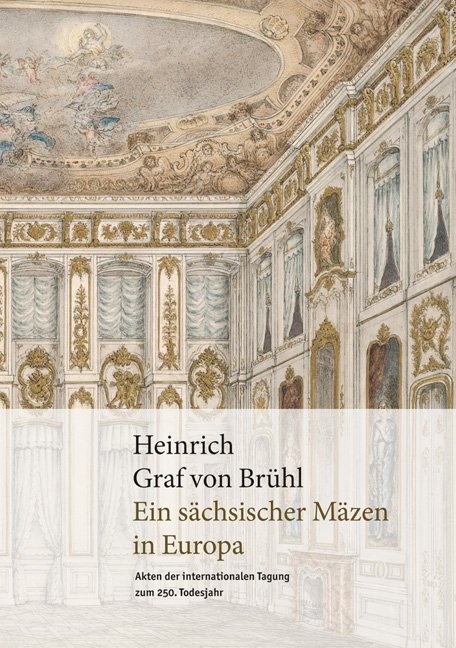
Heinrich Graf von Brühl
Ein sächsischer Mäzen in Europa – Akten der internationalen Tagung zum 250. Todesjahr
Seiten
2017
Sandstein Kommunikation (Verlag)
978-3-95498-297-4 (ISBN)
Sandstein Kommunikation (Verlag)
978-3-95498-297-4 (ISBN)

- Titel ist leider vergriffen;
keine Neuauflage - Artikel merken
Heinrich Graf von Brühl / Heinrich Count von Brühl
Brühl's Terrace, the Swan Service and the Sistine Madonna are all closely connected with the Saxon Prime Minister Heinrich Count von Brühl (1700—1763). He was a patron of the arts whose precious collections and castles set standards in the whole of Europe. The present publication moves away from the somewhat narrow focus on Brühl’s regional importance for Dresden and Saxony. It reveals unexpected connections and opens the door for the study of the cultural and political importance of 18th-century Saxony in Europe and the rest of the world. Eine Leseprobe finden Sie unter "http://verlag.sandstein.de/reader/98-297_GrafBruehl"
Die Brühlsche Terrasse, das Schwanenservice oder auch die Sixtinische Madonna – sie alle sind auf das Engste mit dem sächsischen Premierminister Heinrich Graf von Brühl (1700–1763) verbunden. Als Mäzen setzte er zudem – mit eigenen kostbaren Sammlungen und Schlössern – Maßstäbe in ganz Europa. Die vorliegende Publikation bricht die Verengung des Blicks auf Brühls regionale Bedeutung für Dresden und Sachsen auf und legt erstaunliche Verbindungen frei. Sie versteht sich als »Türöffner« für die Erforschung der kulturellen und politischen Bedeutung Sachsens im 18. Jahrhundert in Europa und der Welt.
Brühl’s Terrace, the Swan Service and the Sistine Madonna are all closely connected with the Saxon Prime Minister Heinrich Count von Brühl (1700–1763). He was a patron of the arts whose precious collections and castles set standards in the whole of Europe. The present publication moves away from the somewhat narrow focus on Brühl’s regional importance for Dresden and Saxony. It reveals unexpected connections and opens the door for the study of the cultural and political importance of 18th-century Saxony in Europe and the rest of the world.
Brühl's Terrace, the Swan Service and the Sistine Madonna are all closely connected with the Saxon Prime Minister Heinrich Count von Brühl (1700—1763). He was a patron of the arts whose precious collections and castles set standards in the whole of Europe. The present publication moves away from the somewhat narrow focus on Brühl’s regional importance for Dresden and Saxony. It reveals unexpected connections and opens the door for the study of the cultural and political importance of 18th-century Saxony in Europe and the rest of the world. Eine Leseprobe finden Sie unter "http://verlag.sandstein.de/reader/98-297_GrafBruehl"
Die Brühlsche Terrasse, das Schwanenservice oder auch die Sixtinische Madonna – sie alle sind auf das Engste mit dem sächsischen Premierminister Heinrich Graf von Brühl (1700–1763) verbunden. Als Mäzen setzte er zudem – mit eigenen kostbaren Sammlungen und Schlössern – Maßstäbe in ganz Europa. Die vorliegende Publikation bricht die Verengung des Blicks auf Brühls regionale Bedeutung für Dresden und Sachsen auf und legt erstaunliche Verbindungen frei. Sie versteht sich als »Türöffner« für die Erforschung der kulturellen und politischen Bedeutung Sachsens im 18. Jahrhundert in Europa und der Welt.
Brühl’s Terrace, the Swan Service and the Sistine Madonna are all closely connected with the Saxon Prime Minister Heinrich Count von Brühl (1700–1763). He was a patron of the arts whose precious collections and castles set standards in the whole of Europe. The present publication moves away from the somewhat narrow focus on Brühl’s regional importance for Dresden and Saxony. It reveals unexpected connections and opens the door for the study of the cultural and political importance of 18th-century Saxony in Europe and the rest of the world.
| Erscheinungsdatum | 22.03.2017 |
|---|---|
| Zusatzinfo | 227 Abb., farbig und sw |
| Sprache | englisch; französisch; deutsch; italienisch |
| Maße | 165 x 235 mm |
| Gewicht | 1620 g |
| Themenwelt | Kunst / Musik / Theater ► Kunstgeschichte / Kunststile |
| Geschichte ► Teilgebiete der Geschichte ► Kulturgeschichte | |
| Schlagworte | 18. Jahrhundert (1700 bis 1799 n. Chr.) • August der Starke • Brühl, Heinrich Graf • Brühlsche Terrasse • Europa, Geschichte; Geistes-/Kultur-Geschichte • Europa, Kunst • Heinrich Graf von Brühl • Kunstgeschichte • Mäzenatentum • Schwanenservice • Sixtinische Madonna • Sozial- und Kulturgeschichte |
| ISBN-10 | 3-95498-297-8 / 3954982978 |
| ISBN-13 | 978-3-95498-297-4 / 9783954982974 |
| Zustand | Neuware |
| Informationen gemäß Produktsicherheitsverordnung (GPSR) | |
| Haben Sie eine Frage zum Produkt? |
Mehr entdecken
aus dem Bereich



aus dem Bereich
Die Revolution des Gemeinen Mannes
Buch | Softcover (2024)
C.H.Beck (Verlag)
CHF 16,80
vom Mittelalter bis zur Gegenwart
Buch | Softcover (2024)
C.H.Beck (Verlag)
CHF 16,80
Eine Geschichte des Geschmacks
Buch | Hardcover (2025)
C.H.Beck (Verlag)
CHF 49,95


