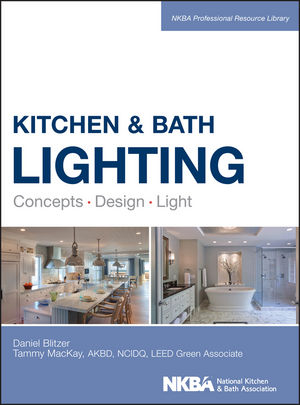
Kitchen and Bath Lighting (eBook)
John Wiley & Sons (Verlag)
978-1-119-12455-9 (ISBN)
Co-published by the National Kitchen and Bath Association (NKBA), Kitchen and Bath Lighting is the go-to resource for designing, planning, and installing light in residential kitchen and bath projects. Full color illustrations throughout the book make Kitchen and Bath Lighting a visually absorbing experience. This beautiful volume begins with the basics of light, color, and vision, progressing from there through every stage of the residential lighting design process. With special attention to sustainability and lighting for older eyes, this book contains the information you need to know about the latest trends impacting the lighting industry.
Because the NKBA established the standard kitchen and bath guidelines for both new construction and remodels, Kitchen and Bath Lighting is aligned with the practices that are in high demand. This book is also an excellent choice for anyone hoping to obtain credentials as a Certified Kitchen Designer or Certified Bath Designer.
- Comprehensive coverage of the kitchen and bath lighting process, from the fundamentals of color to design documentation to construction
- Illustrated guidelines for using lighting tools like sources, luminaries, and controls in design development
- Glossary and end-of-chapter exercises for quickly learning and referencing key terminology and lighting techniques
- Companion website offering resources for instructors
This new addition to the NKBA's Professional Resource Library is an essential reference for kitchen and bath designers, lighting designers, and interior designers, as well as contractors, retrofitters, specifiers, and anyone else involved in lighting kitchens and bathrooms. Kitchen and Bath Lighting will give you the visual understanding of lighting that can lead directly to client satisfaction.
Daniel Blitzer is Lighting Certified and is a member and past president of the Designer's Lighting Forum of NY, member of IESNA, and a director of The Nuckolls Fund for Lighting Education.
Tammy MacKay, AKBD, NCIDQ, LEED Green Associate is an Edmonton, Alberta-based registered interior designer and certified kitchen and bath designer, and teaches lighting at the University of Alberta.
The industry standard illustrated guide from the National Kitchen and Bath Association Co-published by the National Kitchen and Bath Association (NKBA), Kitchen and Bath Lighting is the go-to resource for designing, planning, and installing light in residential kitchen and bath projects. Full color illustrations throughout the book make Kitchen and Bath Lighting a visually absorbing experience. This beautiful volume begins with the basics of light, color, and vision, progressing from there through every stage of the residential lighting design process. With special attention to sustainability and lighting for older eyes, this book contains the information you need to know about the latest trends impacting the lighting industry. Because the NKBA established the standard kitchen and bath guidelines for both new construction and remodels, Kitchen and Bath Lighting is aligned with the practices that are in high demand. This book is also an excellent choice for anyone hoping to obtain credentials as a Certified Kitchen Designer or Certified Bath Designer. Comprehensive coverage of the kitchen and bath lighting process, from the fundamentals of color to design documentation to construction Illustrated guidelines for using lighting tools like sources, luminaries, and controls in design development Glossary and end-of-chapter exercises for quickly learning and referencing key terminology and lighting techniques Companion website offering resources for instructors This new addition to the NKBA's Professional Resource Library is an essential reference for kitchen and bath designers, lighting designers, and interior designers, as well as contractors, retrofitters, specifiers, and anyone else involved in lighting kitchens and bathrooms. Kitchen and Bath Lighting will give you the visual understanding of lighting that can lead directly to client satisfaction.
Daniel Blitzer is Lighting Certified and is a member and past president of the Designer's Lighting Forum of NY, member of IESNA, and a director of The Nuckolls Fund for Lighting Education. Tammy MacKay, AKBD, NCIDQ, LEED Green Associate is an Edmonton, Alberta-based registered interior designer and certified kitchen and bath designer, and teaches lighting at the University of Alberta.
Cover 1
Title Page 5
Copyright 6
Sponsors 7
About the National Kitchen & Bath Association
Table of Contents 11
Preface 17
Acknowledgments 19
Chapter 1 How We See 21
Physics of Light 21
Vision 22
Contrast 24
Adaptation 24
Physiology of the Eye 24
Measuring Light 25
Lumen—the Flow of Light 26
Candela—The Intensity of Light 27
Footcandle/Lux—Light Falling on a Surface 27
Brightness—The Perception of Light 27
Measurement versus Perception 27
Summary 28
Review Questions 28
Chapter 2 Seeing Materials 29
Color 29
Color in Light 29
Refraction and Wavelength 30
Color Vision 31
White Light 32
Color in Objects 32
Form and Texture 32
Matte and Gloss 34
Specularity and Reflectivity 34
Summary 35
Review Questions 35
Chapter 3 Seeing the Space and Each Other 37
Appearance of Light 37
Color Temperature 37
Color Appearance and Color Rendering 38
Color Appearance, Mood, and Culture 38
Light and Our Sense of Space 40
Peripheral Lighting 40
Nonuniform and Uniform Lighting 40
Light and Spatial Impression 40
Light and People 41
More than Skin Deep 41
Lighting Faces 41
Summary 42
Review Questions 42
Chapter 4 Seeing the Work 43
Task Visibility 43
Task Contrast 44
Visual Size 45
Time, Speed, and Accuracy 46
Age 47
Luminance 47
Visual Performance 48
Illuminance 48
Footcandles 48
Illuminance Levels 49
Horizontal and Vertical Tasks 49
Challenges to Task Visibility 50
Small Size and Low Contrast 51
Viewer 51
Lighting Quality 51
Summary 53
Review Questions 53
Chapter 5 Seeing as We Age 55
How Vision Changes with Age 55
Lighting Solutions for Aging Eyes 56
Lighting and Safety 59
Special Considerations for Safety and Convenience 60
Summary 61
Review Questions 62
Chapter 6 Speaking about Lighting 63
Lighting Effects, Not Equipment 63
How Should a Space Feel? 64
Brightness and First Impression 65
Emotion and Activity 65
Layering 68
Experiential Layers of Light 68
Focal Light 69
Ambient Light 70
Sparkle 71
Using the Experiential Layers of Light 71
Functional Layers of Light 74
Task Lighting 74
Ambient Lighting 74
Accent Lighting 74
Wall Lighting 74
Decorative Lighting 75
Using the Functional Layers of Light 78
Applying Light 79
Direction 80
Concentration 82
Orientation 83
What, Where, How 83
Summary 85
Review Questions 85
Chapter 7 Sustainable Lighting 87
Definition of Sustainability 87
Environmental Impacts of Lighting 88
Electricity: Generation and Consumption 88
Material Usage 90
Material Content 91
Recycling 92
Sustainability and the Cost of Lighting 94
Material Cost 94
Electricity Cost 95
Labor Cost 95
Disposal Cost 96
Total Cost of Ownership 96
Life Cycle Cost 97
Sustainable Lighting Strategies 97
Motivation 97
Energy Efficiency 97
Long Equipment Life 99
Clean Materials 99
Sustainability and Cost 99
Summary 99
Review Questions 100
Chapter 8 THE Importance of Daylight 101
Daylight and Human Experience 101
From the Outside In 102
View 102
Comfort 103
Health 103
Beauty 104
Light 104
Daylight in Different Forms 105
Sunlight 105
Skylight 105
Overcast Sky 106
Reflected Daylight 106
Characteristics of Daylight 106
Intensity 106
Direction and Texture 107
Color 107
Change 108
Admitting Daylight 108
Orientation 110
Windows 110
Clerestories 111
Skylights 111
Sharing Daylight 114
Shading 116
Integrating Daylight and Electric Lighting 117
Compensating for Insufficient Daylight 118
Overcoming Bright Daylight 122
Combining the Effects 122
Controlling Electric Light 122
Summary 123
Review Questions 123
Chapter 9 Schematic Design 125
Program 125
Scope 125
Clients 125
Activities and Tasks 126
Preferences and Budget 126
Schematic Design 126
Layers of Light 127
The Lighting Concept 128
Lighting for Kitchen Activities 128
Food Preparation 129
Socializing 130
Storage 131
Lighting for Bathroom Activities 133
Grooming 133
Shower 134
Baths and Spas 137
Cleanup 139
First Aid 141
And the Rest 141
Experience 143
Spatial Experience 143
Emotional Experience 144
Aesthetic Experience 145
Architectural Integration 147
Daylight Integration 148
Ceiling Conditions 149
Coves 149
Communicating the Concept 153
Summary 155
Review Questions 155
Chapter 10 Choosing Electric Light Sources 157
Light Sources for Kitchens and Baths 157
A Brief History 157
Attributes of Light Sources 158
Light Output 158
Power 159
Efficacy 160
Light Distribution 160
Color 161
Using Color Rendering 163
Physical Size 163
Life 163
Control 164
Summary 165
Review Questions 165
Chapter 11 Comparing Electric Light Sources 167
Light Sources for Kitchens and Baths 167
Incandescent Sources 168
A Little Background 168
Attributes of Incandescent Light Sources 168
Construction 169
Nomenclature 169
Halogen Technology 173
Regulation of Incandescent Lamps 174
Low?Voltage Lighting 174
Dimming 175
Incandescent Lamp Options 175
Fluorescent Sources 177
Fluorescent Technology 177
Families of Fluorescent Lamps 178
Nomenclature 179
Character of the Light 181
Light Output 181
Life 182
Practical Light 182
Dimming 182
Mercury 183
Fluorescent Lamp Options 183
LED Sources 184
LED Technology 184
LED Product Configuration 185
Character of the Light 185
Light Output 186
Life 188
Dimming 189
LED Options: Rapidly Changing Technology 189
Product Quality 189
Quality of Color 190
Quality of Life 190
Summary 191
Review Questions 191
Chapter 12 Light Fixtures 193
Light Fixture Selection Criteria 193
Existing Electrical 194
Quantity of Light 194
Fixture Lamping 194
Materials and Finishes of the Space 194
Fixture Finishes 196
Style 196
Budget 197
Timeline 198
Ceiling Height 199
Size and Proportion of Fixture 199
Types of Fixtures (Luminaires) 200
Recessed Fixtures 200
Ceiling or Surface Mount 202
Semi?Surface Mount 203
Suspended Fixtures 203
Wall?Mount Fixtures 207
Portable Fixtures 208
Summary 211
Review Questions 211
Chapter 13 Lighting Controls 213
Benefits and Objectives 213
Rapidly Changing Field 214
Controls Concepts 214
The Language of Controls 215
Load 215
Channel or Zone 215
Power and Signal 216
User Interface 217
Controller 217
Switch 217
Dimmer 217
Preset 218
Scene 218
Remote 218
How Dimmers Work 218
Dimming Incandescent Loads 218
Dimming LED Loads 221
Dimming Drivers 221
Dimming Fluorescent Loads 221
Sensors 223
Motion Sensors 223
Photo Sensors 225
Manual Daylight Control 225
Control Systems 226
Systems for Single Rooms 226
Controlling Adjacent Spaces 229
Systems for the Entire House 229
Wireless Control of LED Lamps 231
Applying Controls 231
Summary 232
Review Questions 232
Chapter 14 Design Development 233
Developing the Design 233
Code Compliance 234
Electric Code 234
Energy Codes 236
Locating Luminaires 237
Downlights 237
Lighting from under Cabinets 239
Lighting inside Cabinets 241
Coves 241
Pendants 244
Closet Lighting 244
Bath Lighting 244
Accent Lighting 247
Selecting Luminaires 248
Recessed Downlights 249
Under?Cabinet Task Lighting 251
Decorative Luminaires 252
Fluorescent Luminaires 253
LED Luminaires 254
Accent Luminaires 254
Sizing the Light Source 255
Ambient Illumination from Downlights 255
Ambient Lighting from a Cove 257
Task Lighting from Undercabinet Luminaires 257
Lighting for Grooming at the Vanity 258
Controls 258
Creating Zones 258
Determining Loads 259
Selecting Specific Control Devices 259
Locating the Controls 260
Programming 260
Summary 261
Review Questions 261
Chapter 15 Documenting the Lighting Design 263
Lighting and Controls Plans 263
Details 265
Dimensions 265
Specifications 267
Schedules 269
Symbols 270
Notes 271
Getting Started 271
Summary 272
Review Questions 272
Chapter 16 Getting Lighting Built 273
Lighting in the Construction Process 273
Switching 274
Suspended Fixtures 274
Door Swings 274
Submittals 276
Lighting Supply Channel 277
Clients 277
Designer 277
General Contractors 277
Manufacturers 280
Manufacturer’s Representative 280
Agents 280
Wholesalers 280
Retailer/Vendor 280
Summary 282
Review Questions 282
Glossary 283
Index 285
EULA 291
| Erscheint lt. Verlag | 16.3.2015 |
|---|---|
| Reihe/Serie | NKBA Professional Resource Library |
| NKBA Professional Resource Library | NKBA Professional Resource Library |
| Sprache | englisch |
| Themenwelt | Kunst / Musik / Theater ► Design / Innenarchitektur / Mode |
| Technik ► Architektur | |
| Schlagworte | Architecture • Architektur • basics of light • Certified Bath Designer • Certified Kitchen Designer • Color • Construction • Contractors • Controls • Dan Blitzer • design development • design documentation • full color illustrations • image bank • Innenarchitektur • installing light fixtures • Interior design • Kitchen and Bath Lighting • lighting designers • lighting for older eyes • lighting kitchens and bathrooms • lighting techniques • lighting tools • Luminaries • National Kitchen and Bath Association • NKBA • planners • Professional Resource Library • residential kitchen and bath • residential lighting design • retrofitters • Sources • Specifications • specifiers • sustainability • Tammy Mackay • Vision |
| ISBN-10 | 1-119-12455-7 / 1119124557 |
| ISBN-13 | 978-1-119-12455-9 / 9781119124559 |
| Informationen gemäß Produktsicherheitsverordnung (GPSR) | |
| Haben Sie eine Frage zum Produkt? |
 PDF (Adobe DRM)
Kopierschutz: Adobe-DRM
Adobe-DRM ist ein Kopierschutz, der das eBook vor Mißbrauch schützen soll. Dabei wird das eBook bereits beim Download auf Ihre persönliche Adobe-ID autorisiert. Lesen können Sie das eBook dann nur auf den Geräten, welche ebenfalls auf Ihre Adobe-ID registriert sind.
Details zum Adobe-DRM
Dateiformat: PDF (Portable Document Format)
Mit einem festen Seitenlayout eignet sich die PDF besonders für Fachbücher mit Spalten, Tabellen und Abbildungen. Eine PDF kann auf fast allen Geräten angezeigt werden, ist aber für kleine Displays (Smartphone, eReader) nur eingeschränkt geeignet.
Systemvoraussetzungen:
PC/Mac: Mit einem PC oder Mac können Sie dieses eBook lesen. Sie benötigen eine
eReader: Dieses eBook kann mit (fast) allen eBook-Readern gelesen werden. Mit dem amazon-Kindle ist es aber nicht kompatibel.
Smartphone/Tablet: Egal ob Apple oder Android, dieses eBook können Sie lesen. Sie benötigen eine
Geräteliste und zusätzliche Hinweise
Buying eBooks from abroad
For tax law reasons we can sell eBooks just within Germany and Switzerland. Regrettably we cannot fulfill eBook-orders from other countries.
aus dem Bereich