


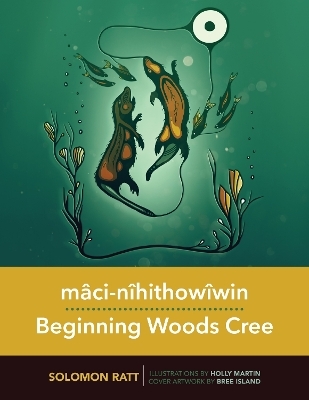
mâci-nîhithowîwin/Beginning Woods Cree
University of Regina Press (Verlag)
978-1-77940-143-4 (ISBN)
- Noch nicht erschienen (ca. September 2026)
- Versandkostenfrei
- Auch auf Rechnung
- Artikel merken
Designed as an introductory workbook, mâci-nîhithowîwin / Beginning Woods Cree complements mâci-nêhiyawêwin / Beginning Cree (Y-dialect) in our Beginning Languages series. The book offers simple and accessible grammar lessons from the animacy of nouns, to pointing words and locative endings of nouns, to the various verb classes that form the foundation of Cree. Each section includes simple sentence structures, clear explanations, engaging exercises, and helpful illustrations.
Using standard roman orthography, the book covers a broad range of concepts including greetings, family, kinship, and more. mâci-nîhithowîwin / Beginning Woods Cree is ideal for both classroom instruction and independent study.
Written by Solomon Ratt, a renowned language expert and educator whose mother tongue is Woods Cree and whose work has been central in the preservation of the Cree language, mâci-nîhithowîwin / Beginning Woods Cree represents decades of advocacy for accessible language and cultural revitalization.
Solomon Ratt is a retired Associate Professor who worked at First Nations University of Canada for many years. He is a member of the Lac La Ronge Indian Band, a survivor of the residential school system, a writer of Cree texts and stories, and a storyteller with many of his storytelling sessions accessible on the Cree Literacy Network (creeliteracy.org).
Chapter One: INTRODUCTION
1. THE CREE
1.1.THE STANDARD ROMAN ORTHOGRAPHY
1.1.a. CONSONANTS
1.1.b.VOWELS
1.1c. SRO: CHANTS
1.1.d. DICTATION
Minimal pairs
1.2. DIALOGUE ONE
1.3. Introductory information about family
1.3.a. DIALOGUE TWO
1.3.b. DIALOGUE THREE
1.4.SUPPLEMENT
1.5. EXERCISES
Chapter Two: NOUNS
2. ANIMACY
2.1. NUMBER
2.1.a. EXERCISES
2.1.b.QUESTIONS AND ANSWERS
2.2. DIMINUTIVES
2.2.a. EXERCISES
2.3. LOCATIVES
2.3.a. EXERCISES
2.4. REVIEW
2.4.a. Nouns
2.4.b. Fill in the blanks
2.4.c. Change the following
Chapter Three: PREPOSITIONS AND PRONOUNS
3. LOCATION WORDS
3.1. PREPOSITIONS
3.2. EXERCISES
3.3. PRONOUNS
3.3.a. DEMONSTRATIVE PRONOUNS
3.3.b. EXERCISES
3.4. INTERROGATIVE PRONOUNS
3.4.a. EXERCISES
3.5. PERSONAL PRONOUNS
3.6. EMPHATIC PRONOUNS
3.7. EXERCISES
3.8. DIALOGUE FOUR
3.9. REVIEW
Chapter Four: ANIMATE INTRANSITIVE VERBS
4. ANIMATE INTRANSITIVE VERBS
4.1. IMPERATIVES
4.1.a. DO
4.1.b. 2–Second person singular
4.1.c. 2P–Second person plural
4.1.d. 21–The Imperative inclusive
4.1.e. The Conjugation Charts for Imperatives
4.1.f. DELAYED IMPERATIVES
4.2. EXERCISES
4.3. INDICATIVE MOOD
4.3.a. Examples of indicative mood
4.3.b. ANIMATE INTRANSITIVE VERB PATTERNS
4.3.c. DO
4.4. THE VAI INDICATIVE AND SUBJUNCTIVE MOOD
4.4.a. INDICATIVE THIRD PERSON SUBJECT
4.4.b. INDICATIVE THIRD PERSON OBVIATIVE SUBJECT
4.4.c. INDICATIVE FIRST PERSON SUBJECT
4.4.d. INDICATIVE SECOND PERSON SUBJECT
4.4.e. GOOFICONS
4.5. EXERCISES
4.5.a. Translate
4.5.b. CONJUGATION OF ANIMATE INTRANSITIVE VERBS
4.5.c. TRANSLATE
4.5.d. EXERCISES
4.5.e. READ THEN ANSWER THE FOLLOWING
4.5.f. ACTIVITIES DURING THE DAY
4.5.g. NOTES
4.5.h. Teamwork
4.6. DO THE FOLLOWING IN PAIRS
4.7. REVIEW VAI
Chapter Five: INANIMATE INTRANSITIVE VERBS
5. INANIMATE INTRANSITIVE VERBS
5.1. WEATHER TERMS
5.1.a. EXERCISES
5.2. FUTURE CONDITIONALS: IIVs
5.2.a. EXERCISES
5.2.b. FUTURE CONDITIONALS
5.3. SEASONS
5.3.a. REVIEW: VITAL STATISTICS I
5.3.b. DO
5.3.c. VITAL STATISTICS II
5.3.d. QUESTIONS AND ANSWERS
5.3.e. EXERCISES
5.3.f. VITAL STATISTICS III
5.3.g. QUESTIONS
5.3.h. DIALOGUE FIVE
5.3.i. EXERCISES
5.4. DAYS OF THE WEEK
5.4.a. EXERCISES
5.5. TEMPORAL UNITS
5.5.a. DIALOGUE SIX
5.5.b. DIALOGUE SEVEN
5.6. TIME PHRASES
5.6.a. REVIEW OF TEMPORAL UNITS
5.6.b. Read the text then answer the Questions
5.6.c. EXERCISES
5.7. REVIEW: INANIMATE INTRANSITIVE VERBS
5.7.a. DAYS OF THE WEEK
5.7.b. WEATHER CONDITIONS
5.7.c. TIMES OF DAY
5.7.d. SEASONS
5.8. EXERCISES WITH VAIs and VIIs
Chapter Six: POSSESSIVES, KINSHIP TERMS
6. THE NATURE OF POSSESSIVES IN CREE
6.1. KINSHIP TERMS
6.2. KINSHIP TERMS: VERBS AND NOUNS
6.3. EXERCISES
6.4. Kinship terms: nouns
6.5.a. CREE KINSHIP: COUSINS and siblings
6.5.b. CREE KINSHIP SYSTEM: seven generations
6.6. VITAL STATISTICS
6.7. VITAL STATISTICS continued
6.8. READ THE TEXT BELOW
6.9. KINSHIP TERMS: NOUNS AND VERBS overview
Chapter Seven: TRANSITIVE INANIMATE VERBS
Transitive Inanimate Verbs
7.1.Connect any of these units
7.2. VTI-1 Future Conditional forms
7.3. Exercises with VTI-1
7.4. DIALOGUE EIGHT
7.5. DIALOGUE NINE
7.6. LIKES AND DISLIKES
7.7. COLOURS AND CLOTHING
7.8. REVIEW– VTI-1
Chapter Eight: TRANSITIVE ANIMATE VERBS
8. TRANSITIVE ANIMATE VERBS
8.1. EXERCISES WITH VTA and VTI IMPERATIVES
8.2. CONJUGATION PATTERNS
8.3. OBVIATION
8.4. Connect any of these units
8.5. REVIEW – VTA
8.6. EXERCISE WITH TRANSITIVE VERBS
8.7. INVERSE FORMS
8.7.a. The ‘you and me’ set
8.7.b. The regular inverse
8.7.c. VTA-FORMS: reflexives, direct forms and inverse forms
8.8. TRANSITIVE VERB PAIRS
8.8.a. FOODS: inanimate
8.8.b. FOODS: animate
8.8.c. ANIMATE INTRANSITIVE VERBS: used with meals, etc
8.9. READ THE TEXT THEN ANSWER THE QUESTIONS
8.10. IDENTIFY THE GRAMMAR POINTS
8.11. Intermeditate level picture text
8.12. REVIEW – VTA
VERB CHARTS
CONJUGATION PATTERNS OF VAI, VTI-1 AND VTA
WORDS from text
BIBLIOGRAPHY
| Erscheint lt. Verlag | 1.9.2026 |
|---|---|
| Reihe/Serie | Indigenous Languages for Beginners |
| Illustrationen | Holly Martin |
| Zusatzinfo | Includes black and white illustrations throughout. |
| Verlagsort | Regina |
| Sprache | englisch |
| Maße | 280 x 216 mm |
| Gewicht | 1135 g |
| Themenwelt | Schulbuch / Wörterbuch ► Wörterbuch / Fremdsprachen |
| Geisteswissenschaften ► Sprach- / Literaturwissenschaft ► Sprachwissenschaft | |
| Sozialwissenschaften ► Ethnologie | |
| Sozialwissenschaften ► Soziologie | |
| ISBN-10 | 1-77940-143-4 / 1779401434 |
| ISBN-13 | 978-1-77940-143-4 / 9781779401434 |
| Zustand | Neuware |
| Informationen gemäß Produktsicherheitsverordnung (GPSR) | |
| Haben Sie eine Frage zum Produkt? |
aus dem Bereich


