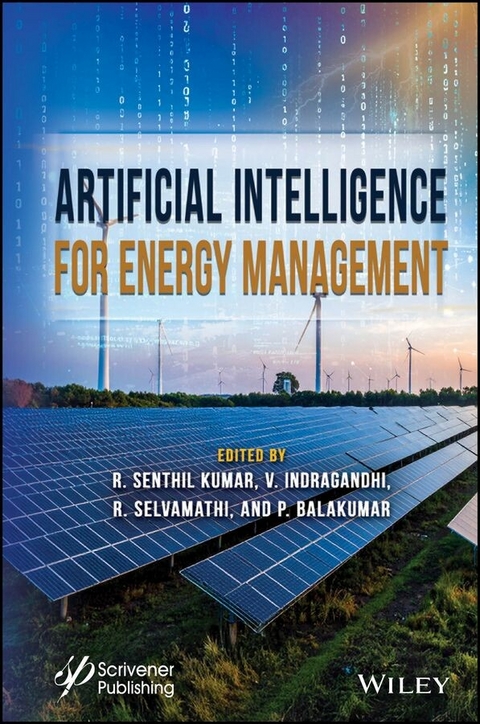
Artificial Intelligence for Energy Management (eBook)
643 Seiten
Wiley-Scrivener (Verlag)
978-1-394-30300-7 (ISBN)

Harness the future of sustainable energy with this essential volume, which provides a comprehensive guide to integrating artificial intelligence for efficient energy storage and management systems.
To achieve a clean and sustainable energy future, renewable energy sources such as solar, hydropower, and wind must develop dependable and effective energy storage technologies. The growing need for intelligent energy storage systems is greater than ever, despite substantial advancements in sophisticated energy storage technology, especially for large-scale energy storage. This book aims to provide the most recent developments in the integration of artificial intelligence for energy storage and management systems by introducing energy systems, power generation, and power needs to reduce expenses associated with generation, power loss, and environmental impacts. It explores state-of-the-art methods and solutions, such as intelligent wind and solar energy systems, founded on current technology, offering a strong foundation to satisfy the requirements of both developed and developing nations. An extensive overview of the many kinds of storage options is included. Additionally, it examines how utilizing diverse storage types can enhance the administration of a power supply system while also considering the more significant opportunities that result from integrating multiple storage devices into a system. Artificial Intelligence for Energy Management is a collection of expert contributions encompassing new techniques, methods, algorithms, practical solutions, and models for renewable energy storage based on artificial intelligence.
R. Senthil Kumar, PhD is an assistant professor in the School of Electrical Engineering at the Vellore Institute of Technology. He has published 48 research articles in various reputed international journals. His research interests include electric vehicle charging stations, battery swapping, fault diagnosis in AC drives, multiport converters, computational intelligence, hybrid microgrids, and advanced step-up converters.
V. Indragandhi, PhD is an associate professor in the School of Electrical Engineering at the Vellore Institute of Technology with more than 12 years of research and teaching experience. She has authored more than 100 research articles in leading peer-reviewed international journals and filed three patents. Her research focuses on power electronics and renewable energy systems.
R. Selvamathi, PhD is an associate professor in the Department of Electrical and Electronics Engineering at AMC Engineering College with more than 18 years of teaching experience. She has published more than 15 research articles in international journals of repute. Her research interests include power electronics and renewable energy systems.
P. Balakumar, PhD is an assistant professor in the School of Electrical Engineering at the Vellore Institute of Technology's Chennai Campus. He has authored articles in leading peer-reviewed international journals with high impact factors. His research interests include dynamic analysis of AC/DC power systems, designing power converters for EV applications, enhancing power quality, and demand side management for smart grid systems using AI approaches.
Harness the future of sustainable energy with this essential volume, which provides a comprehensive guide to integrating artificial intelligence for efficient energy storage and management systems. To achieve a clean and sustainable energy future, renewable energy sources such as solar, hydropower, and wind must develop dependable and effective energy storage technologies. The growing need for intelligent energy storage systems is greater than ever, despite substantial advancements in sophisticated energy storage technology, especially for large-scale energy storage. This book aims to provide the most recent developments in the integration of artificial intelligence for energy storage and management systems by introducing energy systems, power generation, and power needs to reduce expenses associated with generation, power loss, and environmental impacts. It explores state-of-the-art methods and solutions, such as intelligent wind and solar energy systems, founded on current technology, offering a strong foundation to satisfy the requirements of both developed and developing nations. An extensive overview of the many kinds of storage options is included. Additionally, it examines how utilizing diverse storage types can enhance the administration of a power supply system while also considering the more significant opportunities that result from integrating multiple storage devices into a system. Artificial Intelligence for Energy Management is a collection of expert contributions encompassing new techniques, methods, algorithms, practical solutions, and models for renewable energy storage based on artificial intelligence.
1
Introduction to Next-Generation Energy Management and Need for AI Solutions
D. Gunapriya1*, P. Vinoth Kumar2, G. Banu3, S. Revathy4, S. Giriprasad5 and N. Pushpalatha1
1Department of Electrical and Electronics Engineering, Sri Eshwar College of Engineering, Coimbatore, India
2Department of Electrical and Electronics Engineering, Sri Krishna College of Engineering and Technology, Coimbatore, India
3Department of Electrical and Electronics Engineering, V.S.B College of Engineering Technical Campus, Coimbatore, India
4Department of Computer Science and Engineering, St. Joseph’s Institute of Technology, OMR, Chennai, India
5Department of Electronics and Communication Engineering, SRM Institute of Science and Technology, Kattankulathur, India
Abstract
The potential of Artificial Intelligence (AI) to completely change energy processes in production, distribution, and consumption has sparked a lot of interest in energy management. This study highlights a significant shift in the power sector by examining the impact of AI on energy management. This study promotes a more sustainable future while elucidating AI’s influence on energy management. This study evaluates how AI and machine learning affect the energy industry. Using AI, energy management systems can maximize energy use, minimize waste, and improve efficiency. This research sheds light on the challenges and opportunities in AI-powered energy management through a comprehensive analysis of the most current developments and trends. The potential advantages of AI in maximizing energy efficiency, cutting expenses, and improving sustainability are examined in this chapter. It provides insightful information to help regulators and industry experts remain ahead of the curve.
Keywords: Energy management, smart grid, demand fore casting, artificial intelligence, Internet of Things, renewable energy sources, predictive analytics, energy optimization
1.1 Introduction
Conventional energy management methods are changing dramatically in an era characterized by rising energy demands, quick technical breakthroughs, and urgent environmental issues. The emergence of next-generation energy management represents a pivotal shift towards more efficient, sustainable, and intelligent methods of energy utilization. Next-generation energy management can be understood as a holistic and innovative approach to overseeing the production, distribution, and consumption of energy resources. Unlike conventional methods that primarily focus on optimizing energy usage within predefined parameters, next-generation energy management leverages cutting-edge technologies and data-driven insights to achieve unprecedented levels of efficiency, reliability, and environmental sustainability [1, 2]. Traditional energy management practices have historically relied on static and rule-based systems, often characterized by manual intervention and limited adaptability. These approaches typically involve periodic monitoring; reactive responses to fluctuations in energy demand, and centralized control mechanisms that struggle to accommodate the complexities of modern energy systems. Recognizing the inherent limitations of conventional methodologies, there is a growing consensus within the energy sector regarding the imperative need to integrate AI solutions. By harnessing the power of AI algorithms, machine learning techniques, and predictive analytics, organizations can unlock unprecedented opportunities for optimizing energy management processes in real-time.
AI-driven energy management promises to revolutionize the way to generate, distribute, and consume energy by enabling:
- Proactive decision-making based on predictive insights
- Dynamic optimization of energy usage across diverse applications and environments
- Autonomous operation of smart grids and decentralized energy systems
- Efficient and streamlined integration of renewable energy sources and energy storage systems.
1.1.1 Challenges in Traditional Energy Management
- Limited Scalability and Adaptability: Traditional energy management systems often struggle to scale effectively to meet the evolving needs of modern energy infrastructure. These systems are typically designed with fixed parameters and lack the flexibility to accommodate changes in energy demand patterns, emerging technologies, or regulatory requirements. As a result, organizations face challenges in optimizing energy usage across diverse applications and environments, leading to inefficiencies and missed opportunities for cost savings and sustainability.
- Reliance on Manual Processes and Human Decision-Making: Another significant challenge in traditional energy management is the heavy reliance on manual processes and human decision-making. From routine maintenance tasks to strategic planning initiatives, many aspects of energy management still depend on manual intervention, which can be time-consuming, error-prone, and inefficient. Human operators may struggle to analyze vast amounts of data effectively or respond promptly to sudden changes in energy demand or supply, leading to suboptimal performance and increased operational risks.
- Difficulty in Handling Complex Energy Systems and Data: Modern energy systems are becoming increasingly complex, with diverse sources of generation, transmission, and consumption interconnected through intricate networks. Traditional energy management methods struggle to extract relevant insights or uncover optimization opportunities from these systems’ massive, diverse, and fast data. Moreover, the heterogeneous nature of energy data, which may include structured and unstructured data from various sources, further complicates the analysis process and hampers decision-making efforts.
1.1.2 Emergence of Next-Generation Energy Management
The landscape of energy management is undergoing a significant revolution, marked by the introduction of next-generation techniques that harness digitalization, automation, and sophisticated technologies to optimize energy utilization and sustainability. The adoption of these approaches is highlighting this shift.
- Shift Towards Digitalization and Automation in the Energy Sector: The fundamental movement towards digitalization and automation throughout the entire energy value chain is one of the defining characteristics of the next generation of energy management. To monitor, control, and optimize energy assets and operations in real-time, this transition entails the integration of digital technologies such as sensors, communication networks, and cloud computing [3, 4]. Organizations can attain better visibility, efficiency, and control over their energy infrastructure by digitizing energy systems and processes. This paves the way for energy management techniques that are more responsive, adaptive, and intelligent.
- Use of Renewable Energy Sources (RES), Smart Grids, and IoT Devices: The energy management system of the next generation will include several critical components, including smart grids, gadgets connected to the Internet of Things (IoT), and environmentally friendly energy sources. Using smart grids, energy providers, consumers, and grid operators can communicate with one another, exert control over one another, and transmit and receive energy. As a result of this, the capabilities of dynamic load balancing, demand response, and the integration of distributed energy resources are all realistic options. Internet of Things (IoT) wireless devices, such as smart meters and sensors, offer information in real-time about the amount of energy spent, the efficiency of the equipment, and the weather. Using this information, you will be able to plan for enhancements as well as preventative maintenance. Many types of renewable energy sources are employed, such as hydroelectric, solar, and wind power. This not only lessens the amount of carbon emissions but also makes energy more resilient and long-lasting, radically altering the landscape of the energy production industry.
- Significance of Real-Time Monitoring and Predictive Analytics: The need for real-time monitoring and predictive analytics for proactive decision-making and optimization is brought to light by the next-generation energy management system. Analyzing large real-time energy data, identifying patterns, detecting anomalies, and forecasting future energy demand and supply dynamics are all possible through sophisticated analytics techniques, such as machine learning and predictive modeling. This predictive ability allows energy managers to foresee possible problems, optimize energy use, and reduce operational risks, improving system dependability, efficiency, and cost-effectiveness.
1.2 Application of AI in Energy Management Revolution
The conventional approaches to energy management are insufficient to keep up with the continually rising demand for energy. Consequently, there is an increasing demand for energy management systems that are more effective and efficient. AI has the potential to assist businesses and energy organizations in optimizing their energy consumption, cutting expenses, and enhancing sustainability through the application of machine learning and data analytics. Since supply and demand forecasting are useful in many other smart grid choices, AI approaches can be utilized to simulate load and demand forecasting. Figure 1.1 shows the need for AI in energy management. Three major trends influencing AI’s ability to expedite...
| Erscheint lt. Verlag | 30.10.2025 |
|---|---|
| Sprache | englisch |
| Themenwelt | Geisteswissenschaften ► Geschichte |
| Informatik ► Theorie / Studium ► Künstliche Intelligenz / Robotik | |
| Technik ► Elektrotechnik / Energietechnik | |
| Schlagworte | Artificial Intelligence (AI) • artificial intelligent techniques • Deep learning • energy control • Energy Transition • fuel cell • Fuzzy-Neural Network Control • Green Electric Vehicles • Large-Scale Integration • machine learning • Management Control • Photovoltaic System • Reliability • renewable energy • Wind Energy |
| ISBN-10 | 1-394-30300-9 / 1394303009 |
| ISBN-13 | 978-1-394-30300-7 / 9781394303007 |
| Informationen gemäß Produktsicherheitsverordnung (GPSR) | |
| Haben Sie eine Frage zum Produkt? |
 EPUB (Adobe DRM)
Kopierschutz: Adobe-DRM
Adobe-DRM ist ein Kopierschutz, der das eBook vor Mißbrauch schützen soll. Dabei wird das eBook bereits beim Download auf Ihre persönliche Adobe-ID autorisiert. Lesen können Sie das eBook dann nur auf den Geräten, welche ebenfalls auf Ihre Adobe-ID registriert sind.
Details zum Adobe-DRM
Dateiformat: EPUB (Electronic Publication)
EPUB ist ein offener Standard für eBooks und eignet sich besonders zur Darstellung von Belletristik und Sachbüchern. Der Fließtext wird dynamisch an die Display- und Schriftgröße angepasst. Auch für mobile Lesegeräte ist EPUB daher gut geeignet.
Systemvoraussetzungen:
PC/Mac: Mit einem PC oder Mac können Sie dieses eBook lesen. Sie benötigen eine
eReader: Dieses eBook kann mit (fast) allen eBook-Readern gelesen werden. Mit dem amazon-Kindle ist es aber nicht kompatibel.
Smartphone/Tablet: Egal ob Apple oder Android, dieses eBook können Sie lesen. Sie benötigen eine
Geräteliste und zusätzliche Hinweise
Buying eBooks from abroad
For tax law reasons we can sell eBooks just within Germany and Switzerland. Regrettably we cannot fulfill eBook-orders from other countries.
aus dem Bereich