Artificial Intelligence for Energy Management (eBook)
448 Seiten
Wiley-Scrivener (Verlag)
978-1-394-30301-4 (ISBN)
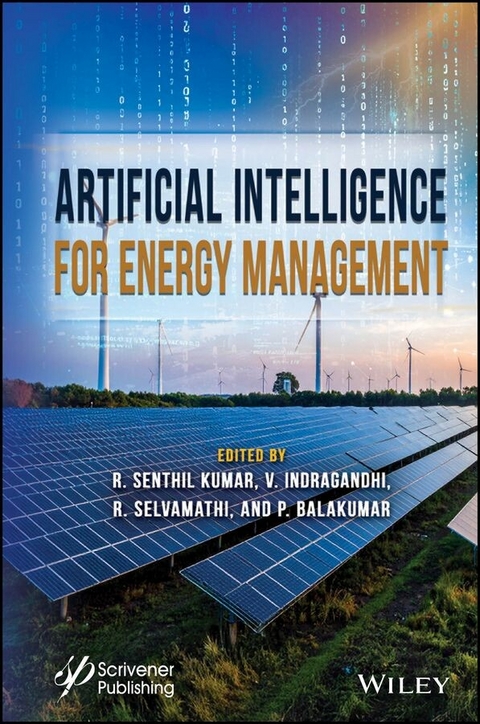
Harness the future of sustainable energy with this essential volume, which provides a comprehensive guide to integrating artificial intelligence for efficient energy storage and management systems.
To achieve a clean and sustainable energy future, renewable energy sources such as solar, hydropower, and wind must develop dependable and effective energy storage technologies. The growing need for intelligent energy storage systems is greater than ever, despite substantial advancements in sophisticated energy storage technology, especially for large-scale energy storage. This book aims to provide the most recent developments in the integration of artificial intelligence for energy storage and management systems by introducing energy systems, power generation, and power needs to reduce expenses associated with generation, power loss, and environmental impacts. It explores state-of-the-art methods and solutions, such as intelligent wind and solar energy systems, founded on current technology, offering a strong foundation to satisfy the requirements of both developed and developing nations. An extensive overview of the many kinds of storage options is included. Additionally, it examines how utilizing diverse storage types can enhance the administration of a power supply system while also considering the more significant opportunities that result from integrating multiple storage devices into a system. Artificial Intelligence for Energy Management is a collection of expert contributions encompassing new techniques, methods, algorithms, practical solutions, and models for renewable energy storage based on artificial intelligence.
R. Senthil Kumar, PhD is an assistant professor in the School of Electrical Engineering at the Vellore Institute of Technology. He has published 48 research articles in various reputed international journals. His research interests include electric vehicle charging stations, battery swapping, fault diagnosis in AC drives, multiport converters, computational intelligence, hybrid microgrids, and advanced step-up converters.
V. Indragandhi, PhD is an associate professor in the School of Electrical Engineering at the Vellore Institute of Technology with more than 12 years of research and teaching experience. She has authored more than 100 research articles in leading peer-reviewed international journals and filed three patents. Her research focuses on power electronics and renewable energy systems.
R. Selvamathi, PhD is an associate professor in the Department of Electrical and Electronics Engineering at AMC Engineering College with more than 18 years of teaching experience. She has published more than 15 research articles in international journals of repute. Her research interests include power electronics and renewable energy systems.
P. Balakumar, PhD is an assistant professor in the School of Electrical Engineering at the Vellore Institute of Technology's Chennai Campus. He has authored articles in leading peer-reviewed international journals with high impact factors. His research interests include dynamic analysis of AC/DC power systems, designing power converters for EV applications, enhancing power quality, and demand side management for smart grid systems using AI approaches.
Harness the future of sustainable energy with this essential volume, which provides a comprehensive guide to integrating artificial intelligence for efficient energy storage and management systems. To achieve a clean and sustainable energy future, renewable energy sources such as solar, hydropower, and wind must develop dependable and effective energy storage technologies. The growing need for intelligent energy storage systems is greater than ever, despite substantial advancements in sophisticated energy storage technology, especially for large-scale energy storage. This book aims to provide the most recent developments in the integration of artificial intelligence for energy storage and management systems by introducing energy systems, power generation, and power needs to reduce expenses associated with generation, power loss, and environmental impacts. It explores state-of-the-art methods and solutions, such as intelligent wind and solar energy systems, founded on current technology, offering a strong foundation to satisfy the requirements of both developed and developing nations. An extensive overview of the many kinds of storage options is included. Additionally, it examines how utilizing diverse storage types can enhance the administration of a power supply system while also considering the more significant opportunities that result from integrating multiple storage devices into a system. Artificial Intelligence for Energy Management is a collection of expert contributions encompassing new techniques, methods, algorithms, practical solutions, and models for renewable energy storage based on artificial intelligence.
| Erscheint lt. Verlag | 18.10.2025 |
|---|---|
| Sprache | englisch |
| Themenwelt | Geisteswissenschaften ► Geschichte |
| Informatik ► Theorie / Studium ► Künstliche Intelligenz / Robotik | |
| Technik ► Elektrotechnik / Energietechnik | |
| Schlagworte | Artificial Intelligence (AI) • artificial intelligent techniques • Deep learning • energy control • Energy Transition • fuel cell • Fuzzy-Neural Network Control • Green Electric Vehicles • Large-Scale Integration • machine learning • Management Control • Photovoltaic System • Reliability • renewable energy • Wind Energy |
| ISBN-10 | 1-394-30301-7 / 1394303017 |
| ISBN-13 | 978-1-394-30301-4 / 9781394303014 |
| Informationen gemäß Produktsicherheitsverordnung (GPSR) | |
| Haben Sie eine Frage zum Produkt? |
 PDF (Adobe DRM)
Kopierschutz: Adobe-DRM
Adobe-DRM ist ein Kopierschutz, der das eBook vor Mißbrauch schützen soll. Dabei wird das eBook bereits beim Download auf Ihre persönliche Adobe-ID autorisiert. Lesen können Sie das eBook dann nur auf den Geräten, welche ebenfalls auf Ihre Adobe-ID registriert sind.
Details zum Adobe-DRM
Dateiformat: PDF (Portable Document Format)
Mit einem festen Seitenlayout eignet sich die PDF besonders für Fachbücher mit Spalten, Tabellen und Abbildungen. Eine PDF kann auf fast allen Geräten angezeigt werden, ist aber für kleine Displays (Smartphone, eReader) nur eingeschränkt geeignet.
Systemvoraussetzungen:
PC/Mac: Mit einem PC oder Mac können Sie dieses eBook lesen. Sie benötigen eine
eReader: Dieses eBook kann mit (fast) allen eBook-Readern gelesen werden. Mit dem amazon-Kindle ist es aber nicht kompatibel.
Smartphone/Tablet: Egal ob Apple oder Android, dieses eBook können Sie lesen. Sie benötigen eine
Geräteliste und zusätzliche Hinweise
Buying eBooks from abroad
For tax law reasons we can sell eBooks just within Germany and Switzerland. Regrettably we cannot fulfill eBook-orders from other countries.
aus dem Bereich