


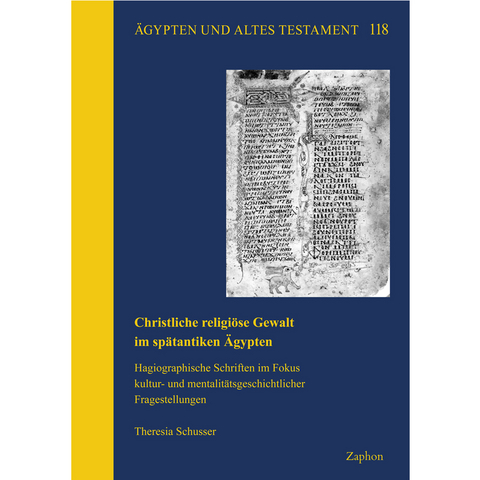
Christliche religiöse Gewalt im spätantiken Ägypten
Hagiographische Schriften im Fokus kultur- und mentalitätsgeschichtlicher Fragestellungen
Seiten
Christlich-religiöse Gewalt ist in der Geisteswissenschaft seit den Thesen Jean-Jacques Rousseaus zur religiösen Intoleranz der christlich-monotheistischen Geisteshaltung und den Aussagen Edward Gibbons zum „intolerant zeal of the Christians“ immer wieder Gegenstand von historischen Forschungen. Theresia Schussers Studie reiht sich ein in die verstärkte Beschäftigung der Altertumswissenschaften mit der Gewaltforschung, insbesondere den Studien und Forschungsprojekte zur religiösen Gewalt in der Spätantike.
Im Rahmen der Untersuchung der durch Christen ausgeübten religiösen Gewalt des 5.–7. Jahrhunderts werden drei koptische hagiographische Schriften im Hinblick auf ihre Darstellung gewalttätiger Konflikte in den Blick genommen und vor dem Hintergrund der „Sozialen Identitätstheorie“ der Sozialpsychologie eingehend erörtert: Im Panegyrikos auf Makarios von Tkōou handelte es sich um eine Kultbeendigung mit Tempelzerstörung und den Tod des Heiligen im Zuge einer binnenkirchlichen Auseinandersetzung. In der Vita des Samuel von Kalamōn wurde der miaphysitische Heilige als zweimaliger Märtyrer, der knapp überlebte, als Opfer christlicher melkitischer Gewalt präsentiert. Die Vita des Moses von Abydos hingegen berichtete von zwei interreligiösen Konfliktsituationen – einer Tempelzerstörung und dem Exorzismus der dämonisierten Gottheit Bes – und verhandelte binnenkirchliche Konflikte nur am Rande. Christian-religious violence has been the subject of historical research in the humanities since Jean-Jacques Rousseau's theses on the religious intolerance of the Christian-monotheistic attitude of mind and Edward Gibbons' statements on the "intolerant zeal of the Christians". Theresia Schusser's study fits in with the increased preoccupation of classical studies with research into violence, in particular the studies and research projects on religious violence in late antiquity.
As part of the investigation of religious violence exercised by Christians of the 5th-7th century, three Coptic hagiographic writings are examined with regard to their depiction of violent conflicts and discussed in detail against the background of the "social identity theory" of social psychology: In the Panegyrikos on Makarios by Tkōou it was about a cult termination with the destruction of the temple and the death of the saint in the course of an internal church dispute. In the Life of Samuel of Kalamōn, the Miaphysite saint was presented as a twice-martyred, who narrowly survived, as a victim of Christian Melkite violence. The life of Moses of Abydos, on the other hand, reported on two inter-religious conflict situations - a temple destruction and the exorcism of the demonized deity Bes - and only marginally dealt with conflicts within the church.
Im Rahmen der Untersuchung der durch Christen ausgeübten religiösen Gewalt des 5.–7. Jahrhunderts werden drei koptische hagiographische Schriften im Hinblick auf ihre Darstellung gewalttätiger Konflikte in den Blick genommen und vor dem Hintergrund der „Sozialen Identitätstheorie“ der Sozialpsychologie eingehend erörtert: Im Panegyrikos auf Makarios von Tkōou handelte es sich um eine Kultbeendigung mit Tempelzerstörung und den Tod des Heiligen im Zuge einer binnenkirchlichen Auseinandersetzung. In der Vita des Samuel von Kalamōn wurde der miaphysitische Heilige als zweimaliger Märtyrer, der knapp überlebte, als Opfer christlicher melkitischer Gewalt präsentiert. Die Vita des Moses von Abydos hingegen berichtete von zwei interreligiösen Konfliktsituationen – einer Tempelzerstörung und dem Exorzismus der dämonisierten Gottheit Bes – und verhandelte binnenkirchliche Konflikte nur am Rande. Christian-religious violence has been the subject of historical research in the humanities since Jean-Jacques Rousseau's theses on the religious intolerance of the Christian-monotheistic attitude of mind and Edward Gibbons' statements on the "intolerant zeal of the Christians". Theresia Schusser's study fits in with the increased preoccupation of classical studies with research into violence, in particular the studies and research projects on religious violence in late antiquity.
As part of the investigation of religious violence exercised by Christians of the 5th-7th century, three Coptic hagiographic writings are examined with regard to their depiction of violent conflicts and discussed in detail against the background of the "social identity theory" of social psychology: In the Panegyrikos on Makarios by Tkōou it was about a cult termination with the destruction of the temple and the death of the saint in the course of an internal church dispute. In the Life of Samuel of Kalamōn, the Miaphysite saint was presented as a twice-martyred, who narrowly survived, as a victim of Christian Melkite violence. The life of Moses of Abydos, on the other hand, reported on two inter-religious conflict situations - a temple destruction and the exorcism of the demonized deity Bes - and only marginally dealt with conflicts within the church.
| Erscheinungsdatum | 12.08.2023 |
|---|---|
| Reihe/Serie | Ägypten und Altes Testament ; 118 |
| Verlagsort | Münster |
| Sprache | deutsch |
| Maße | 220 x 310 mm |
| Gewicht | 800 g |
| Themenwelt | Geisteswissenschaften ► Geschichte ► Regional- / Ländergeschichte |
| Geisteswissenschaften ► Religion / Theologie | |
| Schlagworte | Gewalt • Koptisch • Religiöse Gewalt |
| ISBN-10 | 3-96327-234-1 / 3963272341 |
| ISBN-13 | 978-3-96327-234-9 / 9783963272349 |
| Zustand | Neuware |
| Informationen gemäß Produktsicherheitsverordnung (GPSR) | |
| Haben Sie eine Frage zum Produkt? |
Mehr entdecken
aus dem Bereich


aus dem Bereich
die Geschichte meiner Urgroßmutter
Buch | Hardcover (2025)
C.H.Beck (Verlag)
CHF 32,15


