


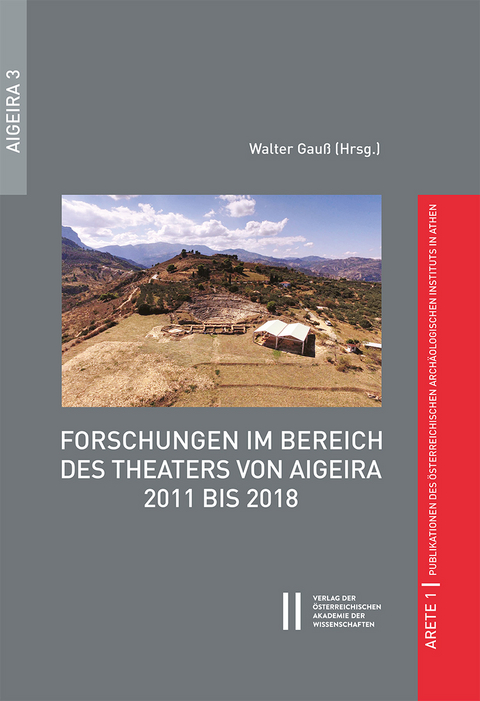
Forschungen im Bereich des Theaters von Aigeira 2011 bis 2018
Aigeira 3
Seiten
2022
Verlag der österreichischen Akademie der Wissenschaften
978-3-7001-8461-4 (ISBN)
Verlag der österreichischen Akademie der Wissenschaften
978-3-7001-8461-4 (ISBN)
- Titel nicht im Sortiment
- Artikel merken
The theatre terrace of ancient Aigeira is considered to be one of the most interesting architectural ensembles of the Hellenistic period on the Peloponnese. Its exploration is one of the foci of the long-term activities of the Austrian Archaeological Institute in Aigeira. This volume edited by Walter Gauß presents both results from the earlier excavations by Wilhelm Alzinger of the 1970s and 1980s as well as recent research conducted under the direction of the editor in this area between 2011 and 2018. The contributions discuss aspects of the development and design of individual buildings, selected groups of small finds, as well as questions regarding the function of the area and its importance for the political and religious life at Aigeira.
Die Terrasse um das Theater des antiken Aigeira zählt zu den interessantesten Bauensembles hellenistischer Zeit auf der Peloponnes. Ihre Erforschung ist einer der Schwerpunkte der langjährigen Tätigkeit des Österreichischen Archäologischen Instituts in Aigeira. Der von Walter Gauß herausgegebene Sammelband präsentiert sowohl Erkenntnisse zu den früheren Grabungen von Wilhelm Alzinger der 1970er und 1980er Jahre als auch neue Ergebnisse aus den unter der Leitung des Herausgebers zwischen 2011 und 2018 durchgeführten Forschungen. Die großzügige Ausgestaltung des vorher kaum bebauten Areals in ein neues öffentliches Zentrum mit Sakral- und Profanbauten begann um die Mitte des 3. Jh. v. Chr. und steht am Beginn der Blütezeit Aigeiras. Diese ist eng mit der Geschichte des Achaiischen Bundes verknüpft und dauerte bis in die römische Kaiserzeit hinein an. Bis zum 1. Jh. v. Chr. wurden im Theaterbereich das Theater, ein dorischer Ringhallentempel, ein großes Peristylgebäude und mehrere kleine tempelartige Bauten, sogenannte Naiskoi, errichtet, die vermutlich als Schatzhäuser, Bankett- oder Kultgebäude genutzt wurden. Während Aigeira bis in die beginnende Spätantike ein städtisches Zentrum blieb, hatte der Theaterbereich zu dieser Zeit seine Funktion als öffentliches Zentrum verloren und diente im 4./5. Jh. n. Chr. als Werkstattareal. In vierzehn Beiträgen werden Aspekte der Entwicklung und Ausstattung einzelner Gebäude sowie ausgewählter Gruppen von Kleinfunden diskutiert, aber auch Fragen zur Funktion des Areals und seiner Bedeutung für das politische und religiöse Geschehen in Aigeira. The theatre terrace of ancient Aigeira is considered to be one of the most interesting architectural ensembles of the Hellenistic period on the Peloponnese. Its exploration is one of the foci of the long-term activities of the Austrian Archaeological Institute in Aigeira. This volume, edited by Walter Gauß, presents both results from the earlier excavations by Wilhelm Alzinger in the 1970s and 1980s as well as recent research conducted under the direction of the editor in this area between 2011 and 2018. The lavish expansion of the previously scarcely built-up area into a new public centre with religious and secular buildings began around the middle of the 3rd century BC and marks the beginning of Aigeira's heyday. This is closely linked to the history of the Achaian League and lasted into the Roman imperial period. Until the 1st century BC, the theatre, a Doric peripteros, a large peristyle building and several small temple-like buildings, so-called naiskoi, were erected in the theatre area. The latter were probably used as treasuries, dining or cult buildings. While Aigeira remained an urban centre until the beginning of Late Antiquity, the theatre area had lost its function as a public centre by this time and served as a workshop area in the 4th/5th century AD. Fourteen contributions discuss aspects of the development and design of individual buildings, selected groups of small finds, and questions regarding the function of the area and its importance for the political and religious life at Aigeira.
Die Terrasse um das Theater des antiken Aigeira zählt zu den interessantesten Bauensembles hellenistischer Zeit auf der Peloponnes. Ihre Erforschung ist einer der Schwerpunkte der langjährigen Tätigkeit des Österreichischen Archäologischen Instituts in Aigeira. Der von Walter Gauß herausgegebene Sammelband präsentiert sowohl Erkenntnisse zu den früheren Grabungen von Wilhelm Alzinger der 1970er und 1980er Jahre als auch neue Ergebnisse aus den unter der Leitung des Herausgebers zwischen 2011 und 2018 durchgeführten Forschungen. Die großzügige Ausgestaltung des vorher kaum bebauten Areals in ein neues öffentliches Zentrum mit Sakral- und Profanbauten begann um die Mitte des 3. Jh. v. Chr. und steht am Beginn der Blütezeit Aigeiras. Diese ist eng mit der Geschichte des Achaiischen Bundes verknüpft und dauerte bis in die römische Kaiserzeit hinein an. Bis zum 1. Jh. v. Chr. wurden im Theaterbereich das Theater, ein dorischer Ringhallentempel, ein großes Peristylgebäude und mehrere kleine tempelartige Bauten, sogenannte Naiskoi, errichtet, die vermutlich als Schatzhäuser, Bankett- oder Kultgebäude genutzt wurden. Während Aigeira bis in die beginnende Spätantike ein städtisches Zentrum blieb, hatte der Theaterbereich zu dieser Zeit seine Funktion als öffentliches Zentrum verloren und diente im 4./5. Jh. n. Chr. als Werkstattareal. In vierzehn Beiträgen werden Aspekte der Entwicklung und Ausstattung einzelner Gebäude sowie ausgewählter Gruppen von Kleinfunden diskutiert, aber auch Fragen zur Funktion des Areals und seiner Bedeutung für das politische und religiöse Geschehen in Aigeira. The theatre terrace of ancient Aigeira is considered to be one of the most interesting architectural ensembles of the Hellenistic period on the Peloponnese. Its exploration is one of the foci of the long-term activities of the Austrian Archaeological Institute in Aigeira. This volume, edited by Walter Gauß, presents both results from the earlier excavations by Wilhelm Alzinger in the 1970s and 1980s as well as recent research conducted under the direction of the editor in this area between 2011 and 2018. The lavish expansion of the previously scarcely built-up area into a new public centre with religious and secular buildings began around the middle of the 3rd century BC and marks the beginning of Aigeira's heyday. This is closely linked to the history of the Achaian League and lasted into the Roman imperial period. Until the 1st century BC, the theatre, a Doric peripteros, a large peristyle building and several small temple-like buildings, so-called naiskoi, were erected in the theatre area. The latter were probably used as treasuries, dining or cult buildings. While Aigeira remained an urban centre until the beginning of Late Antiquity, the theatre area had lost its function as a public centre by this time and served as a workshop area in the 4th/5th century AD. Fourteen contributions discuss aspects of the development and design of individual buildings, selected groups of small finds, and questions regarding the function of the area and its importance for the political and religious life at Aigeira.
is a Senior Research Associate at the Athens branch of the Austrian Archaeological Institute of the ÖAW
| Erscheinungsdatum | 28.04.2022 |
|---|---|
| Reihe/Serie | Forschungen in Aigeira ; 3 |
| Verlagsort | Wien |
| Sprache | deutsch |
| Maße | 210 x 297 mm |
| Gewicht | 1780 g |
| Einbandart | gebunden |
| Themenwelt | Sachbuch/Ratgeber ► Geschichte / Politik ► Vor- und Frühgeschichte / Antike |
| Geisteswissenschaften ► Archäologie | |
| Schlagworte | Achaia • Aigeira • Archäologie • Archäozoologie • ARETE • Bauforschung • Forschungen in Aigeira • Geophysik • Griechenland • Hellenismus • Keramik • klassisch • Kleinfunde • Naiskoi • Numismatik • Öffentliche Bauten • Tempel • Theater • Walter Gauß |
| ISBN-10 | 3-7001-8461-1 / 3700184611 |
| ISBN-13 | 978-3-7001-8461-4 / 9783700184614 |
| Zustand | Neuware |
| Informationen gemäß Produktsicherheitsverordnung (GPSR) | |
| Haben Sie eine Frage zum Produkt? |
Mehr entdecken
aus dem Bereich


aus dem Bereich


