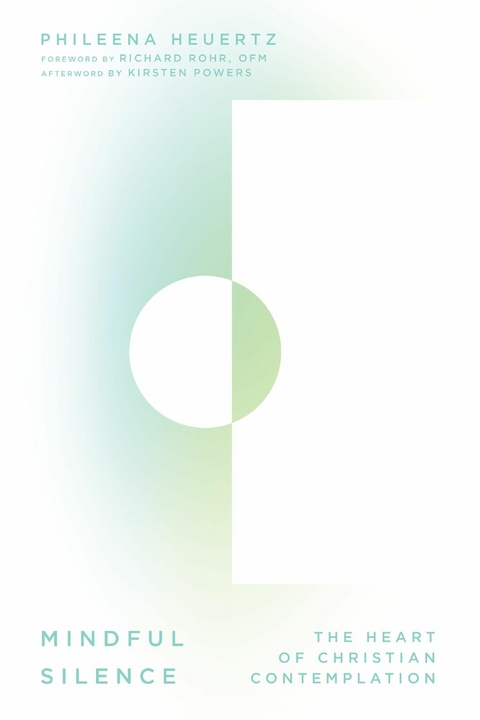
Mindful Silence (eBook)
199 Seiten
IVP Formatio (Verlag)
978-0-8308-7223-7 (ISBN)
Phileena Heuertz is the author of Pilgrimage of a Soul and a founding partner of Gravity, a Center for Contemplative Activism. For nearly twenty years she and her husband, Chris, codirected an international nonprofit. Spiritual director, yoga instructor, public speaker, retreat guide, and author, Phileena is passionate about spirituality and making the world a better place.
Phileena Heuertz is the author of Pilgrimage of a Soul and a founding partner of Gravity, a Center for Contemplative Activism. For nearly twenty years she and her husband, Chris, codirected an international nonprofit. Spiritual director, yoga instructor, public speaker, retreat guide, and author, Phileena is passionate about spirituality and making the world a better place.
CHAPTER TWO
WITHDRAWING TO ENGAGE
Rising early the next morning, Jesus went off
to a lonely place in the desert and prayed there.
It is in deep solitude and silence that
I find the gentleness with which
I can truly love my brother and sister.
SOLITUDE CAN BE a frightening proposition, unless you’re an introvert.
However, being alone and entering interior solitude are not the same. We can be alone and still be dominated by our attachments to power, affection, and security. If you’re an extrovert you may be quick to assume contemplative prayer is not for you, given its solitary nature. But this couldn’t be further from the truth. Just because something doesn’t come naturally, doesn’t mean it’s not for you. In fact, most things that are good for us don’t come easily.
For example, we know it’s good for the body to get exercise. But how many of us really look forward to going to the gym? Though if we neglect our physical health, we know there will be concerning consequences. The same can be said for neglecting our spirituality. Refusing to make time for the spiritual practice of solitude, as well as silence and stillness, can actually lead to violence. The modern contemplative leader and central teacher for this chapter, Thomas Merton, made this point better than anyone.
There is a pervasive form of contemporary violence to which the idealist most easily succumbs: activism and overwork. The rush and pressure of modern life are a form, perhaps the most common form, of its innate violence. To allow oneself to be carried away by a multitude of conflicting concerns, to surrender to too many demands, to commit oneself to too many projects, to want to help everyone in everything, is to succumb to violence. The frenzy of our activism neutralizes our work for peace. It destroys our own inner capacity for peace. It destroys the fruitfulness of our own work, because it kills the root of inner wisdom which makes work fruitful.1
Contemplative practice is the remedy for our frenzied sickness.
Not only is contemplation a cure, but it’s the way of the future. In 1982, Jesuit theologian Karl Rahner stated emphatically, “The Christian of the future will be a mystic or s/he will not exist at all.”2
The historical record indicates that at its birth Christianity most certainly had a mystical core. But by the seventeenth century, the mystical dimension of the Western expression of the faith was relegated to deserts and monasteries. As time progressed, it became more and more difficult for even monasteries to hold on to the contemplative tradition. Prominence was given to the rational mind. So, most Christians in the West today have received a spiritual formation that is dominated by the left brain—the discursive, conceptual, analytical, and judging mind that sees in parts. The religion has, for all intents and purposes, divorced itself from the right brain—the contemplative, non-conceptual, intuitive mind that sees in wholes.
Now, thirty-five years after Rahner’s prophetic statement, these two minds of the faith are coming together. It certainly appears we are in the midst of an evolution of human consciousness. More and more Christians desire to adopt a spiritual practice that exercises the right brain. Many are experiencing the physical, emotional, and spiritual benefits of contemplative prayer. Christianity is no longer in severe opposition to science. Thus, the faith tradition now widely recognizes neurological, medical, and psychological data that reveal the power of meditation to establish an inner state of peace and to aid physical and emotional healing. Furthermore, even prominent mainstream Christians teach that meditation supports one’s relationship with Christ. Slowly, people of faith are making the connection between interior spiritual practice (meditation) and exterior spiritual practice (forgiveness, loving-kindness, mercy, justice, and reconciliation).
In fact, we may be in the midst of a revolutionary tipping point—at least in the West. But it hasn’t always been that way.
Until recently, with the exception of the mendicant religious orders (like the Franciscans and Dominicans), contemplation and action were basically severed from one another, just like the dissociated minds of the faith. Nevertheless, as early as the thirteenth century, one of the principal teachers of the church, Thomas Aquinas, highlighted three vocational options: the contemplative, the active, and the mixed life. Unfortunately, Christian religion essentially limited the choices to two: the active or the contemplative.3 It would take another seven hundred years for the mixed life to become a viable option. The average spiritual seeker today is looking for this very expression of faith and action.
Historically, to be a contemplative meant to take religious vows and be cloistered in a monastery as a nun or monk. The focus for the contemplative life was intended to be love of God and a life devoted to prayer. To be a person of action meant to be of service in society as a diocesan priest or layperson—which incidentally cut one off from the vocation of contemplation. The focus for the active life was love of neighbor and works of mercy.
Aquinas wrote at length about the supremacy of the contemplative life, and the church readily took his perspective. Therefore, because only the few seemed called to cloistered life, contemplation came to be understood as something rare and available to only the chosen few. Contemplation and mystical prayer were seen as highly spiritual, somewhat odd, and cloaked in mystery.
Once the Reformation took place, Protestant Christians for the most part grew ever more distant from the contemplative vocation. By modern times, few lay and even clerical Protestants knew anything about the contemplative dimension of the faith.
In the Christian West, it wasn’t until the spiritual awakening of the 1960s that the contemplative tradition began to be renewed for our time.
BECOMING A MYSTIC
The intensity of a vocation among impoverished people led me into a crisis of faith. Coming to the end of our self will often do that. Essentially, I had come to the limits of an active life dissociated from contemplation.
When I started to experience the psychological and energetic benefits of centering prayer, my vocation took on new expression. I didn’t serve in the same way that I had before—from my limited false self. I was beginning to serve from what Rahner so eloquently described as “a genuine experience of God emerging from the very heart of existence.”4
I was awakening to a new dimension of faith—where my beliefs in God were no longer simply intellectual ideals, but rather a lived reality. I was experiencing God in prayer, and I was being changed. Those changes necessarily affected my relationships, my community, and my vocation.5
Now, because our ideas of mysticism have been reduced to the ecstatic experiences of saints like Teresa of Àvila (who is known to have experienced trance states and levitation), let me be clear. My experiences of God were much, much less dramatic. During centering prayer, there were seldom tangible signs of anything taking place. Sometimes I would experience intense pain in my back or uncontrollable sorrow evidenced by a waterfall of tears. But most of the time, all appeared quiet and still to the casual passerby.
Sure, my mind might not have been as quiet and still as I would have liked, but slowly an interior silence and stillness was building, which allowed for what Father Thomas calls “divine therapy” to take place. Emotional wounds of a lifetime that I had stored in my body and psyche began to heal. My over-attachment to power and control, affection and esteem, and security and survival began to loosen. My false self came into view. As I learned to self-observe, I was empowered to self-correct.6 The consequence is being able to live more often from my true self.
As time went on, I was so convinced that contemplative practice was crucial for our community that I wanted everyone to adopt a practice like centering prayer. But few were interested. I remember the push back and resistance: “That way of prayer is for introverts.” “I pray by doing.” “I experience God in the active life, and that’s good enough for me.” “Contemplation is for the religious, cloistered life.” “That’s just navel-gazing.”
Even our community was affected by the active-contemplative dichotomy of religious consciousness. But I had stumbled into the “mixed life,” and like Rahner, I knew it was the way of the future. Our society, our human family, our planet depends on it.
In time, by withdrawing a few times a day for contemplative prayer, I realized that solitude was not a disconnection from the rest of the world but instead a necessary recalibration for more meaningful connection with the world.
TRUSTING WITHDRAWAL
Recently, after my routine morning meditation and prayer, I was lounging in my chair, reading a well-worn paperback on spirituality, when all of a sudden, my neck and upper back kinked up. I couldn’t look up, and I was in severe pain. A visit with a chiropractor later that week revealed through various tests and x-rays that my spine was in...
| Erscheint lt. Verlag | 13.11.2018 |
|---|---|
| Nachwort | Kirsten Powers |
| Vorwort | Richard Rohr |
| Verlagsort | Lisle |
| Sprache | englisch |
| Themenwelt | Sachbuch/Ratgeber ► Gesundheit / Leben / Psychologie ► Esoterik / Spiritualität |
| Sachbuch/Ratgeber ► Gesundheit / Leben / Psychologie ► Lebenshilfe / Lebensführung | |
| Geisteswissenschaften ► Religion / Theologie | |
| Schlagworte | Christian meditation • christian mindfulness • Christian Spirituality • contemplative • contemplative activism • contemplative Christian • Contemplative Prayer • contemplative spirituality • false self • gravity center • How to pray • meditate • Meditation • meditative • Mindful • mindful Christian • Mindfulness • Prayer • Prayer practices • present • Retreat • Silence • Solitude • Spiritual Formation • Spirituality • spiritual practices • stillness • true self |
| ISBN-10 | 0-8308-7223-X / 083087223X |
| ISBN-13 | 978-0-8308-7223-7 / 9780830872237 |
| Informationen gemäß Produktsicherheitsverordnung (GPSR) | |
| Haben Sie eine Frage zum Produkt? |
 EPUB (Wasserzeichen)
DRM: Digitales Wasserzeichen
Dieses eBook enthält ein digitales Wasserzeichen und ist damit für Sie personalisiert. Bei einer missbräuchlichen Weitergabe des eBooks an Dritte ist eine Rückverfolgung an die Quelle möglich.
Dateiformat: EPUB (Electronic Publication)
EPUB ist ein offener Standard für eBooks und eignet sich besonders zur Darstellung von Belletristik und Sachbüchern. Der Fließtext wird dynamisch an die Display- und Schriftgröße angepasst. Auch für mobile Lesegeräte ist EPUB daher gut geeignet.
Systemvoraussetzungen:
PC/Mac: Mit einem PC oder Mac können Sie dieses eBook lesen. Sie benötigen dafür die kostenlose Software Adobe Digital Editions.
eReader: Dieses eBook kann mit (fast) allen eBook-Readern gelesen werden. Mit dem amazon-Kindle ist es aber nicht kompatibel.
Smartphone/Tablet: Egal ob Apple oder Android, dieses eBook können Sie lesen. Sie benötigen dafür eine kostenlose App.
Geräteliste und zusätzliche Hinweise
Buying eBooks from abroad
For tax law reasons we can sell eBooks just within Germany and Switzerland. Regrettably we cannot fulfill eBook-orders from other countries.
aus dem Bereich