Amino Acids and Proteins in Fossil Biominerals (eBook)
John Wiley & Sons (Verlag)
978-1-119-08951-3 (ISBN)
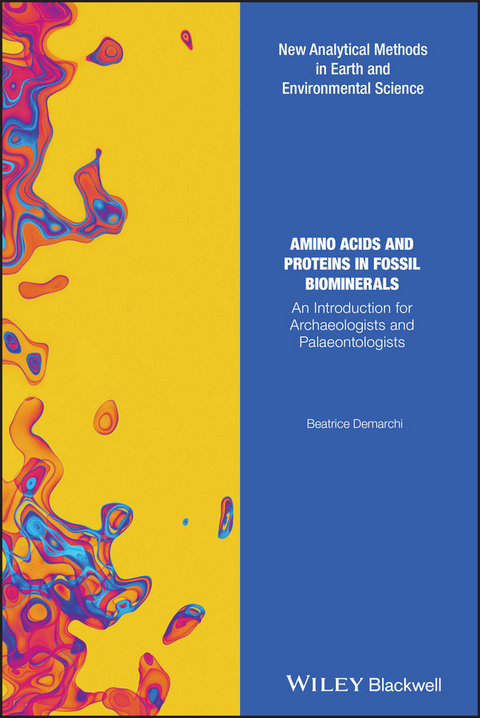
AMINO ACIDS AND PROTEINS IN FOSSIL BIOMINERALS
An essential cross-disciplinary guide to the proteins that form biominerals and that are preserved in the fossil record??
Amino Acids and Proteins in Fossil Biominerals is an authoritative guide to the patterns of survival and degradation of ancient biomolecules in the fossil record. The author brings together new research in biomineralization and ancient proteins to describe mechanisms of protein diagenesis.
The book draws on the author's experiences as well as current information from three research fields: geochemistry, archaeology and Quaternary sciences. The author examines the history of the study of ancient proteins, from the dating of Quaternary biominerals to the present advances in shotgun proteomics, and discusses their applications across archaeology, geology and evolutionary biology.
This important guide:??
- Explores the main components of biominerals
- Describes the breakdown of proteins in fossils
- Reviews the applications of ancient protein studies
Written for students and researchers of biomolecular archaeology and palaeontology, Amino Acids and Proteins in Fossil Biominerals provides a cross-disciplinary guide to the proteins responsible for the formation of biominerals and to the survival of biomolecules in the archaeological and palaeontological record.
This book forms one volume of the popular New Analytical Methods in Earth and Environmental Science Series.
Beatrice Demarchi, PhD, is a biomolecular archaeologist in the Department of Life Sciences and Systems Biology, University of Turin, Turin, Italy.
Beatrice Demarchi, PhD, is a biomolecular archaeologist in the Department of Life Sciences and Systems Biology, University of Turin, Turin, Italy.
Preface vii
Acknowledgements ix
1 Biominerals and the Fossil Record 1
Why Study Old Biominerals? 1
What are Biominerals? 4
How and Why are Biominerals Formed? 5
'Biomineralization Toolkit': From Proteins to Proteomes 8
Fossil Biominerals, Fossil Proteomes 12
References 16
2 Mechanisms of Degradation and Survival 23
Introduction 23
Hydrolysis 27
Racemization 31
Decomposition and Other Diagenesis-induced Modifications 35
References 38
3 Proteins in Fossil Biominerals 43
Bone and Other Collagen-based Hard Tissues 43
Tooth 45
Eggshell 47
Mollusc Shell 51
Other Substrates 57
References 63
4 Chiral Amino Acids: Geochronology and Other Applications 71
Dating the Quaternary (Pleistocene and Holocene) 71
Principles of AAR Dating 76
Measuring D/L Values 78
Factors Affecting D/L Values 82
Aminostratigraphy 87
Aminochronology 92
Palaeothermometry 97
Testing the Suitability of Biominerals for Geochemical Analyses 98
Taxonomic Identification 99
Appendix: Practical Tips on How to Plan and Conduct an AAR Study 100
References 104
5 Ancient Protein Sequences 113
Ancient Protein Analysis by Mass Spectrometry 113
Ancient Proteins: Past and Future 120
References 122
Index 127
2
Mechanisms of Degradation and Survival
2.1 Introduction
‘Diagenesis’ is a geological term, which was first used within the field of carbonate sedimentology (and later palaeobiogeochemistry), to describe the complex network of physical processes and chemical reactions that occur post mortem in the burial environment and that ultimately transform a living organism into its constituent atoms. In the case of biominerals, there will be diagenetic processes driving the transformation of both the mineral and organic phases, and it is crucial to remember that the two cannot occur independently – the breakdown of the inorganic phase will influence the way in which the organic phase is degraded (or indeed preserved) and vice versa.
However, the complexity of the diagenetic network is such that, typically, the processes of organic degradation are considered as if they were occurring in isolation (in a ‘liquid bubble’) and the organic–inorganic interface tends to be ignored. Furthermore, the organic fraction of biominerals is composed of different classes of organic molecules (carbohydrates, lipids and proteins), each of which is usually considered independently. Within each of these classes, there is considerable variability, e.g. ‘proteins’ are composed of hundreds of widely different sequences and structures. (A summary of the main protein families in biominerals will be given in Chapter 3.) As a result, diagenesis is not a simple process. Hoering (1980) attempted to put forward a general scheme and proposed at least five pathways of diagenesis for organic matter in fossil mollusc shells (Scheme 2.1); despite 40 years having elapsed since this schematic view of diagenesis was posited, little experimental work has been carried out in order to verify its hypotheses.
Keeping this complexity in mind is important, especially when we attempt to describe the patterns of diagenesis mathematically. But why should we attempt to describe diagenesis in mathematical terms? We usually do so when we wish to extrapolate the extent of diagenesis as a function of time – generally for dating purposes, though also as a means of predicting the presence of intact biomolecules in old fossils. In the case of protein diagenesis dating, the observed variable will be one of the diagenetic indicators (typically, the extent of racemization of a certain amino acid), which is determined for a range of samples of a known age. Using a ‘black box’ approach (Kriausakul and Mitterer, 1980; Wehmiller, 1980; Collins and Riley, 2000), we can describe the relationship between extent of racemization and time using a mathematical function; this has the obvious advantage that the same function can then be used to extrapolate the age of a sample on the basis of the measured extent of racemization. However, one should always remember that the observed variable is the combination of:
Scheme 2.1 Hoering's summary of diagenesis pathways affecting organic matter in fossil mollusc shells (Hoering, 1980).
- all the processes (e.g. racemization, hydrolysis, decomposition, condensation) of
- all the (thousands of) amino acids in
- all of the (hundreds of) proteins
- that are degrading at different rates
- while trapped together with other organics (with which they interact)
- within a nanometric ‘void’ of random shapes and positions
- within a mineral crystal (with one of many chemical formulae and crystallographic parameters, as in Table 1.1, Chapter 1)
- next to other mineral crystals
- that form a specific tissue
- that is buried in a specific environment.
These multiple organic–organic and organic–inorganic interfaces and interactions characterize every aspect of the processes of diagenesis, and make the understanding of the main mechanisms of degradation (and survival) very challenging. Therefore, it becomes necessary to artificially ‘remove’ some of this complexity in order to pinpoint some of the pathways of diagenesis. The main factors influencing diagenesis, and strategies for circumventing their effect, are listed here. These factors are also summarized in Scheme 2.2.
Scheme 2.2 A summary of the main factors affecting diagenesis.
- The burial environment, including soil composition and pH: its effect on protein decay can be circumvented by isolating the intracrystalline fraction only (by bleaching or as a by-product of diagenesis). If this behaves as a ‘closed system’ the only environmental factor influencing diagenesis (other than time) is the temperature experienced by the sample throughout its life and post mortem (see Towe and Thompson, 1972; Sykes et al., 1995; Penkman et al., 2008, for example).
- The chemical composition of the mineral (e.g. carbonate versus silica), crystal morphology (e.g. aragonite versus calcite), microstructural arrangement (e.g. platelets versus prisms): these factors can only be normalized by comparing the same type of biominerals, down to the level of genus/species. Furthermore, some biominerals, such as mollusc shell, have both calcitic and aragonitic layers, with different microstructures, therefore each layer should be considered separately (Hearty et al., 1986; Demarchi et al., 2013a; Torres et al., 2013).
- The chemical composition of the organic matrix; very little is known about the variability of the nonproteinaceous component of the organic matrix in biominerals, therefore the assumption must be made that comparing similar with similar (e.g. microstructural layers, as above) will be sufficient to minimize this source of variability.
- The composition of the biomineral proteome, which includes hundreds of proteins (e.g. 273 proteins confidently identified in modern bleached ostrich eggshell: Demarchi et al., 2016): this factor is crucial, because the degradation of each amino acid is influenced by the chemical and steric characteristics of its neighbouring residues, as well as by the protein conformation, which will be progressively lost as diagenesis proceeds. Furthermore, the occlusion of proteins in the crystals may occur randomly as the crystals grow around them. In the case of rapidly mineralizing systems, such as avian eggshell, this may result in high variability in the type and proportion of proteins trapped. Finally, direct interaction with the mineral surface may result in unexpected patterns of survival (Demarchi et al., 2016). The compositional variability of the proteome can be partially controlled by analysing several biological replicates.
- The combined effect of time and temperature in the burial environment is also difficult to predict, because it depends on altitude, burial depth, type of soil, presence or absence of vegetation, moisture, exposure to direct sunlight, erosion and reburial (Wehmiller, 1977; Miller et al., 1992; Collins and Demarchi, 2015): the effect of this can be elucidated by performing artificial diagenesis experiments, in which a fragment of biomineral (often powdered to a certain grain size, bleached or unbleached) is immersed in water (or moist sand) in sealed glass ampoules and heated at high temperatures for known times (Hare and Mitterer, 1969; Brooks et al., 1991; Goodfriend and Meyer, 1991; Penkman et al., 2008). This is very useful for determining some of the degradation patterns at high temperature, but the resulting data must be used with caution when attempting to explain patterns at the normal (low) burial temperature, both because the temperature sensitivities of the vast range of reactions involved are such that the order of processes will be affected, and also because the mineral phase will be affected differently by high and low temperatures (Demarchi et al., 2013b; Tomiak et al., 2013).
Overall, it is evident that considering protein diagenesis ‘in isolation’ is problematic. However, understanding the main chemical mechanisms that drive breakdown is important for many applications of ancient protein studies, from dating to reconstructing and authenticating ancient sequences. Therefore, here we will briefly describe three main mechanisms of decay:
- hydrolysis of the peptide bonds
- racemization of the individual amino acids (either peptide bound or free)
- decomposition of amino acids (and of their degradation products).
However, we must bear in mind that there are many other diagenesis-induced modifications, and these are frequently encountered in ancient protein sequences, for example, the deamidation of Asn and Gln, the oxidation of Met and Trp, and dehydration processes (sometimes followed by formation of compounds such as pyroglutamic acid). These diagenesis-induced modifications, deamidation in particular, can offer precious insights into protein sequence authenticity and preservation (Demarchi et al., 2016; Welker et al., 2016; Mackie et al., 2018).
2.2 Hydrolysis
Proteins are synthesized in the ribosomes, where individual amino acids are put together via peptide bonds between neighbouring residues. This condensation reaction between the –NH2 and the –COOH groups leads to the loss of a water molecule. The peptide bond is the weakest bond in the primary structure of a protein and it can be lysed by the addition of a molecule of water, that is, via hydrolysis (Figure...
| Erscheint lt. Verlag | 12.6.2020 |
|---|---|
| Reihe/Serie | Analytical Methods in Earth and Environmental Science |
| Analytical Methods in Earth and Environmental Science | Analytical Methods in Earth and Environmental Science |
| Sprache | englisch |
| Themenwelt | Geisteswissenschaften ► Archäologie |
| Geschichte ► Allgemeine Geschichte ► Vor- und Frühgeschichte | |
| Naturwissenschaften ► Biologie ► Genetik / Molekularbiologie | |
| Naturwissenschaften ► Geowissenschaften ► Mineralogie / Paläontologie | |
| Technik ► Umwelttechnik / Biotechnologie | |
| Schlagworte | Aminosäuren • biominerals • Conduct • Degradation • earth sciences • Geochemie • Geochemie, Mineralogie • Geochemistry & Minerology • Geochronology • Geowissenschaften • Holocene • Paläontologie • Paläontologie, Paläobiologie u. Geobiologie • Paleontology, Paleobiology & Geobiology • Plan • Pleistocene • practical tips • proteins • Quartärforschung • Quartärforschung, Glaziologie • Quaternary • Quaternary Science & Glaciology • study old biominerals • Suitability |
| ISBN-10 | 1-119-08951-4 / 1119089514 |
| ISBN-13 | 978-1-119-08951-3 / 9781119089513 |
| Informationen gemäß Produktsicherheitsverordnung (GPSR) | |
| Haben Sie eine Frage zum Produkt? |
 EPUB (Adobe DRM)
Kopierschutz: Adobe-DRM
Adobe-DRM ist ein Kopierschutz, der das eBook vor Mißbrauch schützen soll. Dabei wird das eBook bereits beim Download auf Ihre persönliche Adobe-ID autorisiert. Lesen können Sie das eBook dann nur auf den Geräten, welche ebenfalls auf Ihre Adobe-ID registriert sind.
Details zum Adobe-DRM
Dateiformat: EPUB (Electronic Publication)
EPUB ist ein offener Standard für eBooks und eignet sich besonders zur Darstellung von Belletristik und Sachbüchern. Der Fließtext wird dynamisch an die Display- und Schriftgröße angepasst. Auch für mobile Lesegeräte ist EPUB daher gut geeignet.
Systemvoraussetzungen:
PC/Mac: Mit einem PC oder Mac können Sie dieses eBook lesen. Sie benötigen eine
eReader: Dieses eBook kann mit (fast) allen eBook-Readern gelesen werden. Mit dem amazon-Kindle ist es aber nicht kompatibel.
Smartphone/Tablet: Egal ob Apple oder Android, dieses eBook können Sie lesen. Sie benötigen eine
Geräteliste und zusätzliche Hinweise
Buying eBooks from abroad
For tax law reasons we can sell eBooks just within Germany and Switzerland. Regrettably we cannot fulfill eBook-orders from other countries.
aus dem Bereich