Indigenous Struggles for Autonomy (eBook)
246 Seiten
Lexington Books (Verlag)
978-1-4985-5882-2 (ISBN)
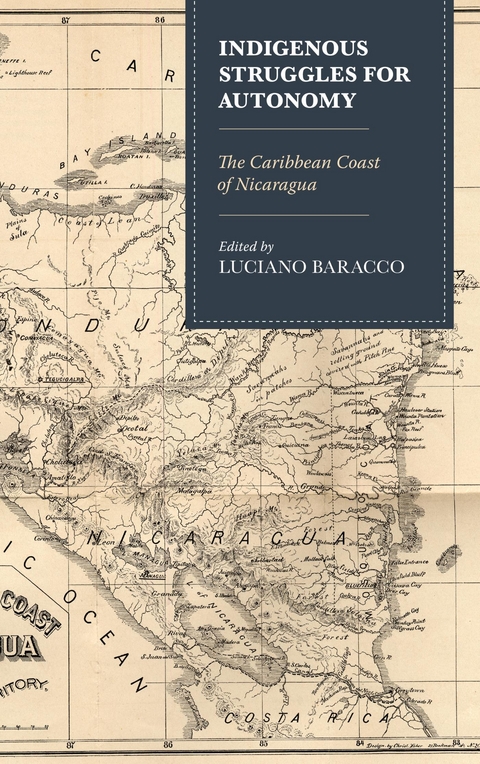
Indigenous Struggles for Autonomy: The Caribbean Coast of Nicaragua offers a broad and comprehensive analysis of Nicaragua's Caribbean Coast and the process of autonomy that was initiated in 1987 as part of a wider conflict resolution process during the years of the Sandinista revolution and has continued through to the present day. Over its 30 year period of development, the autonomy process on Nicaragua's Caribbean Coast can be seen as a crucible for the autonomous struggles of minority peoples throughout the Latin American continent. Autonomy on Nicaragua's Caribbean Coast remains highly contested, being simultaneously characterized by progress, setbacks, and violent confrontation within a number of fields and involving a multiplicity of local, national, and global actors. This experience offers critical lessons for efforts around the world that seek to resolve long-established and deep-seated ethnic conflict by attempting to reconcile the need for development, usually fostered by national governments through neo-extractivist policies, with the protection of minority rights advocated by marginalized minorities living within nation states and, increasingly, by intergovernmental organizations such as the United Nations and the Organization of American States. This book presents analyses that reveal the broad implications for the struggle for autonomy on the Caribbean Coast of Nicaragua, conducted by scholars with expertise in an array of disciplines including sociology, globalization theory, anthropology, history, socio-linguistics, cultural and postcolonial studies, gender studies, and political science.
Luciano Baracco is associate professor in political science and international relations at the Middle East Technical University, Northern Cyprus Campus.
Chapter 1. Indigenous Struggles for Autonomy: The Caribbean Coast of NicaraguaLuciano BaraccoChapter 2. From the Kingdom of Mosquitia to the Mosquito Reservation: The Demise of British Imperialism on the Mosquito Coast and the Challenge of Nicaraguan Nation-BuildingLuciano BaraccoChapter 3. The Company Times: Neocolonialism and Ethnic Relations on Nicaragua’s Caribbean Coast in the Twentieth CenturyEric Rodrigo MeringerChapter 4. The Sandinista Revolution and the Caribbean Coast of Nicaragua: Revolution, Counter-Revolution, and Indigenous Struggles for AutonomyLuciano BaraccoChapter 5. Leasing Communal Lands…In “Perpetuity”: Post-Titling Scenarios on the Caribbean Coast of NicaraguaMiguel GonzálezChapter 6. Negotiating Consultation: The Duty to Consult and Contestation of Autonomy in Nicaragua’s Rama-Kriol TerritoryJoshua L. MayerChapter 7. Autonomy in the Caribbean Coast: Neoliberalism, Landless Peasants and the Resurgence of Ethnic ConflictGovand Khalid Azeez and Alejandra Gaitán-BarreraChapter 8. Strong Women: Memories of Miskitu Women forging Peace and AutonomyDolores Figueroa Romero and Arelly BarbeytoChapter 9. Cocaine Money, Cement Houses, and New Residential Arrangements in a Coastal Miskitu VillageMark JamiesonChapter 10. The Role of Autonomy in the Revitalization of the Languages of Nicaragua’s Caribbean CoastJane Freeland and Colette GrinevaldIndexAbout the EditorAbout the Contributors
| Erscheint lt. Verlag | 29.11.2018 |
|---|---|
| Co-Autor | Govand Khalid Azeez, Eric Rodrigo Meringer, Dolores Figueroa Romero, Luciano Baracco, Arelly Barbeyto, Jane Freeland, Alejandra Gaitan-Barrera, Miguel Gonzalez, Colette Grinevald, Mark Jamieson, Joshua L. Mayer |
| Zusatzinfo | 7 Illustrations including: - 4 Halftones, Black & White including Black & White Photographs; - 3 Maps. |
| Sprache | englisch |
| Themenwelt | Geisteswissenschaften ► Geschichte ► Regional- / Ländergeschichte |
| Schlagworte | Athropology • Caribbean Coast • Demarcation of Indigenous Territories • Indigenous Autonomy • Inter-oceanic canal project • Miskitu • Nicaragua • Plurilingual Education • Sandanistas • Sociology • Sumu-Mayangna • YATAMA |
| ISBN-10 | 1-4985-5882-8 / 1498558828 |
| ISBN-13 | 978-1-4985-5882-2 / 9781498558822 |
| Informationen gemäß Produktsicherheitsverordnung (GPSR) | |
| Haben Sie eine Frage zum Produkt? |
 EPUB (Adobe DRM)
Kopierschutz: Adobe-DRM
Adobe-DRM ist ein Kopierschutz, der das eBook vor Mißbrauch schützen soll. Dabei wird das eBook bereits beim Download auf Ihre persönliche Adobe-ID autorisiert. Lesen können Sie das eBook dann nur auf den Geräten, welche ebenfalls auf Ihre Adobe-ID registriert sind.
Details zum Adobe-DRM
Dateiformat: EPUB (Electronic Publication)
EPUB ist ein offener Standard für eBooks und eignet sich besonders zur Darstellung von Belletristik und Sachbüchern. Der Fließtext wird dynamisch an die Display- und Schriftgröße angepasst. Auch für mobile Lesegeräte ist EPUB daher gut geeignet.
Systemvoraussetzungen:
PC/Mac: Mit einem PC oder Mac können Sie dieses eBook lesen. Sie benötigen eine
eReader: Dieses eBook kann mit (fast) allen eBook-Readern gelesen werden. Mit dem amazon-Kindle ist es aber nicht kompatibel.
Smartphone/Tablet: Egal ob Apple oder Android, dieses eBook können Sie lesen. Sie benötigen eine
Geräteliste und zusätzliche Hinweise
Buying eBooks from abroad
For tax law reasons we can sell eBooks just within Germany and Switzerland. Regrettably we cannot fulfill eBook-orders from other countries.
aus dem Bereich