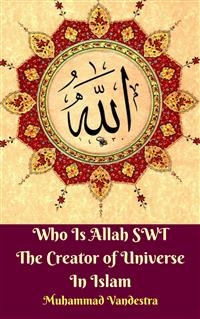
Who Is Allah SWT The Creator of Universe In Islam (eBook)
Dragon Promedia (Verlag)
978-1-387-90992-6 (ISBN)
The One true God is a reflection of the unique concept that Islam associates with Allah. To a Muslim, Allah is the Almighty Creator and Sustainer of the universe, Who is similar to nothing, and nothing is comparable to Him. The Prophet Muhammad was asked by his contemporaries about Allah; the answer came directly from Allah Himself in the form of a short chapter of the Quran, which is considered to be the essence of the unity or the motto of monotheism. This is chapter 112, which reads:
"In the name of Allah, the Merciful, the Compassionate."
"Say (O Muhammad), He is Allah, the One God, the Self-Sufficient, who has not begotten, nor has been begotten, and equal to Him is not anyone."
Some non-Muslims allege that God in Islam is a stern and cruel God who demands to be obeyed fully and is, consequently, not loving and kind. Nothing could be farther from the truth than this allegation. It is enough to know that, with the exception of one, each of the 114 chapters of the Quran begins with the verse, "In the name of God, the Merciful; the Compassionate." In one of the sayings of Prophet Muhammad, may the mercy and blessings of God be upon him, we are told that:
"God is more loving and kind than a mother to her dear child."
On the other hand, God is also Just. Hence, evildoers and sinners must have their share of punishment, and the virtuous must have God’s bounties and favors. Actually, God’s attribute of Mercy has full manifestation in His attribute of Justice. People suffering throughout their lives for His sake should not receive similar treatment from their Lord as people who oppress and exploit others their whole lives. Expecting similar treatment for them would amount to negating the very belief in the accountability of man in the Hereafter and thereby negate all the incentives for a moral and virtuous life in this world. The following Quranic verses are very clear and straightforward in this respect.
"Verily, for the Righteous are gardens of Delight, in the Presence of their Lord. Shall We then treat the people of Faith like the people of Sin? What is the matter with you? How judge you?" (Quran 68:34-36)
Islam rejects characterizing God in any human form or depicting Him as favoring certain individuals or nations on the basis of wealth, power or race. He created human-beings as equals. They may distinguish themselves and get His favor through virtue and piety only.
The concepts, such as God resting on the seventh day of creation, God wrestling with one of His soldiers, God being an envious plotter against mankind, or God being incarnate in any human being, are considered blasphemy from the Islamic point of view.
The unique usage of Allah as a personal name of God is a reflection of Islam’s emphasis on the purity of the belief in God that is the essence of the message of all God’s messengers. Because of this, Islam considers associating any deity or personality with God as a deadly sin that God will never forgive, despite the fact that He may forgive all other sins.
| Erscheint lt. Verlag | 27.6.2018 |
|---|---|
| Sprache | englisch |
| Themenwelt | Geisteswissenschaften ► Religion / Theologie |
| ISBN-10 | 1-387-90992-4 / 1387909924 |
| ISBN-13 | 978-1-387-90992-6 / 9781387909926 |
| Informationen gemäß Produktsicherheitsverordnung (GPSR) | |
| Haben Sie eine Frage zum Produkt? |
 EPUB (Ohne DRM)
Digital Rights Management: ohne DRM
Dieses eBook enthält kein DRM oder Kopierschutz. Eine Weitergabe an Dritte ist jedoch rechtlich nicht zulässig, weil Sie beim Kauf nur die Rechte an der persönlichen Nutzung erwerben.
Dateiformat: EPUB (Electronic Publication)
EPUB ist ein offener Standard für eBooks und eignet sich besonders zur Darstellung von Belletristik und Sachbüchern. Der Fließtext wird dynamisch an die Display- und Schriftgröße angepasst. Auch für mobile Lesegeräte ist EPUB daher gut geeignet.
Systemvoraussetzungen:
PC/Mac: Mit einem PC oder Mac können Sie dieses eBook lesen. Sie benötigen dafür die kostenlose Software Adobe Digital Editions.
eReader: Dieses eBook kann mit (fast) allen eBook-Readern gelesen werden. Mit dem amazon-Kindle ist es aber nicht kompatibel.
Smartphone/Tablet: Egal ob Apple oder Android, dieses eBook können Sie lesen. Sie benötigen dafür eine kostenlose App.
Geräteliste und zusätzliche Hinweise
Buying eBooks from abroad
For tax law reasons we can sell eBooks just within Germany and Switzerland. Regrettably we cannot fulfill eBook-orders from other countries.
aus dem Bereich