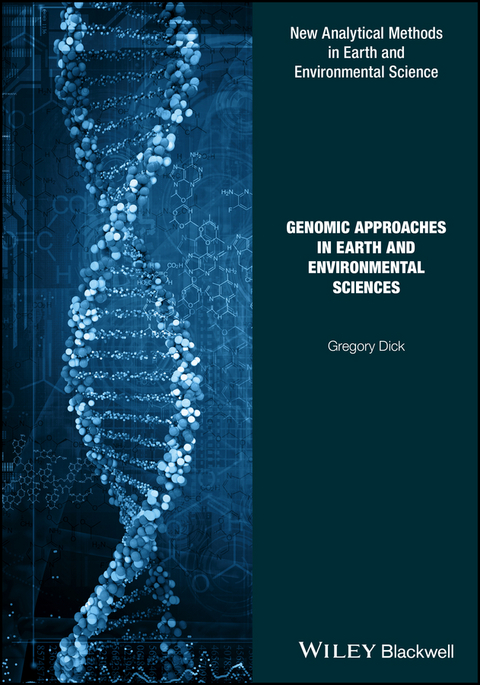
Genomic Approaches in Earth and Environmental Sciences (eBook)
John Wiley & Sons (Verlag)
978-1-118-70820-0 (ISBN)
The first comprehensive synthesis of genomic techniques in earth sciences
The past 15 years have witnessed an explosion of DNA sequencing technologies that provide unprecedented insights into biology. Although this technological revolution has been driven by the biomedical sciences, it also offers extraordinary opportunities in the earth and environmental sciences. In particular, the application of 'omics' methods (genomics, transcriptomics, proteomics) directly to environmental samples offers exciting new vistas of complex microbial communities and their roles in environmental and geochemical processes. This unique book fills the gap where there exists a lack of resources and infrastructure to educate and train geoscientists about the opportunities, approaches, and analytical methods available in the application of omic technologies to problems in the geosciences.
Genomic Approaches in Earth and Environmental Sciences begins by covering the role of microorganisms in earth and environmental processes. It then goes on to discuss how omics approaches provide new windows into geobiological processes. It delves into the DNA sequencing revolution and the impact that genomics has made on the geosciences. The book then discusses the methods used in the field, beginning with an overview of current technologies. After that it offers in-depth coverage of single cell genomics, metagenomics, metatranscriptomics, metaproteomics, and functional approaches, before finishing up with an outlook on the future of the field.
- The very first synthesis of an important new family of techniques
- Shows strengths and limitations (both practical and theoretical) of the techniques
- Deals with both theoretical and laboratory basics
- Shows use of techniques in a variety of applications, including various aspects of environmental science, geobiology, and evolution
Genomic Approaches in Earth and Environmental Sciences is a welcome addition to the library of all earth and environmental scientists and students working within a wide range of subdisciplines.
Gregory J. Dick, is Associate Professor of Earth and Environmental Sciences at the University of Michigan.
The first comprehensive synthesis of genomic techniques in earth sciences The past 15 years have witnessed an explosion of DNA sequencing technologies that provide unprecedented insights into biology. Although this technological revolution has been driven by the biomedical sciences, it also offers extraordinary opportunities in the earth and environmental sciences. In particular, the application of "e;omics"e; methods (genomics, transcriptomics, proteomics) directly to environmental samples offers exciting new vistas of complex microbial communities and their roles in environmental and geochemical processes. This unique book fills the gap where there exists a lack of resources and infrastructure to educate and train geoscientists about the opportunities, approaches, and analytical methods available in the application of omic technologies to problems in the geosciences. Genomic Approaches in Earth and Environmental Sciences begins by covering the role of microorganisms in earth and environmental processes. It then goes on to discuss how omics approaches provide new windows into geobiological processes. It delves into the DNA sequencing revolution and the impact that genomics has made on the geosciences. The book then discusses the methods used in the field, beginning with an overview of current technologies. After that it offers in-depth coverage of single cell genomics, metagenomics, metatranscriptomics, metaproteomics, and functional approaches, before finishing up with an outlook on the future of the field. The very first synthesis of an important new family of techniques Shows strengths and limitations (both practical and theoretical) of the techniques Deals with both theoretical and laboratory basics Shows use of techniques in a variety of applications, including various aspects of environmental science, geobiology, and evolution Genomic Approaches in Earth and Environmental Sciences is a welcome addition to the library of all earth and environmental scientists and students working within a wide range of subdisciplines.
Gregory J. Dick, is Associate Professor of Earth and Environmental Sciences at the University of Michigan.
Cover 1
Title Page 5
Copyright 6
Contents 7
Preface 11
Acknowledgments 12
Abbreviations 13
Chapter 1 Introduction 15
1.1 Exploring the Microbial World 15
1.2 The DNA Sequencing Revolution: Historical Perspectives 18
References 21
Chapter 2 The Architecture of Microbial Genomes 25
Introduction 25
2.1 Genome Size, Organization, and Replication 25
2.2 Nucleotide Composition 28
2.3 Ecological and Evolutionary Aspects of Microbial Genomes 30
2.3.1 The Role of Viruses in Promoting Genomic Diversity 32
2.4 Genomic Diversity in Microbial Communities 33
2.5 Does Genomic Diversity Matter? 35
References 35
Chapter 3 Application of Omics Approaches to Earth and Environmental Sciences: Opportunities and Challenges 41
Introduction 41
3.1 New Perspectives on Microbial Biogeochemistry 41
3.1.1 Redefining the Carbon and Nitrogen Cycles 41
3.1.2 Omics as Sensitive and Efficient Tracers of Biogeochemical Processes 43
3.1.3 Omics Data is Valuable for Biogeochemical Models 43
3.1.4 Understanding Biotic Responses and Feedbacks to Global Change 43
3.2 A Genomic Record of Biological and Geochemical Evolution 44
3.3 Challenges and Limitations of Omics Approaches 46
3.4 Omics as a Complement to Other Approaches 47
References 48
Chapter 4 Overview of Approaches: From Whole-Community Shotgun Sequencing to Single-Cell Genomics 55
Introduction 55
4.1 Choosing the Right Approach 55
4.1.1 Whole-Community Approaches 55
4.1.2 Targeted Approaches: Physical, Microbiological, and Isotopic Enrichment 57
4.1.3 Single-Cell Genomics 58
4.2 Experimental Design and Sampling Considerations 59
4.2.1 Replication 59
4.2.2 Estimating Sequencing Effort: How Much Sequencing Do I Need to Do? 60
4.2.3 From Sample to Data: Biases Due to Preservation, Storage, Extraction, and Sequencing 61
4.2.4 Estimating Absolute Abundance with Internal Standards 63
4.3 Overview of Current DNA Sequencing Technologies 63
4.4 Quality Control and Sequence Processing 65
4.4.1 Dereplication 65
4.4.2 Trimming 66
References 67
Chapter 5 Genomics of Single Species and Single Cells 73
Introduction 73
5.1 Algorithms for Genome Assembly 74
5.2 Challenges of Genome Assembly 75
5.3 Scaffolding 77
5.4 Programs and Pipelines for Genome Assembly 77
5.5 Evaluation of Genome Assemblies 80
5.6 Single-Cell Genomics 81
References 83
Chapter 6 Metagenomics: Assembly and Database-Dependent Approaches 87
Introduction 87
6.1 To Assemble or Not To Assemble? 87
6.2 Database-Dependent Approaches 89
6.3 Database-Independent Approaches: De Novo Assembly 92
6.4 Evaluation of Metagenomic Assemblies 96
6.5 A Philosophy of Metagenome Assemblies 96
References 97
Chapter 7 Metagenomic Binning 103
Introduction 103
7.1 Genomic Signatures of Nucleotide Composition 104
7.2 Binning Programs 105
7.3 Additional Signal and Steps for Binning: Coverage, Taxonomic Data, and Mini-Assemblies 107
7.4 Identifying, Evaluating, and Assessing the Completeness of Genomic Bins 109
References 111
Chapter 8 Annotation: Gene Calling, Taxonomy, and Function 115
Introduction 115
8.1 Gene Calling 116
8.2 Determining Taxonomic Composition 117
8.3 Functional Annotation 120
8.3.1 Overall Approach to Functional Annotation 120
8.3.2 Predicting Metabolic Pathways 121
8.3.3 The Importance of Experimental Annotation 122
References 123
Chapter 9 Metatranscriptomics 127
Introduction 127
9.1 Sample Collection 128
9.2 RNA Extraction and Preparation of cDNA Libraries 129
9.2.1 Should rRNAs Be Removed Prior to Library Preparation and Sequencing? 129
9.3 Assigning Transcripts to Genes or Other Features 129
9.4 De Novo Assembly 130
9.5 Absolute Versus Relative Abundance and Normalization 132
9.6 Detecting Differential Expression 136
References 137
Chapter 10 Metaproteomics 141
Introduction 141
10.1 Methodologies for Basic Proteomics 142
10.2 The Importance of Genomic Databases for Interpreting Proteomics Data 144
10.3 Quantitative Proteomics 145
10.4 Combining Stable Isotope Probing with Proteomics to Track Microbial Metabolism 147
References 147
Chapter 11 Lipidomics and Metabolomics 151
Introduction 151
11.1 Lipidomics 151
11.2 Metabolomics 153
References 154
Chapter 12 Downstream and Integrative Approaches and Future Outlook 159
Introduction 159
12.1 Comparative Omics 159
12.2 Statistical Approaches 160
12.3 Visualization 161
12.4 Cyberinfrastructure for Environmental Omics 162
12.4.1 Software Platforms for Integrated Analyses and Data Storage 163
12.5 Data and Sample Archival 165
12.6 Modeling 165
12.7 Emerging Trends and Future Outlook 167
References 169
Index 175
EULA 178
| Erscheint lt. Verlag | 15.3.2018 |
|---|---|
| Reihe/Serie | Analytical Methods in Earth and Environmental Science |
| Analytical Methods in Earth and Environmental Science | Analytical Methods in Earth and Environmental Science |
| Sprache | englisch |
| Themenwelt | Geisteswissenschaften ► Archäologie |
| Geschichte ► Allgemeine Geschichte ► Vor- und Frühgeschichte | |
| Naturwissenschaften ► Geowissenschaften ► Mineralogie / Paläontologie | |
| Technik | |
| Schlagworte | bioinformatic approaches to metagenomics • earth science • earth sciences • Environmental Science • future of genomics • Genom • Genomic applications • genomics • genomics and earth science • genomics and environmental science • genomic techniques in earth sciences • geomicrobiology • Geowissenschaften • guide to genomic approaches • guide to genomics • <i>Genomic Approaches in Earth and Environmental Sciences</i></p> • <p>geobiology • metagenomics in environmental science • metaproteomicsin environmental science • metatranscriptomics in earth science • molecular geomicrobiology • molecular methods to geobiology • Omics • omics methods • Paläontologie, Paläobiologie u. Geobiologie • paleobiology • paleontology • Paleontology, Paleobiology & Geobiology • Proteomics • single cell genomics in earth science • Transcriptomics • Umweltwissenschaften • understanding geobiology • understanding geoscience |
| ISBN-10 | 1-118-70820-2 / 1118708202 |
| ISBN-13 | 978-1-118-70820-0 / 9781118708200 |
| Informationen gemäß Produktsicherheitsverordnung (GPSR) | |
| Haben Sie eine Frage zum Produkt? |
 PDF (Adobe DRM)
Kopierschutz: Adobe-DRM
Adobe-DRM ist ein Kopierschutz, der das eBook vor Mißbrauch schützen soll. Dabei wird das eBook bereits beim Download auf Ihre persönliche Adobe-ID autorisiert. Lesen können Sie das eBook dann nur auf den Geräten, welche ebenfalls auf Ihre Adobe-ID registriert sind.
Details zum Adobe-DRM
Dateiformat: PDF (Portable Document Format)
Mit einem festen Seitenlayout eignet sich die PDF besonders für Fachbücher mit Spalten, Tabellen und Abbildungen. Eine PDF kann auf fast allen Geräten angezeigt werden, ist aber für kleine Displays (Smartphone, eReader) nur eingeschränkt geeignet.
Systemvoraussetzungen:
PC/Mac: Mit einem PC oder Mac können Sie dieses eBook lesen. Sie benötigen eine
eReader: Dieses eBook kann mit (fast) allen eBook-Readern gelesen werden. Mit dem amazon-Kindle ist es aber nicht kompatibel.
Smartphone/Tablet: Egal ob Apple oder Android, dieses eBook können Sie lesen. Sie benötigen eine
Geräteliste und zusätzliche Hinweise
Buying eBooks from abroad
For tax law reasons we can sell eBooks just within Germany and Switzerland. Regrettably we cannot fulfill eBook-orders from other countries.
aus dem Bereich