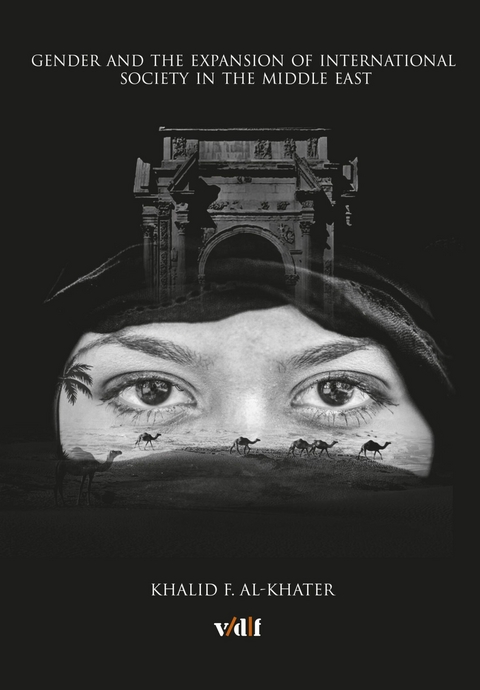
Gender and the Expansion of International Society in the Middle East (eBook)
150 Seiten
vdf Hochschulverlag AG
978-3-7281-3871-2 (ISBN)
Gender Studies, the West, and the Middle East
This chapter discusses how gender studies developed in the West, the range of theories that emerged, and related concepts. This is important for identifying theories relevant to the gender debate in the Middle East and how they reflect developments in the West. Section 1 outlines the main concepts of gender studies. Section 2 outline the main approaches of gender studies. Section 3 discusses how gender evolved in the West. Section 4 discusses the concept of gender in Islamic thought. Section 5 provides a critical analysis of mainstream gender approaches. The final section presents the conclusions.
2.1 Gender Studies
The literature on gender studies can be put into three categories (Hooper, 2001). The first category discusses the biological role of gender. The second category analyzes the role of institutions and gendered social processes, such as the family and the state. The third category analyzes the discursive dimension of gender linked to language and discourse.
This section discusses the concepts of gender, gender roles, and sex as properties of social life and the development of feminism in general. Feminism is the academic field in which these concepts are most heavily debated. Instead of taking conclusive standpoints on the (ongoing) debates, I would like to focus on understanding the gender debate as a subjective dimension that intersects with many other dimensions in social life. This understanding is then explicated and contrasted with other approaches in feminist literature. The second section discusses gender in relation to developments in the West and developments in the Middle East, and outlines the most important points of contention.
The common Western historization of feminism starts with the term feminism itself and its three waves (Evans, 2006: 199; Dhamoon, 2013). The first wave started in the late 18th century, with Wollstonecraft’s Vindication of the Rights of Women (1792) as one of the first major works of feminist philosophy. The first debate centered around the idea that it is nurture and not nature that signifies the role women (should) take in society. Later in the first wave, the important role of education came to light with the work of Mill’s On the Subjection of Women (1869). This, among other works, advocated for women’s participation in the public sphere. The subsequent struggle for political rights proved to be a long one, but it led eventually to women’s education and women’s suffrage in the first quarter of the 20th century. The second wave starts with the cultural revolution of the 1960s and ends around 1990. This wave largely centered on gender equality. The third wave, from the 1990s onward, represented a more diverse and contextual move that challenged the uniformity of femininity in the USA by adding the concept of race into the equation. Afro-American women let their voices be heard and challenged the conceptualization of femininity centered on middle-class white women. As such, even the idea of three waves has “a Western European and Anglo-American backdrop and is premised on a narrow source base” (Dhamoon, 2013).
Concepts
Against this historical background, the essential concepts within feminism form a suitable opportunity for illustrating the diversity of the current state of feminism and emphasizing the importance of contextual factors. First, I discuss the concepts of sex, gender, and gender roles. Second, I introduce several significant schools of thought. Next, I present the debate on differences among women.
The concept of gender has a number of differentiations that overlap in their designation of gender ‘as a social and/or cultural role within society’ (Hawkesworth, 2013). This can be expressed in many ways: through stereotypes, ideology, behavioral conformity, a mode of perception, and others. Before delving deeper into the concept of gender and gender roles, we first need to define what they are not: sex.
Sex
Crucially, we need to separate gender from the concept of sex, as their interrelationship is part of a major point of contention within the feminist scholarship. Sex is best understood “as the anatomical division of the human species into male and female” (Hawkesworth, 2013: 33). This dichotomy is perhaps one of the least questioned biological categorizations in modernity. While several scholars such as Devor (1989), Connel (1987), and Kessler and McKenna (1978) seriously question the scientific basis for this dichotomy, this dichotomy is here one of the core assumptions. Simply because the relevant gender debate in the Middle East that takes place within the (inter)national sphere(s) rests on this distinction. Indeed, to go beyond such a distinction would defeat the purpose of having such a debate. In essence, what this means is that while the understandings of human biology are crucial to a society, the more relevant social and cultural aspects of the gender concept are in fact matters belonging to the social sciences. Even though there is certainly a link between biological bodies and social behavior, it is the collective and societal interpretation of this association that matters and is currently the major point of contention. This latter debate as it is taking place in academic scholarship on gender, Islam, and the international order is explored later in this chapter. The subsequent societal debates that take place in the cases of Afghanistan, Egypt, and Tunisia are clarified in further chapters.
Gender and Gender Roles
With this crucial distinction in place, here we understand gender sociologically, as a subjective dimension in social life. A further, less critical distinction can be made between gender as a micro-level, subconscious, individual role interpretation of masculinity and femininity, and gender role as “a set of prescriptive, culture-specific, macro-level, expectations about what is appropriate for men and women” (Hawkesworth, 2013). This distinction is relevant, as the former usually has a much larger range of variation than the latter.
Gender can be socially constructed on a continuum that ranges from the idea that masculinity and femininity are natural consequences of sex, to the idea that masculinity and femininity are entirely socially constructed. The construction of gendered social entities can become continuously redefined, which presents a key challenge to the way societies in the Middle East are structured on the basis of Islamic thought. This is a source of contention in the gender debate as it is related to the issue of identity.
2.2 Gender Approaches
Feminism is based on the assumption that there is a subordination of women in society. The nature of this subordination can vary depending on the context and history. Yet gender is not just about ‘sex’, but touches upon race, ethnicity, nation, class, and other dimensions of social life (Waylen, 2013). Norms on gender shape not only family life, but also religious practice and structures of markets and processes of governance. The argument holds that, for a long period, men dominated political life in almost every society, constraining the influence of women on decision-making as participants or observers.
But feminism also deserves its criticism. The modes of organization in society have not been uniquely ‘male-dominant’ and ‘male-centered’. The history of the world was not ‘a uniform and patriarchal structure’ (Waylen, 2012: 4). Debates on the role of women in society have never been restricted to Western women: In the 18th and 19th century, feminist movements existed in the Middle East and Asia as well. The case of Egypt will illustrate this. Mary Wollstonecraft and John Stuart Mill wrote about the rights of women in England in the 18th century. There are many approaches to feminism reflecting both the complexity of the object of study as well as the nature of the debate.
Liberal Feminism
Liberal Feminism is the first wave of feminism that started in the Western world with the writings of the earlier and oft-mentioned 18th- and 19th-century scholars Mary Wollstonecraft and John Stuart Mill (Dhamoon, 2013). While pursuing liberal ideas regarding rationality, reason, and the state, these scholars argued for the inclusion of women in the public sphere. More recently, feminists such as Hankivsky (2004) or Brown (1995) challenged the public-private divide, arguing that the state should develop gender-neutral public policies (Dhamoon, 2013).
Marxist Feminism
Marxist feminist scholars view the role of women from a traditional class-based vantage point (Dhamoon, 2013). That is, patriarchal capitalist society creates both class and gender divisions (Hartman, 1997), and the only true way to change those from a Marxist perspective is to overthrow the political system and create more equal systems. Furthermore, the worldwide division of labor increases inequality in many countries, which is especially disadvantageous for women (Mohanty, 2003; Dhamoon, 2013). Marxist feminism also considers the state to be an institute of the ruling class. Subordinating women allows capitalism to be sustained (McIntosh, 1978; Wilson, 1977). Social feminists consider the state as a mediator between men and women in society serving the interest of both (Zillah Eisenstein, 1979).
Radical Feminism
Radical feminism holds that the state serves the interest of men at the expense of women (Mackinnon, 1983). It is very strong on women’s rights with regards to pregnancy, violence, pornography, rape, and homophobia (Dowrkin and...
| Erscheint lt. Verlag | 5.12.2017 |
|---|---|
| Reihe/Serie | Strategie und Konfliktforschung |
| Verlagsort | Zürich |
| Sprache | englisch |
| Themenwelt | Geisteswissenschaften ► Geschichte ► Regional- / Ländergeschichte |
| Schlagworte | Afghanistan • Egypt • gender politics • liberal order • Tunisia • Ummah approach • UN |
| ISBN-10 | 3-7281-3871-1 / 3728138711 |
| ISBN-13 | 978-3-7281-3871-2 / 9783728138712 |
| Informationen gemäß Produktsicherheitsverordnung (GPSR) | |
| Haben Sie eine Frage zum Produkt? |
 EPUB (Wasserzeichen)
Größe: 1,0 MB
DRM: Digitales Wasserzeichen
Dieses eBook enthält ein digitales Wasserzeichen und ist damit für Sie personalisiert. Bei einer missbräuchlichen Weitergabe des eBooks an Dritte ist eine Rückverfolgung an die Quelle möglich.
Dateiformat: EPUB (Electronic Publication)
EPUB ist ein offener Standard für eBooks und eignet sich besonders zur Darstellung von Belletristik und Sachbüchern. Der Fließtext wird dynamisch an die Display- und Schriftgröße angepasst. Auch für mobile Lesegeräte ist EPUB daher gut geeignet.
Systemvoraussetzungen:
PC/Mac: Mit einem PC oder Mac können Sie dieses eBook lesen. Sie benötigen dafür die kostenlose Software Adobe Digital Editions.
eReader: Dieses eBook kann mit (fast) allen eBook-Readern gelesen werden. Mit dem amazon-Kindle ist es aber nicht kompatibel.
Smartphone/Tablet: Egal ob Apple oder Android, dieses eBook können Sie lesen. Sie benötigen dafür eine kostenlose App.
Geräteliste und zusätzliche Hinweise
Buying eBooks from abroad
For tax law reasons we can sell eBooks just within Germany and Switzerland. Regrettably we cannot fulfill eBook-orders from other countries.
aus dem Bereich