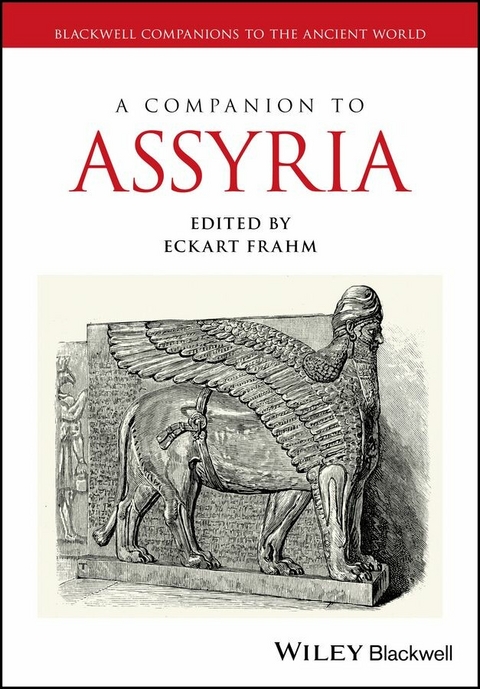
A Companion to Assyria (eBook)
John Wiley & Sons (Verlag)
978-1-118-32523-0 (ISBN)
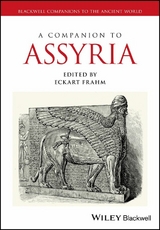
A Companion to Assyria is a collection of original essays on ancient Assyria written by key international scholars. These new scholarly contributions have substantially reshaped contemporary understanding of society and life in this ancient civilization.
- The only detailed up-to-date introduction providing a scholarly overview of ancient Assyria in English within the last fifty years
- Original essays written and edited by a team of respected Assyriology scholars from around the world
- An in-depth exploration of Assyrian society and life, including the latest thought on cities, art, religion, literature, economy, and technology, and political and military history
Eckart Frahm is Professor of Assyriology at Yale University, USA. His primary scholarly interest is the political and intellectual history of Assyria and Babylonia during the first millennium BCE. Frahm is the author of five books: Einleitung in die Sanherib-Inschriften (1997), Historische und historisch-literarische Texte aus Assur (2009), Neo-Babylonian Letters and Contracts from the Eanna Archive (co-authored with Michael Jursa, 2011), Babylonian and Assyrian Text Commentaries: Origins of Interpretation (2011), and Geschichte des alten Mesopotamien (2013). Together with Enrique Jiménez and Mary Frazer, he is currently working on a project to publish a large number of Mesopotamian commentaries both in print and online.
A Companion to Assyria is a collection of original essays on ancient Assyria written by key international scholars. These new scholarly contributions have substantially reshaped contemporary understanding of society and life in this ancient civilization. The only detailed up-to-date introduction providing a scholarly overview of ancient Assyria in English within the last fifty years Original essays written and edited by a team of respected Assyriology scholars from around the world An in-depth exploration of Assyrian society and life, including the latest thought on cities, art, religion, literature, economy, and technology, and political and military history
Eckart Frahm is Professor of Assyriology at Yale University, USA. His primary scholarly interest is the political and intellectual history of Assyria and Babylonia during the first millennium BCE. Frahm is the author of five books: Einleitung in die Sanherib-Inschriften (1997), Historische und historisch-literarische Texte aus Assur (2009), Neo-Babylonian Letters and Contracts from the Eanna Archive (co-authored with Michael Jursa, 2011), Babylonian and Assyrian Text Commentaries: Origins of Interpretation (2011), and Geschichte des alten Mesopotamien (2013). Together with Enrique Jiménez and Mary Frazer, he is currently working on a project to publish a large number of Mesopotamian commentaries both in print and online.
Notes on Contributors viii
Acknowledgments xiii
Introduction 1
Eckart Frahm
Part I Geography and History 11
1 Physical and Cultural Landscapes of Assyria 13
Jason Ur
2 "Assyria" in the Third Millennium bce 36
Lauren Ristvet
3 The Old Assyrian Period (20th-18th Century bce) 57
Klaas R. Veenhof
4 Economy, Society, and Daily Life in the Old Assyrian Period 80
Cécile Michel
5 The Transition Period (17th to 15th Century bce) 108
Shigeo Yamada
6 The Middle Assyrian Period (14th to 11th Century bce) 117
Stefan Jakob
7 Economy, Society, and Daily Life in the Middle Assyrian Period 143
Stefan Jakob
8 The Neo?-Assyrian Period (ca. 1000-609 bce) 161
Eckart Frahm
9 Economy, Society, and Daily Life in the Neo?-Assyrian Period 209
Karen Radner
10 Post?-Imperial Assyria 229
Stefan R. Hauser
Part II The Fringes of Empire: Assyria and its Neighbors 247
11 Assyria and the North: Anatolia 249
Andreas Fuchs
12 Assyria and the East: Western Iran and Elam 259
Andreas Fuchs
13 Assyria and the West: Syria and the Levant 268
Ariel M. Bagg
14 Assyria and the Far West: The Aegean World 275
Robert Rollinger
15 Assyria and the South: Babylonia 286
Eckart Frahm
16 Assyria and the Far South: The Arabian Peninsula and the Persian Gulf 299
Eckart Frahm
Part III Elements of Assyrian Civilization 311
17 Languages and Writing Systems in Assyria 313
Mikko Luukko and Greta Van Buylaere
18 Assyrian Religion 336
Stefan M. Maul
19 Assyrian Literature 359
Alasdair Livingstone
20 Assyrian Scholarship and Scribal Culture in Ashur 368
Nils P. Heeßel
21 Assyrian Scholarship and Scribal Culture in Kalhu and Nineveh 378
Jeanette C. Fincke
22 Assyrian Legal Traditions 398
Frederick Mario Fales
23 Assyrian Cities and Architecture 423
John M. Russell
24 Assyrian Art 453
John M. Russell
25 Assyrian Technology 511
Ariel M. Bagg
26 Assyrian Warfare 522
Stephanie Dalley
27 Thoughts on the Assyrian Empire and Assyrian Kingship 534
Mario Liverani
Part IV The Afterlife and Rediscovery of Assyria 547
28 Assyria in Late Babylonian Sources 549
Paul?]Alain Beaulieu
29 Assyria in the Hebrew Bible 556
Eckart Frahm
30 Assyria in Classical Sources 570
Robert Rollinger
31 The Archaeological Exploration of Assyria 583
Mogens Trolle Larsen
32 Assyrian Christians 599
Aaron Michael Butts
List of Assyrian Kings 613
Eckart Frahm
Index 617
Notes on Contributors
Ariel M. Bagg is private lecturer at the Assyriological Institute of the Ruprecht‐Karls‐Universität Heidelberg (Germany) and member of the Centre François Viète d’épistémologie et d’histoire des sciences et des techniques (Brest/Nantes, France). He is an Assyriologist and Civil Engineer specializing in ancient Near Eastern history of technology and historical geography of the first millennium. His publications include Assyrische Wasserbauten (2000), Die Orts‐ und Gewässernamen der neuassyrischen Zeit. Teil 1: Die Levante (2007), and Die Assyrer und das Westland (2011).
Paul‐Alain Beaulieu received his PhD in Assyriology from Yale University in 1985 and held various research and teaching positions at Yale, Harvard, and the University of Notre Dame before joining the faculty of the Department of Near and Middle Eastern Civilizations in the University of Toronto in 2006. He has published extensively on the history and culture of Mesopotamia in the first millennium BCE, notably The Reign of Nabonidus, King of Babylon (556–539 BC) (1989) and The Pantheon of Uruk During the Neo‐Babylonian Period (2003).
Aaron Michael Butts (PhD University of Chicago) is an Assistant Professor in the Department of Semitic and Egyptian Languages and Literatures at the Catholic University of America. His research focuses on the history, languages, and literature of Christianity in the Near East, including Arabic, Ethiopic, and especially Syriac Christianity. He is author of Language Change in the Wake of Empire: Syriac in its Greco‐Roman Context (2016) and a co‐editor of the Gorgias Encyclopedic Dictionary of the Syriac Heritage (2011).
Greta Van Buylaere (PhD Udine 2009) studied Assyriology in Leuven, Heidelberg, Helsinki, and Udine. At present, she is a researcher in the project “Corpus of Mesopotamian Anti‐Witchcraft Rituals” directed by Daniel Schwemer at the University of Würzburg. She is interested in Assyrian and Babylonian literacy, and the political and intellectual history of first millennium BCE Mesopotamia in general.
Stephanie Dalley is an Assyriologist who taught Akkadian for thirty years at Oxford University, and has published Assyrian cuneiform tablets from Nimrud, Nineveh, Tell al‐Rimah, Til Barsip, as well as Babylonian texts from Sippar and of the First Sealand Dynasty; also translations of the main myths and epics, Myths from Mesopotamia (1989), an analysis of the Assyrian background to the Hebrew Book of Esther, Esther’s Revenge at Susa (2007), and The Mystery of the Hanging Garden of Babylon: An Elusive World Wonder Traced (2013).
Frederick Mario Fales, born in Baltimore in 1946, has been Full Professor of ancient Near Eastern History at the University of Udine (Italy) since 1994. His main scholarly interests concern Mesopotamia in the Neo‐Assyrian period (10th–7th centuries BCE) and range from historical studies to editions of Assyrian and Aramaic texts. He has undertaken, and sometimes directed, archaeological activities in Iraq, Syria, Turkey, and Iraqi Kurdistan. He founded an international journal on Neo‐Assyrian studies, the State Archives of Assyria Bulletin, and the monographic series History of the Ancient Near East (SARGON: Padua). His publications include twelve monographs, seven edited volumes, and some 170 articles. For bibliography up to 2011 see https://uniud.academia.edu/MarioFales.
Jeanette C. Fincke (PhD Würzburg: 1999; habilitation Heidelberg: 2006) has been conducting research on the British Museum’s collection of Nineveh texts for its Ashurbanipal Library Project in the past years, concentrating on divinatory texts and tablets written in the Babylonian ductus. Her work resulted in producing new databases (see www.fincke‐cuneiform.com/nineveh/index.htm) and several articles. Currently, she is chercheur for the ERC project Floriental at the Centre nationale de la recherche scientifique (CNRS) in Paris, where she focuses on the pharmaceutical series URU.AN.NA from the first millennium BCE.
Eckart Frahm (PhD Göttingen 1996, habilitation Heidelberg 2007) is Professor of Assyriology at Yale University. His main research interests are Assyrian and Babylonian history and Mesopotamian scholarly texts of the first millennium BCE. Frahm is the author of numerous articles and five books: Einleitung in die Sanherib‐Inschriften (1997), Keilschrifttexte aus Assur literarischen Inhalts, vol. 3 (2009), Neo‐Babylonian Letters and Contracts from the Eanna Archive (2011, co‐authored with Michael Jursa), Babylonian and Assyrian Text Commentaries: Origins of Interpretation (2011), and Geschichte des alten Mesopotamien (2013). In addition, he serves as director of the Cuneiform Commentaries Project (http://ccp.yale.edu).
Andreas Fuchs is Professor of Assyriology at the University of Tübingen and a specialist in Neo‐Assyrian history. He is the author of Die Inschriften Sargons II. aus Khorsabad (1993), Die Annalen des Jahres 711 v. Chr. nach Prismenfragmenten aus Ninive und Assur (1998), and, together with Simo Parpola, The Correspondence of Sargon II, Part III (2001).
Stefan R. Hauser is Professor for “Archaeology of ancient Mediterranean cultures and their relations to the ancient Near East and Egypt” at the University of Konstanz (Germany). He is editor of Die Sichtbarkeit von Nomaden und saisonaler Besiedlung in der Archäologie (2006) and Ernst Herzfeld and the Development of Near Eastern Studies, 1900–1950 (2005; with A.C. Gunter), and author of Status, Tod und Ritual. Stadt‐ und Sozialstruktur Assurs in neuassyrischer Zeit (2012). He currently directs projects on burial practices and the art of the portrait in Palmyra and on religion and identity in Hellenistic Mesopotamia. A Handbook of the Arsacid Empire is in preparation.
Nils P. Heeßel is Professor of Assyriology at the Julius‐Maximilians University Würzburg. He is a specialist for the Akkadian scholarly tradition, in particular for scientific and divinatory texts. His publications include Babylonisch‐assyrische Diagnostik (2000), Pazuzu (2002), and Divinatorische Texte I and II (2007, 2012).
Stefan Jakob studied Assyriology, Near Eastern Archaeology, and Musicology at the University of Saarbrücken and received his PhD degree in 2000 for research on Middle Assyrian administration and social structure. Between 1992 and 2003 he served as a staff member of several excavation projects (Tell Chuera and Tell Shekh Hassan in Syria and Qantir/Pi‐Ramesse in Egypt). Since 2004 he has been a research assistant in Assyriology at the Institute for Cultures and Languages of the Middle East, University of Heidelberg. His main interests are Middle Assyrian history and chronology. In recent years he also worked on Assyrian prayers and ritual texts.
Mogens Trolle Larsen, Emeritus Professor of Assyriology at the University of Copenhagen, is a specialist in the history and culture of the Old Assyrian period. His most recent book is Ancient Kanesh: A Merchant Colony in Bronze Age Anatolia (2015).
Mario Liverani is Emeritus Professor of History of the Ancient Near East at the University of Rome “La Sapienza.” He is former director of the Institute of Near Eastern Studies, of the Department of Sciences of Antiquity, and of the Inter‐University Center on the Ancient Sahara, in the same “Sapienza” University. He has received honorary doctorates from the Universities of Copenhagen and Madrid, is a honorary member of the American Oriental Society, and member of the Lincei National Academy (Rome), of the Academy of Sciences (Turin), and of the European Academy. He was a member of archaeological missions in Syria (Ebla, Terqa, Mozan), Turkey (Kurban, Arslantepe), Yemen (Baraqish), and Libya (Akakus). He is author of nineteen monographs and ca. 260 articles, and the editor of eight books.
Alasdair Livingstone is Reader in Assyriology at the University of Birmingham and a specialist in cuneiform scholarly and literary texts, especially from Assyria. His publications include Mystical and Mythological Explanatory Works of Assyrian and Babylonian Scholars (1986) and Hemerologies of Assyrian and Babylonian Scholars (2013).
Mikko Luukko studied Assyriology, Semitics, and Linguistics at the University of Helsinki and the Freie Universität Berlin. In 2004, he gained his PhD from Helsinki, with a study of “Grammatical Variation in Neo‐Assyrian.” Luukko is currently working on a research project entitled “Corpus of Mesopotamian Anti‐witchcraft Rituals,” directed by Daniel Schwemer at the University of Würzburg. He has published monographs and articles on Neo‐Assyrian letters and Assyrian grammar, including The Correspondence of Tiglath‐pileser III (2013).
Stefan M. Maul is Professor of Assyriology at the University of Heidelberg. His research focuses on Assyrian and Babylonian religion and intellectual life; over the past years, his main project has been the edition of the literary and scholarly texts from Ashur. Maul’s books include “Herzberuhigungsklagen”: Die...
| Erscheint lt. Verlag | 24.3.2017 |
|---|---|
| Reihe/Serie | Blackwell Companions to the Ancient World |
| Blackwell Companions to the Ancient World | Blackwell Companions to the Ancient World |
| Sprache | englisch |
| Themenwelt | Geschichte ► Allgemeine Geschichte ► Vor- und Frühgeschichte |
| Geschichte ► Allgemeine Geschichte ► Altertum / Antike | |
| Schlagworte | Ancient & Classical History • Antike • Antike u. klassische Geschichte • Assyria • Assyria in classical sources • Assyria in the Bible • Assyrian architecture • Assyrian art • Assyrian Christians • Assyrian civilization • Assyrian economy • assyrian empire • Assyrian Literature • Assyrian religion • Assyrian scholarship • Assyrian society • Assyrian technology • Assyrian Warfare • Assyrien • Classical Studies • fall of Assyria • Humanistische Studien • Middle Assyrian period • Neo-Assyrian Period • Old Assyrian period |
| ISBN-10 | 1-118-32523-0 / 1118325230 |
| ISBN-13 | 978-1-118-32523-0 / 9781118325230 |
| Informationen gemäß Produktsicherheitsverordnung (GPSR) | |
| Haben Sie eine Frage zum Produkt? |
 EPUB (Adobe DRM)
Kopierschutz: Adobe-DRM
Adobe-DRM ist ein Kopierschutz, der das eBook vor Mißbrauch schützen soll. Dabei wird das eBook bereits beim Download auf Ihre persönliche Adobe-ID autorisiert. Lesen können Sie das eBook dann nur auf den Geräten, welche ebenfalls auf Ihre Adobe-ID registriert sind.
Details zum Adobe-DRM
Dateiformat: EPUB (Electronic Publication)
EPUB ist ein offener Standard für eBooks und eignet sich besonders zur Darstellung von Belletristik und Sachbüchern. Der Fließtext wird dynamisch an die Display- und Schriftgröße angepasst. Auch für mobile Lesegeräte ist EPUB daher gut geeignet.
Systemvoraussetzungen:
PC/Mac: Mit einem PC oder Mac können Sie dieses eBook lesen. Sie benötigen eine
eReader: Dieses eBook kann mit (fast) allen eBook-Readern gelesen werden. Mit dem amazon-Kindle ist es aber nicht kompatibel.
Smartphone/Tablet: Egal ob Apple oder Android, dieses eBook können Sie lesen. Sie benötigen eine
Geräteliste und zusätzliche Hinweise
Buying eBooks from abroad
For tax law reasons we can sell eBooks just within Germany and Switzerland. Regrettably we cannot fulfill eBook-orders from other countries.
aus dem Bereich