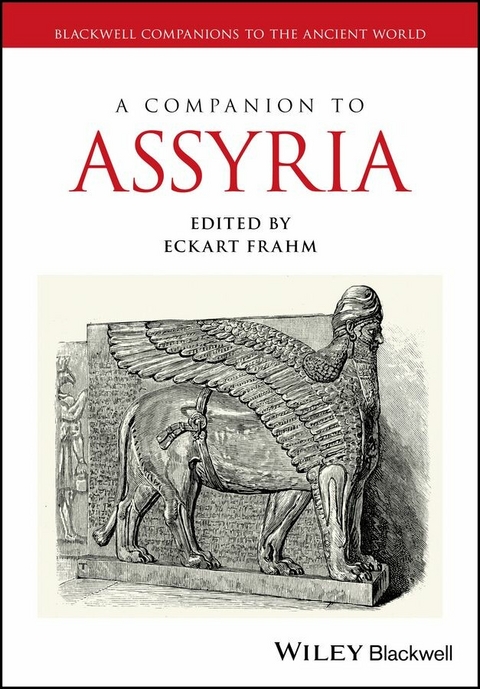
A Companion to Assyria (eBook)
John Wiley & Sons (Verlag)
978-1-118-32524-7 (ISBN)
A Companion to Assyria is a collection of original essays on ancient Assyria written by key international scholars. These new scholarly contributions have substantially reshaped contemporary understanding of society and life in this ancient civilization.
- The only detailed up-to-date introduction providing a scholarly overview of ancient Assyria in English within the last fifty years
- Original essays written and edited by a team of respected Assyriology scholars from around the world
- An in-depth exploration of Assyrian society and life, including the latest thought on cities, art, religion, literature, economy, and technology, and political and military history
Eckart Frahm is Professor of Assyriology at Yale University, USA. His primary scholarly interest is the political and intellectual history of Assyria and Babylonia during the first millennium BCE. Frahm is the author of five books: Einleitung in die Sanherib-Inschriften (1997), Historische und historisch-literarische Texte aus Assur (2009), Neo-Babylonian Letters and Contracts from the Eanna Archive (co-authored with Michael Jursa, 2011), Babylonian and Assyrian Text Commentaries: Origins of Interpretation (2011), and Geschichte des alten Mesopotamien (2013). Together with Enrique Jiménez and Mary Frazer, he is currently working on a project to publish a large number of Mesopotamian commentaries both in print and online.
A Companion to Assyria is a collection of original essays on ancient Assyria written by key international scholars. These new scholarly contributions have substantially reshaped contemporary understanding of society and life in this ancient civilization. The only detailed up-to-date introduction providing a scholarly overview of ancient Assyria in English within the last fifty years Original essays written and edited by a team of respected Assyriology scholars from around the world An in-depth exploration of Assyrian society and life, including the latest thought on cities, art, religion, literature, economy, and technology, and political and military history
Eckart Frahm is Professor of Assyriology at Yale University, USA. His primary scholarly interest is the political and intellectual history of Assyria and Babylonia during the first millennium BCE. Frahm is the author of five books: Einleitung in die Sanherib-Inschriften (1997), Historische und historisch-literarische Texte aus Assur (2009), Neo-Babylonian Letters and Contracts from the Eanna Archive (co-authored with Michael Jursa, 2011), Babylonian and Assyrian Text Commentaries: Origins of Interpretation (2011), and Geschichte des alten Mesopotamien (2013). Together with Enrique Jiménez and Mary Frazer, he is currently working on a project to publish a large number of Mesopotamian commentaries both in print and online.
Title Page 5
Copyright Page 6
Contents 7
Notes on Contributors 10
Acknowledgments 15
Introduction 17
Part I Geography and History 27
Chapter 1 Physical and Cultural Landscapes of Assyria 29
Introduction 29
Physical Environment of Assyria 32
Cultural Landscapes: Past Research and Methods 32
Emergent Landscapes of the Early Bronze Age 34
Imperial Landscapes of the Neo?Assyrian Period 36
Conclusions and Future Prospects 44
Acknowledgments 46
References 46
Further Reading 51
Chapter 2 “Assyria” in the Third Millennium bce 52
Introduction 52
Regionalization (3200–2700 bce) 54
The Second Urban Revolution (2700–2400 bce) 56
The Ebla World-System (2400–2300 bce) 60
Merchants and Empires (2300–2000 bce) 63
Conclusion 66
Notes 67
References 67
Further Reading 72
Chapter 3 The Old Assyrian Period (20th–18th Century bce) 73
Sources, Rulers, and Chronology 73
Old Assyrian History 76
The Political Institutions of Ashur 86
The End of the Old Assyrian Period 89
Notes 90
Abbreviations 91
References 91
Further Reading 94
Chapter 4 Economy, Society, and Daily Life in the Old Assyrian Period 96
Introduction 96
Ashur and Kaniš 97
Slaves 99
The Assyrian Family 100
Economy and Daily Life 107
References 116
Further Reading 123
Chapter 5 The Transition Period (17th to 15th Century bce) 124
Two King Lists and the Period after Šamši-Adad I 125
Signs of Prosperity 129
Mittanian Dominion 130
Notes 131
References 131
Further Reading 132
Chapter 6 The Middle Assyrian Period (14th to 11th Century bce) 133
Assyria Joins the Scene 133
The First Half of the 13th Century bce 135
Territorial Expansion and Consolidation: A First Attempt 138
The Decline of Power in the Period after Tukulti-Ninurta I 148
Territorial Expansion and Consolidation: A Second Attempt 150
Concluding Remarks 155
Abbreviations 156
References 156
Further Reading 158
Chapter 7 Economy, Society, and Daily Life in the Middle Assyrian Period 159
The Middle Assyrian State 159
The King 159
The Royal Palace 163
The Administrative Structure of the Middle Assyrian Kingdom 165
The Military 168
Recruitment and Labor Administration 170
Taxation 171
Middle Assyrian Society: Social Strata 171
The Middle Assyrian Family 173
Ethnic Groups 174
Abbreviations 174
References 174
Further Reading 176
Chapter 8 The Neo-Assyrian Period (ca. 1000–609 bce) 177
Introduction 177
Chronology and Sources 178
The Crisis Years (ca. 1050–935) 181
The Reconquista Period (934–824) 183
Internal Conflicts and Fragmentation of Power: The Age of the “Magnates” (823–745) 189
Genesis of an Empire: Assyria from Tiglath-pileser III to Sargon II (744–705) 192
Imperial Heydays: From Sennacherib to Assurbanipal (704–631) 199
Assyria’s Downfall (631–609) 207
The “Afterlife” and Legacy of the Assyrian Empire 209
Notes 212
Abbreviation 214
References 214
Further Reading 224
Chapter 9 Economy, Society, and Daily Life in the Neo-Assyrian Period 225
The Crucible of Mass Deportation 225
The Heartland of Assyria 228
The Provinces 229
The Nineveh Region 232
Farmers and Pastoralists 234
Four Vignettes of Neo-Assyrian Life 235
Note 242
Abbreviations 242
References 242
Further Reading 244
Chapter 10 Post-Imperial Assyria 245
Introduction 245
The Early Post-imperial Period 246
Restructuring and Revitalization: The Seleucid and Arsacid Periods 252
Notes 257
References 258
Further Reading 262
Part II The Fringes of Empire: Assyria and its Neighbors 263
Chapter 11 Assyria and the North: Anatolia 265
The Eastern Taurus Mountains 265
Eastern Anatolia and Urartu 266
The Western Taurus and Central Anatolia 269
References 273
Further Reading 274
Chapter 12 Assyria and the East: Western Iran and Elam 275
The Assyrian Expansion in the East 276
Western Iran beyond Assyria’s Provinces 277
Elam and Anšan 280
References 283
Further Reading 283
Chapter 13 Assyria and the West: Syria and the Levant 284
Introduction 284
The Levant until the Time of Tiglath-pileser III: Exploration and Exploitation 284
The Levant at the Time of Tiglath-pileser III: The Great Annexation 286
The Levant after Tiglath-pileser III: The Taming of the Insurgents 287
References 289
Further Reading 290
Chapter 14 Assyria and the Far West: The Aegean World 291
Notes 297
Abbreviations 297
References 297
Further Reading 301
Chapter 15 Assyria and the South: Babylonia 302
Introduction 302
The Third and Second Millennium bce 303
The First Millennium bce 307
Note 311
Abbreviations 311
References 312
Further Reading 314
Chapter 16 Assyria and the Far South: The Arabian Peninsula and the Persian Gulf 315
Introduction 315
From the Beginnings to the Reign of Tiglath-pileser III 316
Sargon II and Sennacherib 317
From Esarhaddon to the Downfall of the Assyrian Empire 320
Conclusion 322
Abbreviations 324
References 324
Further Reading 326
Part III Elements of Assyrian Civilization 327
Chapter 17 Languages and Writing Systems in Assyria 329
Languages 329
Writing Systems 337
Main Features of Assyrian Grammar 338
Abbreviations 349
References 349
Further Reading 351
Chapter 18 Assyrian Religion 352
The City of Ashur and its Temples in the Third Millennium bce 353
The God Assur 355
The Theology of Assur and His Elevation to Universal Dominion 358
Assur, His Earthly Representative, and the Community of Gods 362
Politics as Religion and Religion as Politics 365
Swan Song 369
Notes 370
References 371
Further Reading 374
Chapter 19 Assyrian Literature 375
Old Assyrian Period 375
Middle Assyrian Period 376
Neo-Assyrian Period 377
Notes 383
References 383
Further Reading 383
Chapter 20 Assyrian Scholarship and Scribal Culture in Ashur 384
Assyrian Interest in Babylonian Scholarship 384
Middle Assyrian Scholarship 385
The Alleged Royal Library of Tiglath-pileser I 386
Middle Assyrian Scholarly Families 387
The Scholars of Ashur between the Ninth and the Seventh Century bce 389
References 391
Further Reading 393
Chapter 21 Assyrian Scholarship and Scribal Culture in Kalh?u and Nineveh 394
Introduction 394
Libraries of Neo-Assyrian Scholars and Temples 396
The Growing Role of Divination and Scholarship for the Neo-Assyrian Kings 396
How the Neo-Assyrian Kings Obtained Access to Babylonian Scholarship 398
Assembling Tablets for Assurbanipal’s Library in Nineveh 401
The Archaeology of the Royal Library in Nineveh 404
The Tablets of the Library Collection in Nineveh Written by Babylonian Scholars 406
The Tablets of the Library Collection in Nineveh Written by Assyrian Scholars 409
Note 410
Abbreviations 410
References 411
Further Reading 413
Chapter 22 Assyrian Legal Traditions 414
The Many Strands of Assyrian Legal Traditions 414
Old Assyrian Legal Practices 423
Middle Assyrian Legal Practices 426
Neo-Assyrian Legal Practices 430
References 434
Further Reading 438
Chapter 23 Assyrian Cities and Architecture 439
Introduction 439
Ashur in the Third Millennium bce 440
The Old-Assyrian Period 442
The Transition Period (17th to 15th centuries bce) 446
The Middle Assyrian Period 446
The Neo-Assyrian Period 451
References 467
Further Readings 467
Chapter 24 Assyrian Art 469
Introduction 469
Ashur in the Third Millennium bce 469
The Old Assyrian Period 473
The Middle Assyrian Period 479
The Neo-Assyrian Period: Sculpture and Painting 487
The Neo-Assyrian Period: Portable Arts 508
References 516
Further Reading 526
Chapter 25 Assyrian Technology 527
Introduction 527
City Planning and Monumental Buildings 527
Hydraulic Engineering 530
Bridges 533
Transportation of Materials and Heavy Loads 534
Abbreviation 536
References 536
Further Reading 537
Chapter 26 Assyrian Warfare 538
References 547
Further Reading 549
Chapter 27 Thoughts on the Assyrian Empire and Assyrian Kingship 550
Translatio imperii 550
World Empires: Size vs. “Mission” 552
Enlarging Assyria 552
Prerequisites of the Imperial Project 553
Imperial Practice and Theory 555
Destruction and Reconstruction 556
The Advantages of Direct Rule 557
References 559
Further Reading 562
Part IV The Afterlife and Rediscovery of Assyria 563
Chapter 28 Assyria in Late Babylonian Sources 565
Assyria in the Royal Inscriptions of the Babylonian Empire 565
Assyria in Everyday Documents 567
Assyria in the View of the Persians 568
Hellenistic Babylonia Remembers Assyria 568
References 570
Further Reading 571
Chapter 29 Assyria in the Hebrew Bible 572
Introduction 572
Terminology 573
History 573
Stories 577
Political Ideology and Law 578
More Immediate Assyrian Influences on Religion and Culture in Israel and Judah? 581
Conclusions 582
Abbreviations 583
References 583
Further Reading 585
Chapter 30 Assyria in Classical Sources 586
Assyria’s Changing Image in Greek and Roman Texts 586
Assyrian Rulers in Classical Sources 591
Notes 595
References 595
Further Reading 598
Chapter 31 The Archaeological Exploration of Assyria 599
Botta, Layard, and the Rediscovery of Assyria in the Nineteenth Century 600
Twentieth Century Excavations of Assyrian Sites 606
Notes 611
References 611
Further Reading 613
Chapter 32 Assyrian Christians 615
Introduction 615
Assyria and Assyrian in Pre?Modern Syriac Sources 616
Assyrian Christians in Nineteenth?Century Literature from the West 618
Assyrian Identity and the Church of the East 619
Assyrian Identity and the Greater Syriac Heritage 620
Conclusion 621
Appendix: The Churches of the Syriac Heritage 623
Acknowledgments 623
Notes 624
Abbreviation 625
References 625
Further Reading 628
List of Assyrian Kings 629
Notes 631
Index 633
EULA 651
| Erscheint lt. Verlag | 20.3.2017 |
|---|---|
| Reihe/Serie | Blackwell Companions to the Ancient World | Blackwell Companions to the Ancient World |
| Sprache | englisch |
| Themenwelt | Geschichte ► Allgemeine Geschichte ► Vor- und Frühgeschichte |
| Geschichte ► Allgemeine Geschichte ► Altertum / Antike | |
| Schlagworte | Ancient & Classical History • Antike • Antike u. klassische Geschichte • Assyria • Assyria in classical sources • Assyria in the Bible • Assyrian architecture • Assyrian art • Assyrian Christians • Assyrian civilization • Assyrian economy • assyrian empire • Assyrian Literature • Assyrian religion • Assyrian scholarship • Assyrian society • Assyrian technology • Assyrian Warfare • Assyrien • Classical Studies • fall of Assyria • Humanistische Studien • Middle Assyrian period • Neo-Assyrian Period • Old Assyrian period |
| ISBN-10 | 1-118-32524-9 / 1118325249 |
| ISBN-13 | 978-1-118-32524-7 / 9781118325247 |
| Informationen gemäß Produktsicherheitsverordnung (GPSR) | |
| Haben Sie eine Frage zum Produkt? |
 PDF (Adobe DRM)
Kopierschutz: Adobe-DRM
Adobe-DRM ist ein Kopierschutz, der das eBook vor Mißbrauch schützen soll. Dabei wird das eBook bereits beim Download auf Ihre persönliche Adobe-ID autorisiert. Lesen können Sie das eBook dann nur auf den Geräten, welche ebenfalls auf Ihre Adobe-ID registriert sind.
Details zum Adobe-DRM
Dateiformat: PDF (Portable Document Format)
Mit einem festen Seitenlayout eignet sich die PDF besonders für Fachbücher mit Spalten, Tabellen und Abbildungen. Eine PDF kann auf fast allen Geräten angezeigt werden, ist aber für kleine Displays (Smartphone, eReader) nur eingeschränkt geeignet.
Systemvoraussetzungen:
PC/Mac: Mit einem PC oder Mac können Sie dieses eBook lesen. Sie benötigen eine
eReader: Dieses eBook kann mit (fast) allen eBook-Readern gelesen werden. Mit dem amazon-Kindle ist es aber nicht kompatibel.
Smartphone/Tablet: Egal ob Apple oder Android, dieses eBook können Sie lesen. Sie benötigen eine
Geräteliste und zusätzliche Hinweise
Buying eBooks from abroad
For tax law reasons we can sell eBooks just within Germany and Switzerland. Regrettably we cannot fulfill eBook-orders from other countries.
aus dem Bereich