Zum Hauptinhalt springen
Nicht aus der Schweiz? Besuchen Sie lehmanns.de

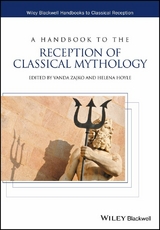
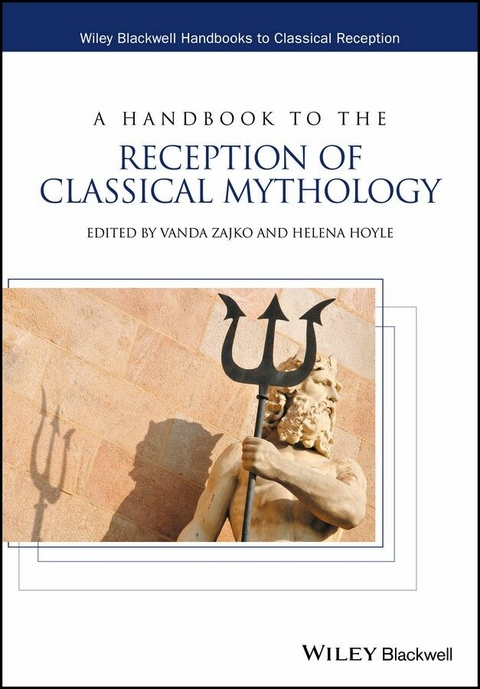
A Handbook to the Reception of Classical Mythology (eBook)

eBook Download: EPUB
2017 | 1. Auflage
496 Seiten
Wiley-Blackwell (Verlag)
978-1-119-07211-9 (ISBN)

Lese- und Medienproben

A Handbook to the Reception of Classical Mythology -
Systemvoraussetzungen
171,99 inkl. MwSt
(CHF 167,95)
Der eBook-Verkauf erfolgt durch die Lehmanns Media GmbH (Berlin) zum Preis in Euro inkl. MwSt.
  • Download sofort lieferbar
  • Zahlungsarten anzeigen
A Handbook to the Reception of Classical Mythology presents a collection of essays that explore a wide variety of aspects of Greek and Roman myths and their critical reception from antiquity to the present day.
  • Reveals the importance of mythography to the survival, dissemination, and popularization of classical myth from the ancient world to the present day
  • Features chronologically organized essays that address different sets of myths that were important in each historical era, along with their thematic relevance
  • Features chronologically organized essays that address different sets of myths that were important in each historical era, along with their thematic relevance
  • Offers a series of carefully selected in-depth readings, including both popular and less well-known examples


Vanda Zajko is Reader in Classics at the University of Bristol, UK. She is co-editor with Miriam Leonard of Laughing with Medusa: Classical Myth and Feminist Thought (2006); with Alexandra Lianeri of Translation and the Classic: Identity as Change in the History of Culture (2008); and with Ellen O'Gorman of Classical Myth and Psychoanalysis: Ancient and Modern Stories of the Self (2013).

Vanda Zajko is Reader in Classics at the University of Bristol, UK. She is co-editor with Miriam Leonard of Laughing with Medusa: Classical Myth and Feminist Thought (2006); with Alexandra Lianeri of Translation and the Classic: Identity as Change in the History of Culture (2008); and with Ellen O'Gorman of Classical Myth and Psychoanalysis: Ancient and Modern Stories of the Self (2013).

Notes on Contributors ix

Introduction 1
Vanda Zajko

Part I Mythography 13

1 Greek Mythography 15
Robert L. Fowler

2 Roman Mythography 29
Gregory Hays

3 Myth and the Medieval Church 43
James G. Clark

4 The Renaissance Mythographers 59
John Mulryan

5 Bulfinch and Graves: Modern Mythography as Literary Reception 75
John Talbot

6 Myth Collections for Children 87
Sheila Murnaghan and Deborah H. Roberts

7 Contemporary Mythography: In the Time of Ancient Gods, Warlords, and Kings 105
Ika Willis

Part II Approaches and Themes 121

8 Circean Enchantments and the Transformations of Allegory 123
Greta Hawes

9 The Comparative Approach 139
Sarah Iles Johnston

10 Revisionism 153
Lillian Doherty

11 Alchemical Interpretations of Classical Myths 165
Didier Kahn

12 Nationalism and Cosmopolitanism: On the Gods of Greece, Italy, and India 179
Phiroze Vasunia

13 The Golden Age 193
Andreas T. Zanker

14 Matriarchy and Utopia 213
Peter Davies

Part III Myth, Creativity, and the Mind 229

15 The Half?]Blood Hero: Percy Jackson and Mythmaking in the Twenty-First Century 231
Joanna Paul

16 Myth as Case Study 243
Heather Tolliday

17 Mythical Narrative and Self?]Development 257
Meg Harris Williams

18 Finding Asylum for Virginia Woolf 's Classical Visions 271
Emily Pillinger

Part IV Iconic Figures and Texts 285

19 Orpheus and Eurydice 287
Genevieve Liveley

20 Narcissus and Echo 299
Rosemary Barrow

21 Prometheus, Pygmalion, and Helen: Science Fiction and Mythology 311
Tony Keen

22 Dionysus in Rome 323
Fiachra Mac Góráin

23 Cupid and Psyche 337
Julia Haig Gaisser

24 Constructing a Mythic City in the Book of the City of Ladies: A New Space for Women in Late Medieval Culture 353
Kathryn McKinley

25 Francis Bacon's Wisdom of the Ancients: Between Two Worlds 367
John Channing Briggs

26 Pieter Bruegel the Elder's Landscape with the Fall of Icarus 379
Jeanne Nuechterlein

27 Ancient and Modern Re?]sounding: Monteverdi's Il ritorno d'Ulisse in patria 391
George Burrows

28 Shelley Prometheus Unbound 407
Michael O'Neill

29 George Bernard Shaw: Pygmalion 419
Helen Slaney

30 Camus and the Myth of Sisyphus 433
Kurt Lampe

31 Creative Strategies: Lars von Trier's Medea 447
Mette Hjort

32 Regarding the Pain of Others with Marsyas: On Tortures Ancient and Modern 463
Lisa Saltzman

Index 475

Notes on Contributors


Rosemary Barrow is a Reader in Classical Art & Reception at the University of Roehampton. Besides articles on art history and the classical tradition, she has published two monographs on Victorian classical reception – Lawrence Alma‐Tadema (2001) and The Use of Classical Art & Literature by Victorian Painters (2007) – and a co‐authored book with Michael Silk and Ingo Gildenhard entitled The Classical Tradition: Art, Literature, Thought (2013).

John Channing Briggs is the author of Francis Bacon and the Rhetoric of Nature, a chapter on Bacon’s science and religion in the Cambridge Companion to Francis Bacon, and a close reading of Lincoln’s speeches (Lincoln’s Speeches Reconsidered). Educated at Harvard and the University of Chicago, he is Professor of English and McSweeny Chair of Rhetoric and Excellence in Teaching at the University of California, Riverside.

George Burrows is Principal Lecturer for Performing Arts at the University of Portsmouth, where he also leads the Centre for Performing Arts. He is co‐founder of the Song, Stage and Screen international musical theater conference and a founding editor of the journal, Studies in Musical Theatre. His research most often considers the social functions and meanings of music and musical theater in the interwar period but he has also published work on the composers Claudio Monteverdi (1567–1643) and Charles Villiers Stanford (1852–1924). He has directed the University of Portsmouth Choirs for more than a decade and his book, Andy Kirk and his Clouds of Joy, is forthcoming.

James G. Clark is Professor of History at the University of Exeter. He has written widely on aspects of medieval clerical culture and has a particular interest in the reception of the Latin classics among learned clerks in the later Middle Ages. Recent publications include Ovid in the Middle Ages (2011).

Peter Davies is Professor of Modern German Studies at the University of Edinburgh. Publications include Divided Loyalties: East German Writers and the Politics of German Division (2000); with Stephen Parker and Matthew Philpotts, The Modern Restoration: Re‐Reading German Literary History, 1930–1960 (2004); Myth, Matriarchy and Modernity: Johann Jakob Bachofen in German Culture, 1860–1945 (2010). He has also written on topics ranging from East German literature, myth and literature, National Socialism and Holocaust writing, and Translation Studies.

Lillian Doherty is a Professor of Classics at the University of Maryland, College Park, where she has taught since 1984. Her home is in the Department of Classics but she is also a member of the affiliate faculties in Women’s Studies and Comparative Literature. She specializes in archaic Greek poetry, with a special emphasis on the Odyssey. She is the author of Siren Songs: Gender, Audiences, and Narrators in the Odyssey (1995) and Gender and the Interpretation of Classical Myth (2001) and the editor of Oxford Readings in Homer’s Odyssey (2008).

Robert L. Fowler was educated at Toronto and Oxford, and has been H.O. Wills Professor of Greek at the University of Bristol since 1996. He has worked on Greek epic and lyric poetry as well as Greek historiography, mythography, religion, and the history of classical scholarship. His publications include The Nature of Early Greek Lyric (1987), The Cambridge Companion to Homer (ed., 2004), and the two volumes of Early Greek Mythography (2000–2013), which collect and comment on the fragments of the first 29 Greek mythographers. He is a Fellow of the British Academy.

Julia Haig Gaisser is Eugenia Chase Guild Professor Emeritus in the Humanities, Professor Emeritus of Latin at Bryn Mawr College.

Greta Hawes is Early Career Fellow and Lecturer in Classics and Ancient History at Australian National University. She is author of Rationalizing Myth in Antiquity (2014), is currently editing a collection of essays, Myths on the Map: The Storied Landscapes of Ancient Greece.

Gregory Hays is Associate Professor of Classics at the University of Virginia. He is the translator of Marcus Aurelius, Meditations (2003) and author of articles on various aspects of late and medieval Latin literature. He is currently finishing a new edition and translation of Fulgentius, with commentary.

Mette Hjort is Professor of Film Studies at the Department of Media, Cognition and Communication, University of Copenhagen. She is the author of Small Nation, Global Cinema (2005) and Lone Scherfig’s “Italian for Beginners” (2010) and the editor, with Ursula Lindqvist, of A Companion to Nordic Cinema. She serves as co‐editor, with Peter Schepelern, for the Nordic Film Classics series.

Sarah Iles Johnston is Arts and Humanities Distinguished Scholar of Religion and Professor of Classics at The Ohio State University. She has published widely on ancient Greek religion and myths.

Didier Kahn is senior researcher at the CNRS (Cellf 16e‐18e). He is the author of Alchimie et paracelsisme en France à la fin de la Renaissance (2007). In 2010 he published an extensive annotated edition of Montfaucon de Villars’ Le Comte de Gabalis, ou Entretiens sur les sciences secrètes (1670), and in 2015 La Messe alchimique attribuée à Melchior de Sibiu. He has recently completed a new book: Chimie et alchimie: le fixe et le volatil, de Paracelse à Lavoisier (forthcoming) and is currently editing the first volume of an annotated edition of Diderot’s correspondence.

Tony Keen is an Honorary Associate and Associate Lecturer for the Open University, an Adjunct Assistant Professor for the University of Notre Dame London Global Gateway, and a Visiting Lecturer for the University of Roehampton; he teaches on classical studies, myth, cinema, and SF and fantasy literature. He writes extensively on classics and SF, and was chair of the 2013 conference Swords, Sorcery, Sandals and Space: The Fantastika and the Classical World.

Kurt Lampe is Senior Lecturer in Classics at the University of Bristol. His publications and teaching cross the boundaries between ancient Greek and Roman and contemporary literature and philosophy. In general, he likes to use the analysis of art (literary, visual, cinematic, etc.) in order to inspire reflection on questions of contemporary importance (e.g., agency, responsibility, selfhood, and their political and sacred contexts).

Genevieve Liveley is Senior Lecturer in Classics at the University of Bristol. Her principal research interests are Augustan literature, critical theory, and the classical tradition. She is co‐editor and contributor to Elegy and Narratology: Fragments of Story and author of A Reader’s Guide to Ovid’s Metamorphoses and Ovid: Love Songs.

Fiachra Mac Góráin is Lecturer in Classics at University College London. He is currently preparing a monograph entitled Virgil’s Dionysus.

Kathryn McKinley is Associate Professor of English at the University of Maryland, Baltimore County. Her research interests include Chaucer, Boccaccio, the medieval reception of classical antiquity and Ovid, images and the materiality of religious cultures in later medieval England. Her publications include Reading the Ovidian Heroine: Metamorphoses Commentaries 1100–1618 (2001); co‐editor, Ovid in the Middle Ages (2011); an article on Chaucer’s House of Fame in Meaning in Motion: The Semantics of Movement in Medieval Art (2011); and Chaucer and Boccaccio: Image, Vision and the Vernacular in the House of Fame (2016).

John Mulryan is Distinquished Board of Trustees Professor, Emeritus, at St. Bonaventure University. He has published a co‐authored translation of Natale Conti’s Mythologiae (2006), a translation of Vincenzo Cartari’s Imagini (2012), and a study of Milton and classical mythology (‘Through a Glass Darkly’: Milton’s Reinvention of the Mythological Tradition), (1996). He has also published articles on classical mythology in Shakespeare and Ben Jonson.

Sheila Murnaghan is Allen Memorial Professor of Greek at the University of Pennsylvania. She is the author of Disguise and Recognition in the Odyssey (2nd. edn 2011) and the co‐editor of Women and Slaves in Greco‐Roman Culture (1998) and Nostos: Odyssean Identities in Modern Cultures (2014). Her current projects include a forthcoming study of Classics and childhood in the late nineteenth and early twentieth centuries, co‐authored with Deborah H. Roberts, and an edition with commentary of Sophocles’ Ajax.

Jeanne Nuechterlein is Senior Lecturer at the University of York, where she has taught northern Renaissance art history in the Department of History of Art and the Centre for Medieval Studies since 2000. Her research investigates various aspects of religious and secular art in Germany and the Low Countries in the fifteenth and sixteenth centuries, and their reception in the nineteenth and twentieth centuries.

Michael O’Neill is a Professor of English at Durham University. His recent books include The Oxford Handbook of Percy Bysshe Shelley (2012), co‐edited with Anthony Howe and with the assistance of Madeleine Callaghan,...

Erscheint lt. Verlag 16.3.2017
Reihe/Serie HCRZ - Wiley-Blackwell Handbooks to Classical Reception
HCRZ - Wiley-Blackwell Handbooks to Classical Reception
Sprache englisch
Themenwelt Geschichte Allgemeine Geschichte Altertum / Antike
Geschichte Teilgebiete der Geschichte Religionsgeschichte
Geisteswissenschaften Religion / Theologie Weitere Religionen
Geisteswissenschaften Sprach- / Literaturwissenschaft Anglistik / Amerikanistik
Geisteswissenschaften Sprach- / Literaturwissenschaft Literaturwissenschaft
Schlagworte Classical Studies • Humanistische Studien • Mythologie • Reception of the Ancient World • Rezeption der Antike
ISBN-10 1-119-07211-5 / 1119072115
ISBN-13 978-1-119-07211-9 / 9781119072119
Informationen gemäß Produktsicherheitsverordnung (GPSR)
Haben Sie eine Frage zum Produkt?
EPUBEPUB (Adobe DRM)

Kopierschutz: Adobe-DRM
Adobe-DRM ist ein Kopierschutz, der das eBook vor Mißbrauch schützen soll. Dabei wird das eBook bereits beim Download auf Ihre persönliche Adobe-ID autorisiert. Lesen können Sie das eBook dann nur auf den Geräten, welche ebenfalls auf Ihre Adobe-ID registriert sind.
Details zum Adobe-DRM

Dateiformat: EPUB (Electronic Publication)
EPUB ist ein offener Standard für eBooks und eignet sich besonders zur Darstellung von Belle­tristik und Sach­büchern. Der Fließ­text wird dynamisch an die Display- und Schrift­größe ange­passt. Auch für mobile Lese­geräte ist EPUB daher gut geeignet.

Systemvoraussetzungen:
PC/Mac: Mit einem PC oder Mac können Sie dieses eBook lesen. Sie benötigen eine Adobe-ID und die Software Adobe Digital Editions (kostenlos). Von der Benutzung der OverDrive Media Console raten wir Ihnen ab. Erfahrungsgemäß treten hier gehäuft Probleme mit dem Adobe DRM auf.
eReader: Dieses eBook kann mit (fast) allen eBook-Readern gelesen werden. Mit dem amazon-Kindle ist es aber nicht kompatibel.
Smartphone/Tablet: Egal ob Apple oder Android, dieses eBook können Sie lesen. Sie benötigen eine Adobe-ID sowie eine kostenlose App.
Geräteliste und zusätzliche Hinweise

Buying eBooks from abroad
For tax law reasons we can sell eBooks just within Germany and Switzerland. Regrettably we cannot fulfill eBook-orders from other countries.

Mehr entdecken
aus dem Bereich
Die Begründung von Lebensformen angesichts gesellschaftlicher …

von Matthias Becker

eBook Download (2025)
Mohr Siebeck (Verlag)
CHF 28,30
Geschichte und Kultur

von Michael Sommer

eBook Download (2025)
C.H.Beck (Verlag)
CHF 9,75
Geschichte und Kultur

von Michael Sommer

eBook Download (2025)
C.H.Beck (Verlag)
CHF 9,75