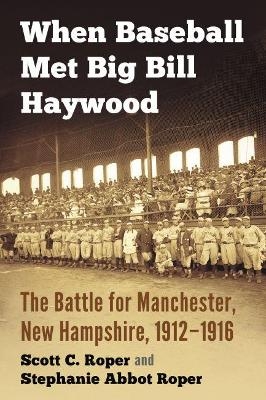
When Baseball Met Big Bill Haywood
McFarland & Co Inc (Verlag)
978-1-4766-6546-7 (ISBN)
In the early 20th century, immigration, labor unrest, social reforms and government regulations threatened the power of the country's largest employers. The Amoskeag Manufacturing Company of Manchester, New Hampshire, remained successful by controlling its workforce, the local media, and local and state government. When a 1912 strike in nearby Lawrence, Massachusetts, threatened to bring the Industrial Workers of the World union to Manchester, the company sought to reassert its influence. Amoskeag worked to promote company pride and to Americanize its many foreign-born workers through benevolence programs, including a baseball club.
Textile Field, the most advanced stadium in New England outside of Boston when it was built in 1913, was the centerpiece of this effort. Results were mixed--the company found itself at odds with social movements and new media outlets, and Textile Field became a magnet for conflict with all of professional baseball.
Scott C. Roper is a professor of geography at Castleton University. He specializes in North American cultural, historical, and ethnic geography and material-culture studies. Stephanie Abbot Roper is a senior instructor at Rivier University and an adjunct professor at Nashua Community College, where she teaches a variety of courses in U.S. history and cultural geography.
Table of Contents
Acknowledgments
Preface: Why Textile Field?
Introduction: The Amoskeag Manufacturing Company in an Age of Reform
1. A City on Edge
2. The Fight for Free Speech
3. Finding a Voice
4. Baseball Season at Last
5. The World Series and a “Last-Ditch Bogey Man”
6. Minor Leagues
7. Problems of Government
8. Textile Field
9. The Rise of the Eighth Ward
10. Manchester and the Red Sox
11. “Textile Field hath been Assailed!”
12. Amoskeag’s Local Challenges
13. Rally Around the Flag
14. The End of Big Games
15. Amoskeag and the Federal League
16. Frank Knox’s Manchester
17. The Demise of the Textiles
Epilogue: The Great Strike of 1922
Conclusion: Textile Field and the Progressive Movement in Manchester
Chapter Notes
Bibliography
Index
| Erscheinungsdatum | 10.08.2017 |
|---|---|
| Zusatzinfo | 23 photos, 1 map, notes, bibliography, index |
| Verlagsort | Jefferson, NC |
| Sprache | englisch |
| Maße | 152 x 229 mm |
| Gewicht | 318 g |
| Themenwelt | Sachbuch/Ratgeber ► Sport ► Ballsport |
| Geschichte ► Teilgebiete der Geschichte ► Wirtschaftsgeschichte | |
| ISBN-10 | 1-4766-6546-X / 147666546X |
| ISBN-13 | 978-1-4766-6546-7 / 9781476665467 |
| Zustand | Neuware |
| Informationen gemäß Produktsicherheitsverordnung (GPSR) | |
| Haben Sie eine Frage zum Produkt? |
aus dem Bereich