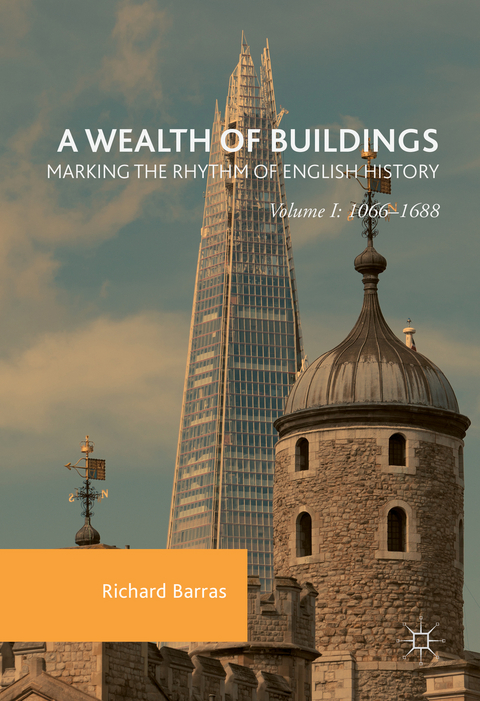
A Wealth of Buildings: Marking the Rhythm of English History (eBook)
337 Seiten
Palgrave Macmillan UK (Verlag)
978-1-137-31921-0 (ISBN)
This first volume provides an introduction to the study of wealth accumulation over the past millennium. There follow three case studies of iconic building investment from the eleventh to the seventeenth century. During the eleventh and twelfth centuries the conquering Norman kings and barons erected castles throughout the country to cement their feudal power. During the thirteenth and fourteenth centuries the great wealth of the ecclesiastical estates funded the lavish construction of Gothic cathedrals and abbeys. During the sixteenth and early seventeenth centuries Tudor and Jacobean magnates vied to build the most magnificent palaces and prodigy houses. The English Revolution brought this era to a close.
Richard Barras is an urban economist with a special interest in building investment. He is Visiting Professor in the Bartlett School, University College London, UK; one of the founding partners of the consultancy, Property Market Analysis; and author of Building Cycles: Growth and Instability (2009).
This two-volume book explores how the great buildings of England bear witness to a thousand years of the nation's history. In every age, investment in iconic buildings reaches a climax when the prevailing mode of production is operating most effectively, surplus wealth is most plentiful, and the dominant class rules supreme. During such periods of stability and prosperity, the demand for new buildings is strong, structural and stylistic innovations abound, and there is fierce competition to build for lasting fame. Each such climax produces a unique vintage of hegemonic buildings that are monuments to the wealth and power of those who ruled their world. This first volume provides an introduction to the study of wealth accumulation over the past millennium. There follow three case studies of iconic building investment from the eleventh to the seventeenth century. During the eleventh and twelfth centuries the conquering Norman kings and barons erected castles throughout the country to cement their feudal power. During the thirteenth and fourteenth centuries the great wealth of the ecclesiastical estates funded the lavish construction of Gothic cathedrals and abbeys. During the sixteenth and early seventeenth centuries Tudor and Jacobean magnates vied to build the most magnificent palaces and prodigy houses. The English Revolution brought this era to a close.
Richard Barras is an urban economist with a special interest in building investment. He is Visiting Professor in the Bartlett School, University College London, UK; one of the founding partners of the consultancy, Property Market Analysis; and author of Building Cycles: Growth and Instability (2009).
1. Of Works and Monuments.- 2. Wealth of the Nation.- 3. Norman Conquest.- 4. Gothic Ascendant.- 5. Magnate Display.
| Erscheint lt. Verlag | 22.9.2016 |
|---|---|
| Zusatzinfo | XXVI, 337 p. 48 illus., 16 illus. in color. |
| Verlagsort | London |
| Sprache | englisch |
| Themenwelt | Geisteswissenschaften ► Geschichte ► Regional- / Ländergeschichte |
| Technik ► Architektur | |
| Wirtschaft ► Allgemeines / Lexika | |
| Wirtschaft ► Volkswirtschaftslehre | |
| Schlagworte | Architectural Style • Building investment • Construction technology • Cultural Hegemony • Iconic buildings • Wealth accumulation |
| ISBN-10 | 1-137-31921-6 / 1137319216 |
| ISBN-13 | 978-1-137-31921-0 / 9781137319210 |
| Informationen gemäß Produktsicherheitsverordnung (GPSR) | |
| Haben Sie eine Frage zum Produkt? |
 PDF (Wasserzeichen)
DRM: Digitales Wasserzeichen
Dieses eBook enthält ein digitales Wasserzeichen und ist damit für Sie personalisiert. Bei einer missbräuchlichen Weitergabe des eBooks an Dritte ist eine Rückverfolgung an die Quelle möglich.
Dateiformat: PDF (Portable Document Format)
Mit einem festen Seitenlayout eignet sich die PDF besonders für Fachbücher mit Spalten, Tabellen und Abbildungen. Eine PDF kann auf fast allen Geräten angezeigt werden, ist aber für kleine Displays (Smartphone, eReader) nur eingeschränkt geeignet.
Systemvoraussetzungen:
PC/Mac: Mit einem PC oder Mac können Sie dieses eBook lesen. Sie benötigen dafür einen PDF-Viewer - z.B. den Adobe Reader oder Adobe Digital Editions.
eReader: Dieses eBook kann mit (fast) allen eBook-Readern gelesen werden. Mit dem amazon-Kindle ist es aber nicht kompatibel.
Smartphone/Tablet: Egal ob Apple oder Android, dieses eBook können Sie lesen. Sie benötigen dafür einen PDF-Viewer - z.B. die kostenlose Adobe Digital Editions-App.
Buying eBooks from abroad
For tax law reasons we can sell eBooks just within Germany and Switzerland. Regrettably we cannot fulfill eBook-orders from other countries.
aus dem Bereich